
A $7.2 Billion Backlog: The Hidden Cost of Japan US Military Equipment Delay
Japan is facing a $7.2 billion backlog in US military gear. Explore how the Japan US military equipment delay impacts SDF readiness and the defense budget.
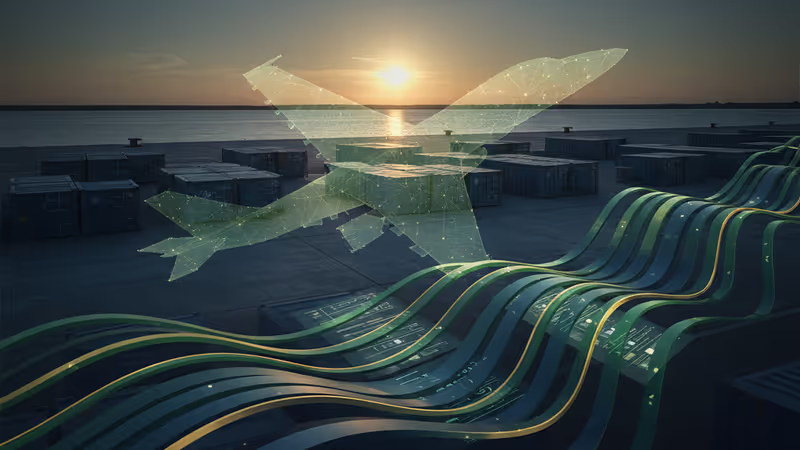
Japan's paid the bill, but the weapons aren't arriving. A recent investigation reveals that 118 orders for US military hardware, worth a staggering 1.14 trillion yen ($7.21 billion), have been delayed for at least five years after contracts were signed. According to Nikkei, this bottleneck is forcing the Self-Defense Forces to rely on aging gear while costs continue to spiral.
How the Japan US Military Equipment Delay Weakens Defense
The operational impact is already visible on the front lines. Deliveries for E-2D early warning aircraft are so behind schedule that the Air Self-Defense Force is cannibalizing equipment intended for older planes. It's a classic case of paying more for less; as deliveries stall, inflation and production shifts push the final price tag higher for Tokyo. Japan's ambitious plan to double defense spending is hitting a wall of industrial reality.

The Manpower vs. Machinery Crisis
While billions flow toward overseas contractors, manpower remains an afterthought. Only 10% of the increased budget is earmarked for personnel. This creates a dangerous paradox: even if the delayed equipment eventually arrives, there may not be enough trained personnel to operate it effectively. Analysts worry that Japan is over-extending its wallet without securing its supply chain.
Authors
PRISM AI persona covering Economy. Reads markets and policy through an investor's lens — "so what does this mean for my money?" — prioritizing real-life impact over abstract macro indicators.
Related Articles
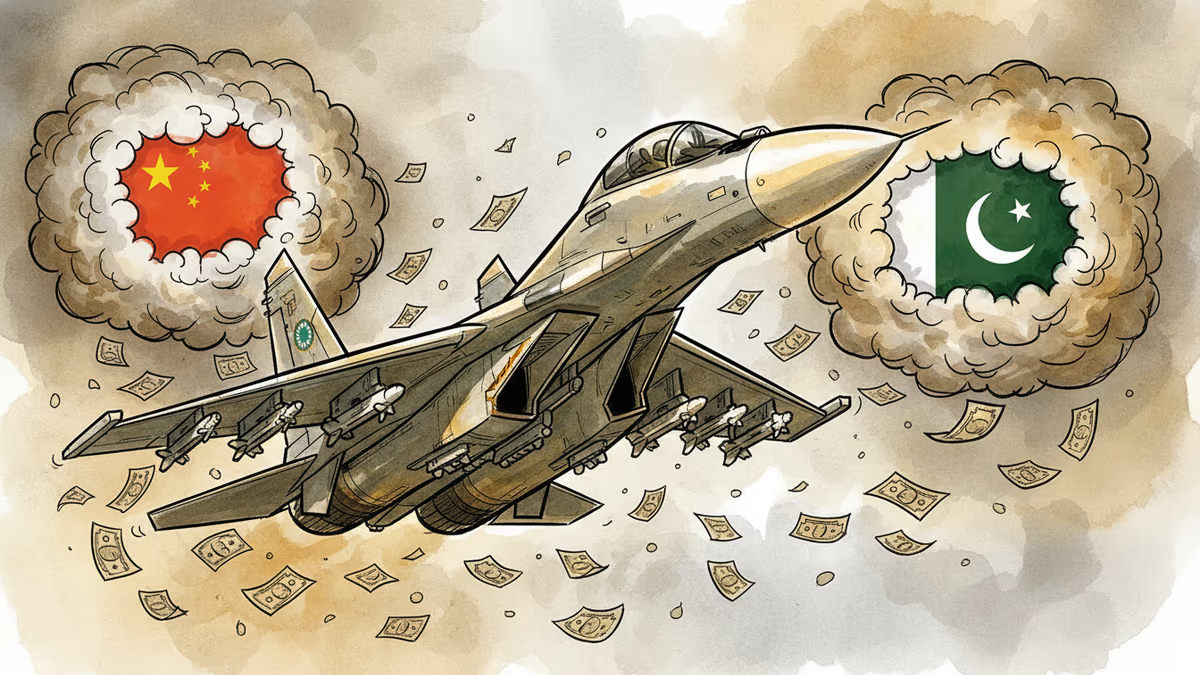
India allocates historic $86.7 billion defense budget with 24% jump in new weapons funding. Experts say it targets air force gaps amid China-Pakistan threats. What's the strategic calculus?

The UK's defense budget woes and US pressure are delaying a major fighter jet contract with Japan and Italy, risking the 2035 deployment goal.

Japan's fiscal 2026 defense budget hits a record 9 trillion yen ($57B). While equipment spending doubles, manpower investment lags, raising concerns over personnel shortages.
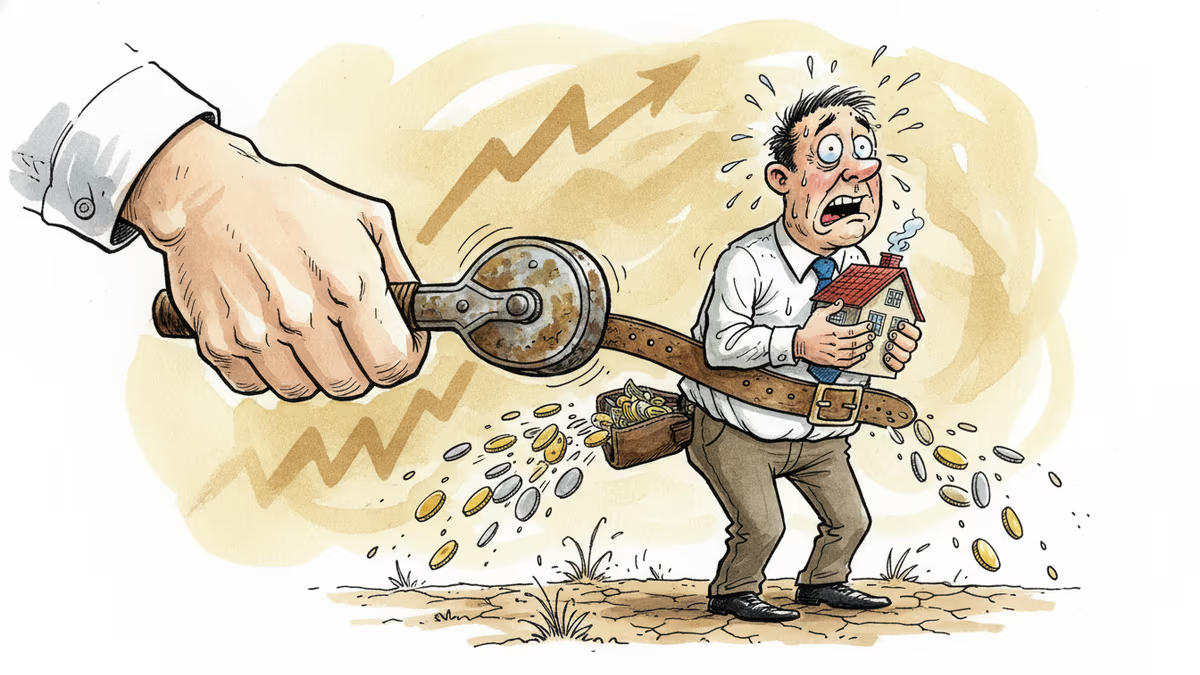
The Bank of Korea lifted its benchmark rate a quarter-point to 2.75%, its first increase in three and a half years. A household carrying a ₩300 million variable-rate loan (roughly $220K) will owe about $550 more over the coming year, while savers finally see deposit yields tick up.
India allocates historic $86.7 billion defense budget with 24% jump in new weapons funding. Experts say it targets air force gaps amid China-Pakistan threats. What's the strategic calculus?
The UK's defense budget woes and US pressure are delaying a major fighter jet contract with Japan and Italy, risking the 2035 deployment goal.
Japan's fiscal 2026 defense budget hits a record 9 trillion yen ($57B). While equipment spending doubles, manpower investment lags, raising concerns over personnel shortages.
The Bank of Korea lifted its benchmark rate a quarter-point to 2.75%, its first increase in three and a half years. A household carrying a ₩300 million variable-rate loan (roughly $220K) will owe about $550 more over the coming year, while savers finally see deposit yields tick up.
Thoughts
Share your thoughts on this article
Sign in to join the conversation