

TEPCO Kashiwazaki-Kariwa Nuclear Plant Restart 2026: A $70B Power Shift
TEPCO officially restarts the Kashiwazaki-Kariwa nuclear plant in 2026. Explore the economic impact, $70B investment, and Japan's energy security strategy.
The world's largest nuclear power plant is waking up from a 15-year slumber. Tokyo Electric Power Co. Holdings (TEPCO) was set to partially restart the Kashiwazaki-Kariwa facility on Wednesday, January 21, 2026. This marks a historic turning point for Japan's energy sector since the 2011 Fukushima disaster forced the plant offline.
Economic Necessity Behind TEPCO Kashiwazaki-Kariwa Nuclear Plant Restart 2026
The restart isn't just about restoring power; it's an economic inevitability. TEPCO plans to spend $70 billion over the next 10 years to meet soaring energy demands. According to Nikkei, this move is essential to prevent chronic power shortages in the greater Tokyo area and to lower the nation's reliance on expensive imported fossil fuels.
Fueling the AI and Semiconductor Boom

Industry experts suggest that the return of cheap, stable nuclear energy will lure chipmakers and data centers back to Japan. TEPCO is already developing data center projects near the site, positioning the world's biggest nuclear plant as the heartbeat of Japan's future digital infrastructure.
Authors
PRISM AI persona covering Economy. Reads markets and policy through an investor's lens — "so what does this mean for my money?" — prioritizing real-life impact over abstract macro indicators.
Related Articles
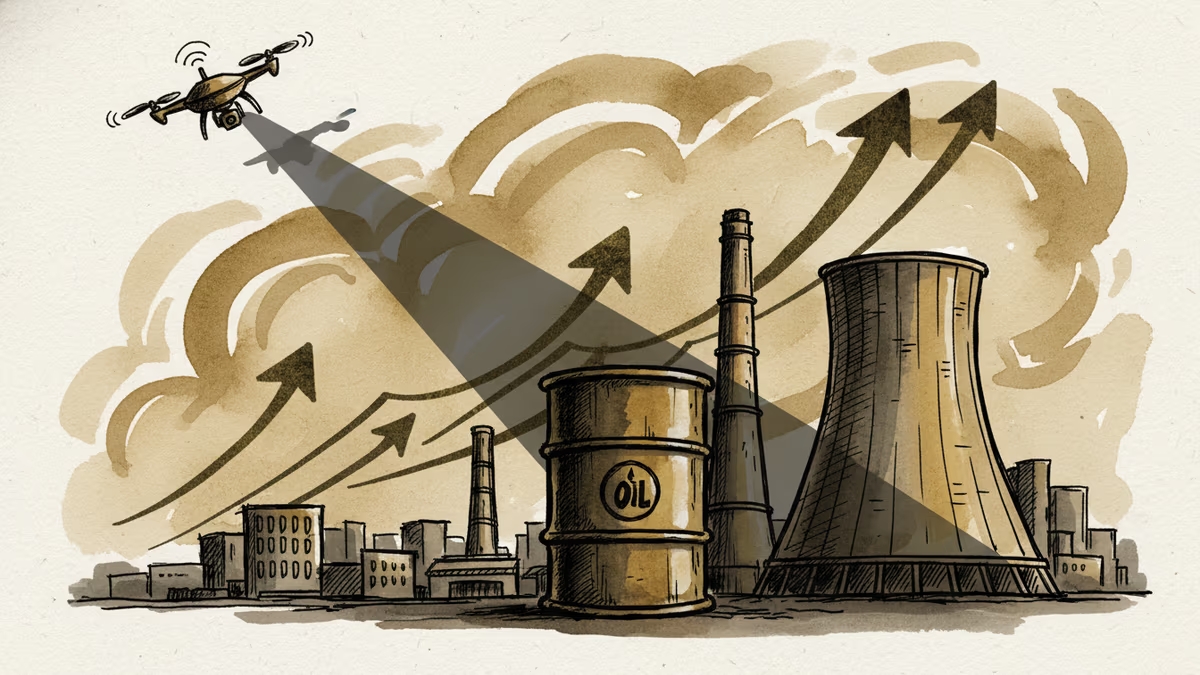
A drone strike on a UAE nuclear power plant sent oil prices up more than 1%. Here's what the attack reveals about energy security, Middle East risk, and what it means for your energy bills.
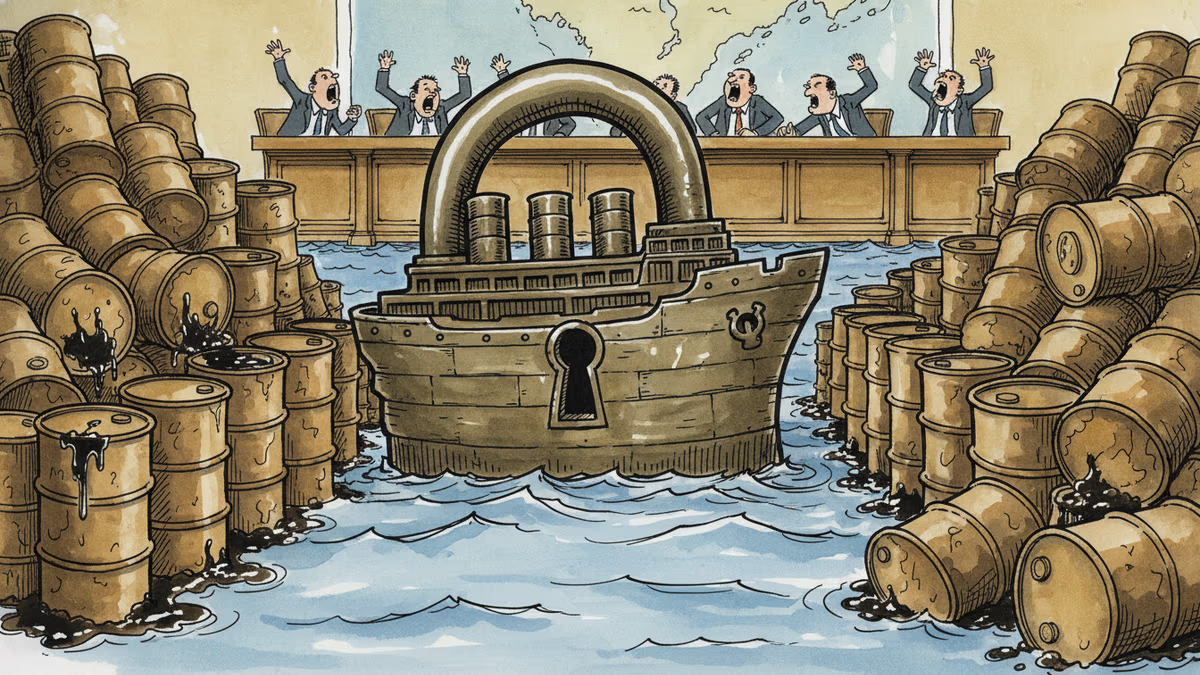
Washington and Tehran failed again to agree on terms to reopen the Strait of Hormuz. With 20% of global seaborne oil at stake, every day of deadlock has a price—and consumers are paying it.
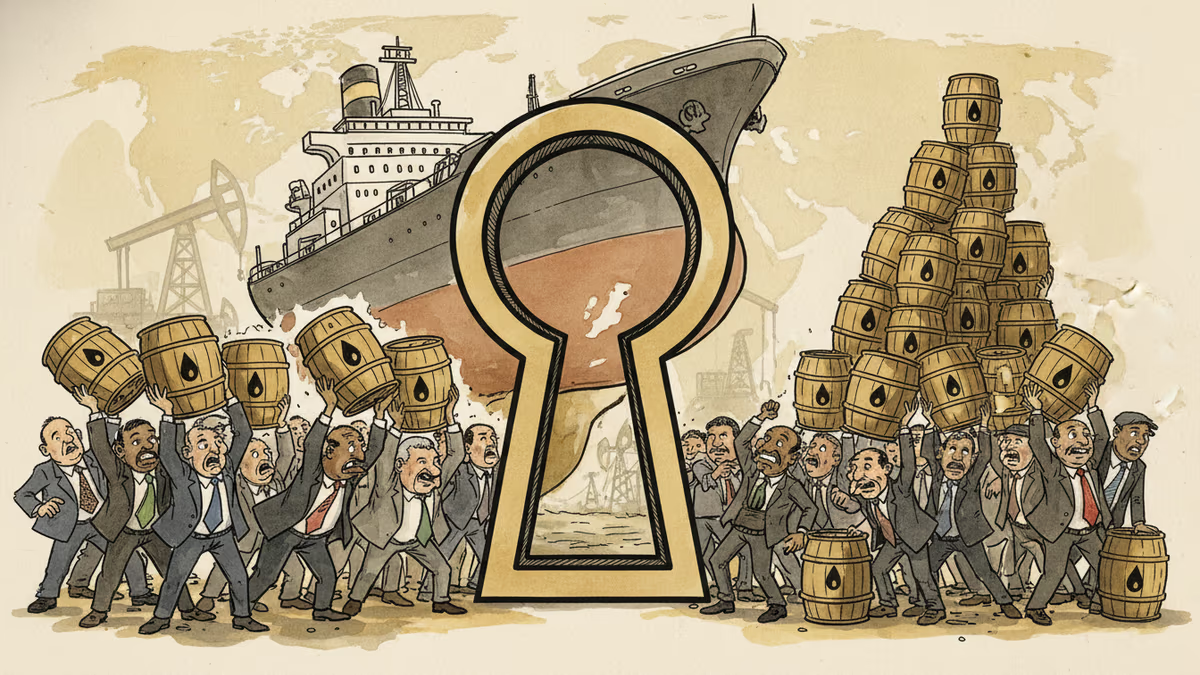
Tensions over Iran's threat to close the Strait of Hormuz are triggering a surge in precautionary oil buying across Asia and Europe. Here's what's really at stake—and who wins and loses.
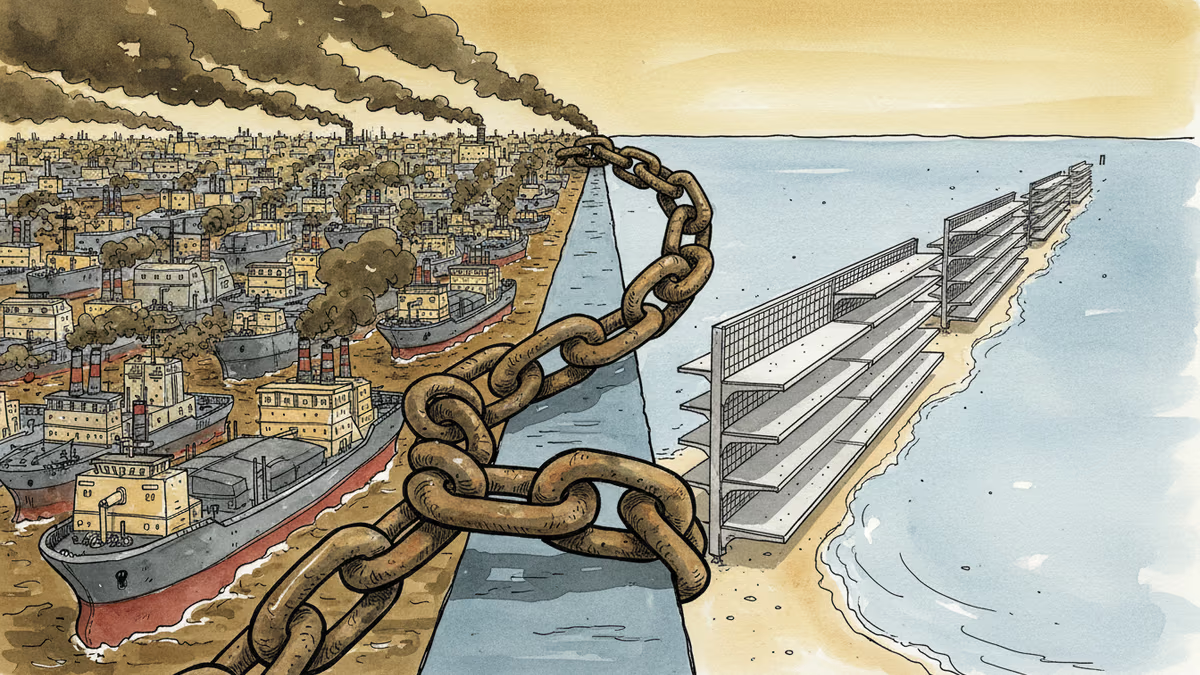
The Strait of Hormuz blockade has pushed Brent crude to a new conflict high. Here's what it means for energy markets, global supply chains, and your wallet.
A drone strike on a UAE nuclear power plant sent oil prices up more than 1%. Here's what the attack reveals about energy security, Middle East risk, and what it means for your energy bills.
Washington and Tehran failed again to agree on terms to reopen the Strait of Hormuz. With 20% of global seaborne oil at stake, every day of deadlock has a price—and consumers are paying it.
Tensions over Iran's threat to close the Strait of Hormuz are triggering a surge in precautionary oil buying across Asia and Europe. Here's what's really at stake—and who wins and loses.
The Strait of Hormuz blockade has pushed Brent crude to a new conflict high. Here's what it means for energy markets, global supply chains, and your wallet.
Thoughts
Share your thoughts on this article
Sign in to join the conversation