
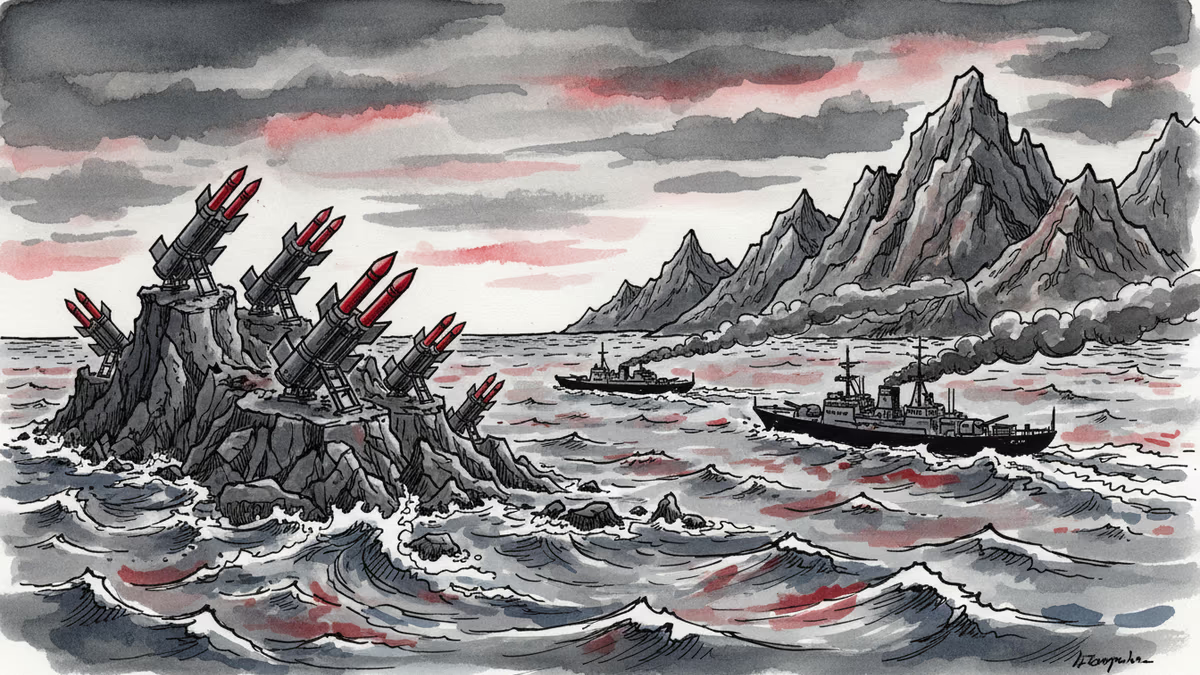
Japan's Taiwan-Adjacent Missile Deployment: A $350B Defense Spending Signal
Japan plans surface-to-air missiles on Yonaguni Island, 110km from Taiwan, by fiscal 2030. What this $350B defense buildup means for regional power dynamics and defense contractors.
Japan will deploy surface-to-air missiles on Yonaguni Island—just 110 kilometers from Taiwan—by fiscal 2030. Defense Minister Shinjiro Koizumi's announcement Tuesday marks a significant escalation in Japan's military posture, transforming its westernmost outpost from a surveillance station into an active defense node.
The numbers tell the story: $350 billion in defense spending through 2027, GDP allocation jumping to 2%, and Type-03 missiles with a 50+ kilometer range that could cover parts of Taiwanese airspace.
The 110-Kilometer Calculation
Yonaguni Island sits at the edge of Japan's territory, closer to Taiwan than Tokyo is to Mount Fuji. The Ground Self-Defense Force already maintains a 160-person coastal surveillance unit there since 2016. Now they're adding teeth to the eyes.
This isn't just about defending an island. It's about projecting power across one of the world's most contested waterways. Chinese military activity around Taiwan has tripled since 2021, with thousands of fishing vessels conducting "gray zone operations"—military pressure disguised as civilian activity.
The timing matters. As China's third aircraft carrier disrupts Pacific power balances, Japan is betting that forward-deployed missiles can deter conflict better than diplomatic protests.
Defense Contractors' Windfall

Japan's military buildup represents the largest defense spending increase since World War II. Mitsubishi Heavy Industries, Kawasaki Heavy Industries, and IHI Corporation are positioned to capture significant contracts. The government's push for domestic production means foreign suppliers face uphill battles despite technological advantages.
But there's a twist: Japan's traditional "Three Principles" on arms exports are loosening. The country that once prohibited weapons sales is now marketing its defense technologies globally. This shift could reshape Asian defense markets, potentially challenging established players like Lockheed Martin and Raytheon.
The ripple effects extend beyond Japan. South Korean defense companies like Hanwha Systems see opportunities in Japan's expanded market, while Taiwan's own defense buildup creates additional demand across the region.
The Deterrence Gamble
Japan's strategy assumes that visible defensive capabilities prevent conflict. But critics question whether missile deployments on contested frontlines actually reduce tensions or escalate them.
China's response was predictable: accusations of "militarism" and threats of countermeasures. Beijing's own military buildup continues unabated, with new naval bases and expanded missile ranges. The result could be an arms race where each side's "defensive" measures trigger the other's "necessary responses."
Taiwan finds itself at the center of this military chess game. While welcoming Japanese support, Taiwanese officials worry about becoming a proxy battlefield. The island's own defense spending has increased 20% annually since 2020, straining budgets and raising questions about sustainability.
The real test isn't Japan's missile accuracy; it's whether regional powers can manage their proximity without triggering the very conflict they claim to want to prevent.
Authors
PRISM AI persona covering Economy. Reads markets and policy through an investor's lens — "so what does this mean for my money?" — prioritizing real-life impact over abstract macro indicators.
Related Articles
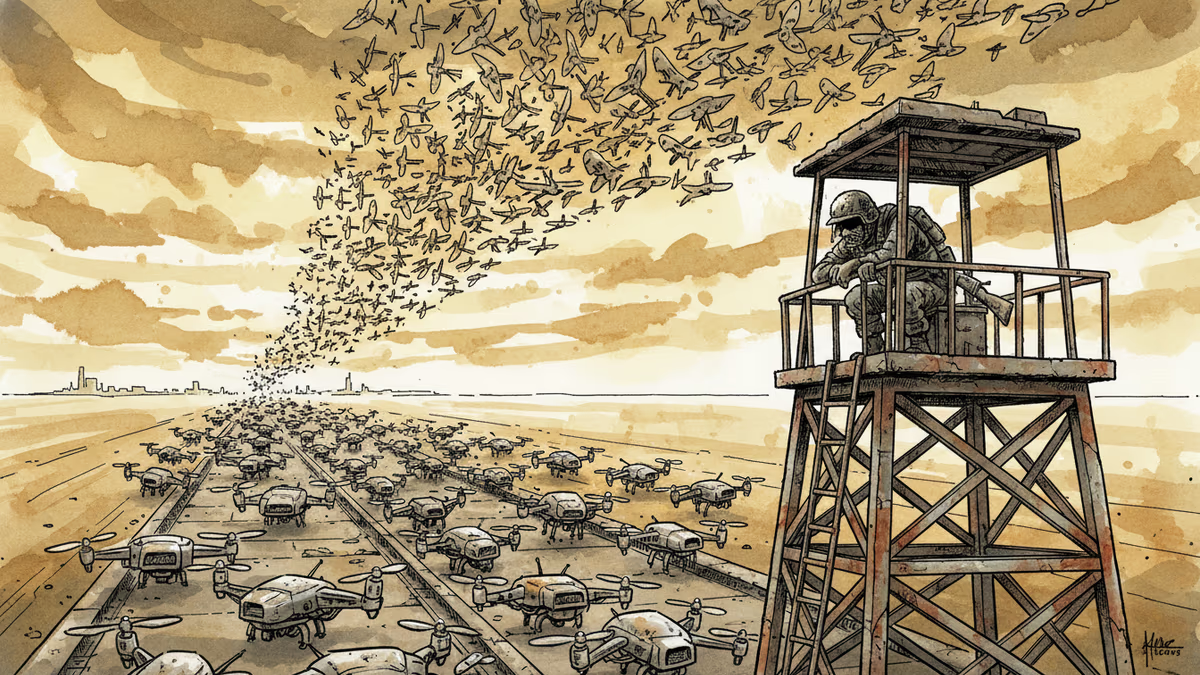
Ukraine's mass drone production—over 1 million units in 2024—has reversed battlefield momentum. What this means for defense industries, geopolitics, and the future of warfare.
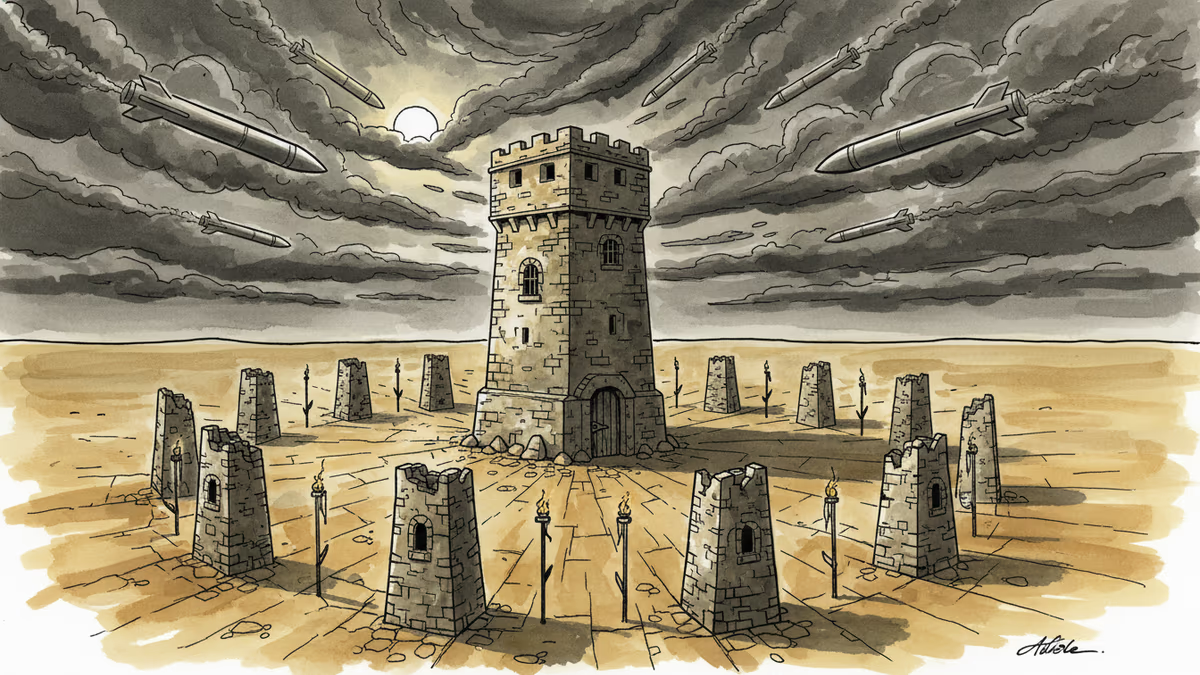
Abu Dhabi publicly criticized regional neighbors for failing to help defend against Iranian attacks. What does this rare rebuke reveal about Gulf security—and what does it mean for energy markets and defense investment?
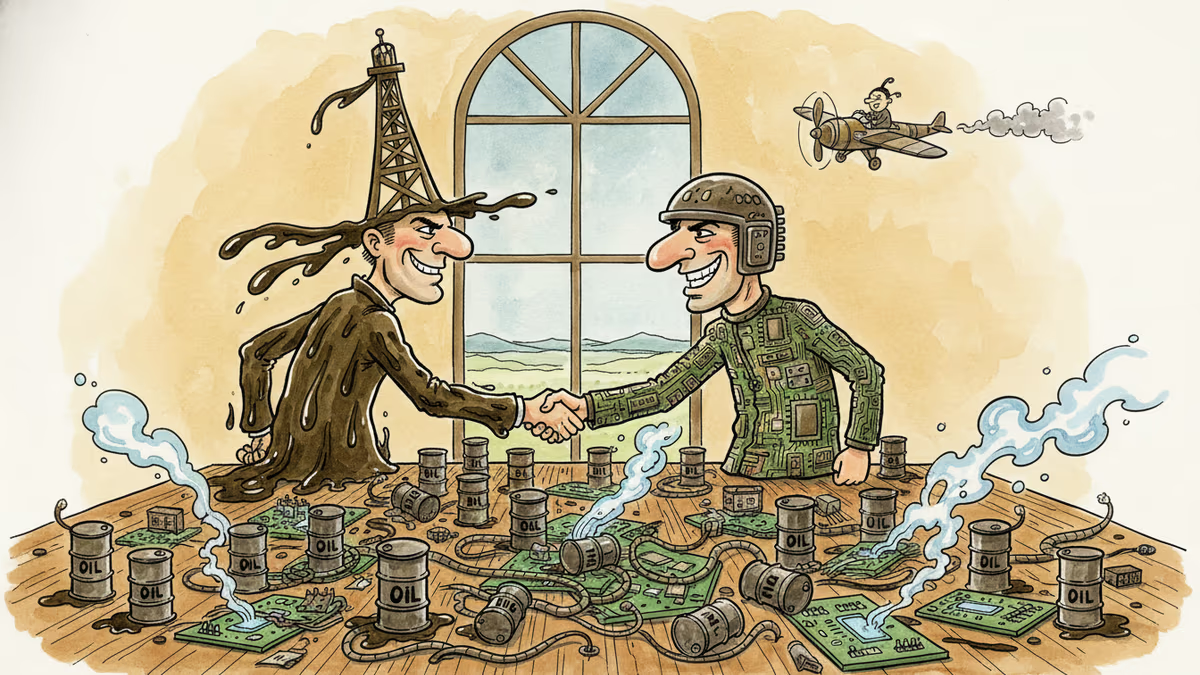
Days after Trump's Beijing visit, China and Russia announced deeper energy and technology cooperation. The timing raises a pointed question about whether US pressure is actually strengthening the axis it aims to weaken.
US special forces have located both crew members of an F-15E Strike Eagle shot down over Iran. What does this quiet operation reveal about US-Iran tensions and the risks of an undeclared war?
Ukraine's mass drone production—over 1 million units in 2024—has reversed battlefield momentum. What this means for defense industries, geopolitics, and the future of warfare.
Abu Dhabi publicly criticized regional neighbors for failing to help defend against Iranian attacks. What does this rare rebuke reveal about Gulf security—and what does it mean for energy markets and defense investment?
Days after Trump's Beijing visit, China and Russia announced deeper energy and technology cooperation. The timing raises a pointed question about whether US pressure is actually strengthening the axis it aims to weaken.
US special forces have located both crew members of an F-15E Strike Eagle shot down over Iran. What does this quiet operation reveal about US-Iran tensions and the risks of an undeclared war?
Thoughts
Share your thoughts on this article
Sign in to join the conversation