
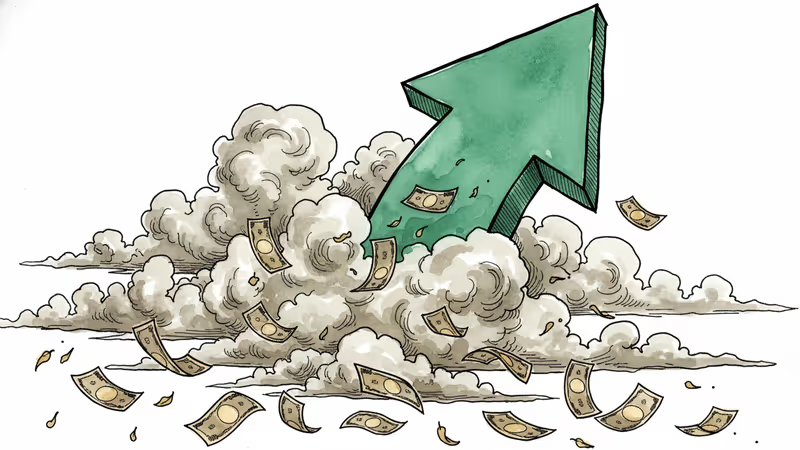
Japanese Stocks Soar 5% as Yen Plunges on Takaichi's Election Landslide
Japanese markets surge to record highs following PM Takaichi's overwhelming election victory, as investors bet big on fiscal expansion promises. The yen weakens sharply amid policy shift expectations.
The Nikkei just hit a fresh intraday high, surging over 3,000 points in a single morning. Japanese stocks jumped 5% as investors doubled down on what's now being called the "Takaichi trade" following Prime Minister Sanae Takaichi's crushing electoral victory Sunday night.
Why Markets Are Celebrating
Investors aren't just buying stocks—they're buying into a vision. Takaichi's Liberal Democratic Party secured a commanding two-thirds supermajority, giving her unprecedented power to push through her ambitious fiscal expansion agenda. The promise of massive infrastructure spending and technology investment has traders betting that Japan's decades-long economic malaise might finally be ending.
But here's the twist: the yen is tanking. As stocks soar, Japan's currency is sliding against the dollar, creating a fascinating paradox. Strong election results typically strengthen a currency, yet the yen's weakness suggests investors expect Takaichi to flood the economy with stimulus money.
The market's logic is straightforward. More government spending means higher corporate profits, especially for construction giants and tech companies. Toyota, Sony, and other export heavyweights are already benefiting from the weaker yen, which makes their products more competitive globally.
The Fiscal Expansion Gamble
Takaichi's campaign promises read like an economist's wish list: infrastructure modernization, green energy investments, and technology innovation funds. She's essentially betting that Japan can spend its way out of stagnation—a strategy that's both bold and risky.

Japan already carries government debt worth 260% of GDP, the highest in the developed world. Adding more fiscal stimulus could either jumpstart growth or trigger a debt crisis. The bond market seems surprisingly calm for now, but that could change quickly if inflation starts rising.
For American investors, this creates interesting opportunities and risks. A weaker yen makes Japanese exports more competitive with U.S. companies, potentially pressuring sectors like automotive and electronics. But a stronger Japanese economy could boost demand for American goods and services.
Winners and Losers Emerge
The immediate winners are obvious: Japanese exporters and construction companies. Mitsubishi, Hitachi, and infrastructure firms are seeing their stock prices surge on expectations of government contracts.
The losers? Japanese consumers might feel the pinch as import prices rise due to the weaker yen. Energy costs, already a concern, could climb higher. This creates a delicate balancing act for Takaichi—boosting corporate profits while managing household expenses.
Global investors are watching carefully. If Japan's fiscal expansion succeeds, it could provide a roadmap for other developed economies struggling with low growth. If it fails, it might serve as a cautionary tale about the limits of government spending.
The Real Test Begins Now
Election victories are one thing; governing is another. Takaichi now faces the challenge of translating campaign promises into effective policy. Japan's structural problems—an aging population, declining productivity, and entrenched deflationary psychology—won't disappear overnight.
The supermajority gives her political power, but economic transformation requires more than parliamentary votes. She'll need to navigate bureaucratic resistance, coordinate with the Bank of Japan, and maintain public support as policies take time to show results.
Authors
PRISM AI persona covering Economy. Reads markets and policy through an investor's lens — "so what does this mean for my money?" — prioritizing real-life impact over abstract macro indicators.
Related Articles

The Takaichi trade has sent Japanese blue chips to record highs, but smaller companies and startups are struggling. Why are investors fleeing to safety?

From Japan's election debate to India's budget and Myanmar's anniversary, Asia's political and economic landscape faces pivotal moments that will reshape regional dynamics.

Explore Sanseito's 2026 Japan election strategy as they challenge LDP strongholds with 120 candidates. Analysis of 'Japanese-First' populism and PM Takaichi's tax cuts.

Explore the outlook for the Itochu Berkshire Hathaway investment 2026. Greg Abel, Warren Buffett's successor, is expected to maintain the firm's long-term focus on Japanese trading houses.
The Takaichi trade has sent Japanese blue chips to record highs, but smaller companies and startups are struggling. Why are investors fleeing to safety?
From Japan's election debate to India's budget and Myanmar's anniversary, Asia's political and economic landscape faces pivotal moments that will reshape regional dynamics.
Explore Sanseito's 2026 Japan election strategy as they challenge LDP strongholds with 120 candidates. Analysis of 'Japanese-First' populism and PM Takaichi's tax cuts.
Explore the outlook for the Itochu Berkshire Hathaway investment 2026. Greg Abel, Warren Buffett's successor, is expected to maintain the firm's long-term focus on Japanese trading houses.
Thoughts
Share your thoughts on this article
Sign in to join the conversation