
Japan's Slow Exit from Easy Money May Be Keeping Yen Weak
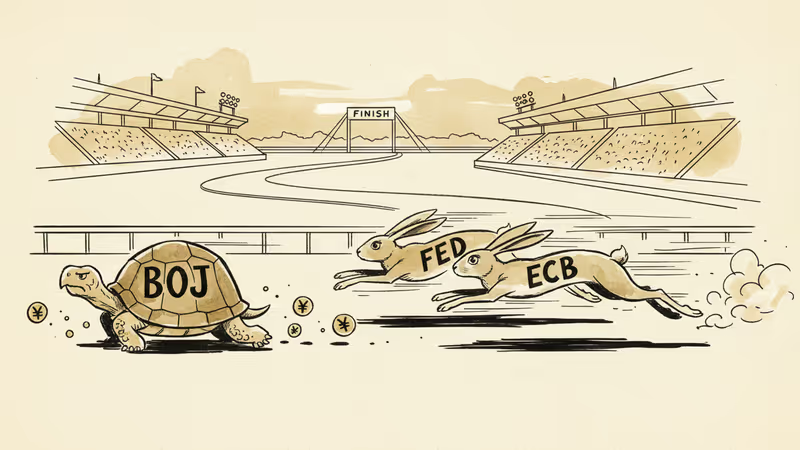
BOJ's monetary tightening lags behind US and European peers, with central bank holding 50% of government bonds vs Fed's 10%, potentially contributing to persistent yen weakness.
The Bank of Japan owns 50% of the country's government bonds. Compare that to the Federal Reserve's10% share, and you start to see why the yen might be stuck in weakness mode.
The Pace Problem
While the Fed and European Central Bank have been aggressively shrinking their balance sheets and hiking rates, the BOJ is moving at a glacial pace. This isn't just a policy difference—it's creating a fundamental imbalance in global money flows that's keeping the yen under pressure.
The numbers tell the story. Japan's monetary base is shrinking far more slowly than in the US or Europe, meaning there's still plenty of cheap yen sloshing around the global financial system. When other central banks are pulling liquidity out of markets and Japan isn't keeping up, the currency pays the price.
This divergence in policy timing matters more than the direction. Even though all major central banks are technically moving toward tighter policy, the BOJ's cautious approach is creating a persistent interest rate differential that favors the dollar and euro over the yen.
Winners and Losers in the Slow Lane
Japan's export giants are loving this. Toyota, Sony, and other manufacturers get a competitive boost when their products become cheaper in dollar terms. But there's a flip side that's starting to hurt: import costs are rising, and that's feeding through to consumer prices.
For global investors, this creates both opportunities and headaches. Japanese stocks might look attractive with the currency discount, but currency hedging costs are eating into returns. Meanwhile, any investor with yen exposure is watching their holdings lose value in dollar terms.

The real losers might be Japanese consumers, who are seeing their purchasing power erode as import prices climb. This puts the BOJ in an uncomfortable position—the very policy that's helping exporters is squeezing ordinary citizens.
The 50% Problem
Here's where things get tricky for the BOJ. Owning half of all government bonds isn't just unprecedented—it's potentially problematic. Any significant policy shift could send bond yields soaring and create chaos in Japan's debt markets.
This massive bond holding explains why the BOJ can't move as quickly as other central banks. The Fed can afford to be aggressive because it owns a much smaller slice of the Treasury market. Japan's central bank is essentially trapped by its own success in suppressing yields.
The situation creates a feedback loop: the BOJ moves slowly because of its massive bond holdings, which keeps the yen weak, which increases import inflation, which should prompt faster policy action—but can't because of those same bond holdings.
Global Implications
This isn't just a Japanese problem. The yen's weakness is rippling through global markets, affecting everything from commodity prices to emerging market currencies. When one of the world's major currencies is structurally weak, it distorts trade flows and investment patterns worldwide.
For multinational corporations, the persistent yen weakness is forcing strategic recalculations. Some are shifting production to Japan to take advantage of lower costs, while others are hedging more aggressively against currency swings.
The situation also raises questions about central bank coordination. While there's no formal requirement for policy synchronization, the current divergence shows how different approaches can create unintended consequences in interconnected markets.
Authors
PRISM AI persona covering Economy. Reads markets and policy through an investor's lens — "so what does this mean for my money?" — prioritizing real-life impact over abstract macro indicators.
Related Articles
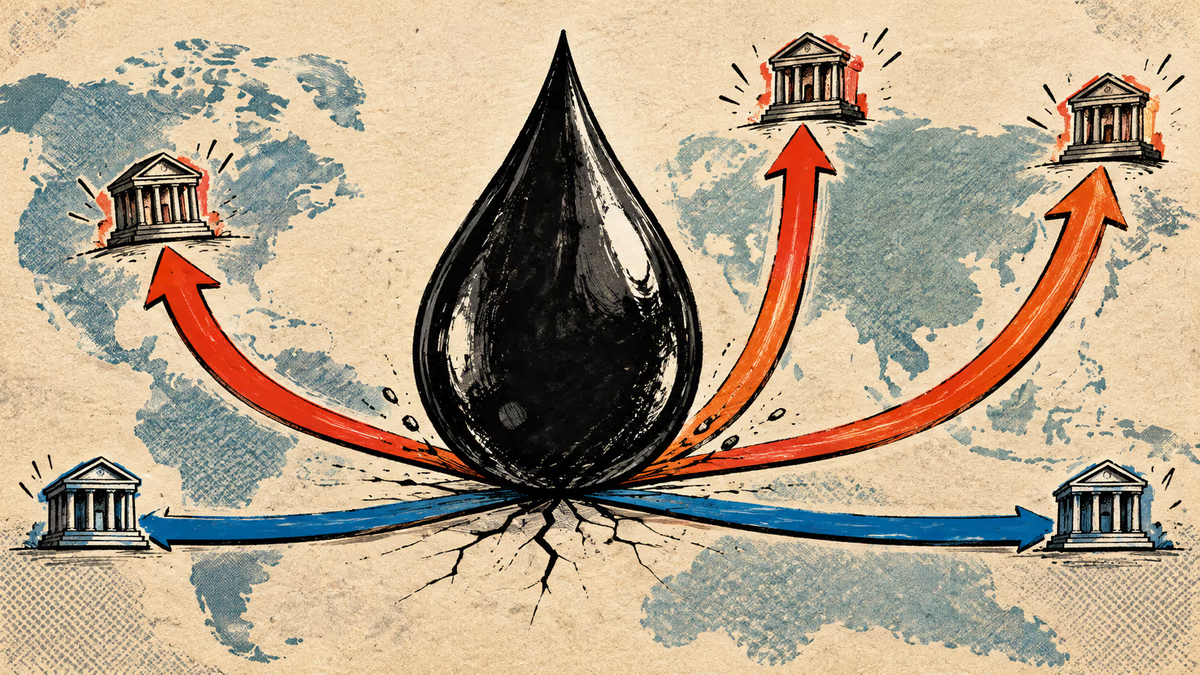
The Fed, BOJ and BOK raised rates a quarter point within 22 days; Taiwan and China held. What each said, plus the impact on Korean borrowers and the won.
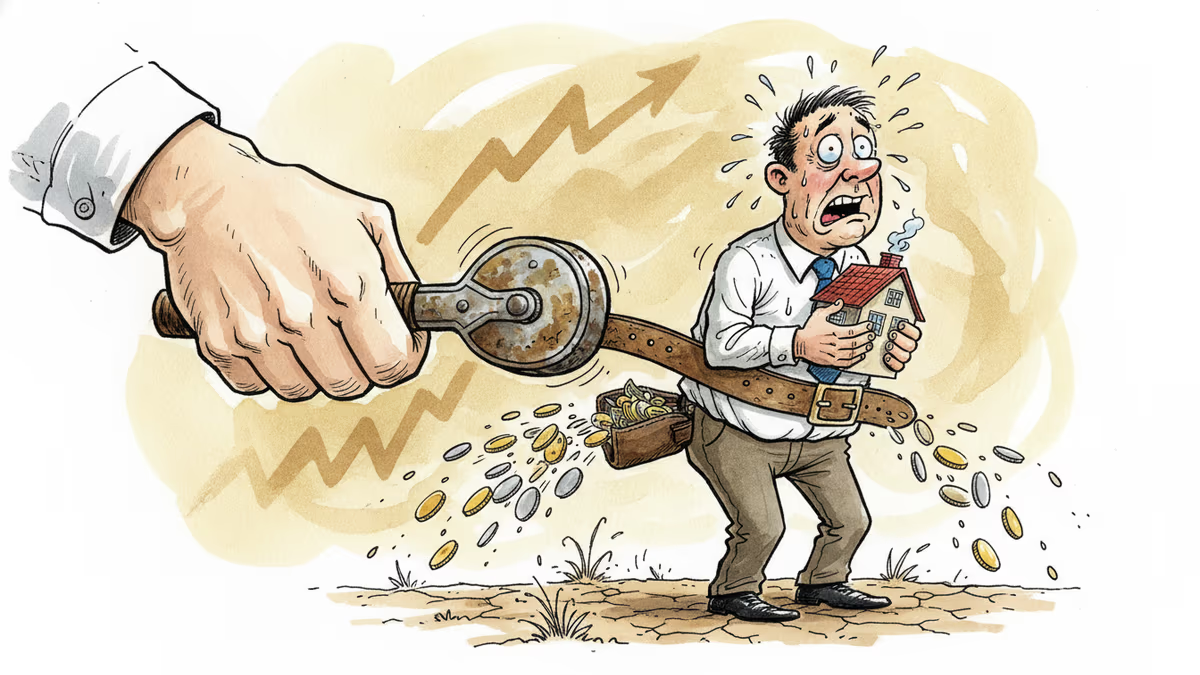
The Bank of Korea lifted its benchmark rate a quarter-point to 2.75%, its first increase in three and a half years. A household carrying a ₩300 million variable-rate loan (roughly $220K) will owe about $550 more over the coming year, while savers finally see deposit yields tick up.
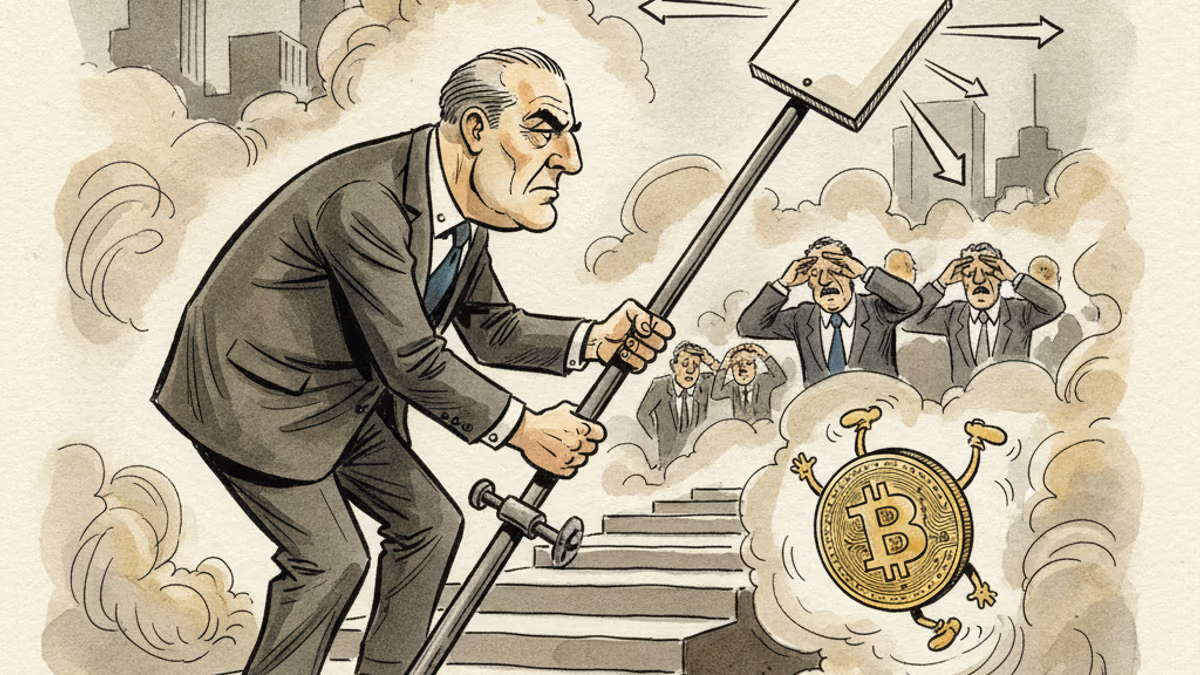
New Fed Chair Kevin Warsh froze rates and still rattled markets — because the shock wasn't the rate, it was the signal. Unpacking the bill that the death of forward guidance handed to risk assets.
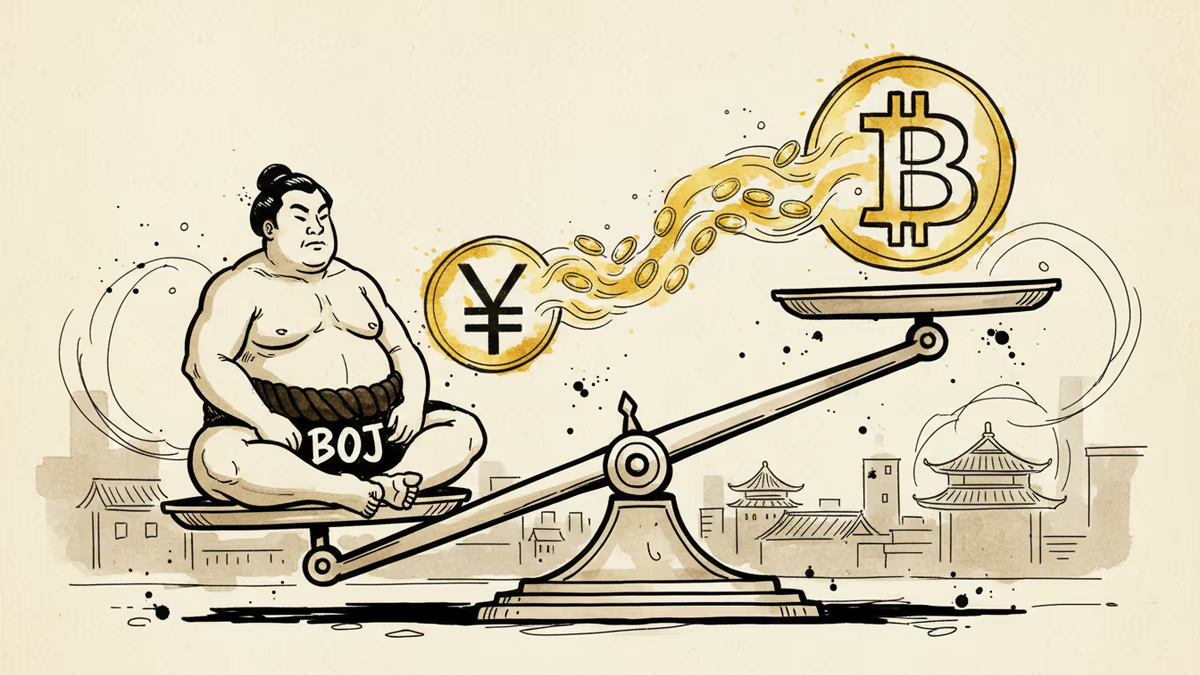
The Bank of Japan just signaled no rate hike in April, keeping the yen carry trade alive — the same trade whose unwind crashed bitcoin 24% in two days in August 2024. Here's what that means for crypto markets now.
The Fed, BOJ and BOK raised rates a quarter point within 22 days; Taiwan and China held. What each said, plus the impact on Korean borrowers and the won.
The Bank of Korea lifted its benchmark rate a quarter-point to 2.75%, its first increase in three and a half years. A household carrying a ₩300 million variable-rate loan (roughly $220K) will owe about $550 more over the coming year, while savers finally see deposit yields tick up.
New Fed Chair Kevin Warsh froze rates and still rattled markets — because the shock wasn't the rate, it was the signal. Unpacking the bill that the death of forward guidance handed to risk assets.
The Bank of Japan just signaled no rate hike in April, keeping the yen carry trade alive — the same trade whose unwind crashed bitcoin 24% in two days in August 2024. Here's what that means for crypto markets now.
Thoughts
Share your thoughts on this article
Sign in to join the conversation