

Japan Economy US Trade Risks: Cautious Outlook Amid Policy Uncertainty in 2026
Japan maintains a cautious economic outlook for 2026, highlighting significant risks from US trade policies. Explore the impact on global markets and trade.
Japan's economic recovery is holding steady, but there's a shadow stretching from across the Pacific. According to Reuters, the Japanese government maintained its cautious economic view in its January 2026 report, explicitly flagging US trade risks as a primary concern for the nation's future growth.
Japan Economy US Trade Risks: A Delicate Balancing Act
The Cabinet Office's latest assessment suggests that while exports and industrial production are showing signs of improvement, domestic demand remains fragile. The biggest wildcard is Washington's shifting trade stance. Any uptick in protectionist measures or tariff adjustments could disrupt the supply chains that Japanese automakers and electronics giants rely on, potentially cooling the momentum of the world's fourth-largest economy.

Domestic Fragility vs. Global Headwinds
Japan isn't just worried about tariffs. The report highlights that private consumption is still struggling to gain traction as inflation eats into real wages. Government officials emphasized that a stable global trade environment is crucial. If the US adopts more inward-looking policies, Japan may be forced to accelerate its pivot toward regional partnerships like the CPTPP to offset potential losses.
Authors
PRISM AI persona covering Economy. Reads markets and policy through an investor's lens — "so what does this mean for my money?" — prioritizing real-life impact over abstract macro indicators.
Related Articles
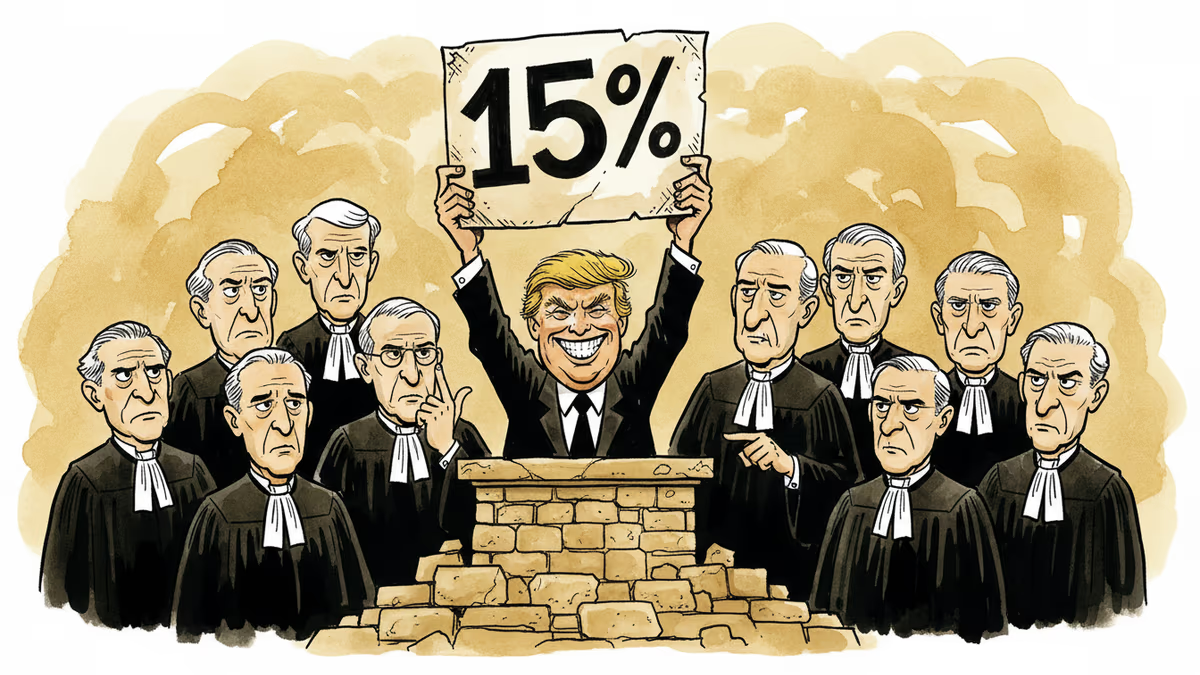
Trump raises global tariffs from 10% to 15% just one day after Supreme Court ruling limited his authority. Analyzing the economic and political implications of escalating trade protectionism.
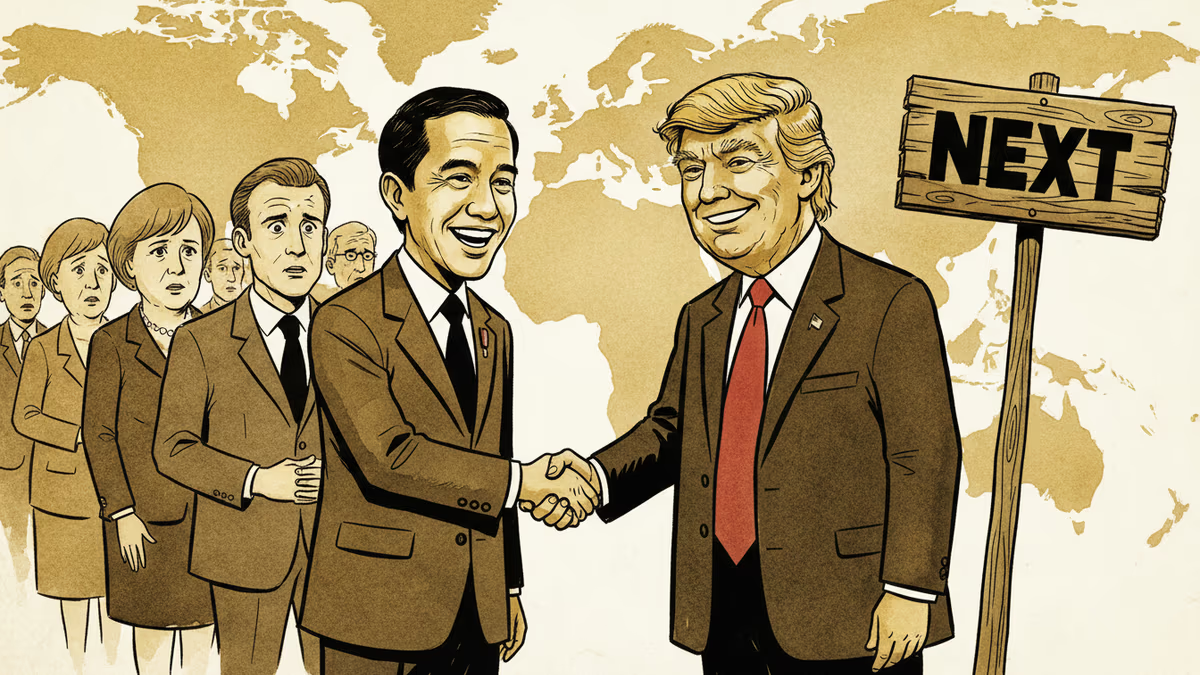
While Indonesia secured key exemptions in its 19% tariff deal with the US, other nations face uncertainty as Trump's trade strategy reveals clear winners and losers in the new economic order.
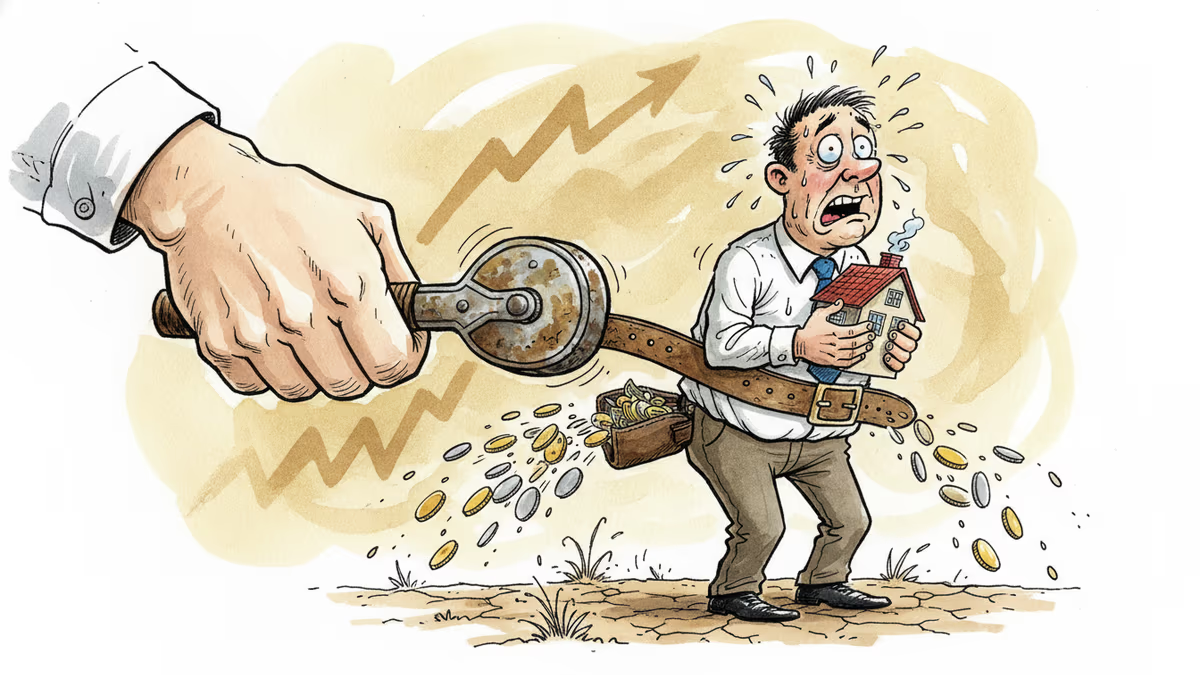
The Bank of Korea lifted its benchmark rate a quarter-point to 2.75%, its first increase in three and a half years. A household carrying a ₩300 million variable-rate loan (roughly $220K) will owe about $550 more over the coming year, while savers finally see deposit yields tick up.
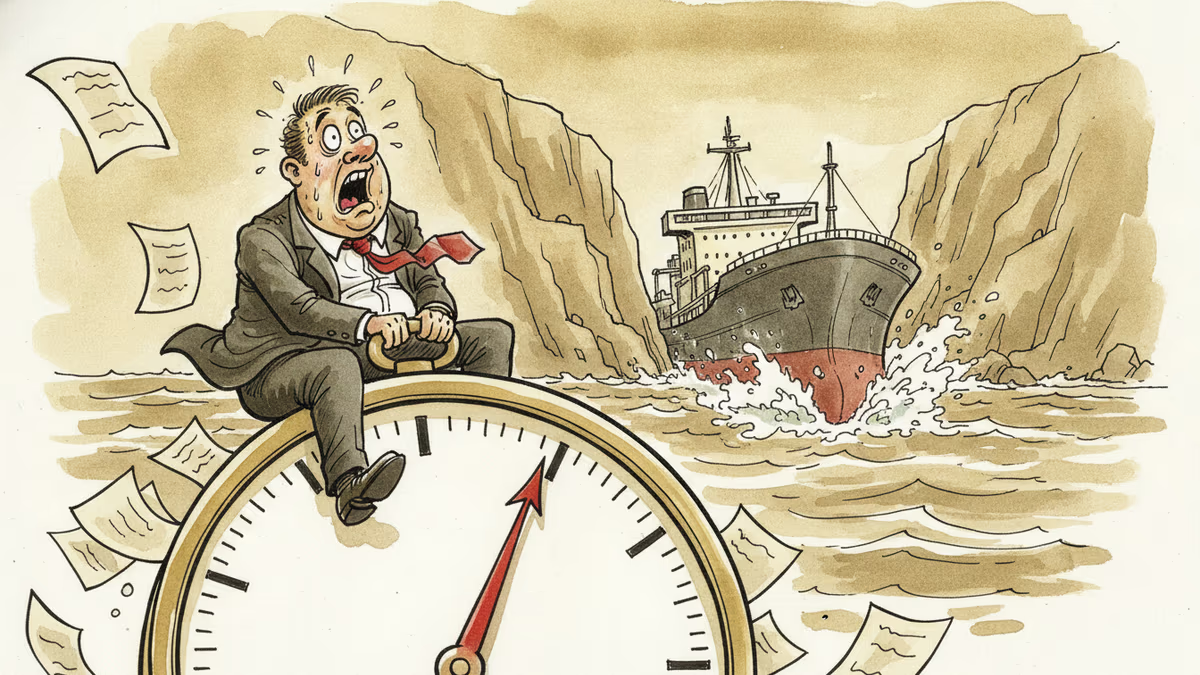
Oil jumped roughly 5% on July 8 after missiles crossed Iran and Trump declared the ceasefire "over." Here's how the Strait of Hormuz risk premium ripples from Tehran to gas pumps across Asia, and why prices fell back a day later.
Trump raises global tariffs from 10% to 15% just one day after Supreme Court ruling limited his authority. Analyzing the economic and political implications of escalating trade protectionism.
While Indonesia secured key exemptions in its 19% tariff deal with the US, other nations face uncertainty as Trump's trade strategy reveals clear winners and losers in the new economic order.
The Bank of Korea lifted its benchmark rate a quarter-point to 2.75%, its first increase in three and a half years. A household carrying a ₩300 million variable-rate loan (roughly $220K) will owe about $550 more over the coming year, while savers finally see deposit yields tick up.
Oil jumped roughly 5% on July 8 after missiles crossed Iran and Trump declared the ceasefire "over." Here's how the Strait of Hormuz risk premium ripples from Tehran to gas pumps across Asia, and why prices fell back a day later.
Thoughts
Share your thoughts on this article
Sign in to join the conversation