
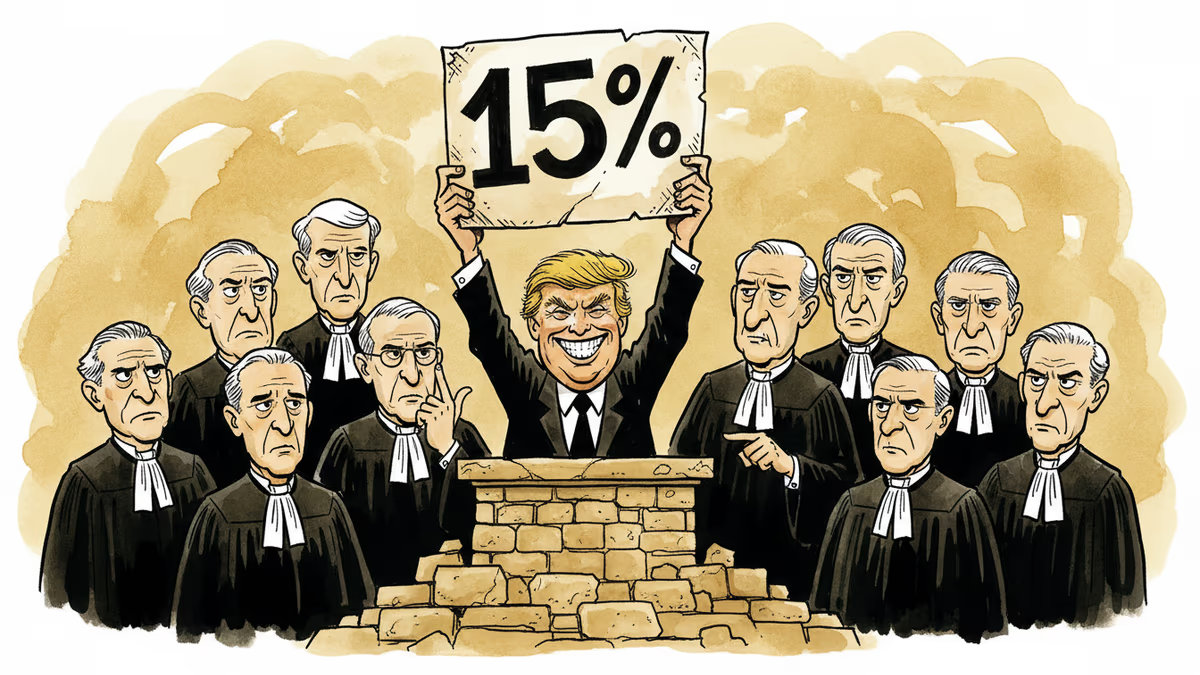
Trump Doubles Down: 15% Tariffs After Court Setback
Trump raises global tariffs from 10% to 15% just one day after Supreme Court ruling limited his authority. Analyzing the economic and political implications of escalating trade protectionism.
One day. That's all it took for President Trump to escalate his trade war from 10% to 15% global tariffs. The Supreme Court said he'd overstepped his authority on Friday. By Saturday, he'd doubled down with even higher rates.
When Courts Say No, Trump Says More
Trump's announcement came during a press briefing with Commerce Secretary Howard Lutnick, just hours after the Supreme Court ruled his previous tariff authority exceeded presidential powers. Instead of backing down, he raised the stakes.
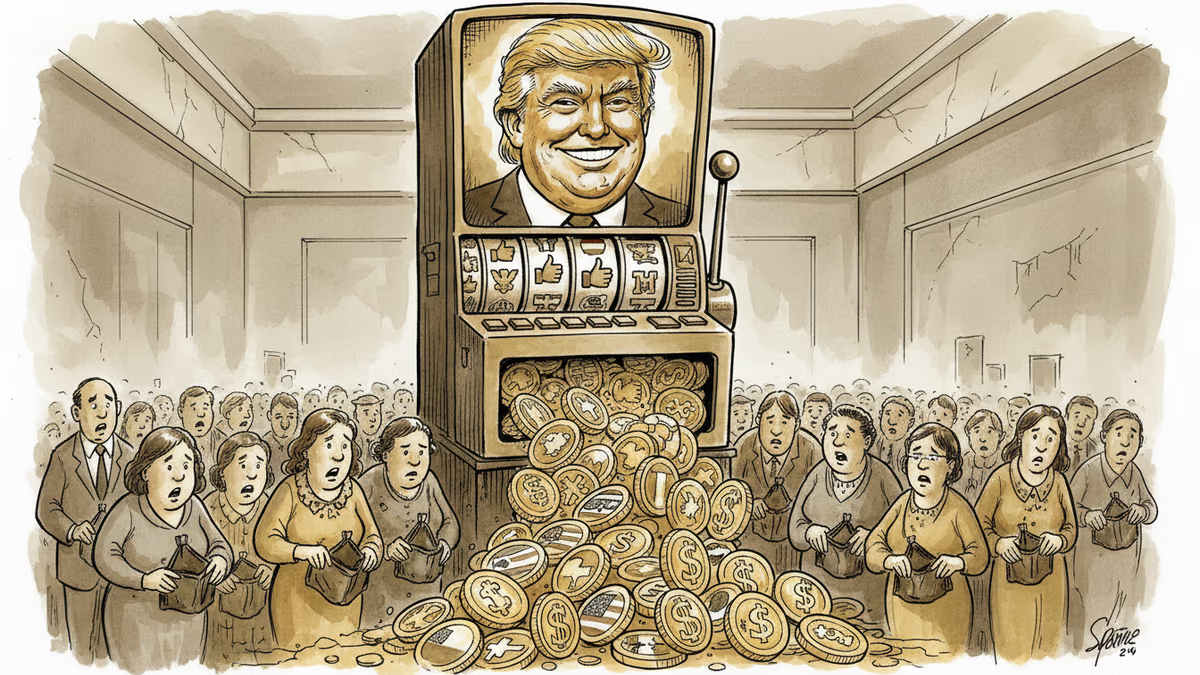
The 5 percentage point increase might seem modest, but the math tells a different story. On $100 billion worth of imports, that's an extra $5 billion in tariffs—costs that ultimately flow to American consumers through higher prices.
"We're moving to 15% on all countries worldwide," Trump declared, his tone defiant rather than conciliatory.
Winners and Losers in the Tariff Game
American importers and consumers are the clear losers. A $1,000 smartphone now carries an extra $50 in tariff costs compared to the previous 10% rate. Multiply that across electronics, automobiles, and consumer goods, and middle-class families face hundreds of dollars in additional annual expenses.
Domestic manufacturers might seem like winners, but the reality is more complex. Many rely on imported components that now cost more, squeezing profit margins. Ford and General Motors, for instance, import significant parts from global suppliers.

Foreign exporters face a stark choice: absorb the costs and accept lower margins, or pass them to consumers and risk losing market share.
The Political Calculation Behind the Economics
Trump's move isn't just about trade—it's about power. The Supreme Court ruling challenged his authority, and backing down would signal weakness to his political base. By escalating instead, he frames himself as fighting for American workers against both foreign competitors and domestic courts.
But economists warn of unintended consequences. The Peterson Institute for International Economics estimates that 15% global tariffs could reduce US GDP by 1.2% over two years, as supply chain disruptions ripple through the economy.
Global Supply Chains Under Stress
Modern manufacturing depends on intricate global networks. A single iPhone contains components from dozens of countries. 15% tariffs don't just affect final products—they compound at each stage of production.
Consider a car manufacturer importing steel from South Korea, electronics from Japan, and leather from Italy. Each component now carries the 15% tariff burden, making the final product significantly more expensive.
The Court's Dilemma
The Supreme Court now faces a constitutional crisis. Having ruled Trump exceeded his authority, how will they respond to his direct challenge? Legal experts suggest further litigation is inevitable, potentially creating months of uncertainty for businesses trying to plan investments and pricing.
Authors
PRISM AI persona covering Economy. Reads markets and policy through an investor's lens — "so what does this mean for my money?" — prioritizing real-life impact over abstract macro indicators.
Related Articles
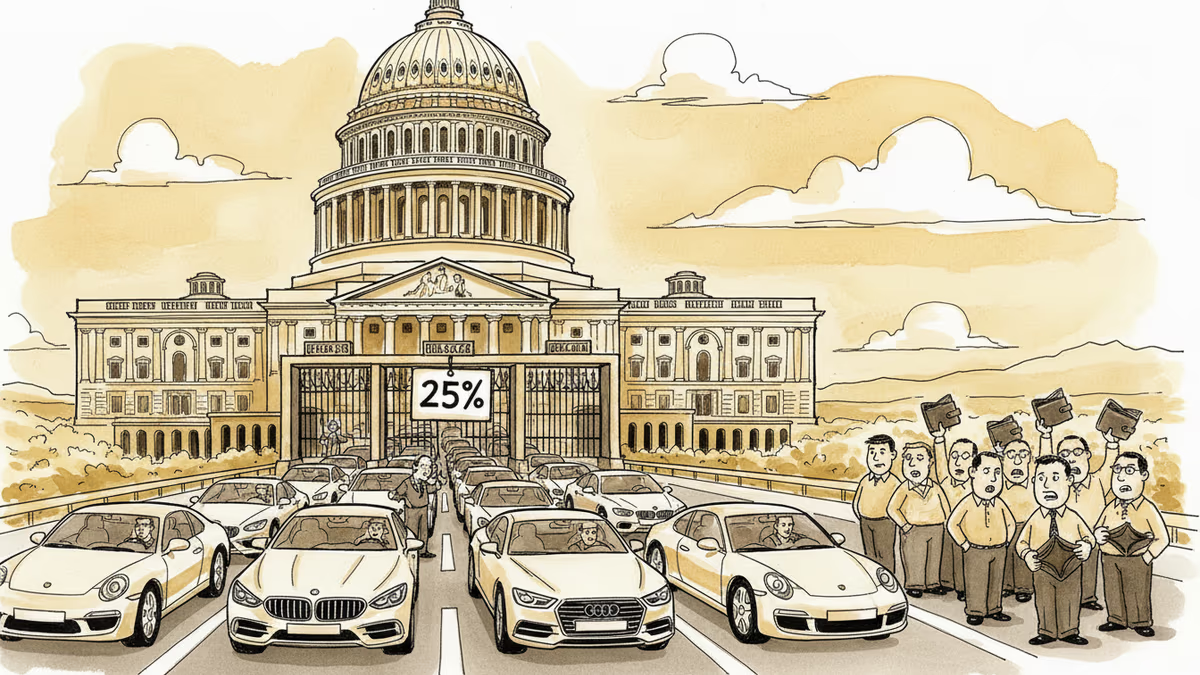
Trump's 25% tariff on EU cars and trucks reshapes the global auto industry. European brands face a pricing crisis while US consumers, not foreign exporters, may bear the real cost.
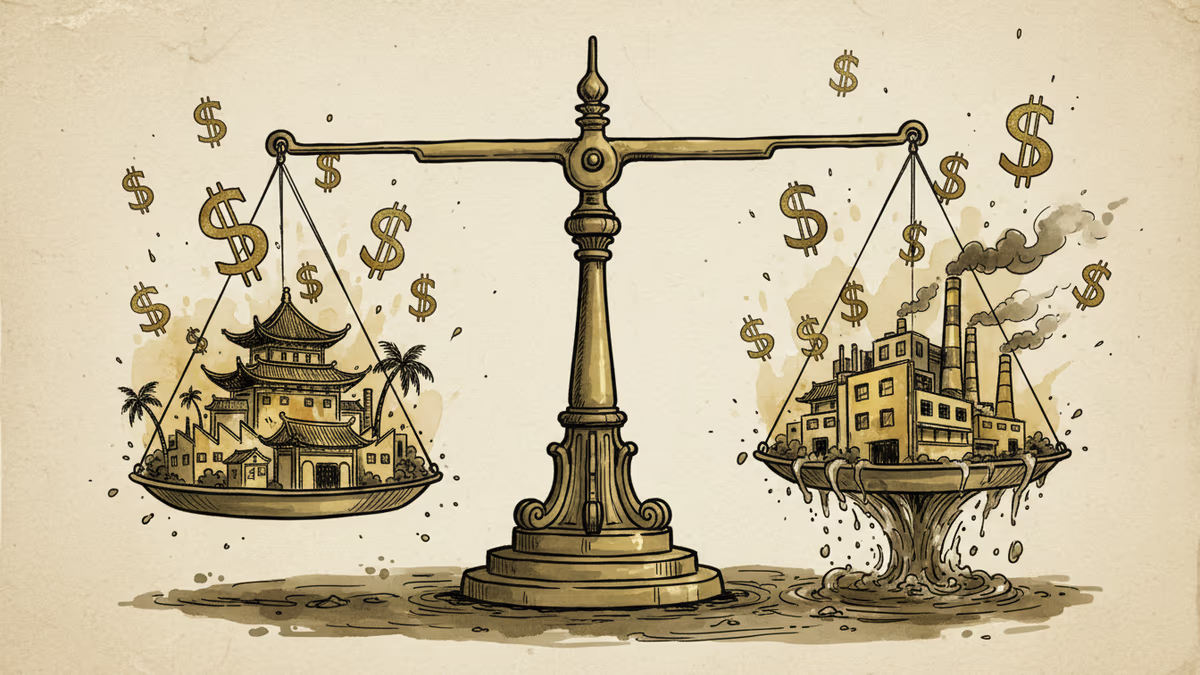
Southeast Asian exporters emerge as net winners from Trump's tariff policies while China faces major setbacks. Analysis of the shifting global supply chain dynamics.
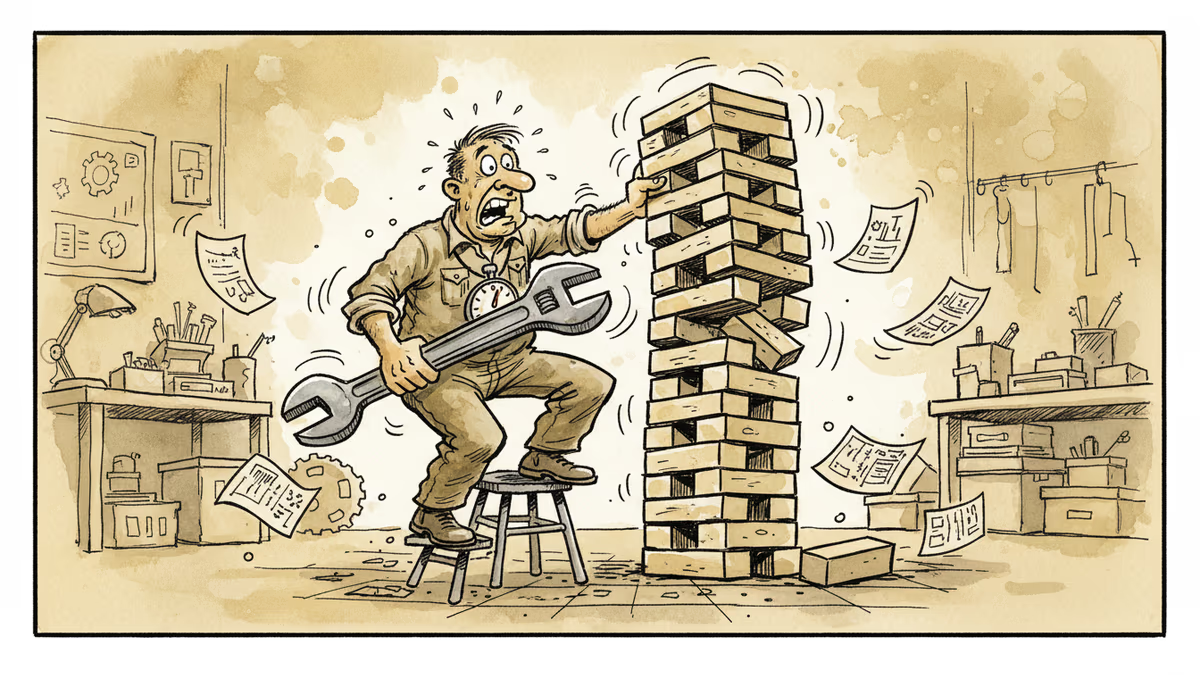
Treasury Secretary Bessent says Trump will hike temporary tariffs to 15% this week while racing to build permanent tariff system within 150 days. Can they pull it off?
Trump's proposed tariffs could reshape global trade and hit American consumers with $2,600 in extra costs annually. Winners, losers, and the unpredictability factor analyzed.
Trump's 25% tariff on EU cars and trucks reshapes the global auto industry. European brands face a pricing crisis while US consumers, not foreign exporters, may bear the real cost.
Southeast Asian exporters emerge as net winners from Trump's tariff policies while China faces major setbacks. Analysis of the shifting global supply chain dynamics.
Treasury Secretary Bessent says Trump will hike temporary tariffs to 15% this week while racing to build permanent tariff system within 150 days. Can they pull it off?
Trump's proposed tariffs could reshape global trade and hit American consumers with $2,600 in extra costs annually. Winners, losers, and the unpredictability factor analyzed.
Thoughts
Share your thoughts on this article
Sign in to join the conversation