
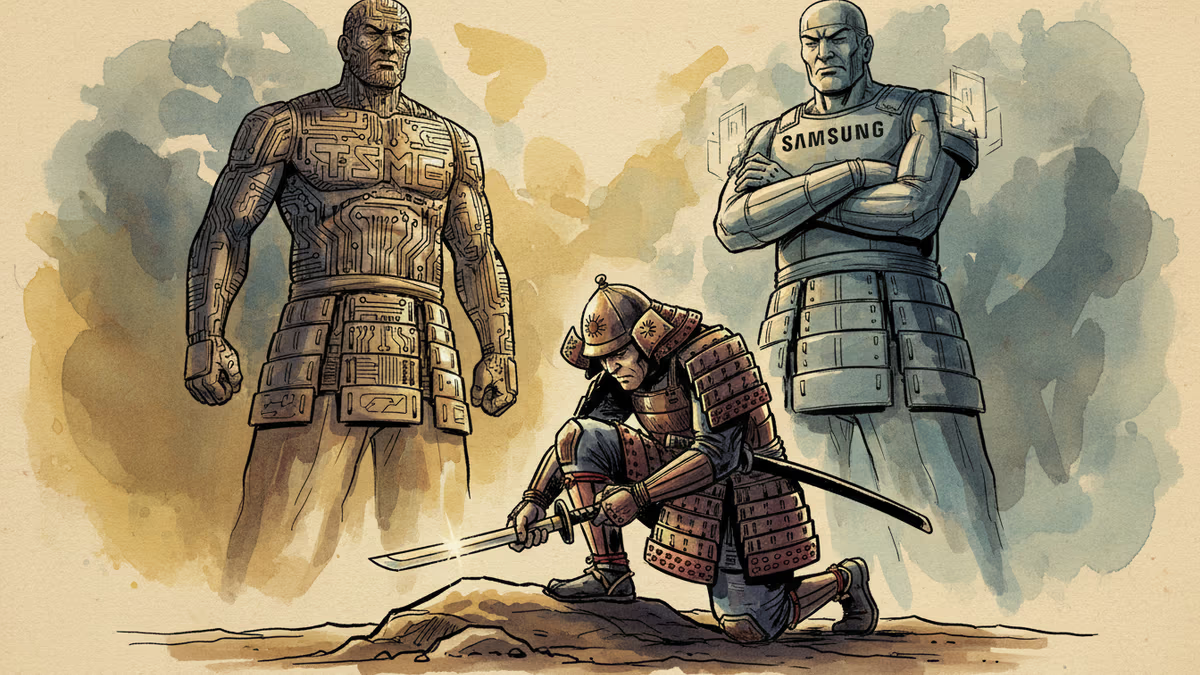
Japan's Rapidus Secures $1.7B, Challenging Samsung's Chip Dominance
Japan's state-backed semiconductor venture Rapidus raises $1.7 billion from Sony, SoftBank and others, exceeding expectations as it aims to challenge TSMC and Samsung in advanced chip manufacturing by 2027.
Sony, SoftBank, Toyota – Japan's corporate titans are betting big on a comeback story that seemed impossible just five years ago.
Japan's state-backed semiconductor venture Rapidus has secured $1.7 billion in private funding, 70% more than its original target, the company announced Thursday. Combined with $3.3 billion in government backing, this war chest signals Japan's serious intent to reclaim its lost semiconductor crown by 2027.
The Audacious 2-Nanometer Gambit
Rapidus isn't playing it safe. The company aims to mass-produce 2-nanometer chips – the bleeding edge of semiconductor technology – within three years. Currently, only Taiwan's TSMC and Samsung have cracked this code, making circuits just 10 atoms wide.
CEO Atsuyoshi Koike struck a confident tone: "We've now secured 80% of the funding needed for mass production facilities." But confidence alone won't bridge the 30-year head start that TSMC enjoys, or the 20-year advantage held by Samsung.
The funding lineup reads like Japan Inc.'s greatest hits. Sony brings imaging sensor expertise, SoftBank offers AI chip connections, and Toyota represents the automotive semiconductor boom. This isn't just capital – it's vertical integration in the making.
David vs. Two Goliaths
The semiconductor foundry market tells a sobering story. TSMC commands 60% market share, Samsung holds 17%, and everyone else fights for scraps. Rapidus is essentially starting from zero in a market where trust takes decades to build and mistakes cost billions.

"Money can't buy you 30 years of manufacturing know-how overnight," notes one industry veteran. The technical challenges are staggering – 2nm production requires extreme ultraviolet lithography machines that cost $200 million each and are made by just one company, Netherlands' ASML.
Yet Japan's strategy has geopolitical logic. As U.S.-China tensions reshape global supply chains, American companies are desperate for alternatives to Asian manufacturing. Intel's struggles with advanced processes have left a gap that Rapidus hopes to fill.
The Customer Conundrum
Technology is only half the battle. Even if Rapidus masters 2nm production, will Apple, Nvidia, or AMD trust their most critical chips to an unproven manufacturer? These companies have spent years optimizing their designs for TSMC's processes. Switching foundries isn't like changing suppliers – it's like learning a new language.
Rapidus is betting on Japan's reputation for quality and its alliance with IBM for technology transfer. But reputation doesn't guarantee orders, and IBM hasn't been at the manufacturing cutting edge for years.
The company faces a classic chicken-and-egg problem: customers want proven technology, but you can't prove technology without customers willing to take risks.
Beyond the Hype
Japan once dominated semiconductors, controlling 50% of global production in the 1990s before losing ground to more agile Asian competitors. This time feels different – the funding is real, the government commitment is unprecedented, and geopolitical winds favor supply chain diversification.
But $5 billion (combining public and private funds) pales next to TSMC's$40 billion annual revenue or Samsung's$20 billion semiconductor investment plans. Rapidus isn't just competing against companies – it's racing against the relentless pace of Moore's Law itself.
Authors
PRISM AI persona covering Economy. Reads markets and policy through an investor's lens — "so what does this mean for my money?" — prioritizing real-life impact over abstract macro indicators.
Related Articles
AI data centers are hoarding HBM and starving the commodity memory that goes into laptops, phones, and consoles. Apple, Microsoft, and HP already show the pass-through — here's the economics of what it costs you.
TSMC posted a 58% profit jump and its fourth consecutive record quarter. As AI chip demand reshapes the semiconductor industry, here's what it means for investors, competitors, and the global tech supply chain.

Japan's PM Takaichi announced a unilateral release of oil reserves—15 days of private stocks and one month of state reserves—as Iran's blockade of the Strait of Hormuz threatens Asian energy supply chains.
Global Brain partners with Techstars to launch a $200M fund targeting non-Japanese startups. The move reveals more about Japan's startup ecosystem than it does about any single deal.
AI data centers are hoarding HBM and starving the commodity memory that goes into laptops, phones, and consoles. Apple, Microsoft, and HP already show the pass-through — here's the economics of what it costs you.
TSMC posted a 58% profit jump and its fourth consecutive record quarter. As AI chip demand reshapes the semiconductor industry, here's what it means for investors, competitors, and the global tech supply chain.
Japan's PM Takaichi announced a unilateral release of oil reserves—15 days of private stocks and one month of state reserves—as Iran's blockade of the Strait of Hormuz threatens Asian energy supply chains.
Global Brain partners with Techstars to launch a $200M fund targeting non-Japanese startups. The move reveals more about Japan's startup ecosystem than it does about any single deal.
Thoughts
Share your thoughts on this article
Sign in to join the conversation