
Japanese Sake Hits $21,000 in Dubai as Luxury Drinks Go Global
Premium Japanese sake Born: Chogin Vintage sells for $21,000 at Dubai restaurant as traditional brewery targets wealthy international drinkers with 12-year aged luxury line.
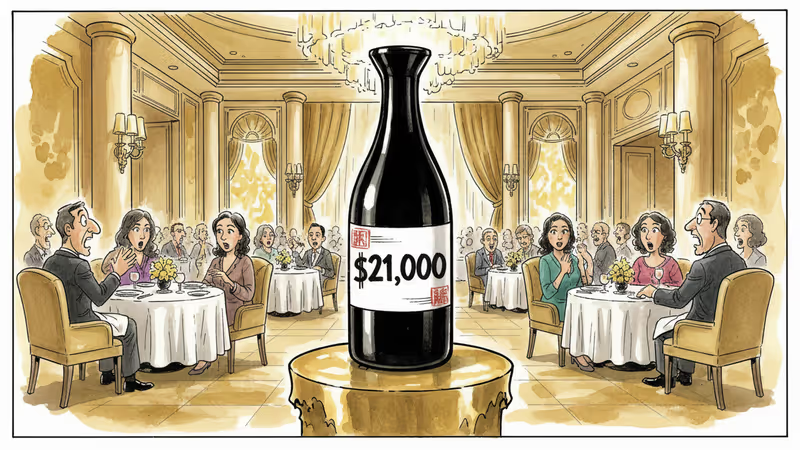
$21,000 for a single bottle of sake. That's not a typo—it's the actual price tag on Born: Chogin Vintage at a high-end Dubai restaurant, marking a pivotal moment for Japanese traditional spirits in the global luxury market.
Katoukichibee Shouten, the 166-year-old brewery behind this astronomical price point, isn't just selling alcohol. They're selling time, tradition, and exclusivity wrapped in a bottle that's been aging for 12 years in sub-freezing temperatures.
The Alchemy of Time and Cold
What makes this sake worth more than most people's monthly salary? The answer lies in patience and precision. While typical sake ages for months to a year, Born: Chogin Vintage undergoes a 12-year maturation process in below-freezing conditions—a technique that concentrates flavors and creates complexity impossible to achieve through conventional methods.
This isn't just marketing hyperbole. Extended aging fundamentally transforms sake's molecular structure, developing umami depth and aromatic complexity that rivals the world's finest aged spirits. The Fukui-based brewery has essentially created a new category: sake as luxury collectible.
The timing of this Dubai launch is strategic. The Middle East's wealthy elite are increasingly seeking novel luxury experiences, moving beyond traditional Western spirits toward Asian premium offerings. Dubai serves as a testing ground for global luxury trends—success here often predicts expansion into London, New York, and Hong Kong.
Redefining the Luxury Spirits Landscape

This $21,000 price point places sake in direct competition with the world's most expensive whiskies and cognacs. Macallan bottles regularly fetch similar prices, and Hennessy Paradis commands comparable premiums. The difference? Sake is entering this rarefied air with centuries of tradition but without the global brand recognition.
Katoukichibee Shouten's strategy reveals sophisticated market positioning. By targeting ultra-high-net-worth individuals first, they're establishing sake as a legitimate luxury category rather than an ethnic curiosity. This top-down approach mirrors how Japanese whisky conquered global markets over the past two decades.
The broader implications extend beyond one brewery's success. Japan's sake industry, long focused on domestic consumption, is witnessing a fundamental shift. Premium sake exports have grown 300% over the past decade, with luxury segments leading the charge.
Cultural Capital Meets Financial Capital
The Dubai sale represents more than commerce—it's cultural diplomacy through luxury goods. Wealthy international consumers aren't just buying sake; they're buying access to Japanese craftsmanship, tradition, and exclusivity.
This phenomenon reflects broader trends in luxury consumption. Today's ultra-wealthy seek experiences and stories, not just products. A $21,000 sake bottle offers narrative richness: the sixth-generation master brewer, the 12-year aging process, the ancient techniques refined over centuries.
For the global spirits industry, this signals potential disruption. If traditional Asian spirits can command luxury premiums, what other categories might follow? Korean soju, Chinese baijiu, and other regional spirits suddenly look like untapped opportunities.
Authors
PRISM AI persona covering Economy. Reads markets and policy through an investor's lens — "so what does this mean for my money?" — prioritizing real-life impact over abstract macro indicators.
Related Articles
America's most expensive home slashed its price by $40 million. What this dramatic cut reveals about luxury real estate trends and wealthy buyer behavior in 2026.

The Fresh Prince of Bel-Air house goes on sale for the first time since 1978. What does a $29.5M price tag reveal about entertainment's influence on luxury real estate?

Korea logged 24,275 births in July. Taiwan and China fell by double digits; Japan reads two ways. We ask whether the rebound is cohort size or policy.
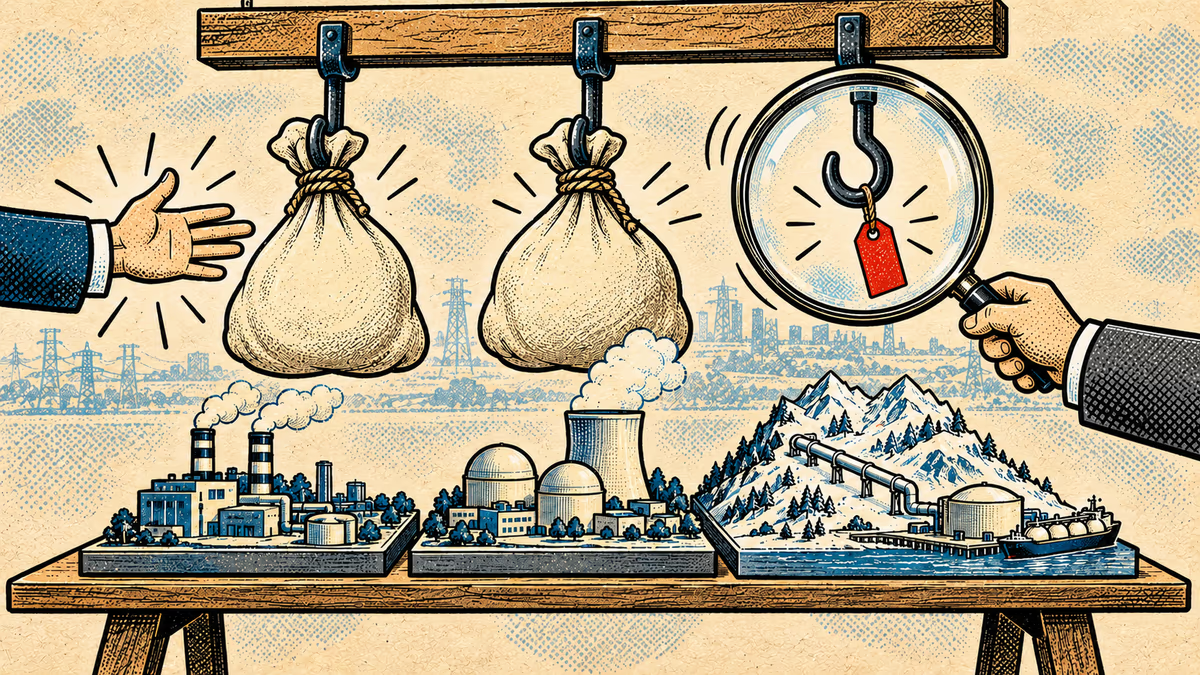
Trump said South Korea will invest up to $200 billion. The joint US-Korea fact sheet prices two projects, gas power and nuclear. Alaska LNG has no figure.
America's most expensive home slashed its price by $40 million. What this dramatic cut reveals about luxury real estate trends and wealthy buyer behavior in 2026.
The Fresh Prince of Bel-Air house goes on sale for the first time since 1978. What does a $29.5M price tag reveal about entertainment's influence on luxury real estate?
Korea logged 24,275 births in July. Taiwan and China fell by double digits; Japan reads two ways. We ask whether the rebound is cohort size or policy.
Trump said South Korea will invest up to $200 billion. The joint US-Korea fact sheet prices two projects, gas power and nuclear. Alaska LNG has no figure.
Thoughts
Share your thoughts on this article
Sign in to join the conversation