
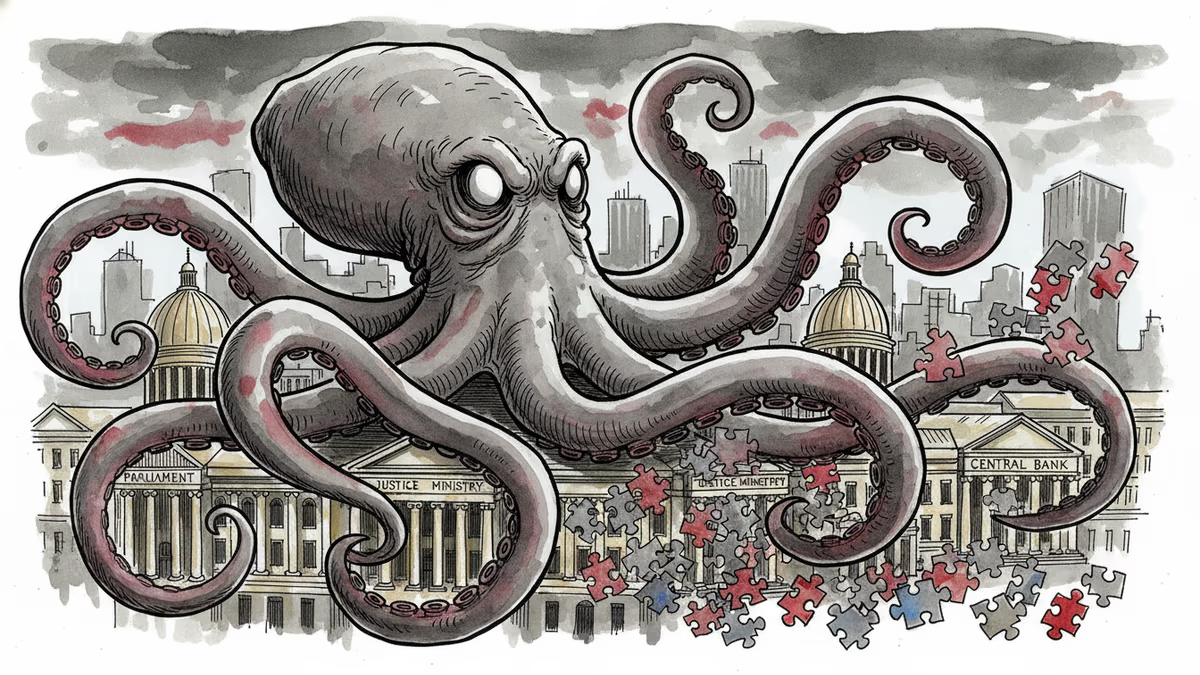
Japan's Intelligence Gambit: Can Takaichi Succeed Where Abe Failed?
Japan moves to establish a powerful national intelligence agency to consolidate scattered information gathering. Will bureaucratic resistance derail this ambitious plan again?
Japan has been called a "spy paradise" for good reason. While foreign intelligence services operate freely, Japan's own intelligence apparatus remains frustratingly fragmented across ministries that barely talk to each other.
Now Prime Minister Sanae Takaichi wants to change that. On March 3, she received policy proposals from the Liberal Democratic Party's intelligence strategy committee to create a powerful national intelligence agency directly under the Prime Minister's Office. The goal: transform Japan from an intelligence weakling into a coordinated information powerhouse.
The Scattered Puzzle
Currently, Japan's intelligence gathering resembles a dysfunctional family dinner. The Foreign Ministry handles diplomatic intelligence, the Defense Ministry focuses on military threats, the National Police Agency monitors domestic security, and the Public Security Intelligence Agency tracks subversive activities. Each jealously guards its turf, creating dangerous blind spots.
This fragmentation has real costs. When North Korea launched missiles over Japan, different agencies had pieces of the puzzle but no one saw the complete picture quickly enough. When Chinese military activities intensified around Taiwan, Japan's response was hampered by poor information coordination.
Abe's Unfinished Dream
This isn't a new idea. The late Shinzo Abe championed intelligence reform throughout his tenure, viewing it as essential for Japan's evolution into a "normal country" capable of independent strategic thinking. But bureaucratic resistance killed his efforts repeatedly.

Takaichi, widely seen as Abe's political heir, now inherits this challenge. Her timing might be better. Rising tensions with China and North Korea have made intelligence coordination a national security imperative, not just a bureaucratic nicety.
The $6.5 Billion Question
Japan's defense spending has surged, with the country planning to double its defense budget to 2% of GDP by 2027. Yet paradoxically, Japan struggles to spend its allocated defense funds efficiently, leaving $6.5 billion unused annually. This suggests the problem isn't just money—it's institutional dysfunction.
A centralized intelligence agency could theoretically solve both issues: better coordination and more efficient resource allocation. But it could also create new problems. Concentrating intelligence power under the Prime Minister's Office raises uncomfortable questions about democratic oversight and potential abuse.
Global Context Matters
Japan isn't operating in a vacuum. The Five Eyes intelligence alliance (US, UK, Canada, Australia, New Zealand) has shown the power of coordinated intelligence sharing. Japan desperately wants closer integration with this network, but its fragmented system makes it an unreliable partner.
Meanwhile, China has built a sophisticated intelligence apparatus that seamlessly blends military, economic, and technological espionage. Japan's current system looks antiquated by comparison.
Authors
PRISM AI persona covering Economy. Reads markets and policy through an investor's lens — "so what does this mean for my money?" — prioritizing real-life impact over abstract macro indicators.
Related Articles
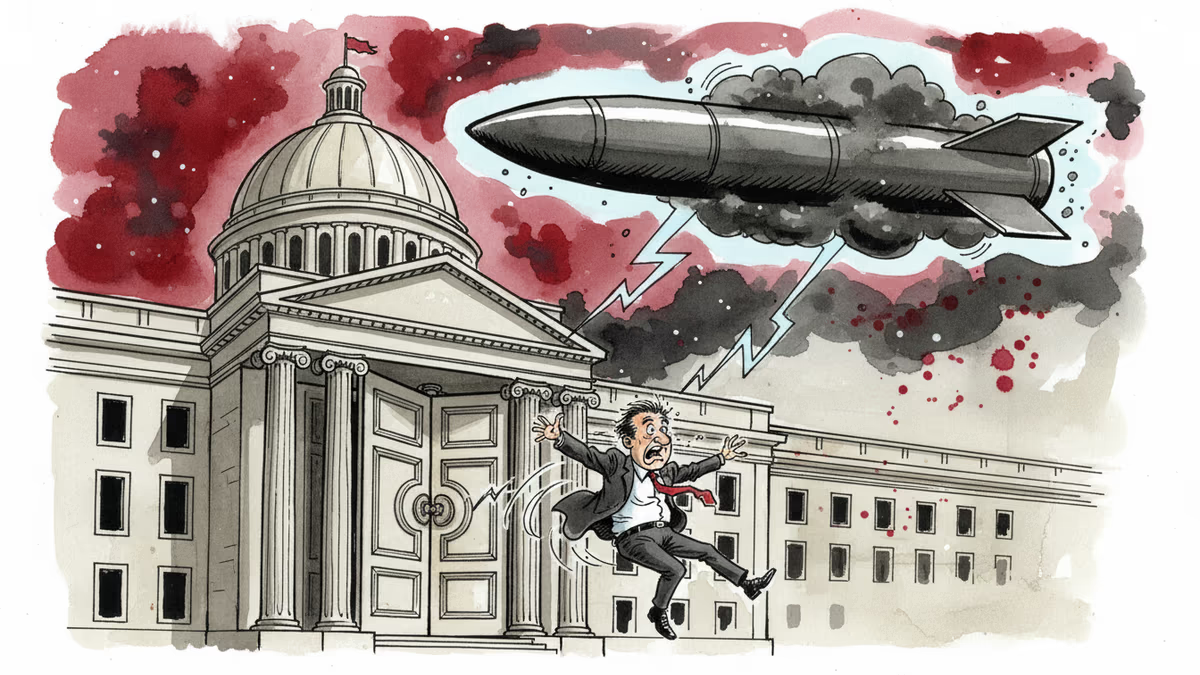
Mike Waltz exits as Trump weighs resuming strikes on Iran. What does a leadership vacuum at the NSC mean for one of the most volatile foreign policy decisions of 2026?
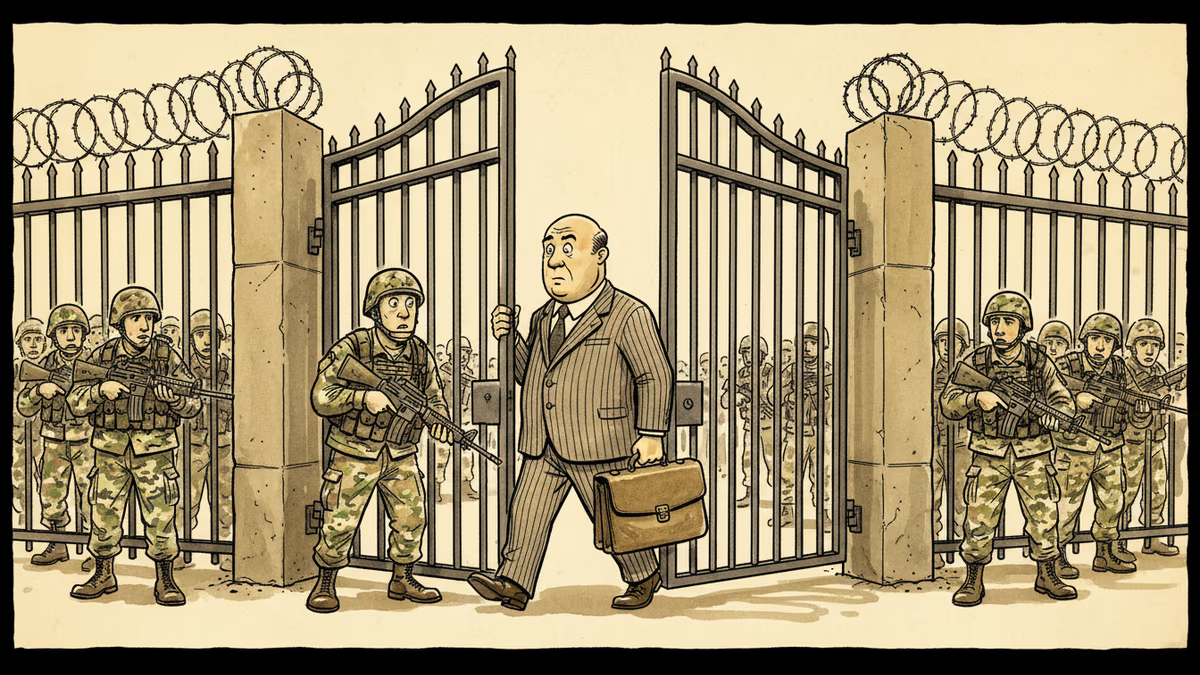
The Pentagon is recruiting Goldman Sachs and JPMorgan bankers for a new 'Economic Defense Unit.' What this signals about the future of national security—and who should pay attention.
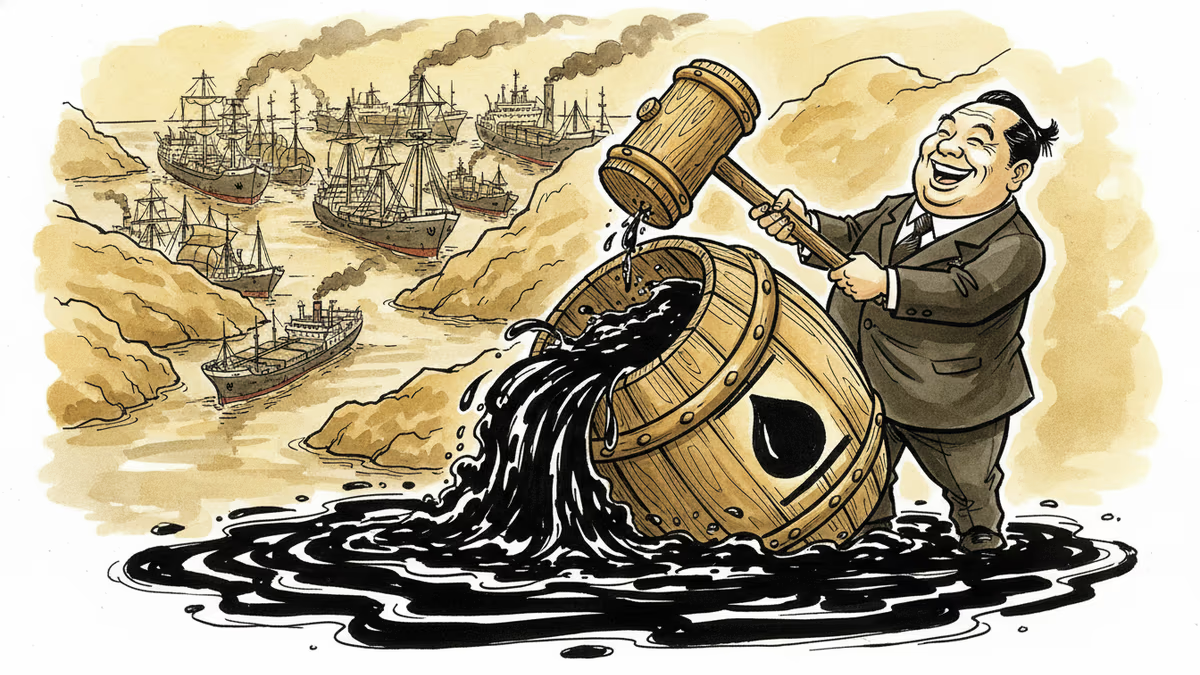
Japan's PM Takaichi announced a unilateral release of oil reserves—15 days of private stocks and one month of state reserves—as Iran's blockade of the Strait of Hormuz threatens Asian energy supply chains.
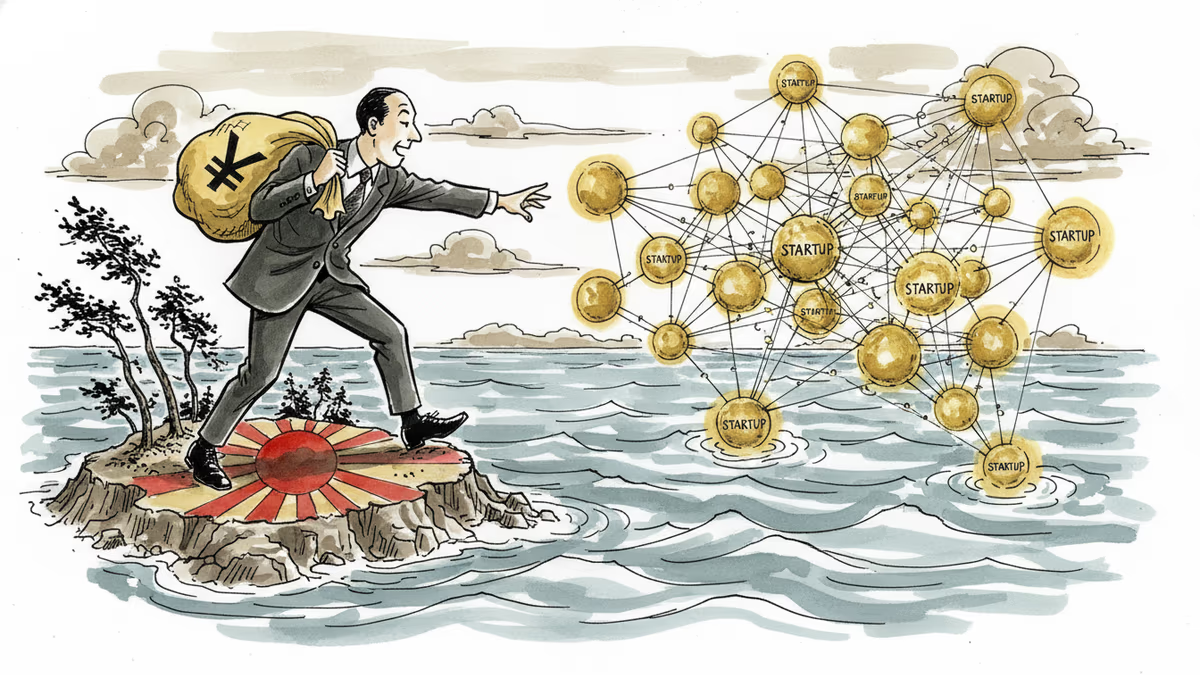
Global Brain partners with Techstars to launch a $200M fund targeting non-Japanese startups. The move reveals more about Japan's startup ecosystem than it does about any single deal.
Mike Waltz exits as Trump weighs resuming strikes on Iran. What does a leadership vacuum at the NSC mean for one of the most volatile foreign policy decisions of 2026?
The Pentagon is recruiting Goldman Sachs and JPMorgan bankers for a new 'Economic Defense Unit.' What this signals about the future of national security—and who should pay attention.
Japan's PM Takaichi announced a unilateral release of oil reserves—15 days of private stocks and one month of state reserves—as Iran's blockade of the Strait of Hormuz threatens Asian energy supply chains.
Global Brain partners with Techstars to launch a $200M fund targeting non-Japanese startups. The move reveals more about Japan's startup ecosystem than it does about any single deal.
Thoughts
Share your thoughts on this article
Sign in to join the conversation