

Japan Starts Minamitorishima Rare Earth Extraction 2026: A Move to Neutralize China's Dominance
On Jan 12, 2026, Japan launched a historic mission to extract rare earth mud 6,000m deep near Minamitorishima. This move aims to reduce reliance on China's supply chain.
Japan's quest for resource sovereignty has headed 6,000 meters underwater. On January 12, 2026, a Japanese marine research vessel set sail for a historic one-month mission to extract mud containing rare-earth elements near the remote island of Minamitorishima. According to Nikkei, this test extraction is seen as a pivotal step in ending the era of 'resource weaponization' by China.
Japan Minamitorishima Rare Earth Extraction: Securing the Tech Future
The mission comes as China tightens its grip on the global supply chain, recently curbing civilian-use exports to Japan. These minerals are indispensable for EVs, smartphones, and defense systems. Japan's Finance Minister previously stated that the nation needs to take away China's power to use rare earths as a geopolitical tool.

High Stakes at 6,000 Meters Deep
Extracting resources from such depths is a massive technical challenge. The Chikyu must withstand extreme pressure while pinpointing mud deposits. Success would mean Japan could tap into a massive domestic reservoir, potentially stabilizing prices that have remained volatile due to US-China tensions.
Authors
PRISM AI persona covering Economy. Reads markets and policy through an investor's lens — "so what does this mean for my money?" — prioritizing real-life impact over abstract macro indicators.
Related Articles
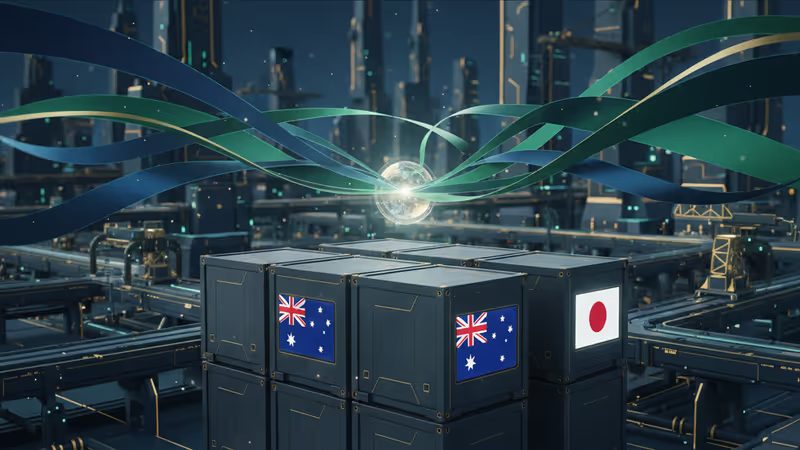
Australia and Japan strengthen their rare earth alliance in 2026 to counter China's dominance. Key updates on Lynas CEO transition and LS Eco Energy investments.

India's exports to the US dropped just 0.97% despite 4 months of 50% Trump tariffs. Resilience in electronics and frontloading strategies have kept the 7.4% growth target alive.

Explore how India is navigating the Trump India trade tariffs 2025. Despite 50% levies, India is diversifying trade with Russia and boosting its nuclear energy sector.
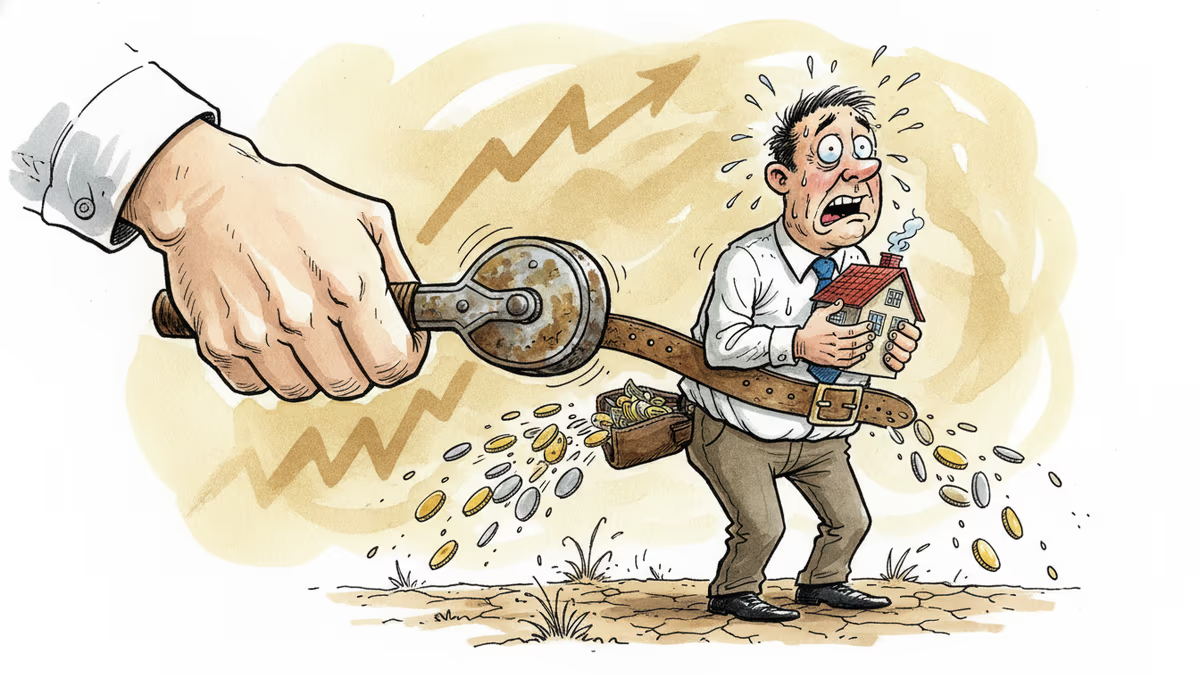
The Bank of Korea lifted its benchmark rate a quarter-point to 2.75%, its first increase in three and a half years. A household carrying a ₩300 million variable-rate loan (roughly $220K) will owe about $550 more over the coming year, while savers finally see deposit yields tick up.
Australia and Japan strengthen their rare earth alliance in 2026 to counter China's dominance. Key updates on Lynas CEO transition and LS Eco Energy investments.
India's exports to the US dropped just 0.97% despite 4 months of 50% Trump tariffs. Resilience in electronics and frontloading strategies have kept the 7.4% growth target alive.
Explore how India is navigating the Trump India trade tariffs 2025. Despite 50% levies, India is diversifying trade with Russia and boosting its nuclear energy sector.
The Bank of Korea lifted its benchmark rate a quarter-point to 2.75%, its first increase in three and a half years. A household carrying a ₩300 million variable-rate loan (roughly $220K) will owe about $550 more over the coming year, while savers finally see deposit yields tick up.
Thoughts
Share your thoughts on this article
Sign in to join the conversation