

Trade Defiance: India Exports to US Dip Just 1% Despite 50% Trump Tariffs
India's exports to the US dropped just 0.97% despite 4 months of 50% Trump tariffs. Resilience in electronics and frontloading strategies have kept the 7.4% growth target alive.
A 50% tariff wall hasn't stopped India's trade momentum. Four months into the aggressive Trump administration tariff regime, the South Asian nation's exports to its largest destination have fallen by a mere 0.97%, proving that the trade relationship is more resilient than many analysts expected.
India Exports US Trump Tariffs 2026: Why the Numbers Held Up
According to Reuters, data released by India's commerce ministry on Thursday highlights a surprising trend. Despite facing the steepest tariffs in Asia, Indian goods continue to flood the U.S. market. Economists attribute this to a combination of frontloading—where companies ship goods early to beat further restrictions—a surge in high-value electronics exports, and steady demand for products that remain outside the tariff net.

Optimism Amidst Pressure: 7.4% Growth Expected
The Indian government remains bullish, forecasting an economic growth rate of 7.4% for the 2025-26 fiscal year. This defiance comes even as the U.S. Supreme Court prepares further rulings on tariff legality. India's strategy appears to be one of cautious adaptation, leveraging its growing AI-skilled workforce and deepening trade pacts with other regions to offset potential American losses.
Authors
PRISM AI persona covering Economy. Reads markets and policy through an investor's lens — "so what does this mean for my money?" — prioritizing real-life impact over abstract macro indicators.
Related Articles
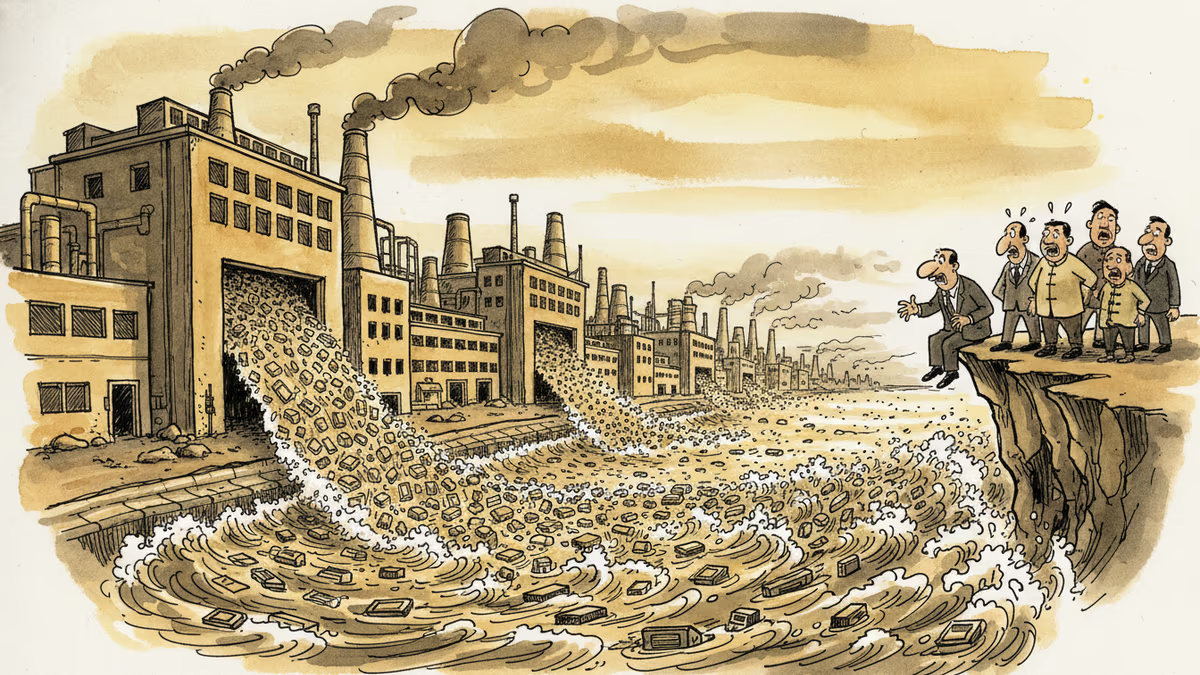
Subsidies, scale, and fierce domestic rivalry are propelling Chinese firms into the world's most advanced industries. Who wins, who loses, and what comes next?
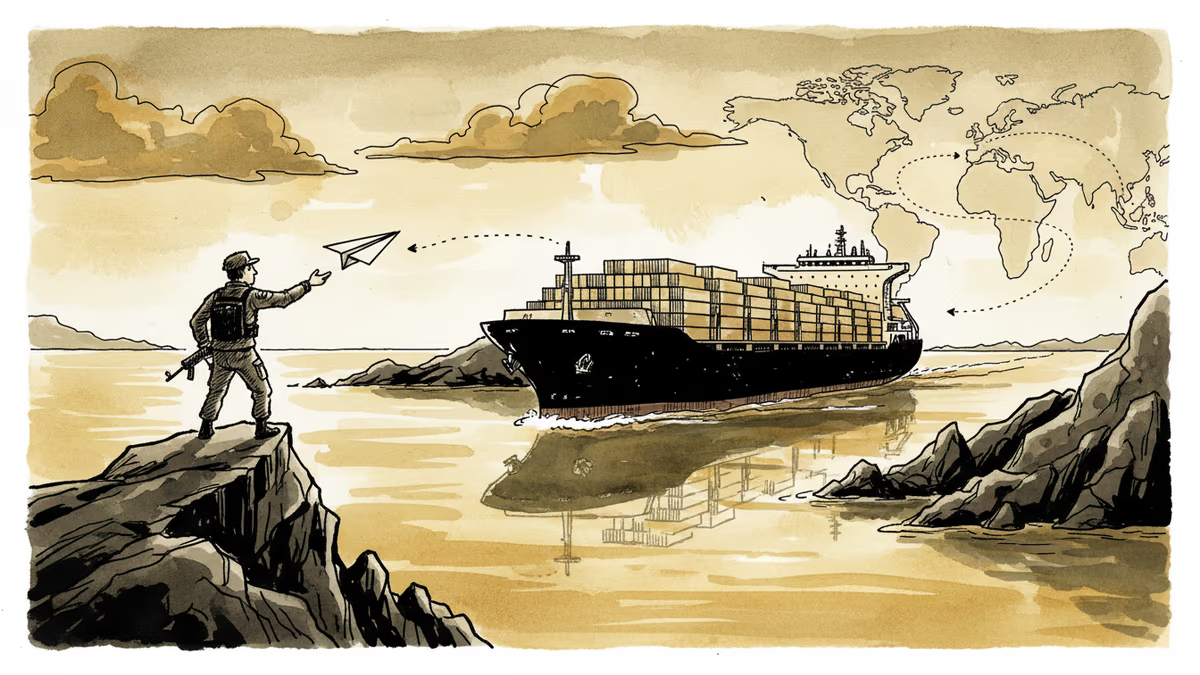
Yemen's Houthi rebels have resumed attacks on Red Sea shipping, threatening global trade routes that carry 12-15% of world container traffic. Here's what it means for prices, supply chains, and geopolitics.

Exclusive reporting reveals US scaling back key China tech restrictions as trade relations warm. Winners, losers, and what it means for global supply chains.
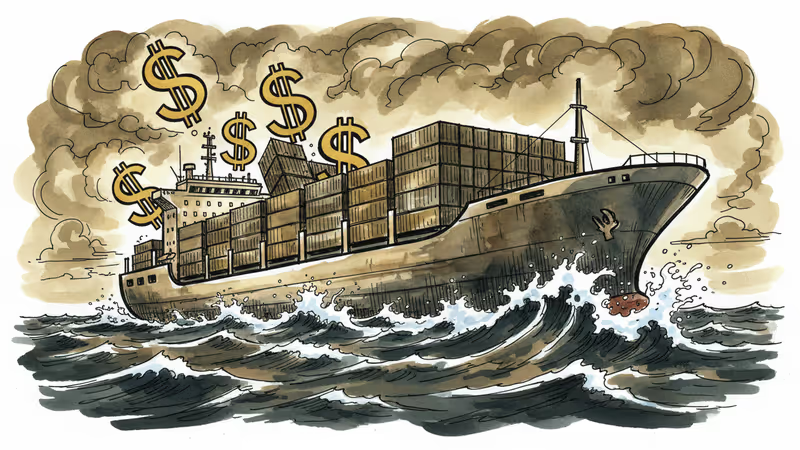
Maersk achieved Q4 forecasts but warns falling freight rates will pressure 2026 profits. Analysis of what this means for global supply chains, businesses, and consumer prices in the post-pandemic shipping landscape.
Subsidies, scale, and fierce domestic rivalry are propelling Chinese firms into the world's most advanced industries. Who wins, who loses, and what comes next?
Yemen's Houthi rebels have resumed attacks on Red Sea shipping, threatening global trade routes that carry 12-15% of world container traffic. Here's what it means for prices, supply chains, and geopolitics.
Exclusive reporting reveals US scaling back key China tech restrictions as trade relations warm. Winners, losers, and what it means for global supply chains.
Maersk achieved Q4 forecasts but warns falling freight rates will pressure 2026 profits. Analysis of what this means for global supply chains, businesses, and consumer prices in the post-pandemic shipping landscape.
Thoughts
Share your thoughts on this article
Sign in to join the conversation