
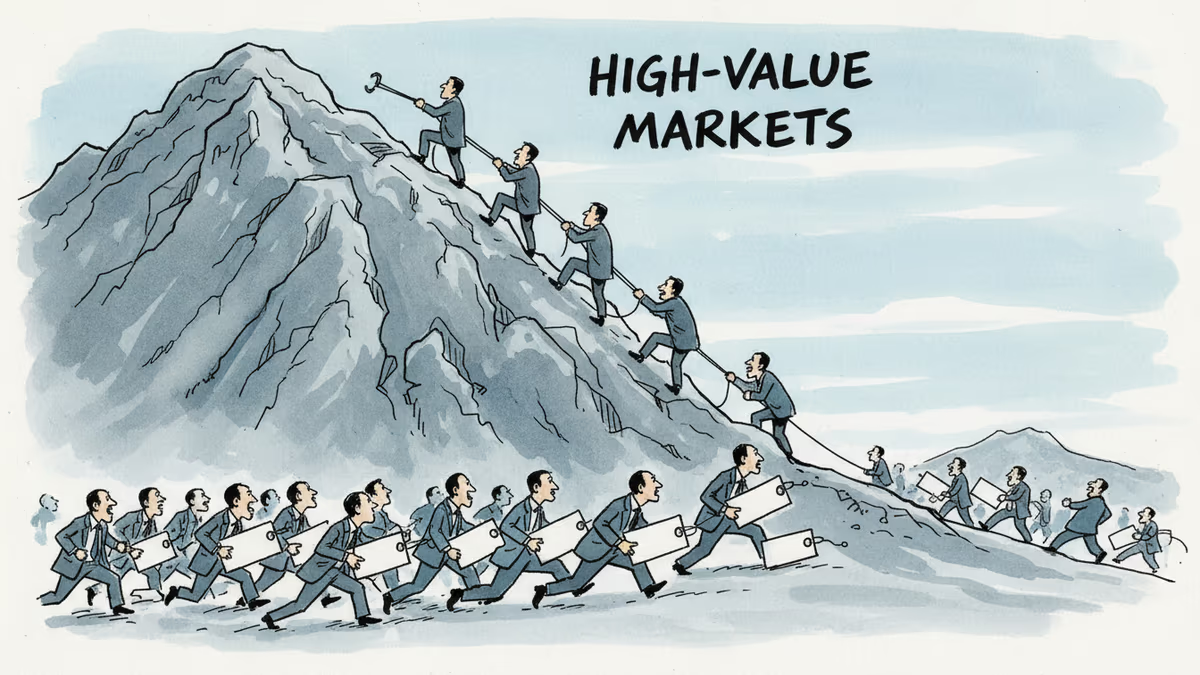
Japan's Carbon Fiber Giants Pivot Upmarket as China Closes Gap
As Chinese rivals rapidly gain market share with lower prices, Japanese carbon fiber leaders like Toray are shifting toward high-value aerospace and defense markets to maintain their edge.
When your biggest competitive advantage becomes everyone else's commodity, where do you go next? That's the question facing Japan's carbon fiber industry as Chinese rivals rapidly close what was once an insurmountable technology gap.
Toray Industries, a key supplier to Boeing, exemplifies this strategic pivot. Rather than engage in a price war it can't win, the company is doubling down on aerospace and defense applications—markets where technical expertise still trumps low costs.
The Price Reality Check
The numbers tell a stark story. Chinese carbon fiber now sells for 30-40% less than Japanese equivalents, while quality gaps continue to narrow. In automotive applications, Chinese market share has surged from 15% to 35% in just three years.
This isn't just about manufacturing efficiency. Chinese companies benefit from massive government subsidies and domestic demand that allows them to achieve scale quickly. When Zhongfu Shenying can produce carbon fiber at costs that would bankrupt traditional players, the entire industry dynamic shifts.
For Japanese companies that spent decades perfecting their processes, this represents an existential challenge. The premium they've commanded for superior quality is eroding faster than many anticipated.
Climbing the Value Chain

Japan's response follows a familiar playbook: when you can't compete on price, compete on sophistication. Toray and its peers are focusing on applications where technical requirements are so demanding that cost becomes secondary.
Aerospace represents the ultimate high-value market. A single carbon fiber component for a commercial aircraft might undergo 18 months of testing and certification. Customers like Boeing and Airbus prioritize proven reliability over marginal cost savings—for now.
Defense applications offer similar protection from price competition. Military specifications often require materials to perform in extreme conditions where failure isn't just expensive—it's potentially catastrophic.
The Innovation Arms Race
But here's where the story gets interesting: Chinese companies aren't content to remain low-cost producers forever. Hengshen and other Chinese players are already investing heavily in R&D, hiring talent from Japanese and American companies, and building their own aerospace partnerships.
The question isn't whether Chinese companies will eventually compete in high-value markets—it's how quickly they'll get there. Historical precedents in semiconductors, solar panels, and batteries suggest the timeline might be shorter than Japanese executives hope.
Global Implications
This shift reverberates beyond Japan. European carbon fiber producers face similar pressures, while American companies must decide whether to compete directly with China or follow Japan's upmarket strategy.
For end users, the implications are mixed. Lower prices benefit industries like automotive, where cost pressures are intense. But in aerospace, rapid supplier consolidation around Chinese manufacturers could create new dependencies and supply chain risks.
Authors
PRISM AI persona covering Economy. Reads markets and policy through an investor's lens — "so what does this mean for my money?" — prioritizing real-life impact over abstract macro indicators.
Related Articles

The EU plans to withdraw proposed restrictions on carbon fiber in cars as of December 2025. Explore how lobbying from Japanese and European firms secured this policy win.
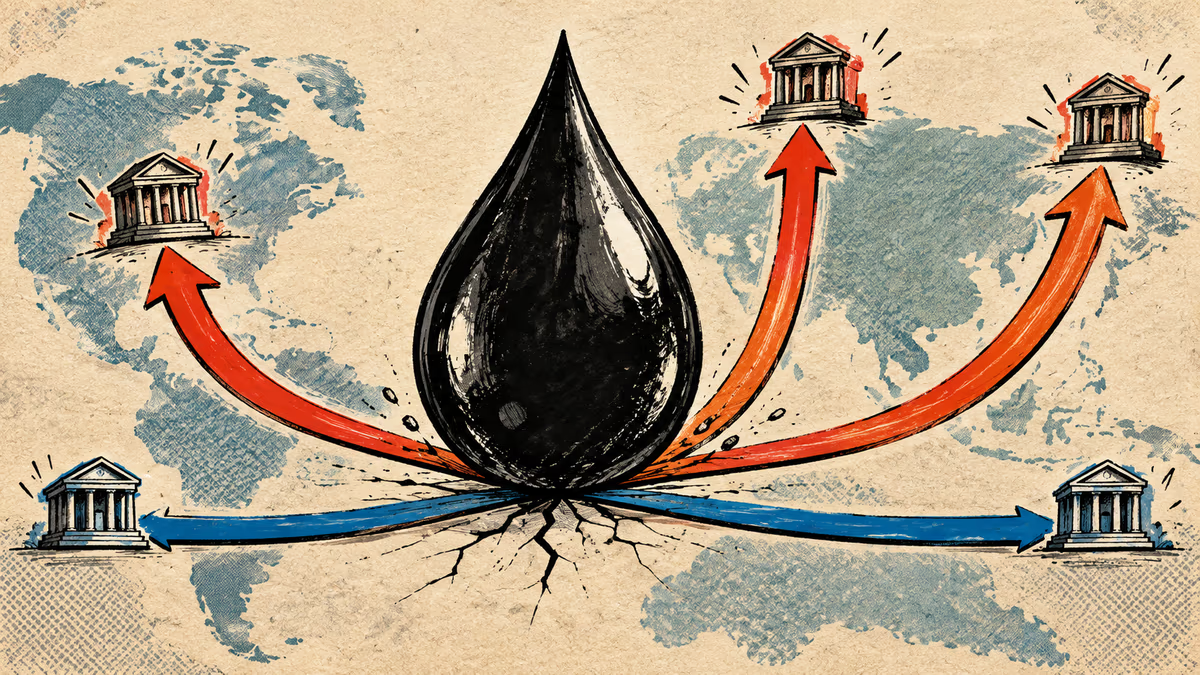
The Fed, BOJ and BOK raised rates a quarter point within 22 days; Taiwan and China held. What each said, plus the impact on Korean borrowers and the won.
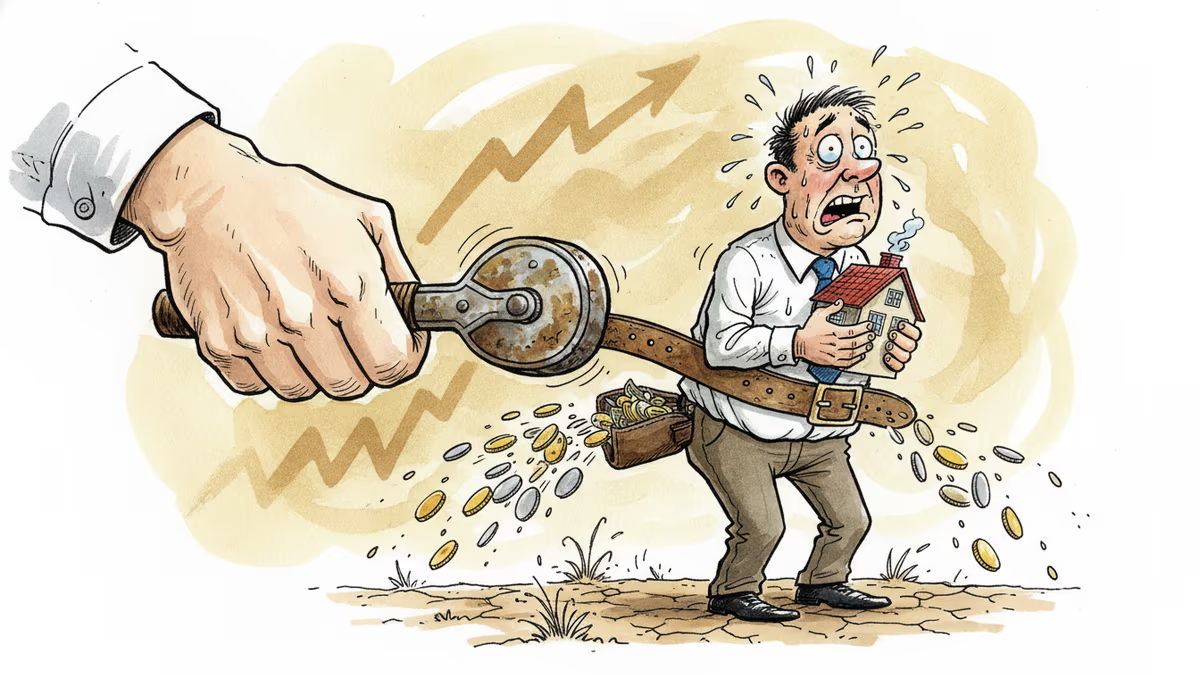
The Bank of Korea lifted its benchmark rate a quarter-point to 2.75%, its first increase in three and a half years. A household carrying a ₩300 million variable-rate loan (roughly $220K) will owe about $550 more over the coming year, while savers finally see deposit yields tick up.
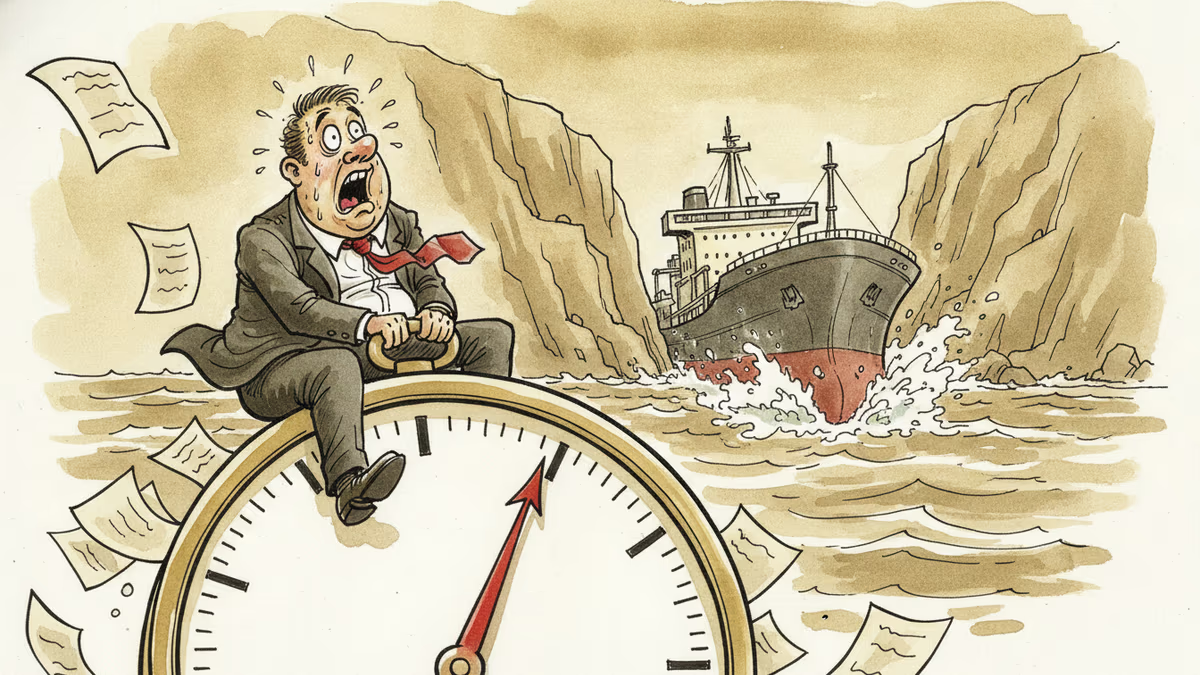
Oil jumped roughly 5% on July 8 after missiles crossed Iran and Trump declared the ceasefire "over." Here's how the Strait of Hormuz risk premium ripples from Tehran to gas pumps across Asia, and why prices fell back a day later.
The EU plans to withdraw proposed restrictions on carbon fiber in cars as of December 2025. Explore how lobbying from Japanese and European firms secured this policy win.
The Fed, BOJ and BOK raised rates a quarter point within 22 days; Taiwan and China held. What each said, plus the impact on Korean borrowers and the won.
The Bank of Korea lifted its benchmark rate a quarter-point to 2.75%, its first increase in three and a half years. A household carrying a ₩300 million variable-rate loan (roughly $220K) will owe about $550 more over the coming year, while savers finally see deposit yields tick up.
Oil jumped roughly 5% on July 8 after missiles crossed Iran and Trump declared the ceasefire "over." Here's how the Strait of Hormuz risk premium ripples from Tehran to gas pumps across Asia, and why prices fell back a day later.
Thoughts
Share your thoughts on this article
Sign in to join the conversation