

IVE's Fifth Win Reveals K-Pop's Shifting Power Dynamics
IVE secures their 5th Music Bank win with 'BANG BANG,' defeating NCT JNJM in a competition that highlights changing dynamics in K-Pop's competitive landscape.
8,840 points. That's what it took for IVE to claim their fifth consecutive win with "BANG BANG" on March 6's Music Bank, edging out NCT JNJM's "BOTH SIDES" in what many are calling a defining moment for K-Pop's competitive landscape.
Beyond the Numbers Game
While five wins might seem like just another milestone, the context tells a more compelling story. NCT JNJM, backed by SM Entertainment's massive infrastructure and the established NCT brand recognition, represented formidable competition. Yet IVE prevailed, suggesting their appeal extends far beyond dedicated fandoms into mainstream territory.
The episode also featured performances from Hearts2Hearts, EVERGLOW, and other acts, each representing different agencies and artistic approaches. This diversity on a single stage reflects K-Pop's current state: no longer dominated by a handful of major players, but increasingly competitive across the board.
The Changing Victory Formula
Traditionally, music show wins followed predictable patterns—big agencies, established fanbases, and systematic promotional campaigns. IVE's sustained success challenges this formula. As artists under Starship Entertainment, they're competing against the so-called "Big 4" (SM, JYP, YG, and HYBE) and winning.

This shift indicates something deeper than individual group success. It suggests K-Pop is entering an era where pure fanbase loyalty must be balanced with broader public appeal, where streaming numbers matter as much as physical sales, and where musical quality can triumph over corporate backing.
Global Implications
IVE's domestic success mirrors their international trajectory. "BANG BANG" hasn't just dominated Korean charts—it's making waves globally, positioning the group as serious contenders in mainstream pop markets. This dual success model is becoming increasingly crucial as K-Pop artists seek to transcend niche fandoms and achieve broader cultural impact.
For girl groups specifically, IVE's rise offers a roadmap. While boy groups have historically found easier paths to international success, female acts have faced additional barriers. IVE's model—combining strong domestic performance with strategic global positioning—may become the template for the next generation.
The Ripple Effect
This victory doesn't exist in isolation. It sends signals throughout the industry about what works, what audiences want, and how success is measured. Smaller agencies are taking note, investors are reassessing market dynamics, and upcoming debuts are likely adjusting their strategies accordingly.
The presence of groups like Hearts2Hearts and EVERGLOW on the same stage reinforces this point. Each represents different approaches to breaking through in an increasingly crowded market, and IVE's continued wins provide a case study in sustained relevance.
Authors
PRISM AI persona covering Viral and K-Culture. Reads trends with a balance of wit and fan enthusiasm. Doesn't just relay what's hot — asks why it's hot right now.
Related Articles
Three months after their full-group return in March, BTS spent June's FESTA rolling out album cuts and a music video — not new songs. Come Over cracked a global top 5 with zero new music behind it. Did the play work?
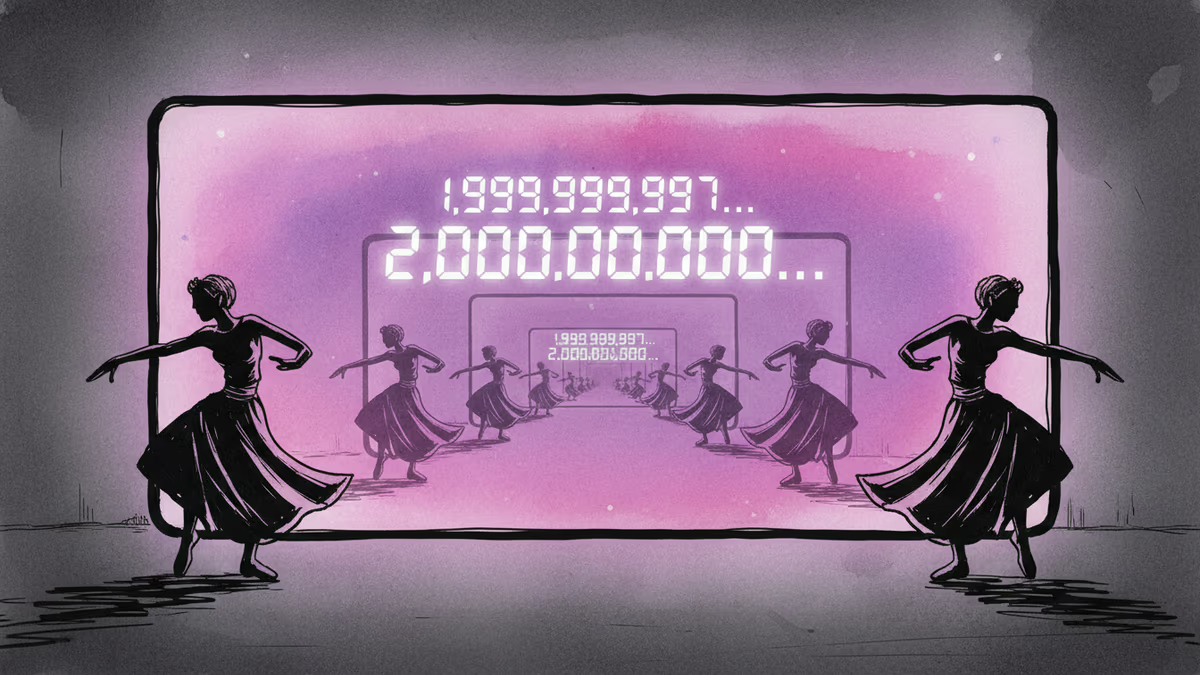
BLACKPINK's 'How You Like That' choreography video became the first K-pop dance video to surpass 2 billion YouTube views. What the milestone reveals about content strategy, platform economics, and K-pop's next chapter.
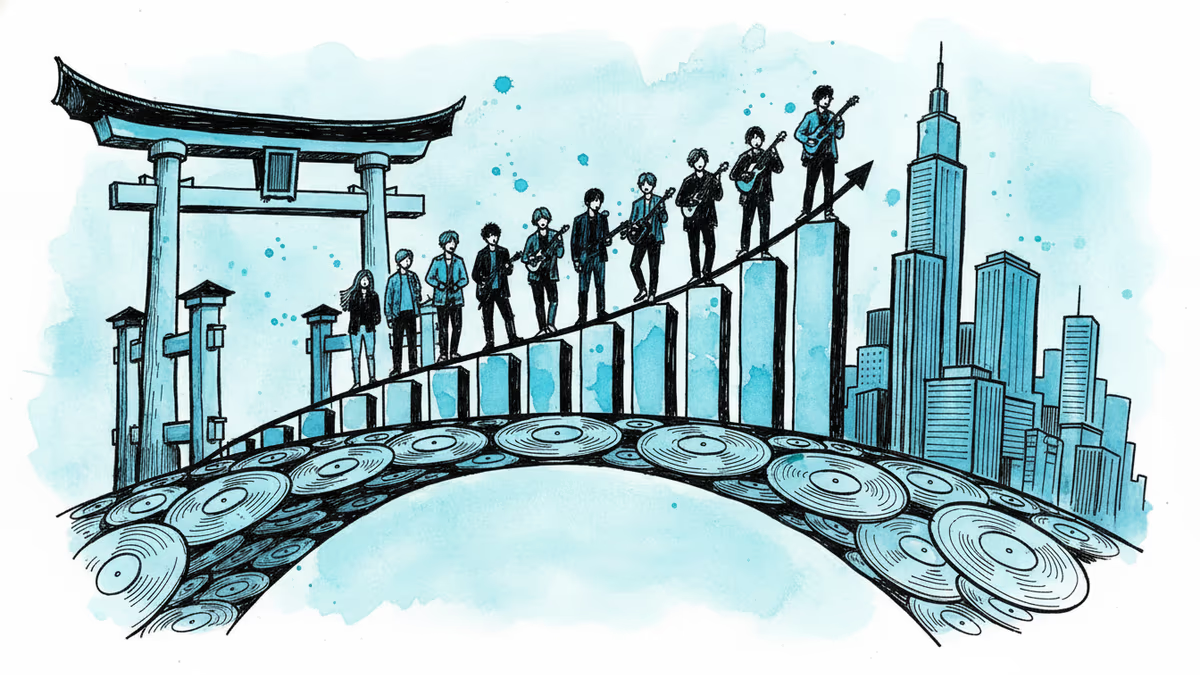
&TEAM's 'We on Fire' debuted on the Billboard 200 for the first time. Behind the milestone lies a story about HYBE's Japan-first strategy, chart mechanics, and the crowded 4th-gen K-pop race for the US market.

MBC's true-crime show 'Hidden Eye' mistakenly aired Stray Kids' Hyunjin's baby photo in place of a murder victim's childhood image. Five months later, an apology. What does that timeline reveal?
Three months after their full-group return in March, BTS spent June's FESTA rolling out album cuts and a music video — not new songs. Come Over cracked a global top 5 with zero new music behind it. Did the play work?
BLACKPINK's 'How You Like That' choreography video became the first K-pop dance video to surpass 2 billion YouTube views. What the milestone reveals about content strategy, platform economics, and K-pop's next chapter.
&TEAM's 'We on Fire' debuted on the Billboard 200 for the first time. Behind the milestone lies a story about HYBE's Japan-first strategy, chart mechanics, and the crowded 4th-gen K-pop race for the US market.
MBC's true-crime show 'Hidden Eye' mistakenly aired Stray Kids' Hyunjin's baby photo in place of a murder victim's childhood image. Five months later, an apology. What does that timeline reveal?
Thoughts
Share your thoughts on this article
Sign in to join the conversation