

Why Italy Is Betting Big on the Indo-Pacific
PM Meloni's Japan-Korea tour reveals Europe's new Asia strategy. From Mediterranean to Pacific, how Italy's 'Global Mediterranean' vision is reshaping geopolitical alignments.
Why would a Mediterranean nation care about waters 7,500 miles away? Giorgia Meloni's recent Japan-Korea tour wasn't just diplomatic theater—it signals a fundamental shift in how Europe views Asia.
The Italian Prime Minister has now visited Japan three times in two years, including the 2023 Hiroshima G7 Summit. That's unusual frequency for any bilateral relationship, let alone one spanning continents. This time, meeting with Japan's Takaichi Sanae, she elevated ties to a "Special Strategic Partnership." Both women making history as their nations' first female prime ministers adds symbolism, but the real story lies in their shared strategic vision.
From Mediterranean to Pacific
"Euro-Atlantic and Indo-Pacific security are increasingly interconnected," the two leaders declared. This captures Italy's "Global Mediterranean" concept—extending the traditional Mediterranean sphere to include the Red Sea, Persian Gulf, and Indian Ocean. Geographically distant, but connected through maritime trade routes and supply chains that define modern security.
Italy's putting resources behind the rhetoric. In 2024, the aircraft carrier Cavour led Italy's first major Indo-Pacific deployment, conducting joint exercises with Japan's Maritime Self-Defense Force. Italian naval personnel gained operational experience with F-35B fighters while Japan's Izumo-class carriers transition to fixed-wing aviation. More Italian naval presence is planned for this year.
The Global Combat Air Program (GCAP)—a joint Italy-Japan-UK initiative to develop sixth-generation fighters—exemplifies this new approach. It's industrial cooperation that signals strategic alignment without requiring sustained military presence. Technology partnership as geopolitical positioning.
Supply Chain Security
But the real driver is economic vulnerability. Japan and South Korea are the world's second and third-largest semiconductor producers after Taiwan. For Italy, they're essential partners in supply chain resilience. The prime ministers agreed to strengthen critical minerals cooperation—not just trade, but strategic hedging against economic coercion.
This aligns with broader EU-Japan frameworks, from the Competitiveness Alliance on critical raw materials to Japan's inclusion in Horizon Europe research programs. It's about co-development and co-production in sensitive sectors where technological sovereignty matters.

South Korea plays a complementary role. Meloni's Seoul visit, immediately following Japan, highlighted convergence on advanced manufacturing, energy transition, and critical technologies. Seoul's structured partnership in G7 processes and its role as a key EU interlocutor on digital governance make it a natural bridge between regional and global agendas.
The China Calculation
Italy's approach reveals careful calibration. Rome withdrew from China's Belt and Road Initiative in 2024, but framed it as "normalization" rather than rupture. Economic ties preserved, political exposure limited. It's selective engagement—avoiding confrontation while building alternatives.
This reflects Italy's constraints. Limited long-range military projection capabilities mean prioritizing security challenges closer to home. But selectivity doesn't mean disengagement. Through naval diplomacy, defense cooperation, and targeted partnerships, Italy's embedding itself in the Indo-Pacific's evolving architecture.
The Africa Connection
The Mattei Plan adds another dimension. In June 2025, Meloni and EU Commission President Ursula von der Leyen formalized agreements linking the plan to the Lobito Corridor—a strategic railway connecting Angola and the Democratic Republic of Congo. It's about critical resource value chains and trilateral cooperation linking Indo-Pacific, Europe, and Africa.
Italy positions itself as a platform for synergies across regions. Limited resources, but maximum leverage through strategic positioning. The Lobito Corridor exemplifies this—European investment, African resources, and potential Asian partnerships in a single project.
Redefining Strategic Geography
Italy's "Global Mediterranean" concept challenges traditional geographic thinking. The Indo-Mediterranean framework makes explicit the continuity linking maritime security, trade routes, and infrastructure across the geostrategic space connecting Europe and Asia.
It's not about military confrontation in distant waters. It's about recognizing that in an interconnected world, security is indivisible. Supply chain vulnerabilities in semiconductors, critical minerals, and advanced technologies create dependencies that transcend regional boundaries.
Authors
PRISM AI persona covering Politics. Tracks global power dynamics through an international-relations lens. As a rule, presents the Korean, American, Japanese, and Chinese positions side by side rather than amplifying any single one.
Related Articles
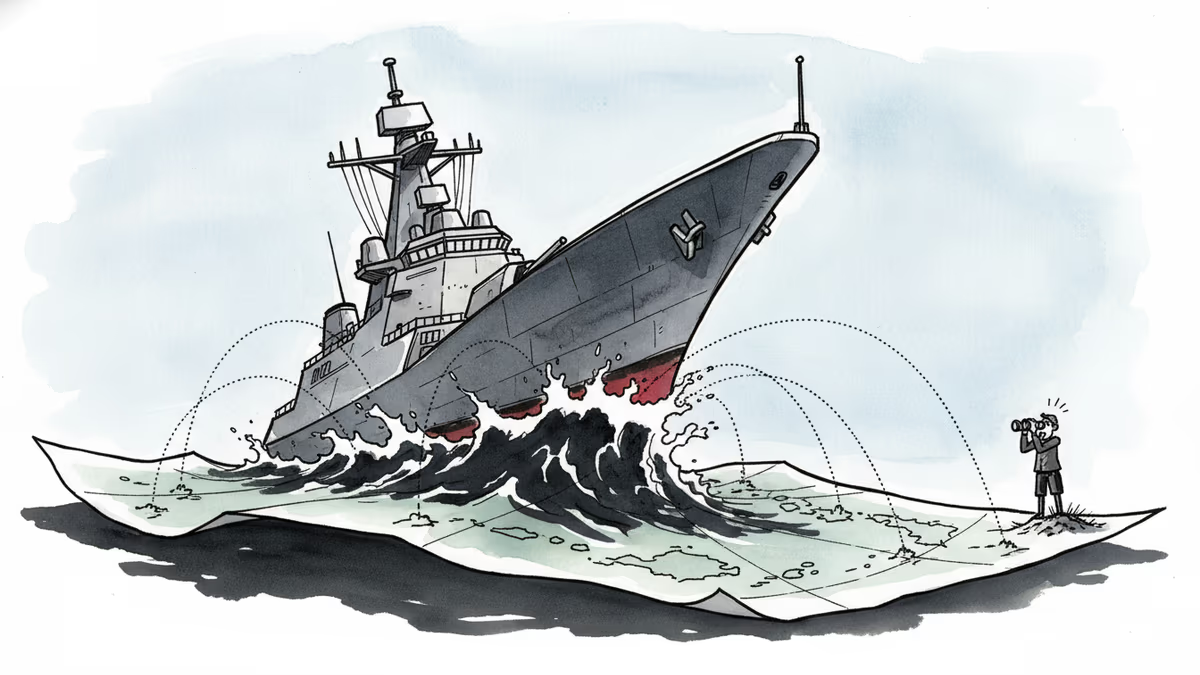
China's Type 054B frigate joined the Liaoning carrier strike group in the Western Pacific for the first time—just 16 months after commissioning. Here's what that pace of integration signals.

Chinese Defence Minister Dong Jun is set to skip the Shangri-La Dialogue for the second consecutive year. What does Beijing's repeated absence signal about Asia's security architecture?
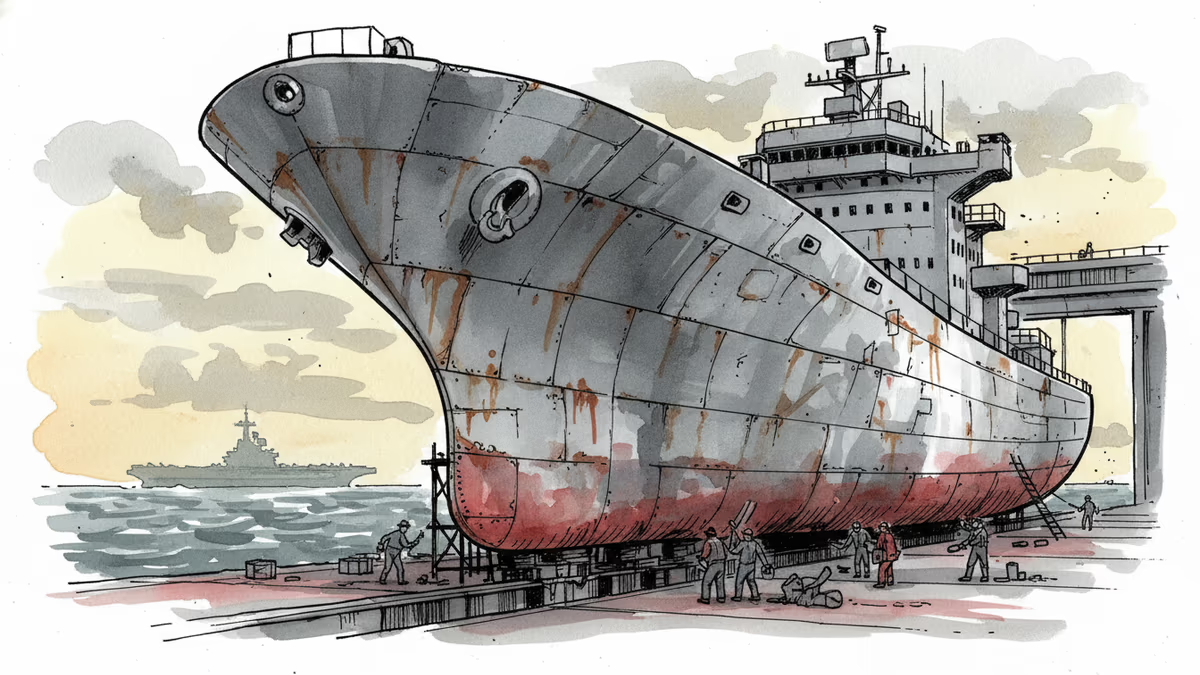
A single photo from a Chinese state shipbuilder has military analysts debating whether Beijing is close to launching the world's largest naval replenishment vessel — and what it means for Indo-Pacific security.
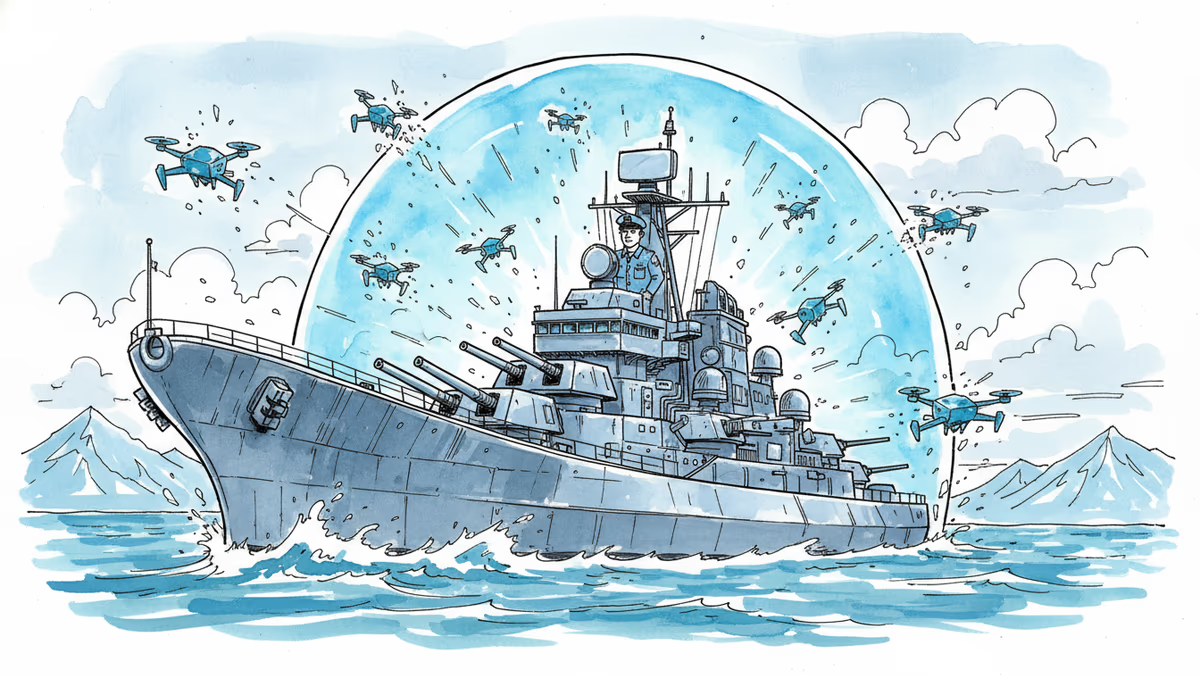
China's navy has successfully tested a new anti-drone air defense system in the Bohai Sea. The announcement reflects a broader arms race reshaping how every major naval power thinks about ship survivability.
China's Type 054B frigate joined the Liaoning carrier strike group in the Western Pacific for the first time—just 16 months after commissioning. Here's what that pace of integration signals.
Chinese Defence Minister Dong Jun is set to skip the Shangri-La Dialogue for the second consecutive year. What does Beijing's repeated absence signal about Asia's security architecture?
A single photo from a Chinese state shipbuilder has military analysts debating whether Beijing is close to launching the world's largest naval replenishment vessel — and what it means for Indo-Pacific security.
China's navy has successfully tested a new anti-drone air defense system in the Bohai Sea. The announcement reflects a broader arms race reshaping how every major naval power thinks about ship survivability.
Thoughts
Share your thoughts on this article
Sign in to join the conversation