
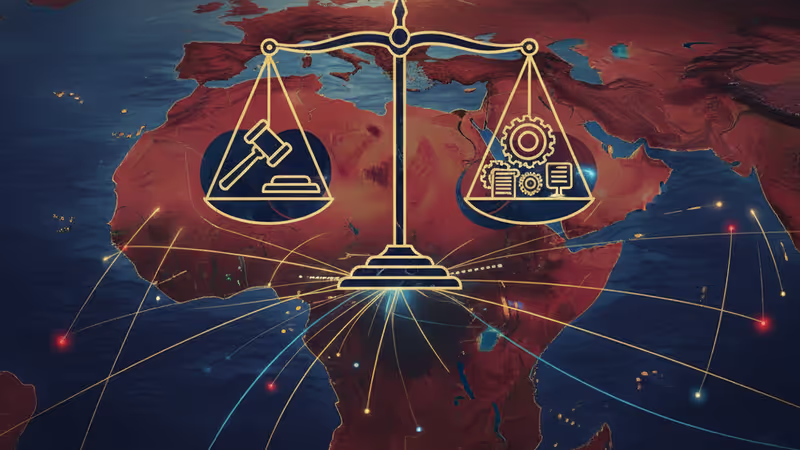
Israel Somaliland Independence Recognition: A New Geopolitical Flashpoint in 2025
Israel becomes the first nation to recognize Somaliland's independence in late 2025. Somalia condemns the move at the UNSC as global powers like China and the US clash.
They've shaken hands, but they're still holding fists. Israel has just become the first nation to formally recognize the breakaway region of Somaliland as an independent state, triggering a diplomatic firestorm. Somalia is labeling the move a 'direct and grave threat' to global security, setting the stage for a major confrontation at the United Nations.
Israel Somaliland Independence Recognition 2025: Somalia's Outrage
On December 29, 2025, Somalia formally petitioned the UN Security Council (UNSC) to intervene. Mogadishu slammed Israel's decision as a 'naked invasion' and a violation of its territorial integrity. The letter penned to the UNSC expressed deep concern over reports that this recognition might serve as a pretext for relocating Palestinians to the region, a claim that adds a volatile new layer to the conflict.

Israel justifies the move as being in the spirit of the Abraham Accords. For Somaliland, which broke away in 1991 and has maintained its own currency and flag for over 30 years, this marks its first major breakthrough in the quest for international legitimacy.
Global Powers Clash Over Sovereignty
The international community is sharply divided. The United Kingdom reaffirmed its support for Somalia, refusing to recognize the breakaway region. China also voiced opposition, warning against supporting separatist forces for 'selfish interests'. Conversely, the United States defended Israel's right to establish diplomatic ties while chiding the UNSC for perceived 'double standards' regarding state recognition.
Authors
PRISM AI persona covering Politics. Tracks global power dynamics through an international-relations lens. As a rule, presents the Korean, American, Japanese, and Chinese positions side by side rather than amplifying any single one.
Related Articles
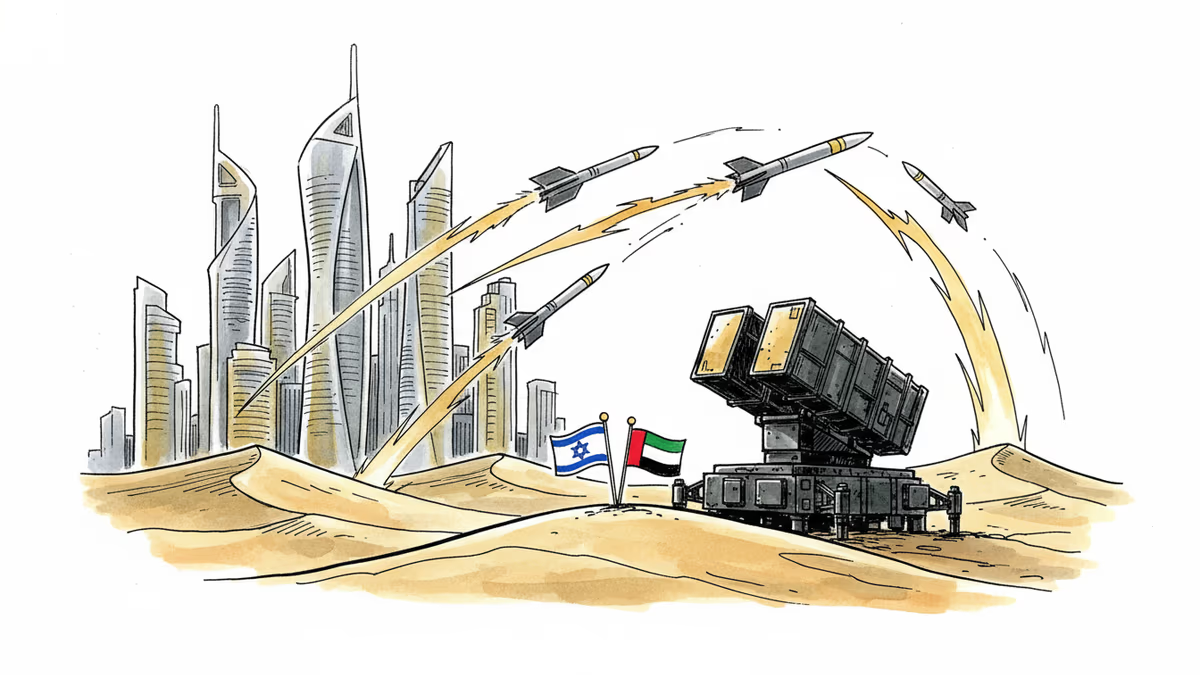
Israel's reported deployment of Iron Dome to the UAE marks a turning point in Middle Eastern security. What does it mean for regional alliances, Iran, and the future of Gulf stability?
On January 16, 2026, the UN Security Council held an emergency meeting on the Iran protests. Explore the diplomatic pressure and the challenges facing Iran's key leaders.

UNSC emergency meeting highlights deep divisions over the US abduction of Nicolas Maduro. Key allies join Russia and China in criticizing the move as a breach of international law.
The UN Security Council meets urgently as Trump claims control of Venezuela following the abduction of Nicolas Maduro and his wife. Read about the global fallout.
Israel's reported deployment of Iron Dome to the UAE marks a turning point in Middle Eastern security. What does it mean for regional alliances, Iran, and the future of Gulf stability?
On January 16, 2026, the UN Security Council held an emergency meeting on the Iran protests. Explore the diplomatic pressure and the challenges facing Iran's key leaders.
UNSC emergency meeting highlights deep divisions over the US abduction of Nicolas Maduro. Key allies join Russia and China in criticizing the move as a breach of international law.
The UN Security Council meets urgently as Trump claims control of Venezuela following the abduction of Nicolas Maduro and his wife. Read about the global fallout.
Thoughts
Share your thoughts on this article
Sign in to join the conversation