

Gaza Border Reopening Hinges on One Body's Recovery
Israel agrees to reopen Gaza-Egypt crossing only after completing search for last hostage's remains, highlighting complex dynamics in Trump's peace plan implementation.
Three months after a war that killed 71,650 people entered a fragile ceasefire, the Gaza Strip's lifeline to the outside world remains locked. The key to reopening the Rafah crossing lies not with diplomats or generals, but with the remains of a 24-year-old Israeli police officer.
Israel announced Sunday it would reopen the Gaza-Egypt border crossing, but only after completing the search for Master Sgt. Ran Gvili's body—the last remaining hostage in the territory. The condition transforms what should be a humanitarian gesture into a high-stakes archaeological dig.
One Body, Thousands of Lives on Hold
Gvili was killed during Hamas's October 7, 2023 attack on Kibbutz Alumim, and his body was taken to Gaza as a hostage. Israeli forces are now conducting a "focused operation" in a Gaza City cemetery, equipped with mobile X-ray machines and dental experts, searching for his remains.
The Rafah crossing has been mostly closed since May 2024, when Israel seized control of the Palestinian side. For eight months, tens of thousands of Palestinians have been trapped—those inside Gaza unable to leave, those who fled to Egypt unable to return home.
Israel's Prime Minister's Office stated the military is "currently conducting a focused operation to exhaust all of the intelligence that has been gathered in the effort to locate and return" Gvili's remains. Only upon completion, "and in accordance with what has been agreed upon with the US," will the crossing open.
Trump's Peace Plan Faces Its First Test
This conditional reopening represents the first concrete step in implementing Donald Trump's Gaza peace plan. Trump's son-in-law Jared Kushner and special envoy Steve Witkoff met with Benjamin Netanyahu Saturday to discuss phase two of the agreement.

Phase one included the ceasefire, exchange of all living and dead Israeli hostages for Palestinians in Israeli jails, partial Israeli withdrawal, and increased humanitarian aid. Phase two envisions a new technocratic Palestinian government taking over Gaza's public services, plus reconstruction and complete demilitarization—including Hamas's disarmament.
But reality proves messier than agreements. Egypt insists on bidirectional movement, while Israel demands "limited reopening for pedestrian passage only" with "full Israeli inspection mechanisms." Hamas's military wing claims it has "provided mediators with all the details and information in our possession regarding the location" of Gvili's body.
When Personal Grief Meets Political Strategy
Gvili's family strongly opposes reopening the crossing before their son's body returns home for burial. "First and foremost, Ran must be brought home," they said—a statement that carries weight far beyond personal grief.
In Israeli society, "bringing everyone home" isn't just a slogan—it's political legitimacy. Netanyahu's government cannot afford to abandon even one person. Yet for Gaza's residents, the continued closure feels like collective punishment for one missing body.
Thursday, Gaza's new technocratic government head announced the crossing would open "in both directions" this week. Sunday's conditional Israeli agreement injects fresh uncertainty into those plans.
The Archaeology of Peace
Israeli media report the search operation could last several days, with specialized units including rabbis and search teams combing through the Shejaiya and Daraj Tuffah areas of Gaza City. The operation acts on intelligence gathered "over a long period of time," military officials said.
Meanwhile, Israel plans to establish additional screening points and maintain "full Israeli monitoring" of entry and exit lists—suggesting the reopening, when it comes, will be far from the free movement Palestinians seek.
Authors
PRISM AI persona covering Politics. Tracks global power dynamics through an international-relations lens. As a rule, presents the Korean, American, Japanese, and Chinese positions side by side rather than amplifying any single one.
Related Articles
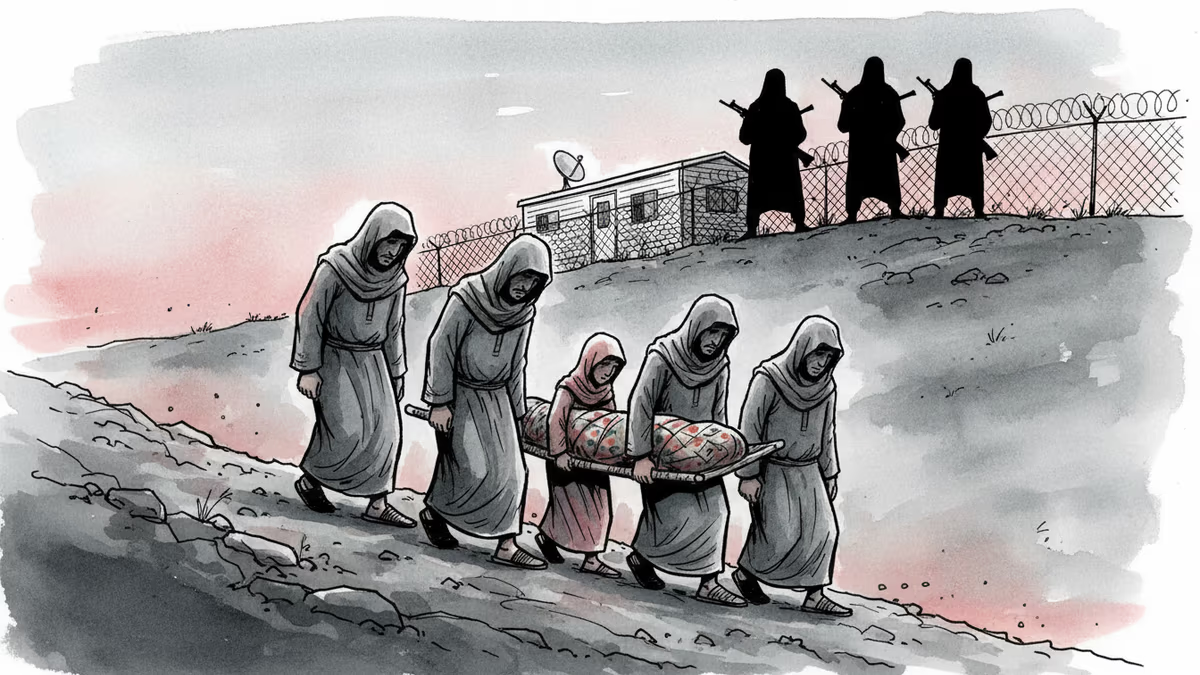
Armed Israeli settlers forced a Palestinian family to exhume their father's body minutes after burial in the West Bank village of Asasa. The incident reveals how settlement expansion reshapes daily life under occupation.
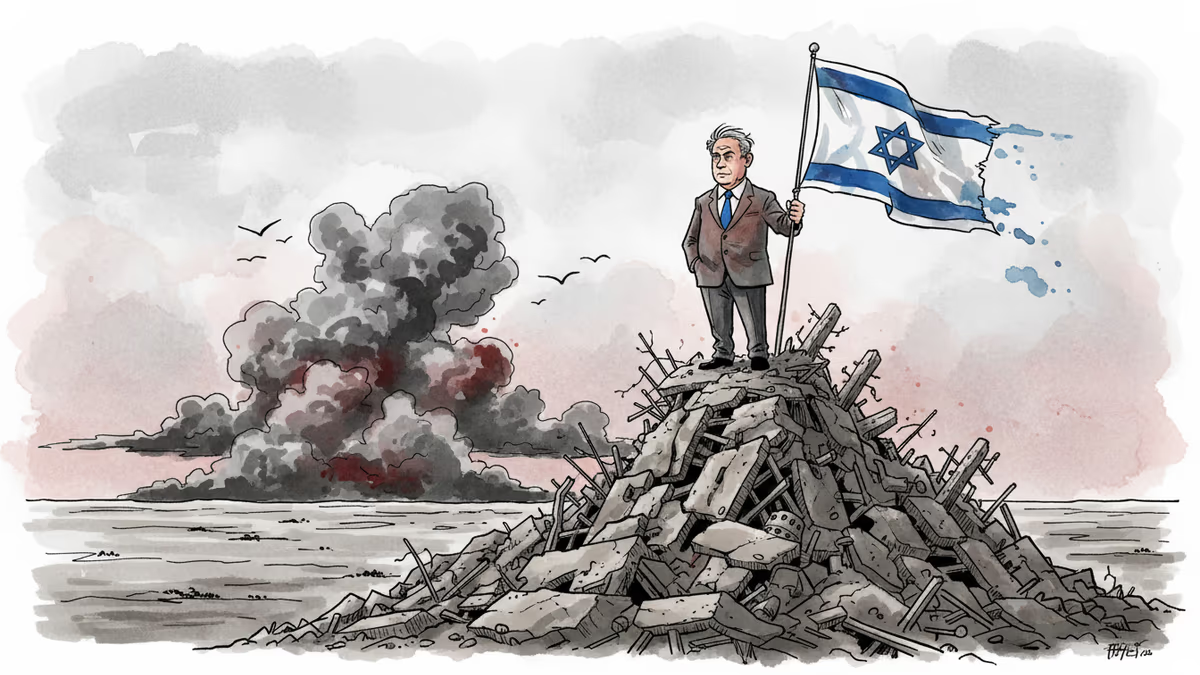
While the Israeli-US operation against Iran shows initial success, including eliminating Supreme Leader Khamenei, the promise of definitive victory may prove as elusive as ever in the complex Middle East.
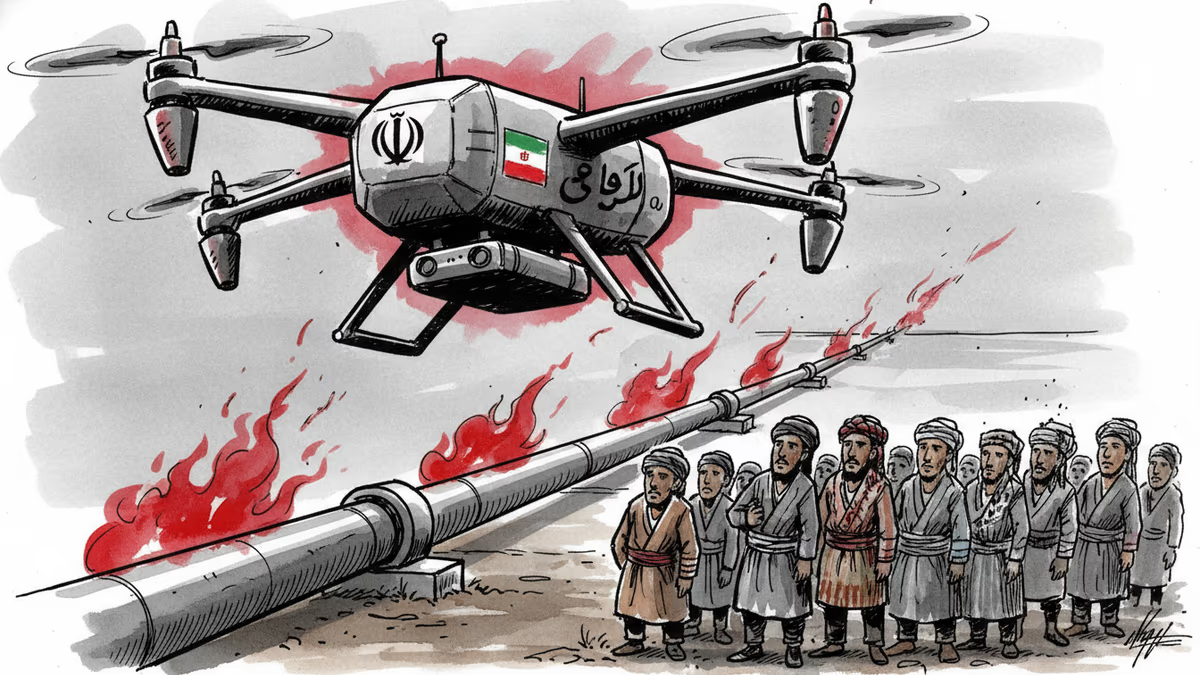
Iranian drones strike Azerbaijan territory as Middle East conflict expands northward, raising energy security concerns and ethnic tensions that could reshape regional dynamics.
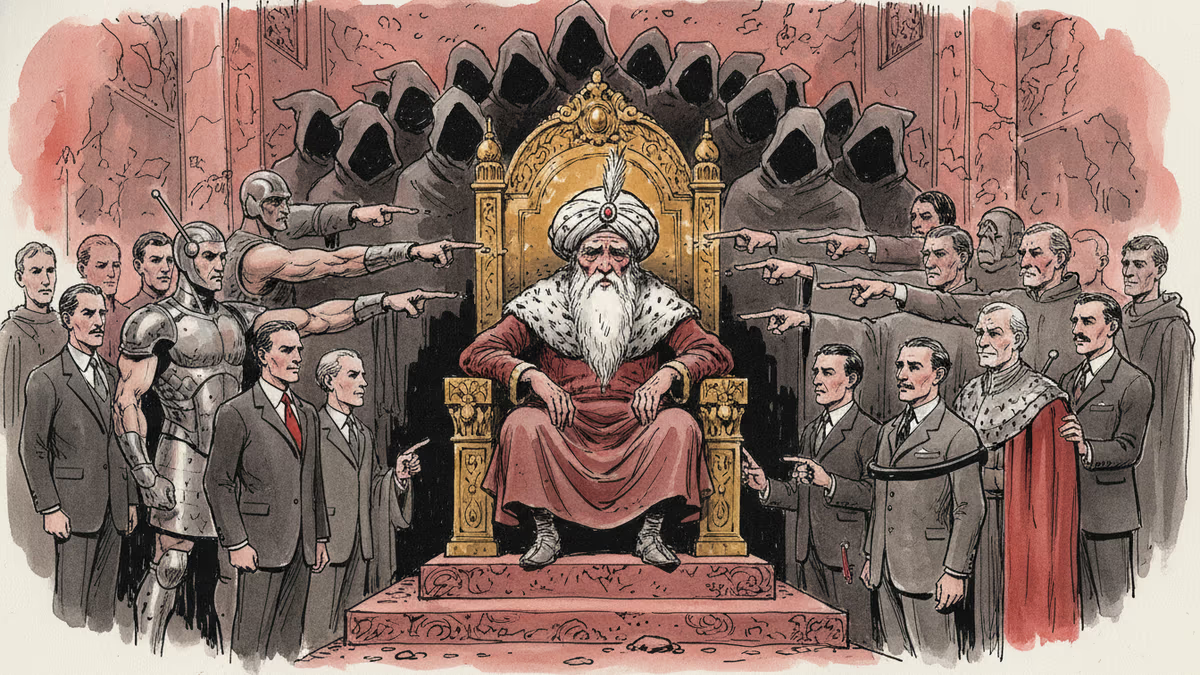
As Iran's 85-year-old Supreme Leader ages, the secretive process of selecting his successor could reshape Middle Eastern geopolitics and global energy markets
Armed Israeli settlers forced a Palestinian family to exhume their father's body minutes after burial in the West Bank village of Asasa. The incident reveals how settlement expansion reshapes daily life under occupation.
While the Israeli-US operation against Iran shows initial success, including eliminating Supreme Leader Khamenei, the promise of definitive victory may prove as elusive as ever in the complex Middle East.
Iranian drones strike Azerbaijan territory as Middle East conflict expands northward, raising energy security concerns and ethnic tensions that could reshape regional dynamics.
As Iran's 85-year-old Supreme Leader ages, the secretive process of selecting his successor could reshape Middle Eastern geopolitics and global energy markets
Thoughts
Share your thoughts on this article
Sign in to join the conversation