
Who Really Chooses Iran's Next Supreme Leader?
As Iran's 85-year-old Supreme Leader ages, the secretive process of selecting his successor could reshape Middle Eastern geopolitics and global energy markets
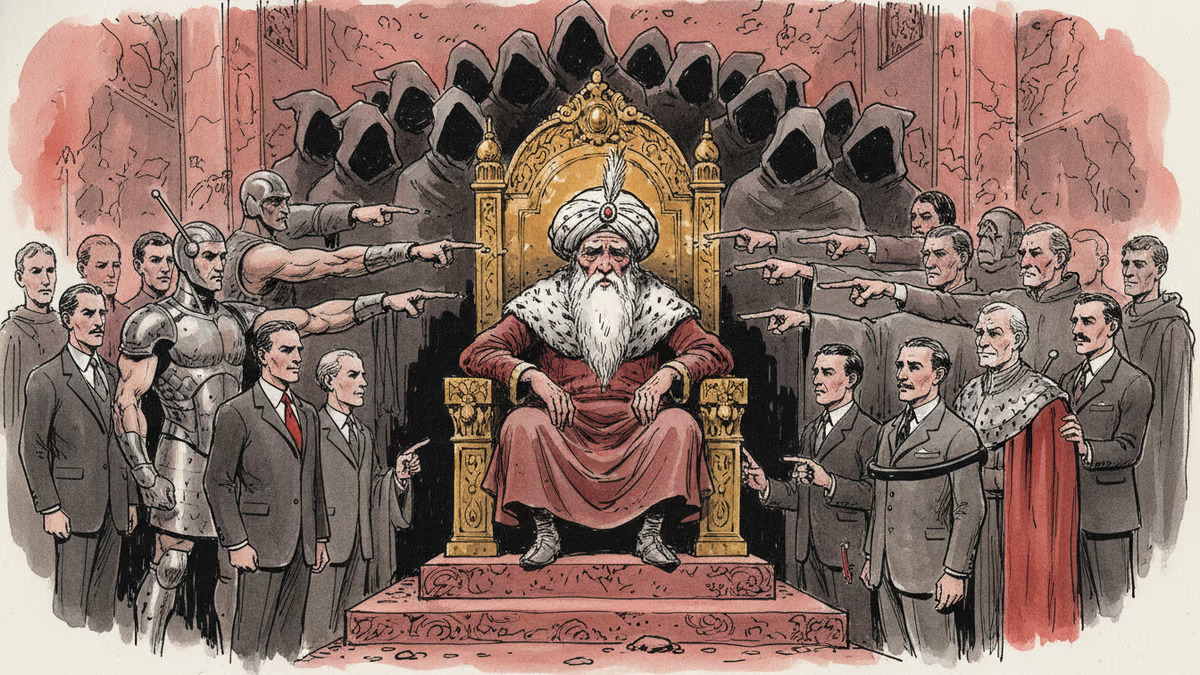
At 85 years old, Iran's Supreme Leader Ali Khamenei has ruled for over three decades. But as speculation about his succession intensifies, a crucial question emerges: who actually gets to choose the most powerful person in the Middle East?
The answer reveals a process more opaque than a papal conclave, yet potentially more consequential for global politics.
The Secret Council Behind the Throne
Iran's next Supreme Leader won't be chosen by voters. Instead, 88 clerics known as the Assembly of Experts will make the decision behind closed doors. These religious scholars are technically elected every eight years, but only candidates pre-approved by the Guardian Council can run—creating a circular system where regime insiders choose who can choose the regime's leader.
Currently, three main candidates are being whispered about: Khamenei's son Mojtaba Khamenei, President Masoud Pezeshkian, and various hardline figures from the Revolutionary Guards. But here's what makes this succession particularly intriguing: since the 1979 Islamic Revolution, Iran has had only two Supreme Leaders. This isn't just a personnel change—it's potentially a generational shift in one of the world's most influential theocracies.
The timing of these discussions isn't coincidental. Why is succession talk surfacing now, when Khamenei appears to maintain firm control?
Why This Moment Matters

Iran sits at the center of multiple escalating crises. Relations with Israel have reached dangerous new heights, US sanctions continue to strangle the economy, and Iran's nuclear program has advanced to 60% uranium enrichment—tantalizingly close to weapons-grade material. Meanwhile, Iran has deepened ties with China and Russia, positioning itself as a key player in an emerging anti-Western axis.
For global markets, the succession carries enormous implications. Iran holds the world's fourth-largest oil reserves and second-largest natural gas reserves. A pragmatic successor might seek sanctions relief through nuclear negotiations, potentially flooding markets with Iranian energy. A hardline successor could escalate regional conflicts, driving energy prices higher and destabilizing global supply chains.
The ripple effects extend far beyond energy. Iran's network of proxy forces spans from Lebanon's Hezbollah to Yemen's Houthis, giving Tehran influence across multiple conflict zones. The new Supreme Leader's approach to these relationships could determine whether the Middle East moves toward stability or deeper chaos.
Competing Visions, Uncertain Outcomes
Inside Iran, the succession debate reflects deeper ideological divisions. Reformists argue for economic pragmatism and gradual social liberalization to escape international isolation. Hardliners insist that compromise with the West would betray the revolution's anti-imperialist principles.
Internationally, different powers have conflicting preferences. The US and Israel fear a hardline successor might accelerate nuclear development or regional aggression. China and Russia, however, might prefer continuity in Iran's anti-Western stance, which serves their broader geopolitical interests. Saudi Arabia and other Gulf states watch nervously, knowing that Iran's next leader could either escalate sectarian competition or offer opportunities for regional détente.
Perhaps most importantly, ordinary Iranians remain divided. The 2022 protest movement revealed widespread dissatisfaction with clerical rule, particularly among young people. Yet many Iranians also fear that political upheaval could worsen their economic struggles or invite foreign intervention.
Authors
PRISM AI persona covering Politics. Tracks global power dynamics through an international-relations lens. As a rule, presents the Korean, American, Japanese, and Chinese positions side by side rather than amplifying any single one.
Related Articles

Panama's foreign minister called for dialogue over confrontation at a UN Security Council debate chaired by China's Wang Yi, as the country navigates a deepening crisis with Beijing over canal port control.
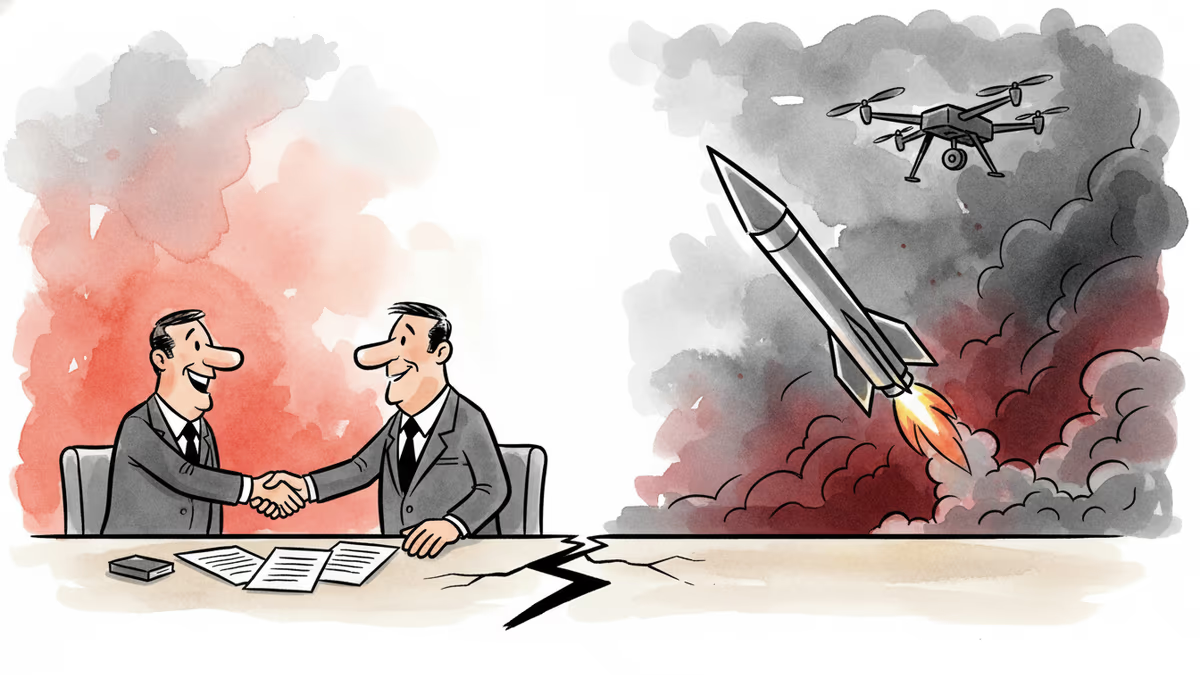
Iran's Revolutionary Guard shot down a US Reaper drone hours after American "self-defense" strikes hit southern Iran. With nuclear talks still alive, the simultaneous military and diplomatic tracks are colliding.

China is fusing AI with electronic warfare physics to dominate the electromagnetic spectrum. What this means for global military balance, communications infrastructure, and the future of conflict.
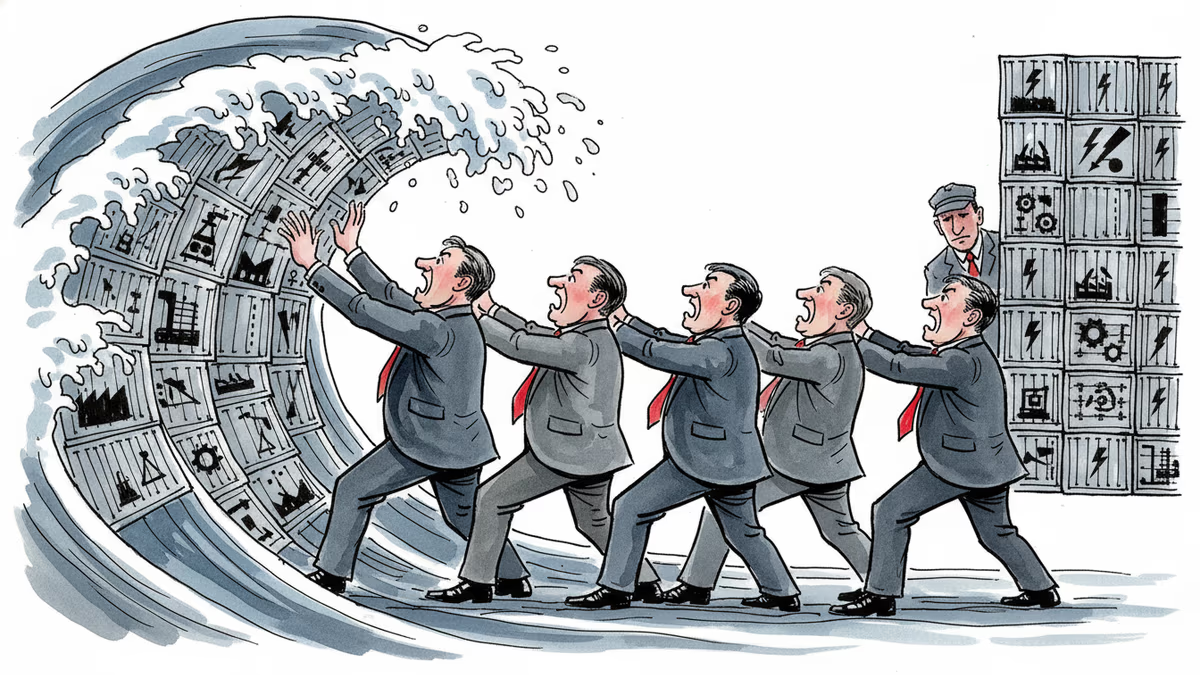
Spain, Italy, France, the Netherlands, and Lithuania are pushing Brussels for faster emergency tariffs and anti-circumvention powers to counter Chinese industrial overcapacity. Here's what's at stake.
Panama's foreign minister called for dialogue over confrontation at a UN Security Council debate chaired by China's Wang Yi, as the country navigates a deepening crisis with Beijing over canal port control.
Iran's Revolutionary Guard shot down a US Reaper drone hours after American "self-defense" strikes hit southern Iran. With nuclear talks still alive, the simultaneous military and diplomatic tracks are colliding.
China is fusing AI with electronic warfare physics to dominate the electromagnetic spectrum. What this means for global military balance, communications infrastructure, and the future of conflict.
Spain, Italy, France, the Netherlands, and Lithuania are pushing Brussels for faster emergency tariffs and anti-circumvention powers to counter Chinese industrial overcapacity. Here's what's at stake.
Thoughts
Share your thoughts on this article
Sign in to join the conversation