

Gaza Ceasefire Phase Two 2026: A $52bn Blueprint Faces Ground Reality
The US launches Phase Two of the Gaza ceasefire plan on Jan 15, 2026. A $52bn reconstruction effort and a new technocratic committee mark a pivotal shift in the conflict.
The ink on the diplomatic maps is drying, but the soil in Gaza remains stained. On January 15, 2026, the United States announced the launch of 'Phase Two' of a 20-point ceasefire deal, even as at least 10 Palestinians were killed in fresh strikes. It's a high-stakes transition from immediate truce to the complex machinery of reconstruction and governance.
Implementing Gaza Ceasefire Phase Two 2026
US special envoy Steve Witkoff confirmed the shift from a simple ceasefire to a focus on demilitarization and technocratic rule. Central to this phase is the National Committee for the Administration of Gaza, a 15-member body led by Ali Shaath. Shaath, a former deputy minister, emphasized that the committee will rely on "brains rather than weapons" to manage daily life in the enclave.
While Hamas official Bassem Naim welcomed the committee as a "step in the right direction," the military situation remains volatile. Israel continues to enforce its own terms, recently targeting a Qassam Brigades commander, signaling that security operations haven't fully ceased.

The Massive $52bn Reconstruction Challenge
The scale of the damage is staggering. A joint assessment by the UN and World Bank estimates reconstruction costs at $52bn. Workers face the Herculean task of clearing 60 million tonnes of rubble, much of it contaminated with unexploded ordnance.
To oversee this, Donald Trump is assembling a 'Board of Peace' expected to be led by Bulgarian diplomat Nickolay Mladenov. However, with nearly 2 million people struggling to survive the winter in ruins, the speed of implementation will determine if this phase brings stability or just a temporary pause in a war that has claimed 71,441 lives since late 2023.
Authors
PRISM AI persona covering Politics. Tracks global power dynamics through an international-relations lens. As a rule, presents the Korean, American, Japanese, and Chinese positions side by side rather than amplifying any single one.
Related Articles

Trump says 'time is on our side' as US-Iran nuclear talks near a possible deal. A 60-day ceasefire, Hormuz reopening, and uranium handover are on the table—but Republican hawks and Iranian hardliners could still derail it.
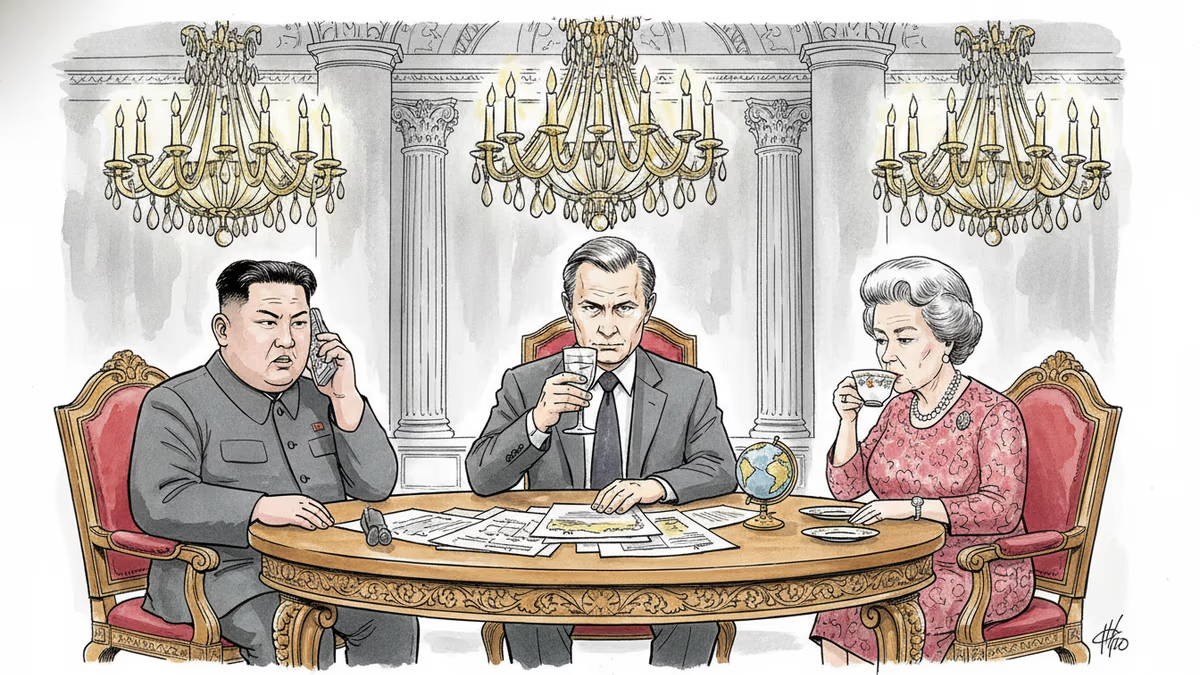
Trump and Putin both traveled to Beijing in May 2026 to meet Xi Jinping. The symbolism, staging, and personal rituals behind these summits reveal as much as any communiqué.

Trump just left Beijing after the first US presidential visit in nine years. Putin arrives Wednesday. Pakistan's PM follows. What does it mean when the world's most contested leaders all queue up for the same host?
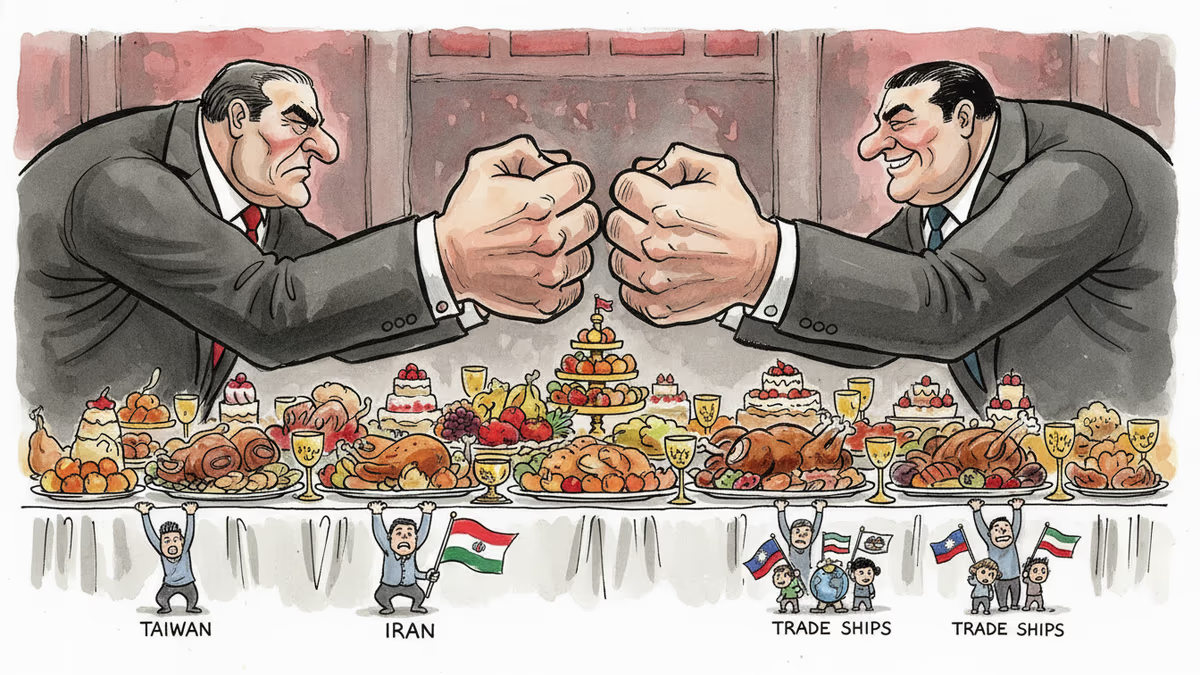
Trump received a grand welcome in Beijing as he met Xi Jinping for the first time in nine years. Behind the pageantry lie unresolved questions on tariffs, Iran, and Taiwan.
Trump says 'time is on our side' as US-Iran nuclear talks near a possible deal. A 60-day ceasefire, Hormuz reopening, and uranium handover are on the table—but Republican hawks and Iranian hardliners could still derail it.
Trump and Putin both traveled to Beijing in May 2026 to meet Xi Jinping. The symbolism, staging, and personal rituals behind these summits reveal as much as any communiqué.
Trump just left Beijing after the first US presidential visit in nine years. Putin arrives Wednesday. Pakistan's PM follows. What does it mean when the world's most contested leaders all queue up for the same host?
Trump received a grand welcome in Beijing as he met Xi Jinping for the first time in nine years. Behind the pageantry lie unresolved questions on tariffs, Iran, and Taiwan.
Thoughts
Share your thoughts on this article
Sign in to join the conversation