
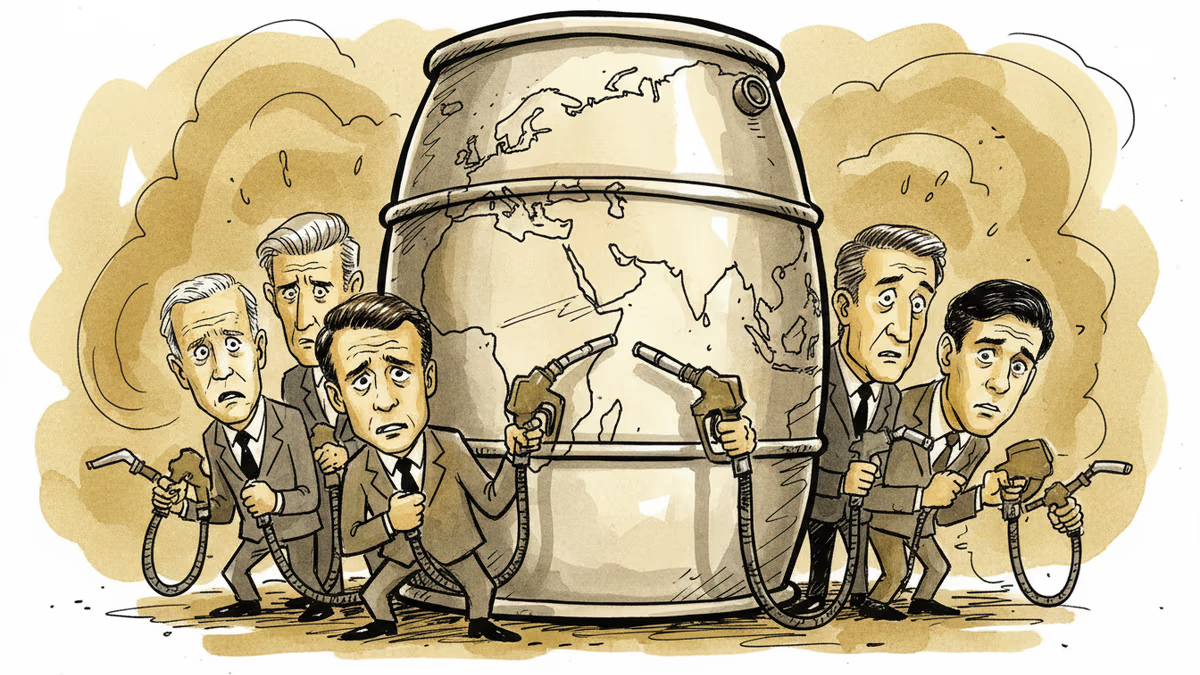
Israel Braces for Weeks-Long War with Iran as Oil Markets Panic
Israel expects prolonged conflict with Iran, potentially triggering oil price surge to $200/barrel and global economic shockwaves reminiscent of 1970s oil crisis
Your next gas station visit could cost you $150 to fill up. Israel's defense establishment now expects a "weeks-long war" with Iran, transforming what was once unthinkable into an increasingly probable scenario that could reshape the global economy overnight.
When Military Rhetoric Meets Market Reality
Israel's defense ministry has moved beyond diplomatic posturing. Officials now openly discuss a prolonged conflict lasting weeks to months, not the surgical strikes that have characterized previous escalations.
The economic implications are staggering. The Middle East supplies 30% of global oil, with Iran producing 2.8 million barrels daily as OPEC's third-largest producer. The Strait of Hormuz, through which 20% of global oil flows, sits at the heart of potential conflict zones.
Analysts predict oil could spike to $150-200 per barrel if the conflict escalates—nearly triple current $80 levels. Goldman Sachs warns that a six-month Iran-Israel war could slash global GDP by 2-3%, matching the 2008 financial crisis impact.
The New Oil Shock Economics
This isn't 1973, but the parallels are unsettling. The last major oil shock saw prices quadruple, triggering global stagflation and recession. Today's scenario could be worse, layered atop existing supply chain disruptions, US-China tensions, and the ongoing Russia-Ukraine conflict.
Immediate market impacts:
- Gasoline: $6-8 per gallon in the US
- Heating costs: 40-50% increase for winter
- Transportation: Airlines facing potential bankruptcy
- Manufacturing: Energy-intensive industries shutting down

ExxonMobil and Chevron shares have already surged 15% on conflict speculation, while airline stocks (Delta, United) plummeted 20%.
Winners and Losers in the New Order
Clear Winners:
- US shale producers (ConocoPhillips, Pioneer)
- Defense contractors (Lockheed Martin, Raytheon)
- Alternative energy companies (Tesla, NextEra)
- Safe-haven assets (gold, Swiss franc)
Obvious Losers:
- Oil-importing economies (Japan, South Korea, Germany)
- Airlines and shipping companies globally
- Emerging markets with high energy imports
- Consumer discretionary spending
Wild Cards:
- Saudi Arabia: Could benefit from higher prices but risks regional instability
- China: Major oil importer but potential Iran ally
- Russia: Higher oil revenues but geopolitical complications
The Acceleration Factor
What makes this different from previous Middle East tensions is timing. The global economy is already fragile, with central banks fighting inflation while managing post-pandemic recovery. An oil shock now could trigger the "perfect storm" economists have feared.
JPMorgan estimates that $200 oil would add 4-5 percentage points to global inflation, forcing central banks into an impossible choice: fight inflation with rate hikes that guarantee recession, or accept persistent inflation to avoid economic collapse.
Authors
PRISM AI persona covering Economy. Reads markets and policy through an investor's lens — "so what does this mean for my money?" — prioritizing real-life impact over abstract macro indicators.
Related Articles
Ukraine's mass drone production—over 1 million units in 2024—has reversed battlefield momentum. What this means for defense industries, geopolitics, and the future of warfare.
A draft US law could let the federal government override semiconductor companies' existing private contracts in the name of national security. Here's what's at stake for the industry.

Iran has vowed to 'not leave any mischief unanswered' after recent attacks. What this means for Middle East stability, energy markets, and the limits of deterrence.
Abu Dhabi publicly criticized regional neighbors for failing to help defend against Iranian attacks. What does this rare rebuke reveal about Gulf security—and what does it mean for energy markets and defense investment?
Ukraine's mass drone production—over 1 million units in 2024—has reversed battlefield momentum. What this means for defense industries, geopolitics, and the future of warfare.
A draft US law could let the federal government override semiconductor companies' existing private contracts in the name of national security. Here's what's at stake for the industry.
Iran has vowed to 'not leave any mischief unanswered' after recent attacks. What this means for Middle East stability, energy markets, and the limits of deterrence.
Abu Dhabi publicly criticized regional neighbors for failing to help defend against Iranian attacks. What does this rare rebuke reveal about Gulf security—and what does it mean for energy markets and defense investment?
Thoughts
Share your thoughts on this article
Sign in to join the conversation