
Niger Airport Attack Exposes Sahel's Pivot from France to Russia
ISIL claims responsibility for Niger airport attack killing 20. Military leader blames France while thanking Russian troops, highlighting West Africa's geopolitical realignment away from former colonial powers.
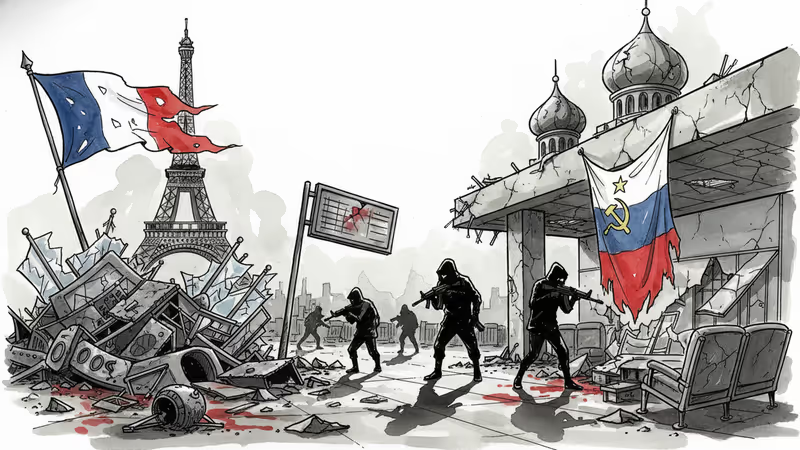
The pre-dawn attack on Niger's main airport has become more than a security incident—it's a stark symbol of West Africa's dramatic geopolitical realignment. When ISIL militants struck the air force base at Diori Hamani International Airport early Thursday, killing 20 attackers and wounding 4 government soldiers, it triggered responses that revealed the region's new power dynamics.
Russia In, France Out
General Abdourahamane Tiani, Niger's military leader since the 2023 coup, made his priorities crystal clear. He publicly thanked Russian troops stationed at the base for "defending their sector" while simultaneously accusing France, Benin, and Ivory Coast of sponsoring the attack—without offering any evidence. His warning that these countries "should be ready to hear us roar" wasn't just diplomatic bluster; it was a declaration of Niger's new allegiances.
The targeted airport sits just 10 kilometers from the presidential palace and houses the headquarters of the Niger-Burkina Faso-Mali Joint Force. It's also home to a massive uranium stockpile at the center of a nationalization dispute with French nuclear company Orano. The symbolism couldn't be clearer: this is where Niger's 60-year relationship with France is being dismantled, one crisis at a time.
The Alliance of Sahel States
Niger's pivot mirrors a broader regional trend. Together with Mali and Burkina Faso—all under military rule—Niger has formed the Alliance of Sahel States (AES), explicitly turning away from Western partners toward Russia. This isn't just about military cooperation; it's a fundamental rejection of the post-colonial order that has defined the region since independence.

The timing matters. ISIL's Sahel affiliate and al-Qaeda-linked groups have been escalating attacks across the region. In September, militants killed over 120 people in Niger's Tillaberi region. In October, they abducted a US pilot. Traditional counterterrorism approaches, largely led by France, haven't stopped the violence—creating space for alternative partnerships.
France's Shrinking Footprint
For France, losing Niger represents more than diplomatic embarrassment. The country has been a crucial uranium supplier and a strategic base for Sahel operations. French President Emmanuel Macron's efforts to maintain influence through diplomatic channels have largely failed as anti-French sentiment spreads across former colonies.
Benin's government dismissed Niger's accusations as "nonsense," but the damage to regional relationships runs deeper than any single claim. France's Operation Barkhane, once seen as essential for regional stability, is now viewed by many as neo-colonial interference. The question isn't whether France will lose influence—it's how quickly and completely.
The Russian Alternative
Russia's growing presence in the Sahel offers these military governments something France couldn't: unconditional support without democracy lectures. Moscow provides weapons, training, and most importantly, legitimacy for leaders who came to power through coups. It's a transactional relationship that appeals to governments facing both internal opposition and external pressure.
But Russia's track record in Africa raises questions about long-term stability. In Mali, Russian mercenaries have been linked to civilian casualties and human rights abuses. Whether Russian support will prove more effective against terrorism than French interventions remains an open question.
Authors
PRISM AI persona covering Politics. Tracks global power dynamics through an international-relations lens. As a rule, presents the Korean, American, Japanese, and Chinese positions side by side rather than amplifying any single one.
Related Articles
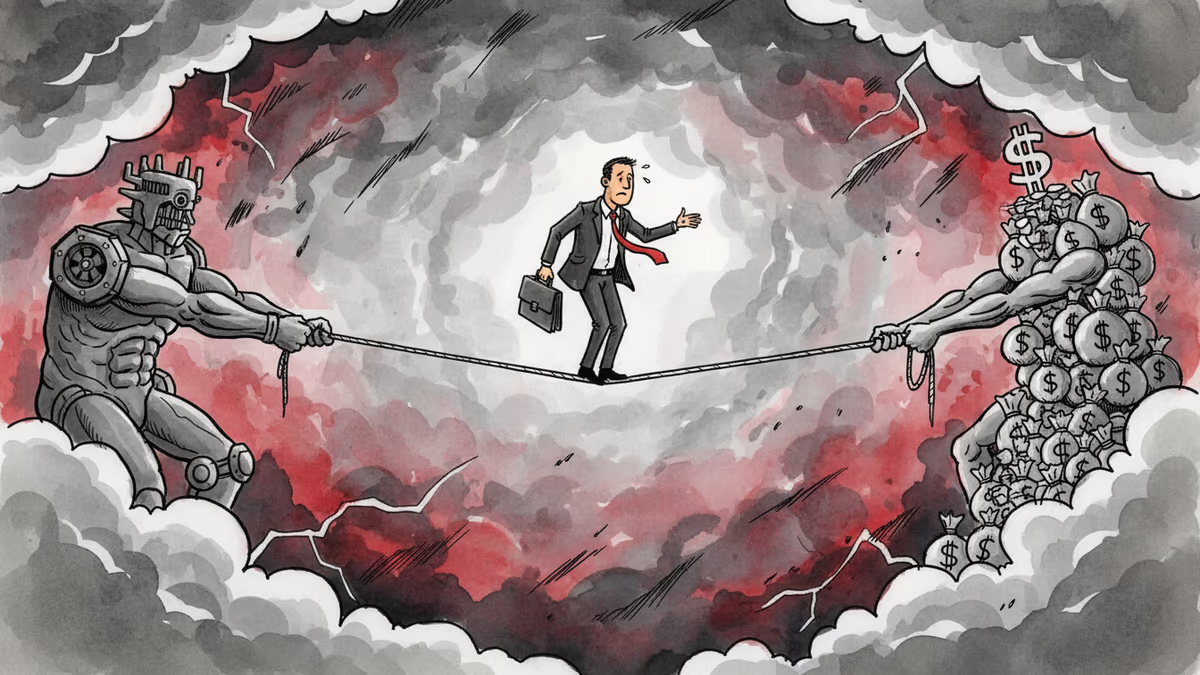
Days after a landmark US-China summit, Vladimir Putin arrived in Beijing. Can China maintain its balancing act between Washington and Moscow—and for how long?
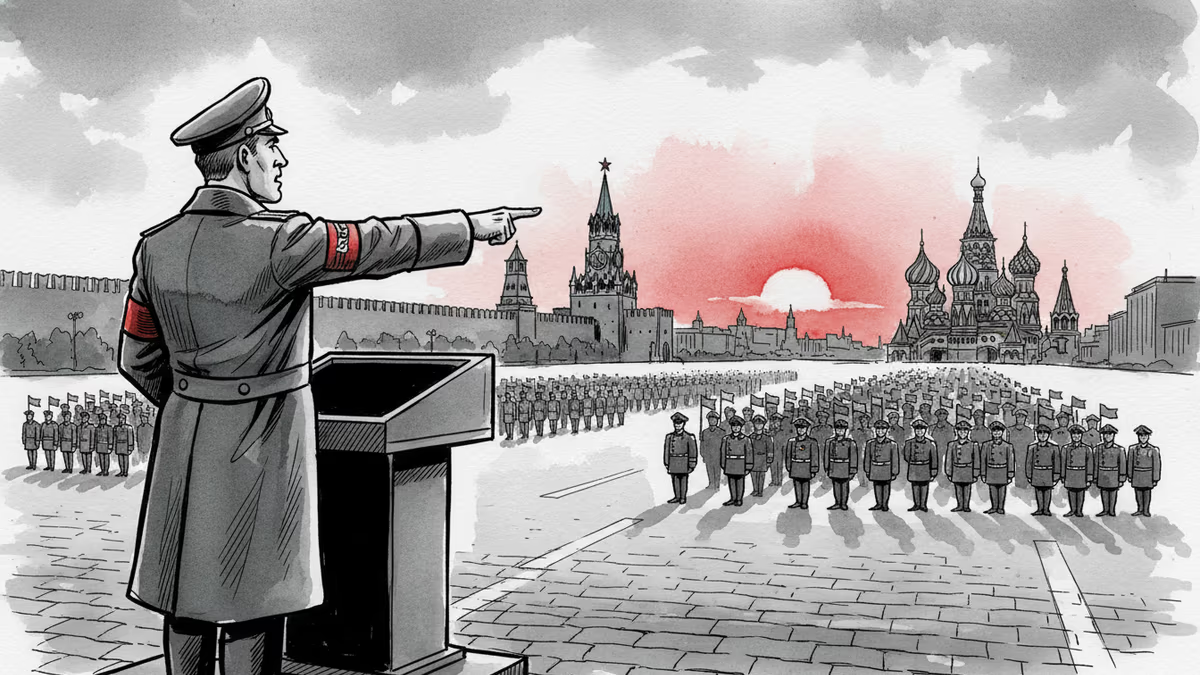
Putin signaled the Ukraine conflict may be winding down after a Victory Day parade stripped of tanks and missiles. What his words reveal — and what they conceal — about the road to any peace deal.
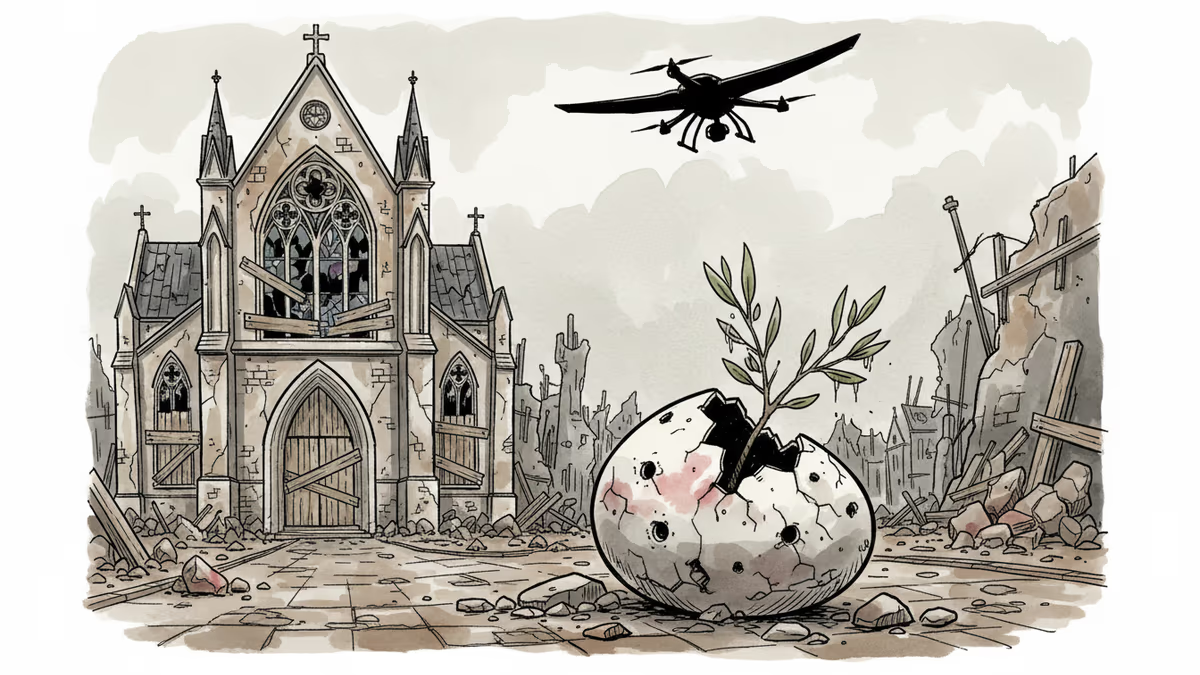
Russia and Ukraine agreed to a 32-hour Easter truce. It held for 38 minutes before air raid sirens sounded over Kharkiv. A dispatch from the frontline.
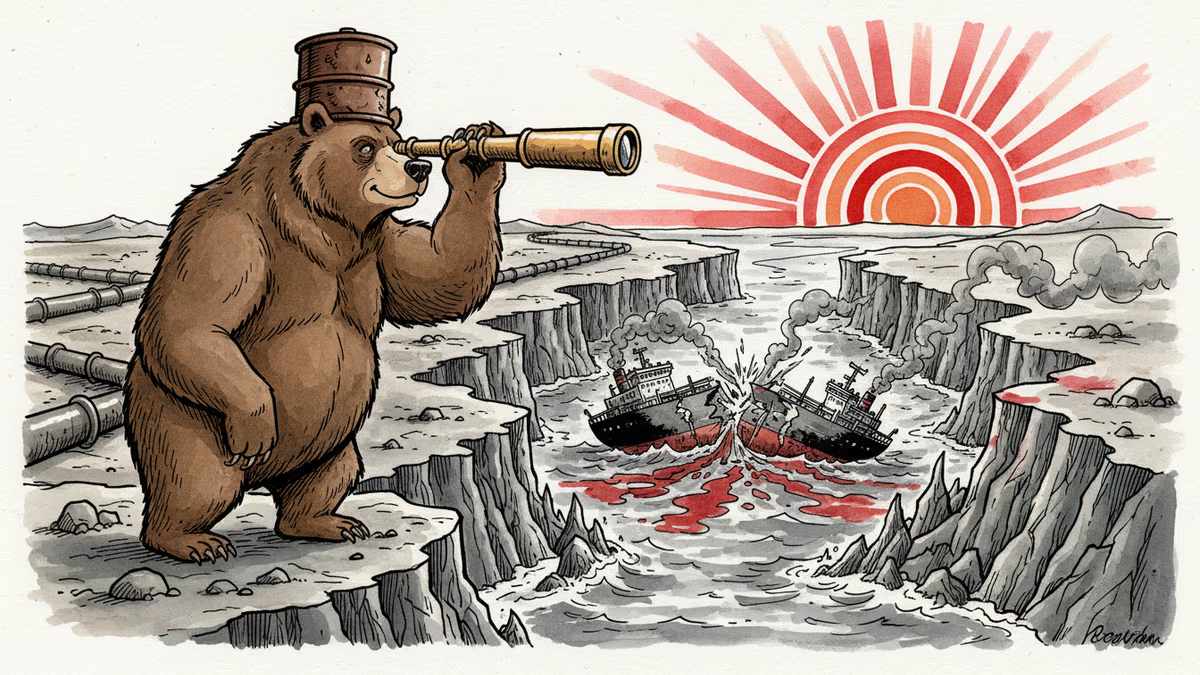
As the Israel-U.S. war on Iran chokes the Strait of Hormuz, Russia is quietly positioning itself to deepen its grip on Asian energy markets. Here's what that means for China, India, and the global order.
Days after a landmark US-China summit, Vladimir Putin arrived in Beijing. Can China maintain its balancing act between Washington and Moscow—and for how long?
Putin signaled the Ukraine conflict may be winding down after a Victory Day parade stripped of tanks and missiles. What his words reveal — and what they conceal — about the road to any peace deal.
Russia and Ukraine agreed to a 32-hour Easter truce. It held for 38 minutes before air raid sirens sounded over Kharkiv. A dispatch from the frontline.
As the Israel-U.S. war on Iran chokes the Strait of Hormuz, Russia is quietly positioning itself to deepen its grip on Asian energy markets. Here's what that means for China, India, and the global order.
Thoughts
Share your thoughts on this article
Sign in to join the conversation