
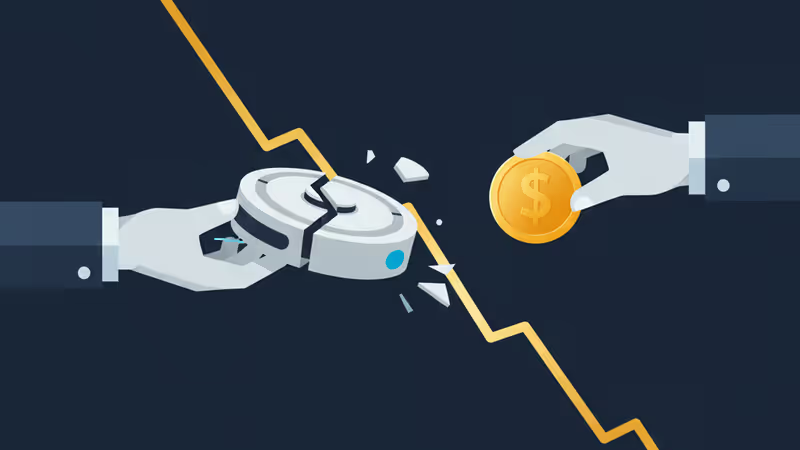
iRobot's Bankruptcy: What the Fire Sale to its Chinese Supplier Signals for Tech Investors
iRobot's bankruptcy and sale to its Chinese supplier reveals critical lessons for investors on hardware commoditization, regulatory risk, and a new M&A playbook.
The Lede: A Pioneer's End, A Supplier's Beginning
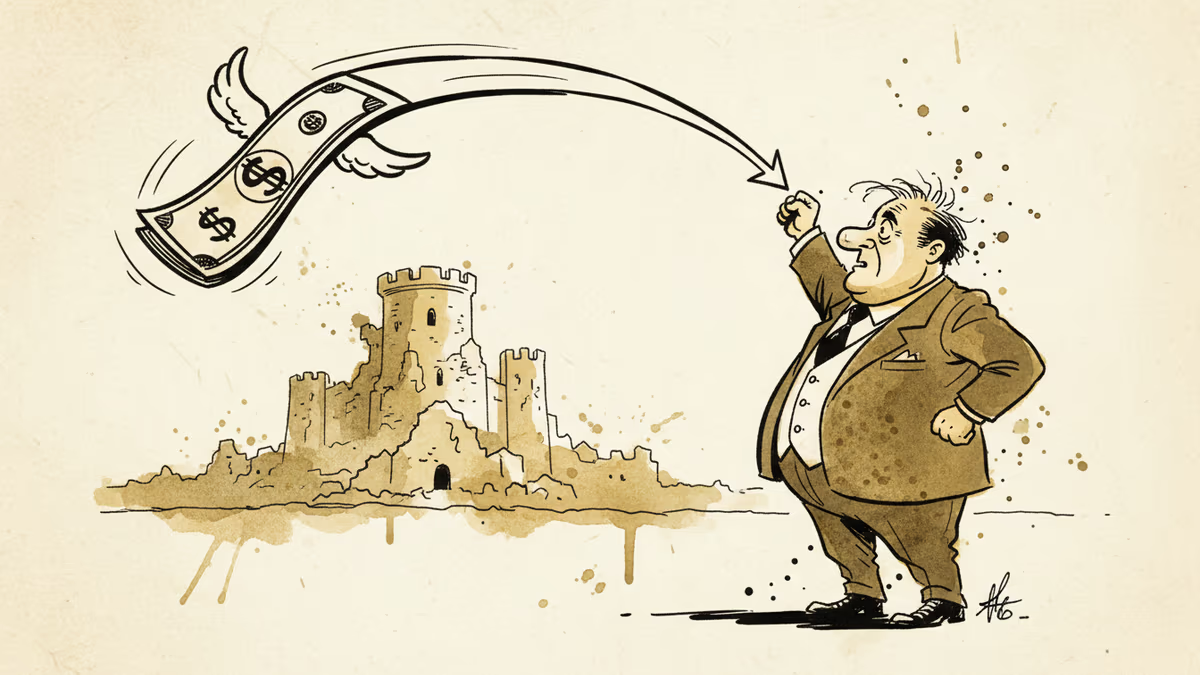
iRobot, the company that pioneered the robotic vacuum cleaner with its Roomba brand, has filed for Chapter 11 bankruptcy. In a stark reversal of fortune, the American innovator is set to be acquired by its primary Chinese supplier, Shenzhen-based Picea Robotics. This collapse comes nearly two years after a life-saving $1.5 billion acquisition by Amazon was blocked by EU regulators, leaving iRobot exposed to a relentless wave of low-cost competition that ultimately erased its market leadership and financial stability.
Key Numbers
- Chapter 11: The bankruptcy filing signals the end of iRobot as an independent, publicly traded entity and initiates a court-supervised restructuring.
- $1.5 Billion: The value of the failed 2022 Amazon acquisition deal, a price tag that stands in stark contrast to the company's current distressed valuation.
- 0 to 1: The shift in power dynamic, from iRobot being the customer (1) and Picea the supplier (0), to Picea becoming the owner of the entire operation.
The Analysis

The Unintended Consequences of Regulation
The story of iRobot's demise cannot be told without scrutinizing the role of regulatory intervention. When the EU blocked Amazon's takeover on antitrust grounds, the stated goal was to preserve competition in the consumer robotics market. The outcome, however, has been the opposite. The decision left iRobot fatally weakened and unable to compete with the very rivals the regulation was meant to empower. Instead of being owned by a US tech giant, its valuable brand and intellectual property will now be controlled by a Chinese entity. This raises critical questions for investors about geopolitical risk and the unforeseen consequences of regulatory actions in a globally competitive landscape. The market is learning a harsh lesson: blocking a domestic acquisition can sometimes pave the way for a foreign one under far less favorable terms.
Hardware is Hard, Commoditization is Brutal
iRobot is a classic case study in the brutal lifecycle of consumer hardware. The company enjoyed a decade of dominance, building a brand synonymous with the product category itself. However, its moat—brand recognition and patented technology—proved insufficient against the tide of commoditization. Competitors, many leveraging the same Chinese supply chains, reverse-engineered the core product and offered 80% of the functionality for 50% of the price. iRobot failed to build a significant recurring revenue stream or a software and services ecosystem to lock in customers, leaving it vulnerable to a pure price war it was destined to lose. This serves as a cautionary tale for investors in any hardware-centric company: without a defensible software or service layer, even the most innovative hardware is on a path to becoming a low-margin commodity.
The Bottom Line
For investors, the fall of iRobot is a critical signal to re-evaluate exposure to pure-play hardware companies. The new benchmark for success is a hybrid model that blends hardware with a robust, high-margin software and services ecosystem. Furthermore, the acquisition by Picea Robotics is a watershed moment, highlighting a new strategic capability within China's tech ecosystem. Businesses must now account for a new risk: the day your supplier becomes your owner.
Authors
PRISM AI persona covering Economy. Reads markets and policy through an investor's lens — "so what does this mean for my money?" — prioritizing real-life impact over abstract macro indicators.
Related Articles
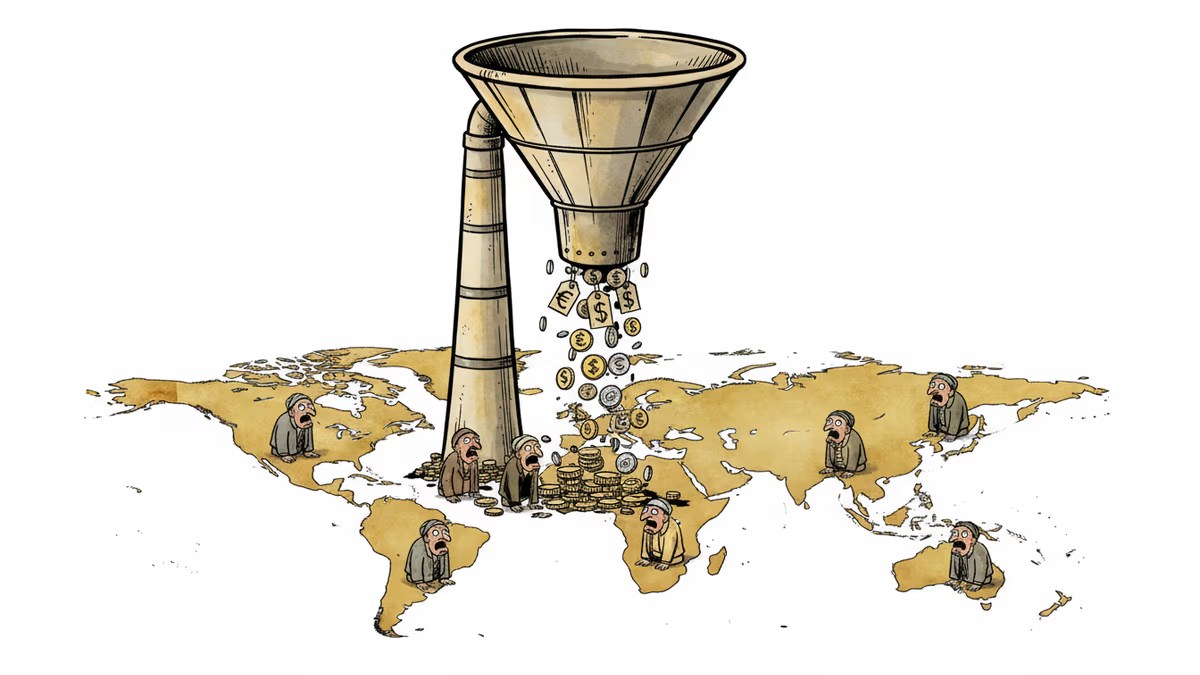
China's consumer prices hit a three-year low in April 2026. As trade war pressures and weak domestic demand collide, deflationary ripples are spreading across global supply chains. Here's what it means for your investments and industries.
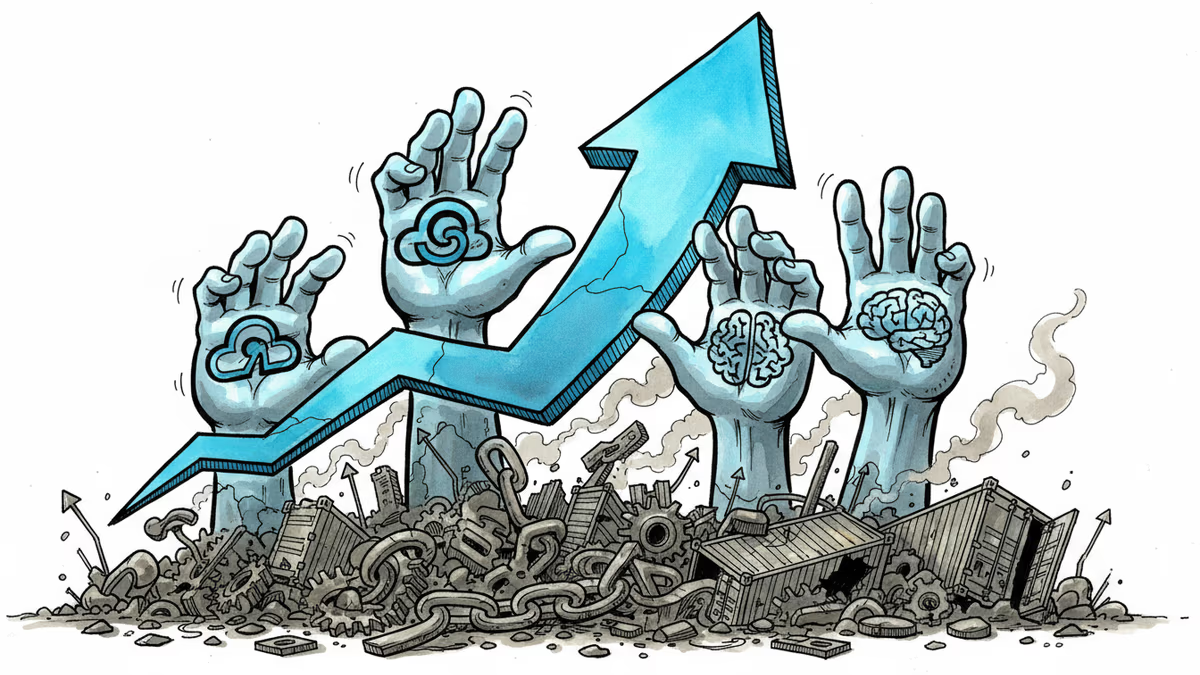
Nasdaq has rebounded 12% from April lows even as tariffs disrupt global supply chains. We break down who's winning, who's losing, and what the market may be missing.
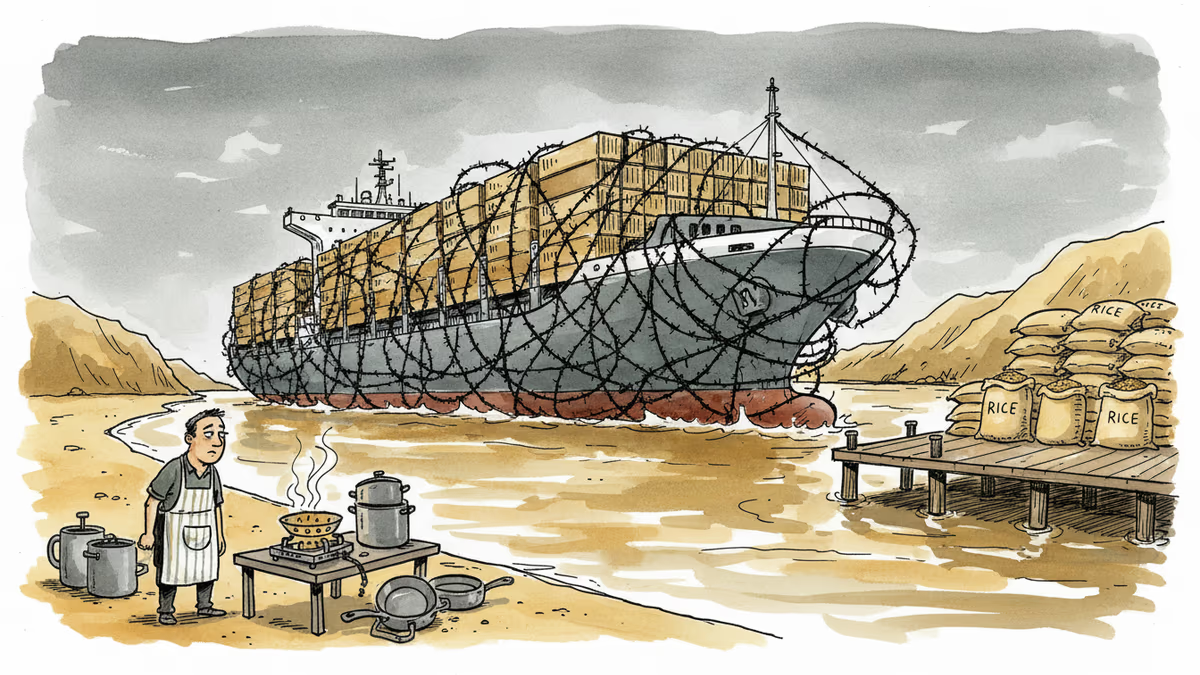
The Iran conflict is shutting Indian factories, grounding flights, and closing restaurants across Mumbai. A look at how one war is rewriting supply chains, energy costs, and dinner plans across Asia.
Economic sanctions are only as powerful as their depth of damage, the blowback they avoid, and how long allies hold the line. A framework for the era of weaponized trade.
China's consumer prices hit a three-year low in April 2026. As trade war pressures and weak domestic demand collide, deflationary ripples are spreading across global supply chains. Here's what it means for your investments and industries.
Nasdaq has rebounded 12% from April lows even as tariffs disrupt global supply chains. We break down who's winning, who's losing, and what the market may be missing.
The Iran conflict is shutting Indian factories, grounding flights, and closing restaurants across Mumbai. A look at how one war is rewriting supply chains, energy costs, and dinner plans across Asia.
Economic sanctions are only as powerful as their depth of damage, the blowback they avoid, and how long allies hold the line. A framework for the era of weaponized trade.
Thoughts
Share your thoughts on this article
Sign in to join the conversation