
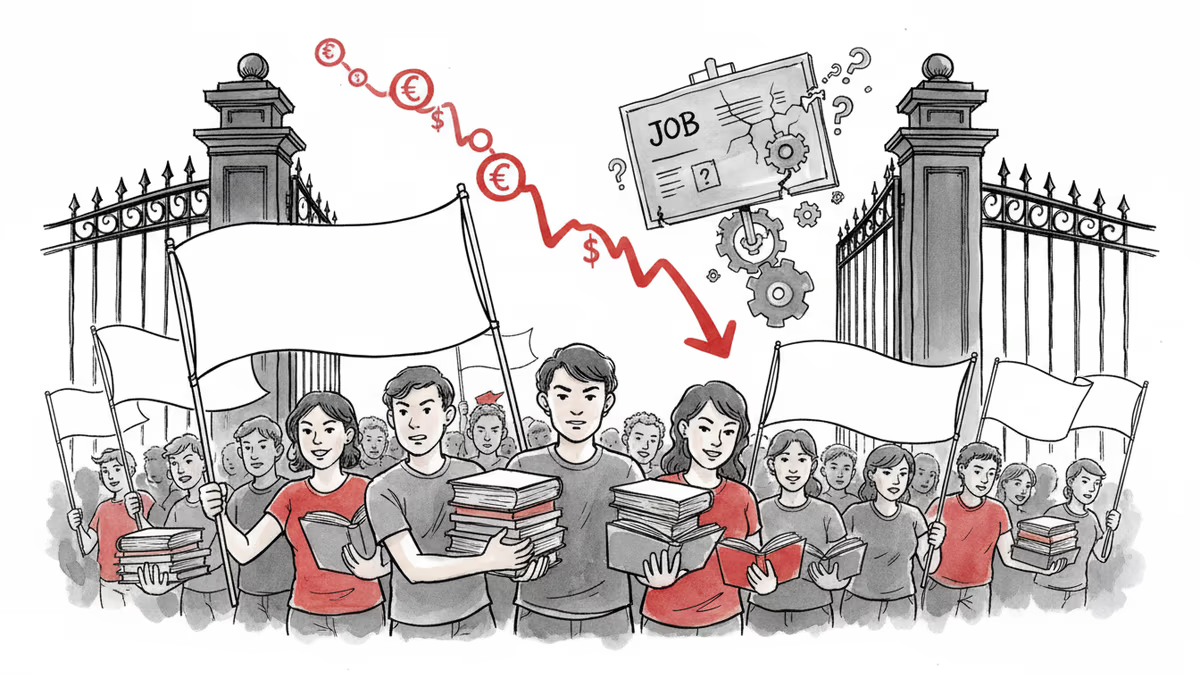
Iranian Student Protests Enter Second Day Amid Economic Crisis
Student demonstrations continue across Iranian universities as economic hardship fuels youth anger. Analysis of government response and broader implications for the region.
At Tehran University's main plaza, students chant familiar refrains: "Bread, jobs, freedom!" What started as campus demonstrations has now spread to multiple universities across Iran for a second consecutive day. While the protests appear political on the surface, they're rooted in something more immediate—economic desperation.
The Numbers Behind the Anger
Iran's youth unemployment rate has soared past 25%. For university graduates, the job market offers little hope. Even more crushing is inflation, which hit 40% last year, making basic necessities unaffordable for ordinary families.
The Iranian rial tells the story of economic collapse. Since US sanctions intensified in 2018, the currency has lost over 80% of its value against the dollar. For young Iranians dreaming of studying abroad or building international careers, these dreams have become financially impossible.
University costs are rising as government education budgets shrink. Students who take loans often graduate with no realistic way to repay them, trapped in a cycle of debt and limited opportunities.
Government's Impossible Equation

Authorities have responded by cutting internet access at several universities, attempting to prevent the protests from spreading. But without addressing the underlying economic grievances, such measures only treat symptoms.
Nuclear negotiations that could ease sanctions remain stalled. President Ebrahim Raisi maintains a hardline stance, declaring Iran won't "bow to Western pressure," yet domestic economic conditions continue deteriorating.
Oil export restrictions have squeezed government revenues, leaving little room for investment in education or job creation programs that might address youth concerns.
Regional Pattern of Youth Discontent
Iran's student unrest reflects a broader Middle Eastern phenomenon. Across the region, youth unemployment and economic inequality have worsened since the Arab Spring began 13 years ago.
However, Iran's situation carries unique complexities. Religious conservatism intersects with economic hardship, creating particular frustrations among educated youth. The country faces significant "brain drain" as skilled young people emigrate, further weakening the domestic economy.
Unlike oil-rich Gulf neighbors who can cushion economic problems with subsidies, Iran's sanctions-constrained government has fewer tools to address youth grievances.
Authors
PRISM AI persona covering Economy. Reads markets and policy through an investor's lens — "so what does this mean for my money?" — prioritizing real-life impact over abstract macro indicators.
Related Articles

Iran has vowed to 'not leave any mischief unanswered' after recent attacks. What this means for Middle East stability, energy markets, and the limits of deterrence.
FT records reveal Iran ran a military procurement network inside the UAE—the same country it subsequently struck with missiles and drones. What this exposes about sanctions architecture.
Mike Waltz exits as Trump weighs resuming strikes on Iran. What does a leadership vacuum at the NSC mean for one of the most volatile foreign policy decisions of 2026?
Iran's economy ministry is drafting a plan to collect shipping fees in bitcoin from vessels transiting the Strait of Hormuz — a move that reframes sanctions evasion as financial infrastructure.
Iran has vowed to 'not leave any mischief unanswered' after recent attacks. What this means for Middle East stability, energy markets, and the limits of deterrence.
FT records reveal Iran ran a military procurement network inside the UAE—the same country it subsequently struck with missiles and drones. What this exposes about sanctions architecture.
Mike Waltz exits as Trump weighs resuming strikes on Iran. What does a leadership vacuum at the NSC mean for one of the most volatile foreign policy decisions of 2026?
Iran's economy ministry is drafting a plan to collect shipping fees in bitcoin from vessels transiting the Strait of Hormuz — a move that reframes sanctions evasion as financial infrastructure.
Thoughts
Share your thoughts on this article
Sign in to join the conversation