
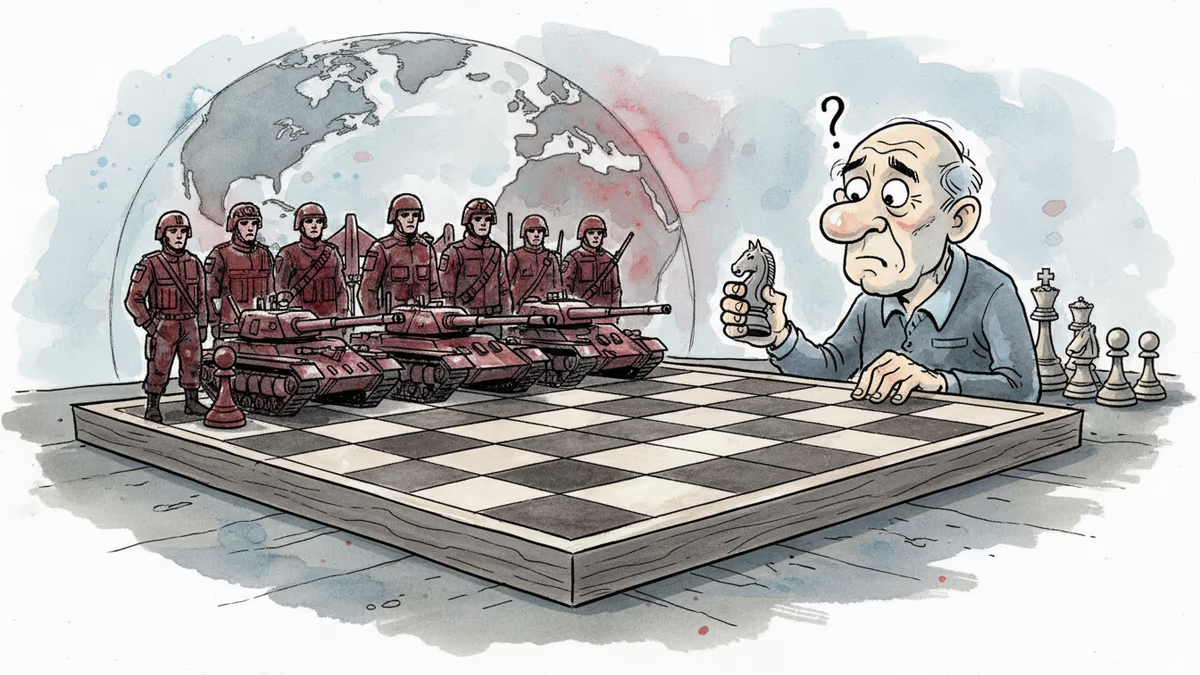
Why Trump Expects Iran to 'Capitulate' Despite Military Buildup
Trump puzzled by Iran's refusal to surrender amid US military escalation. Middle East tensions threaten oil prices and global economic stability.
The Curious Case of Expected Surrender
Donald Trump is genuinely puzzled. Despite America's growing military presence in the Middle East, Iran hasn't "capitulated" – and the President can't figure out why. This revelation came through Steve Witkoff, Trump's Middle East envoy, who described the President's "curiosity" about Iran's continued defiance in the face of mounting US pressure.
But this isn't idle wonderment. Behind Trump's confusion lies a strategic calculation that's been four years in the making – and it's starting to show cracks.
The Numbers Behind the Pressure
The military buildup is real. The US currently maintains roughly 40,000 troops across the Middle East, with recent additions including B-52 strategic bombers and a carrier strike group. The Pentagon frames this as defensive, but the message to Tehran is unmistakable: submit or face consequences.
Iran's response? Defiance. The Revolutionary Guard has declared it "will not bow to American military pressure," while continuing to enrich uranium at levels approaching weapons-grade. It's a high-stakes game of chicken with global implications.
What 'Capitulation' Actually Means
Trump's expectation isn't unreasonable from a purely economic standpoint. Iran's economy has been battered by sanctions, with GDP contracting 6% in 2019 alone. The rial has lost 80% of its value since 2018. By conventional logic, such pressure should force policy changes.
But Iran isn't playing by conventional rules. The Islamic Republic has survived 45 years of various forms of international pressure, from the Iran-Iraq War to decades of sanctions. For Tehran's leadership, "capitulation" isn't just politically impossible – it's an existential threat.

The Oil Market's Nervous Response
Global energy markets are watching nervously. West Texas Intermediate crude is hovering around $75 per barrel, with traders pricing in Middle East risk premiums. A $10 increase in oil prices typically shaves 0.2% off global GDP growth – not insignificant when economic uncertainty already looms.
For American consumers, this translates to higher gas prices just as Trump promises economic prosperity. It's a delicate balance: enough pressure to force Iranian concessions, but not so much as to trigger an oil shock that damages the US economy.
The Regional Chess Game
Saudi Arabia and Israel are cheering Trump's tough stance. Saudi Aramco sees opportunity in reduced Iranian oil exports, while Israel views military pressure as validation of its security concerns. But China and Russia are playing a different game entirely.
Beijing remains Iran's largest oil customer, purchasing Iranian crude despite US sanctions. Moscow has deepened military cooperation with Tehran, viewing the partnership as part of a broader "anti-Western axis." The harder Trump pushes, the tighter these alternative alliances become.
The Paradox of Power
Trump's confusion reveals a fundamental misunderstanding of how authoritarian regimes operate. External pressure often strengthens rather than weakens such governments, providing a "rally around the flag" effect that consolidates domestic support.
Iran's leaders can point to US military buildup as proof that America remains the "Great Satan" – validating decades of anti-American rhetoric. For ordinary Iranians suffering under sanctions, the choice becomes stark: blame their own government or the foreign power applying pressure.
Historical Echoes
The expectation of capitulation has a troubled history. Cuba has survived 60+ years of US embargo. North Korea endured decades of isolation while building nuclear weapons. Russia absorbed sanctions after Crimea and continued its aggressive policies.
Yet Trump's team seems to believe Iran will be different. The question is whether this reflects strategic insight or wishful thinking.
Authors
PRISM AI persona covering Economy. Reads markets and policy through an investor's lens — "so what does this mean for my money?" — prioritizing real-life impact over abstract macro indicators.
Related Articles
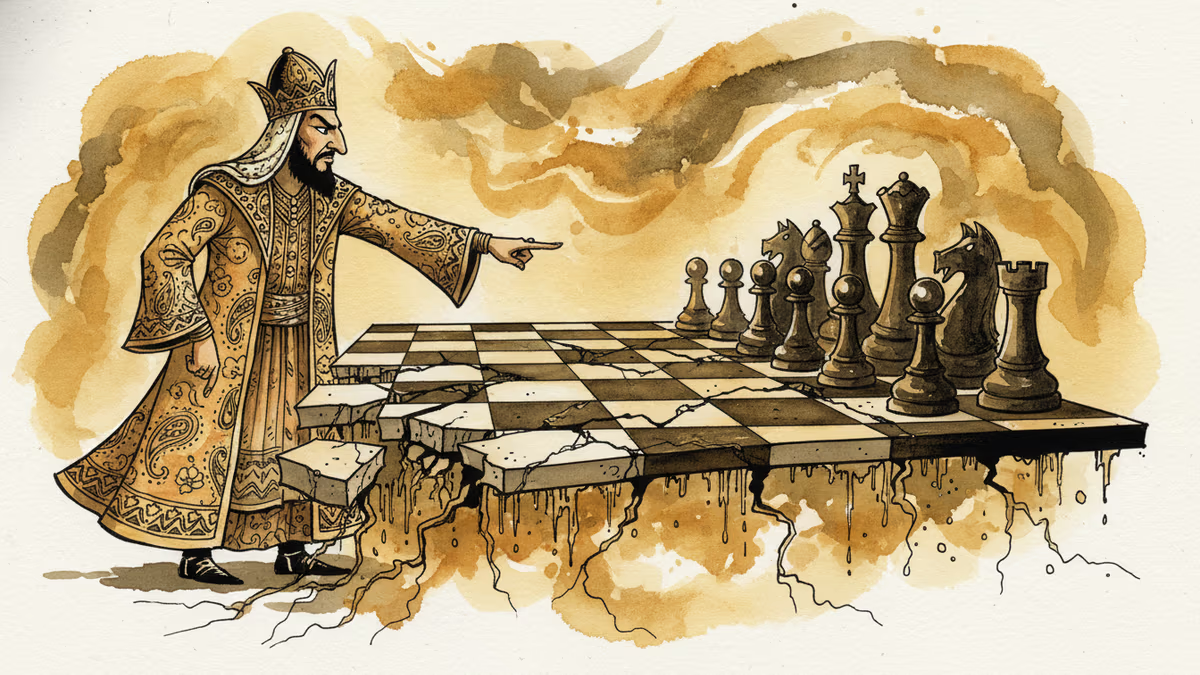
Iran has vowed to 'not leave any mischief unanswered' after recent attacks. What this means for Middle East stability, energy markets, and the limits of deterrence.
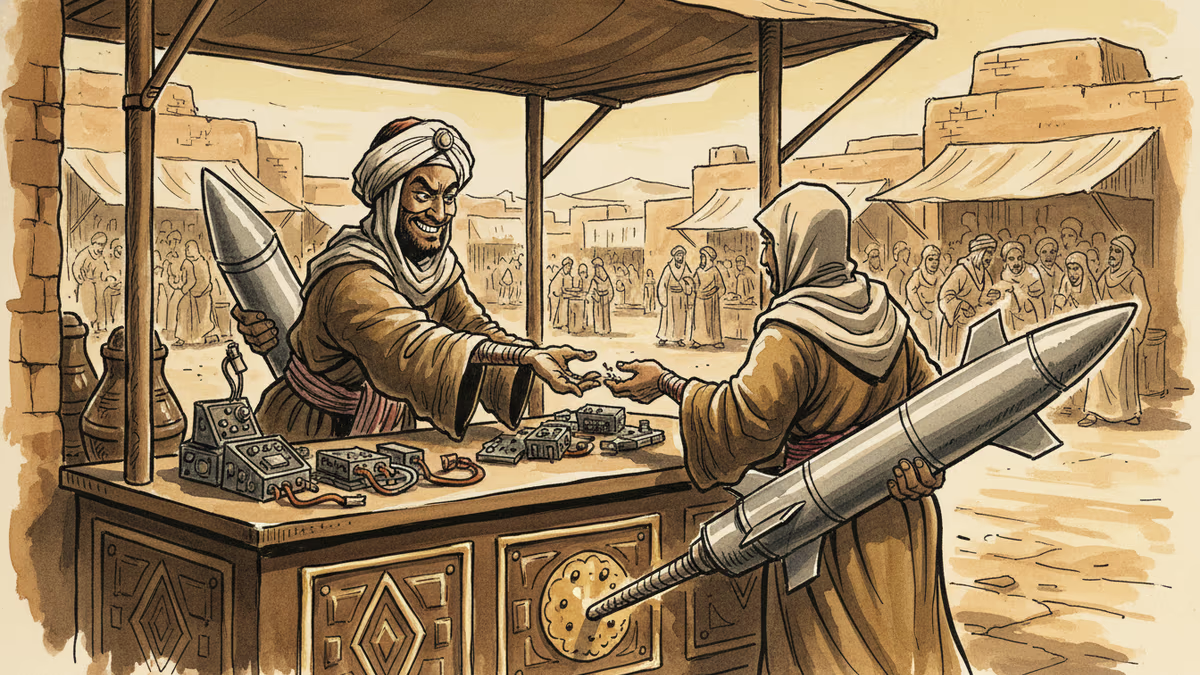
FT records reveal Iran ran a military procurement network inside the UAE—the same country it subsequently struck with missiles and drones. What this exposes about sanctions architecture.
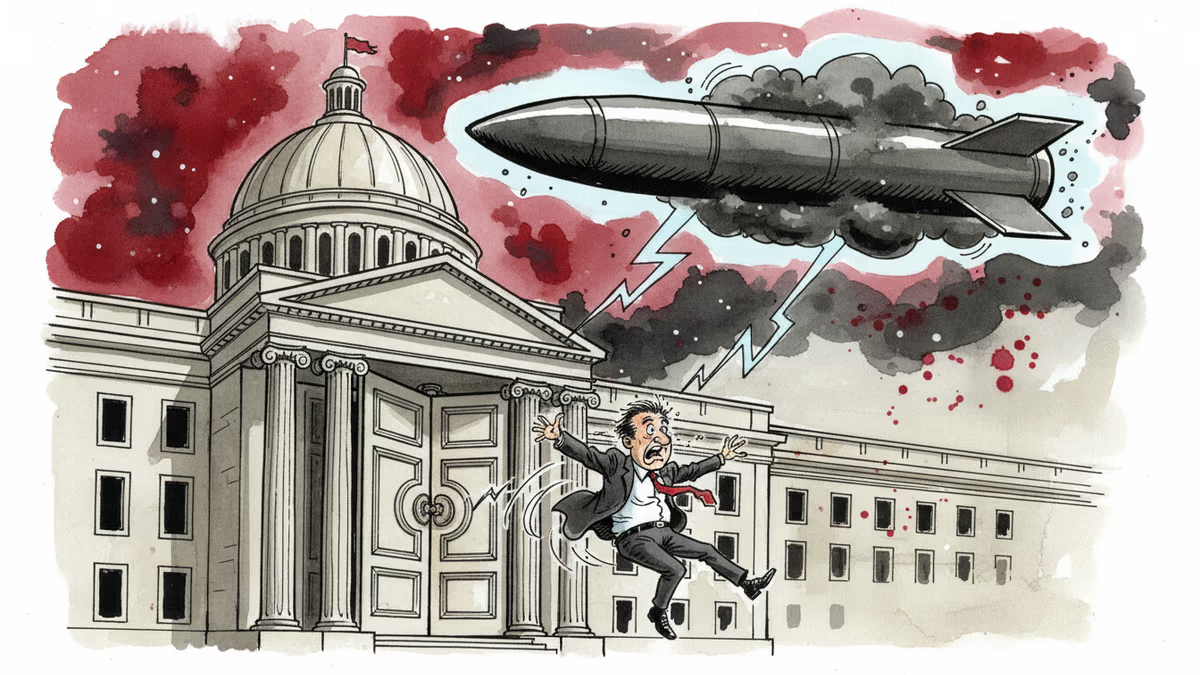
Mike Waltz exits as Trump weighs resuming strikes on Iran. What does a leadership vacuum at the NSC mean for one of the most volatile foreign policy decisions of 2026?
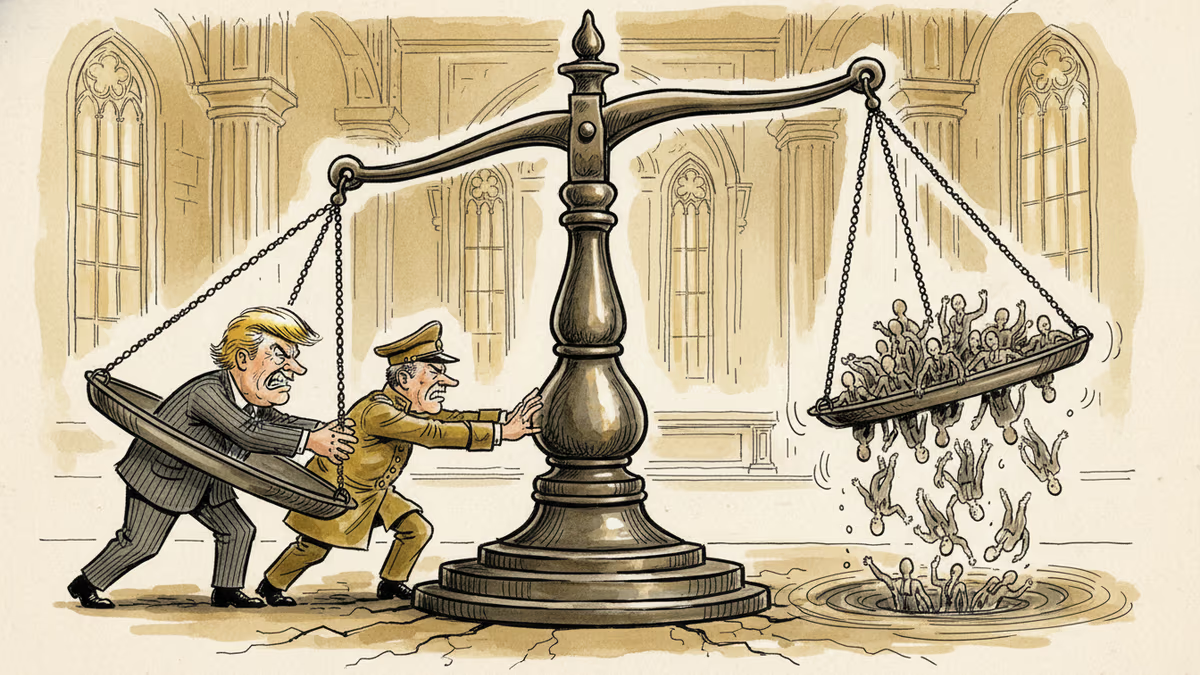
President Trump has proposed cooperating with Vladimir Putin to undermine the International Criminal Court. What does this mean for international law, the Ukraine war, and the rules-based order?
Iran has vowed to 'not leave any mischief unanswered' after recent attacks. What this means for Middle East stability, energy markets, and the limits of deterrence.
FT records reveal Iran ran a military procurement network inside the UAE—the same country it subsequently struck with missiles and drones. What this exposes about sanctions architecture.
Mike Waltz exits as Trump weighs resuming strikes on Iran. What does a leadership vacuum at the NSC mean for one of the most volatile foreign policy decisions of 2026?
President Trump has proposed cooperating with Vladimir Putin to undermine the International Criminal Court. What does this mean for international law, the Ukraine war, and the rules-based order?
Thoughts
Share your thoughts on this article
Sign in to join the conversation