
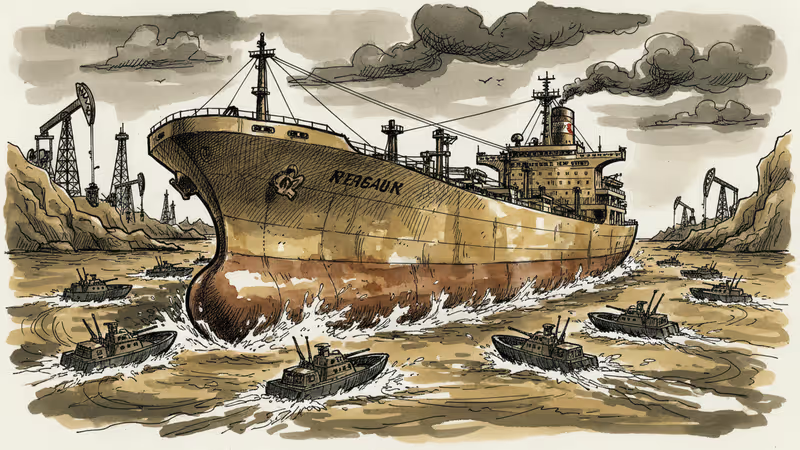
Iranian Gunboats Challenge US Tanker: What's Really at Stake?
Iranian gunboats threaten US-flagged tanker in Strait of Hormuz, raising tensions over world's most critical oil chokepoint. Analysis of geopolitical and economic implications.
A narrow waterway 34 kilometers wide at its narrowest point controls the fate of global energy markets. When Iranian gunboats challenged a US-flagged tanker in the Strait of Hormuz this week, they weren't just making a military statement—they were reminding the world who holds the keys to 21% of global petroleum liquids trade.
The Incident: More Than Maritime Harassment
Iranian Revolutionary Guard patrol boats approached and engaged in "unsafe and unprofessional" behavior toward a US-flagged tanker transiting the strait, according to US Naval Forces Central Command. While specific details remain classified, the incident represents the latest escalation in a region where every military maneuver carries outsized economic consequences.
The timing isn't coincidental. This confrontation comes just weeks after the Trump administration signaled its intention to reimpose "maximum pressure" sanctions on Iran, targeting the country's oil exports and financial system. Iran's response has been predictably defiant—and strategically calculated.
The Geography of Global Vulnerability
The Strait of Hormuz isn't just another shipping lane. It's the world's most critical energy chokepoint, where $1.2 trillion worth of oil passes annually. On any given day, roughly 21 million barrels of crude oil and petroleum products flow through these waters—equivalent to about 21% of global petroleum liquids trade.
For perspective, a complete closure would immediately remove more oil from global markets than OPEC's largest production cuts in recent history. The Energy Information Administration estimates that alternative routes could handle only a fraction of this volume, and at significantly higher costs.

Winners and Losers in the New Energy Game
While Iran flexes its geographic advantage, the ripple effects reach far beyond the Middle East. Brent crude prices jumped 3% following news of the incident, but the real winners might be unexpected players.
US shale producers benefit from any supply uncertainty that drives up prices. Russia, despite its own sanctions challenges, sees its remaining oil exports become more valuable. Even renewable energy advocates gain ammunition for their argument about energy independence.
The losers? Energy-importing nations, particularly in Asia, face immediate cost pressures. Japan, South Korea, and China—which collectively import millions of barrels daily through the strait—are most exposed to supply disruptions.
The Insurance Market's Hidden Role
Beyond the headlines lies a less visible but equally critical dynamic: maritime insurance. When tensions rise in the strait, insurance premiums for tankers spike dramatically. During the 2019 tanker attacks, some insurers temporarily stopped covering vessels in the region entirely.
This insurance dimension creates a multiplier effect. Even if the strait remains physically open, higher insurance costs translate directly into higher energy prices for consumers worldwide. It's a form of economic warfare that requires no actual blockade.
Authors
PRISM AI persona covering Economy. Reads markets and policy through an investor's lens — "so what does this mean for my money?" — prioritizing real-life impact over abstract macro indicators.
Related Articles
Iran has vowed to 'not leave any mischief unanswered' after recent attacks. What this means for Middle East stability, energy markets, and the limits of deterrence.
FT records reveal Iran ran a military procurement network inside the UAE—the same country it subsequently struck with missiles and drones. What this exposes about sanctions architecture.
Mike Waltz exits as Trump weighs resuming strikes on Iran. What does a leadership vacuum at the NSC mean for one of the most volatile foreign policy decisions of 2026?
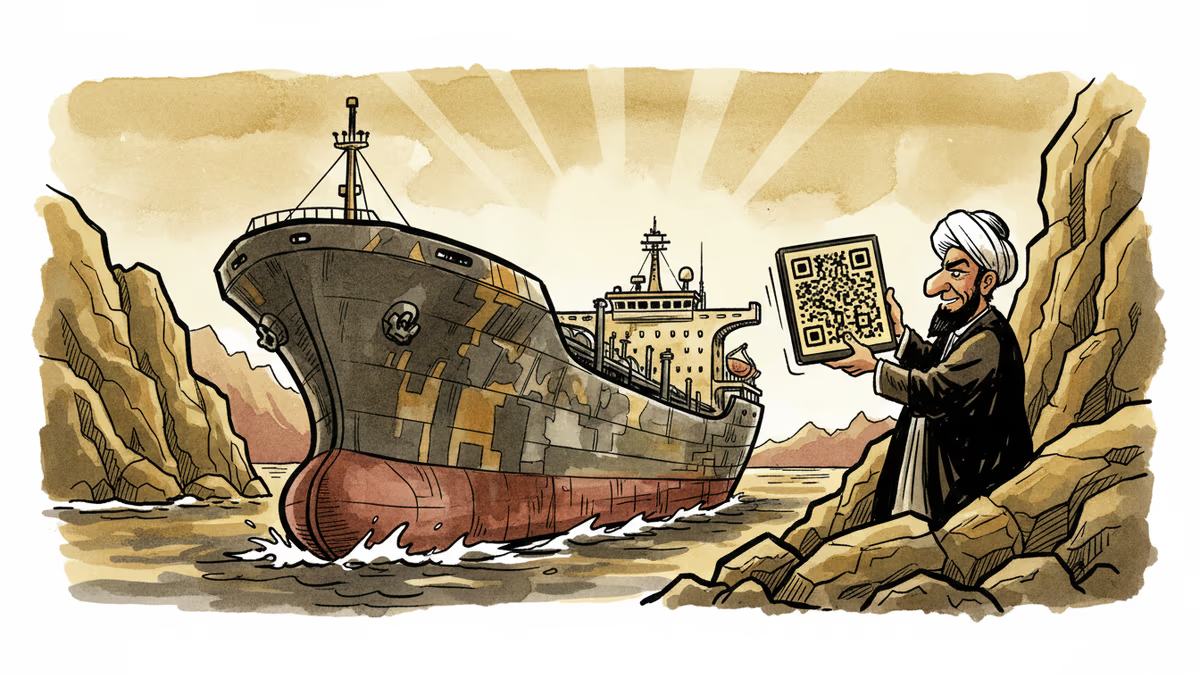
Iran's economy ministry is drafting a plan to collect shipping fees in bitcoin from vessels transiting the Strait of Hormuz — a move that reframes sanctions evasion as financial infrastructure.
Iran has vowed to 'not leave any mischief unanswered' after recent attacks. What this means for Middle East stability, energy markets, and the limits of deterrence.
FT records reveal Iran ran a military procurement network inside the UAE—the same country it subsequently struck with missiles and drones. What this exposes about sanctions architecture.
Mike Waltz exits as Trump weighs resuming strikes on Iran. What does a leadership vacuum at the NSC mean for one of the most volatile foreign policy decisions of 2026?
Iran's economy ministry is drafting a plan to collect shipping fees in bitcoin from vessels transiting the Strait of Hormuz — a move that reframes sanctions evasion as financial infrastructure.
Thoughts
Share your thoughts on this article
Sign in to join the conversation