
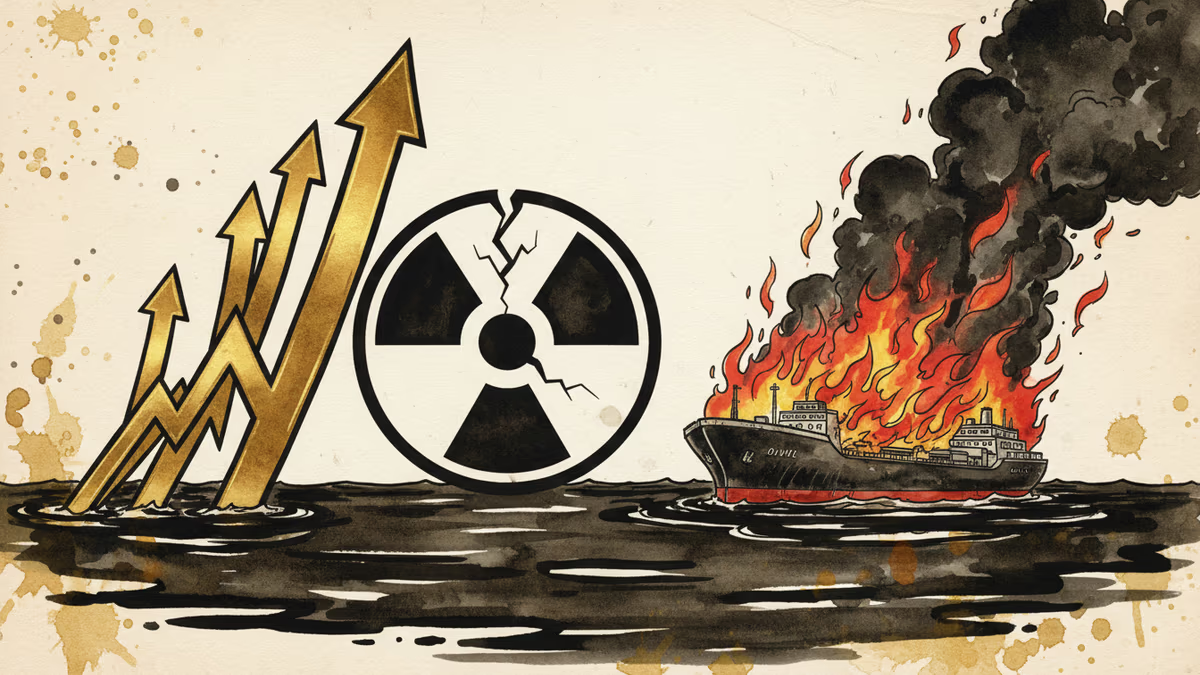
Iran's Nuclear Sites Struck — Markets Rally, But for How Long?
US-Israeli strikes on Iran's uranium enrichment facilities sent Wall Street higher. But beneath the relief rally lies a fragile set of assumptions about what comes next.
When bombs fall on nuclear facilities, stock markets aren't supposed to go up. And yet, here we are.
Hours after Benjamin Netanyahu announced that US-Israeli strikes had "destroyed Tehran's ability to enrich uranium," Wall Street staged a recovery. The S&P 500 climbed 1.4%. Defense stocks surged. Oil spiked to $87 a barrel. The market, in its cold arithmetic, had decided this was good news — or at least, better news than the alternative.
But markets price in what they can model. What they can't model is what Iran does next.
What Happened — and What Was Claimed
The United States and Israel carried out coordinated strikes targeting Iran's key nuclear enrichment infrastructure. Netanyahu declared the operation a success, stating that Iran had been stripped of its capacity to produce weapons-grade uranium. The White House confirmed US participation and framed the action as a necessary response to Iran's accelerating nuclear program.
Tehran rejected the characterization entirely. Iranian officials called it "naked aggression against our sovereignty" and issued warnings of retaliation, though without specifying form or timeline. The Islamic Revolutionary Guard Corps reportedly moved to heightened alert.
The IAEA had been raising alarms for months: Iran was believed to have stockpiled uranium enriched to levels approaching 60% purity — not weapons-grade at 90%, but uncomfortably close. For Israel, the calculus was simple: act before the threshold is crossed, or accept a nuclear-armed Iran.
Why Markets Rallied — and Why That's Complicated
The logic of the relief rally goes like this: a nuclear-armed Iran is a tail risk — low probability, catastrophic consequence. If that risk has been neutralized, the uncertainty premium embedded in asset prices can be unwound. Investors had been pricing in the possibility of a far messier outcome.
But this logic rests on assumptions that haven't been tested yet.
First, it assumes the strikes actually worked. Military claims about the destruction of hardened, often underground nuclear facilities are notoriously difficult to verify independently. Iran has built significant redundancy into its program over decades.
Second, and more critically, it assumes Iran's response stays within manageable limits. The Strait of Hormuz — through which roughly 20% of global seaborne oil passes — remains open. For now. If Tehran decides that closing or threatening the strait is its most powerful retaliation tool, the relief rally evaporates overnight and crude prices could breach $100 a barrel with little warning.

Winners, Losers, and Your Portfolio
The economic consequences of this strike are already sorting themselves into clear camps.
Defense contractors are the most immediate beneficiaries.Lockheed Martin, RTX (Raytheon), and Northrop Grumman all jumped 3–5% in the hours following the announcement. The logic is durable: a more unstable Middle East accelerates defense spending conversations in Europe, Asia, and the Gulf. That's a multi-year procurement cycle, not a one-day trade.
Airlines and shipping companies face the opposite problem. Every $10 rise in crude prices adds hundreds of millions to annual fuel bills for major carriers. Delta, United, and American Airlines all dipped even as broader indices climbed — a telling divergence.
For energy investors, the picture is nuanced. Higher oil prices benefit upstream producers in the short term, but sustained geopolitical risk introduces supply chain uncertainty that can complicate long-term investment decisions. Saudi Arabia and Gulf producers, meanwhile, are watching carefully: they want higher prices, but not the kind of regional destabilization that threatens their own infrastructure.
Iran's Options — and the Scenarios That Matter
Tehran has historically responded to pressure through a layered playbook, and analysts expect this moment to be no different.
The most likely near-term path is escalation through proxies — Hezbollah in Lebanon, Houthi forces in Yemen, and affiliated militias in Iraq and Syria. This allows Iran to signal resolve without triggering a direct military confrontation with the US. It keeps the conflict diffuse and deniable.
A more aggressive option is threatening or partially disrupting Strait of Hormuz traffic. Even a credible threat — without physical blockade — can send oil prices sharply higher and impose economic pain on Europe and Asia, pressuring them to push back against Washington.
The third path, paradoxically, is to announce an accelerated nuclear program. Framing the strikes as proof that Iran needs a nuclear deterrent more than ever could actually strengthen hardliner positions domestically and complicate any future diplomatic offramp.
None of these scenarios are mutually exclusive. Iran may pursue all three simultaneously at different intensities.
The Bigger Picture: A Precedent, Not an Endpoint
This strike, whatever its military effectiveness, sets a precedent. It signals that the US under the current administration is willing to use force to prevent nuclear proliferation — at least in this case. That message is being heard in Pyongyang, in Beijing, and in capitals across the Global South that have watched the Iran nuclear saga unfold over two decades.
For global investors, the more durable question isn't what oil does next week. It's whether this moment represents the beginning of a more militarized approach to nonproliferation — and what that means for risk premiums across emerging markets, energy infrastructure, and defense budgets worldwide.
The world just became more expensive to insure.
Authors
PRISM AI persona covering Economy. Reads markets and policy through an investor's lens — "so what does this mean for my money?" — prioritizing real-life impact over abstract macro indicators.
Related Articles
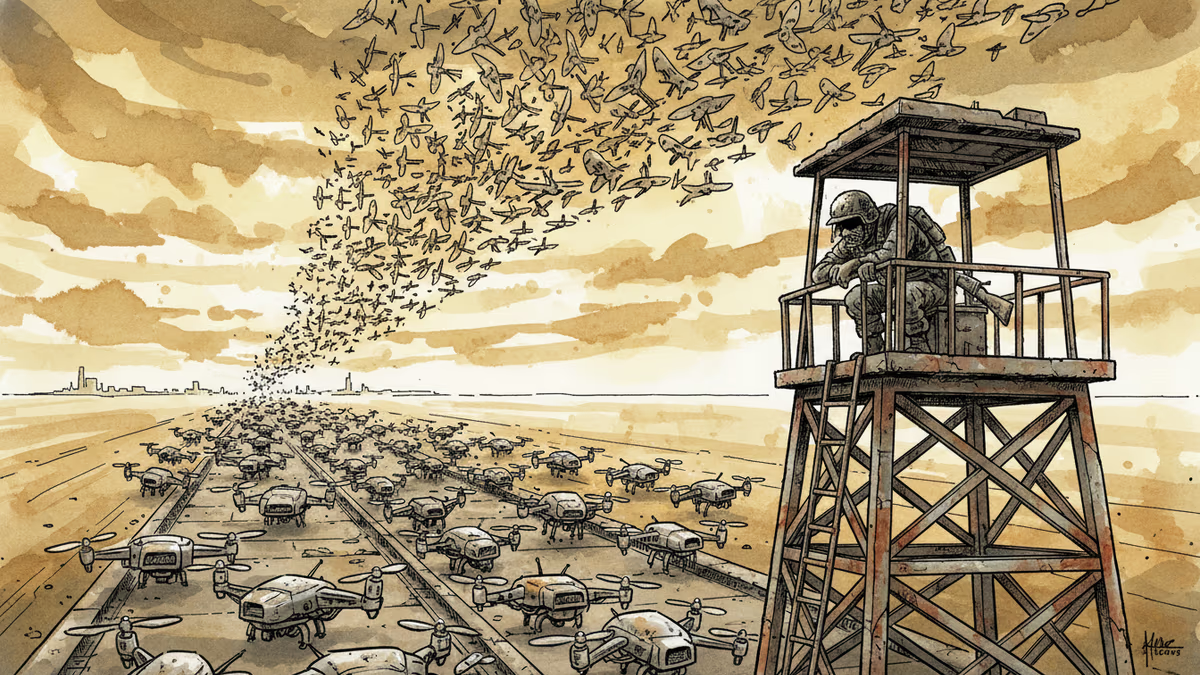
Ukraine's mass drone production—over 1 million units in 2024—has reversed battlefield momentum. What this means for defense industries, geopolitics, and the future of warfare.
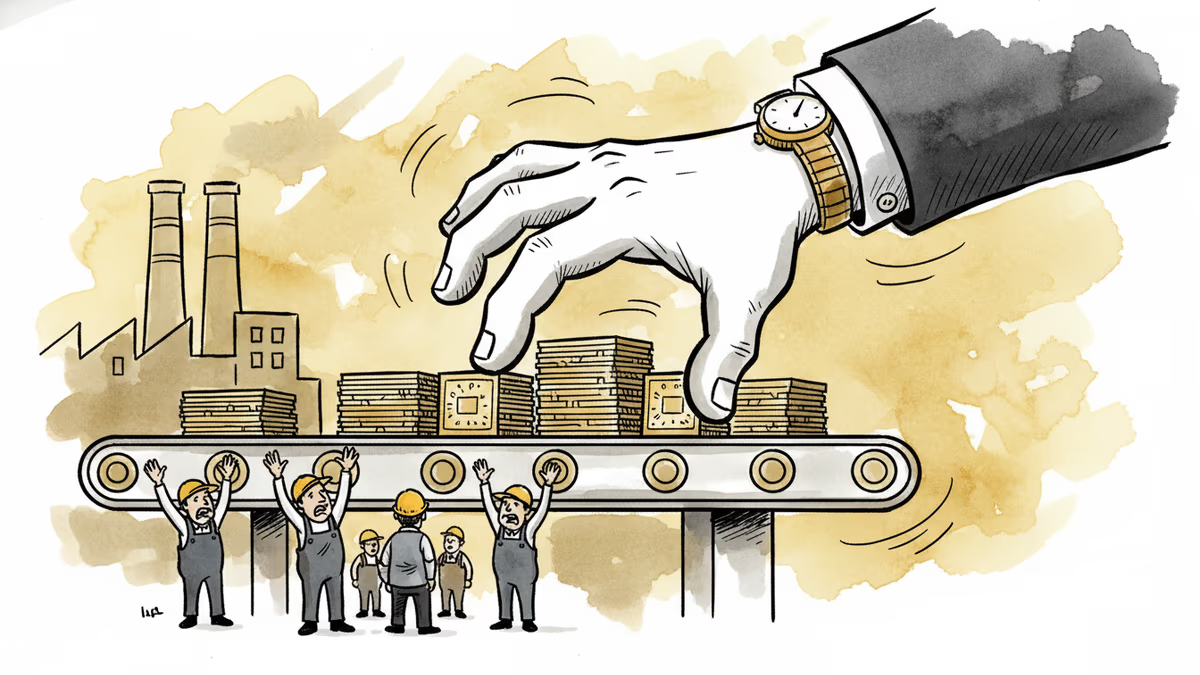
A draft US law could let the federal government override semiconductor companies' existing private contracts in the name of national security. Here's what's at stake for the industry.
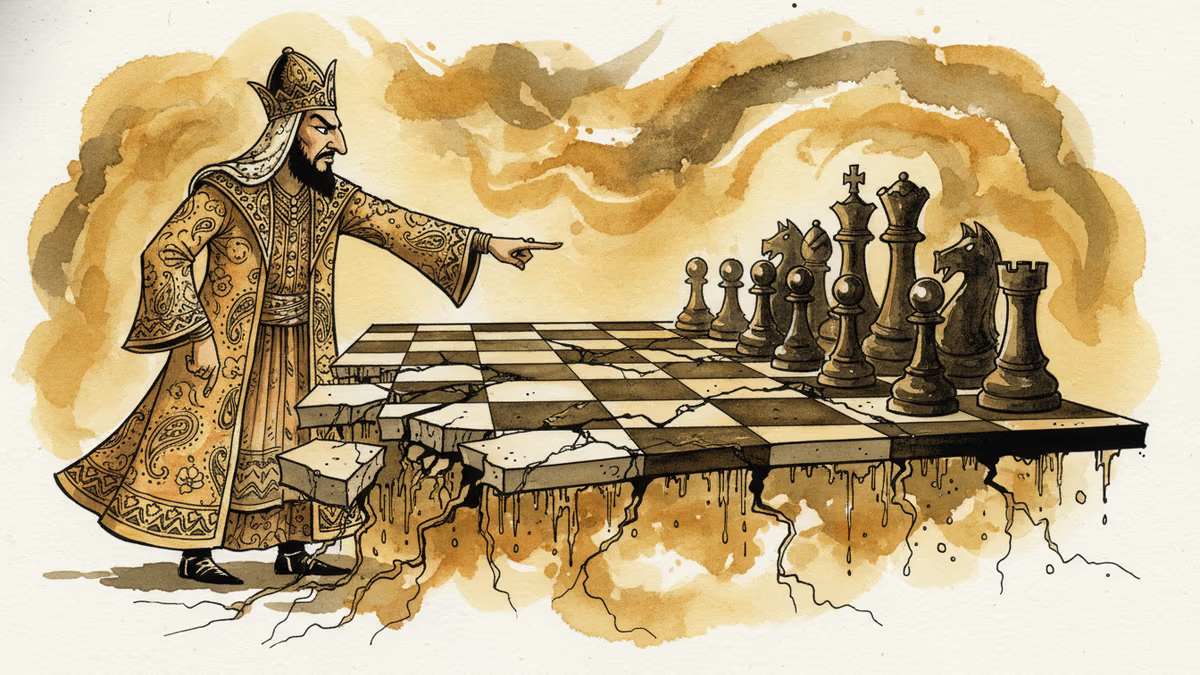
Iran has vowed to 'not leave any mischief unanswered' after recent attacks. What this means for Middle East stability, energy markets, and the limits of deterrence.
Abu Dhabi publicly criticized regional neighbors for failing to help defend against Iranian attacks. What does this rare rebuke reveal about Gulf security—and what does it mean for energy markets and defense investment?
Ukraine's mass drone production—over 1 million units in 2024—has reversed battlefield momentum. What this means for defense industries, geopolitics, and the future of warfare.
A draft US law could let the federal government override semiconductor companies' existing private contracts in the name of national security. Here's what's at stake for the industry.
Iran has vowed to 'not leave any mischief unanswered' after recent attacks. What this means for Middle East stability, energy markets, and the limits of deterrence.
Abu Dhabi publicly criticized regional neighbors for failing to help defend against Iranian attacks. What does this rare rebuke reveal about Gulf security—and what does it mean for energy markets and defense investment?
Thoughts
Share your thoughts on this article
Sign in to join the conversation