
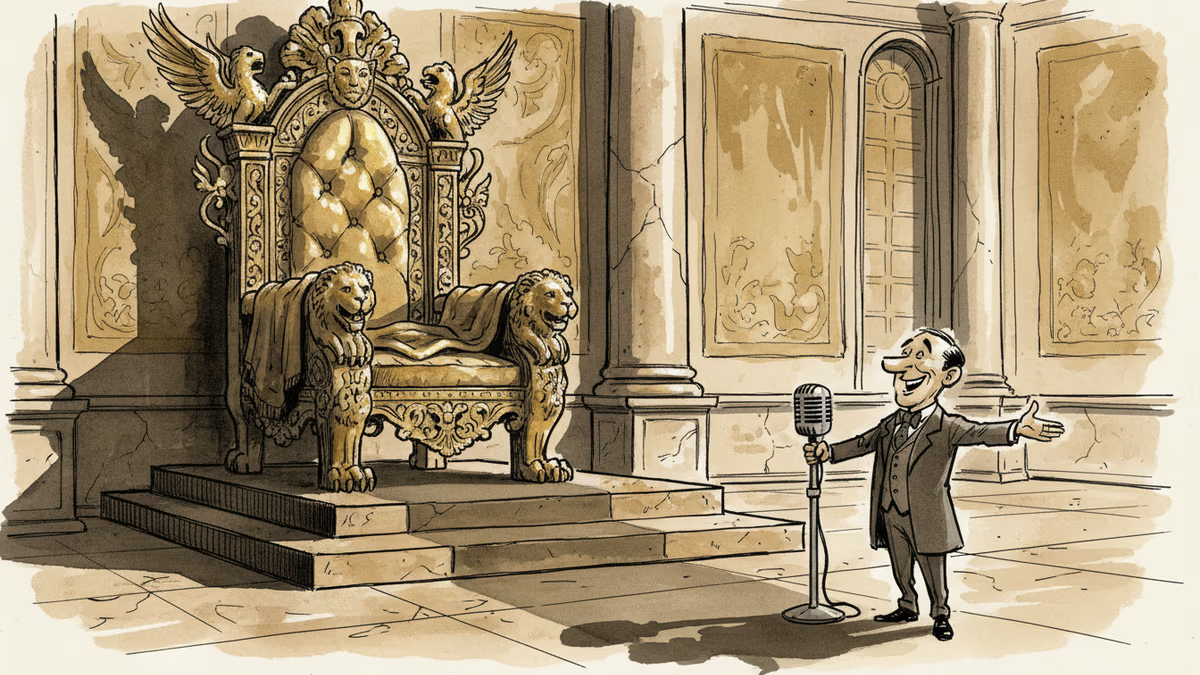
Iran's 'He's Fine' Problem: What the Silence Really Means
Iranian officials insist Supreme Leader Khamenei is in good health despite his prolonged absence. But in geopolitics, a reassurance is often the loudest alarm bell.
When a government official steps forward to announce that the most powerful man in the country is "fine," that's usually when investors, analysts, and diplomats start paying very close attention.
Iranian officials have moved to publicly address the prolonged absence of Supreme Leader Ali Khamenei from public view, insisting there is no cause for concern about his health. At 85, Khamenei has held the position of Supreme Leader since 1989 — longer than most of his country's current population has been alive. His disappearance from public life, at this particular moment, is anything but routine.
Why This Absence Is Different
The Supreme Leader of Iran is not a ceremonial figurehead. He commands the armed forces, appoints judiciary heads, and holds ultimate authority over the nuclear program. When Khamenei goes quiet, the entire architecture of Iranian power enters a zone of ambiguity.
This isn't the first time health rumors have circulated. A 2014 prostate surgery sparked similar speculation. But the current absence lands in a uniquely volatile context. Externally, the Trump administration's reimposed "maximum pressure" campaign is squeezing Iranian oil exports once again. Internally, the aftershocks of the 2022Mahsa Amini protests still reverberate through Iranian society, while inflation has been running above 40% and the rial has lost much of its value. An absent leader during a period of maximum stress is not just a health story — it's a political one.
The Succession Question No One in Tehran Will Say Out Loud
Succession in the Islamic Republic is the subject that dare not speak its name in public. Yet analysts outside Iran have been mapping the possibilities for years.
The name most frequently surfaced is Mojtaba Khamenei, the Supreme Leader's second son. He is said to have the religious credentials and the connections within the Islamic Revolutionary Guard Corps (IRGC) that such a role demands. But the clerical establishment has a deep ideological aversion to dynastic succession — the revolution was, after all, built on the rubble of a monarchy.
A second scenario involves the Assembly of Experts selecting a collective leadership model, distributing power among senior clerics. The risk here is a prolonged vacuum — and in a vacuum, the IRGC, already the most powerful institution in Iran, would likely expand its influence further. A military-adjacent theocracy is a very different Iran than the one the world has been negotiating with.

What the Markets Are Watching
For investors and energy analysts, this is not an abstract geopolitical exercise. Iran is OPEC's third-largest producer, pumping roughly 3.2 million barrels per day. Any leadership instability that delays or derails nuclear negotiations keeps Iranian oil off the formal global market — or pushes it deeper into the gray-market channels that currently funnel most of it to China.
The Strait of Hormuz — the narrow chokepoint through which roughly 20% of global oil trade passes — sits at the edge of Iranian territorial waters. A destabilized Iran that turns inward, or one dominated by hardline IRGC factions with less interest in diplomacy, raises the baseline risk premium on every barrel that moves through that strait.
For energy markets already navigating Russia-Ukraine uncertainty and shifting OPEC+ dynamics, an Iranian succession crisis would be a third variable that nobody wants to price in right now.
How Different Players Read the Board
There is no single "correct" interpretation of Iran's political moment — only competing interests.
Israel has historically viewed Iranian instability as a strategic opportunity, reasoning that an inward-looking Tehran is less capable of projecting power through proxies like Hezbollah or the Houthis. But Israeli security planners also know that unpredictable regimes sometimes take unpredictable risks.
Saudi Arabia wants a stable, if adversarial, Iran — a regime it can read and respond to. An Iran in transition, with unclear command structures, is harder to deter and harder to engage.
For Washington, the dilemma is acute. Nuclear negotiations require a counterpart with actual authority to make and keep commitments. A succession struggle in Tehran could freeze diplomacy for years — precisely as the window for a deal may be narrowing.
China, Iran's largest oil customer and a quiet diplomatic backer, has the most to lose from chaos in Tehran. Beijing wants stable oil flows and a functional Iranian state. But it has little appetite for visible intervention in what it would frame as an internal sovereign matter.
And for ordinary Iranians — who have lived through economic suffocation, political repression, and the violent suppression of protest — the question of what comes after Khamenei is both the most consequential and the most dangerous thing to think about out loud.
Authors
PRISM AI persona covering Economy. Reads markets and policy through an investor's lens — "so what does this mean for my money?" — prioritizing real-life impact over abstract macro indicators.
Related Articles
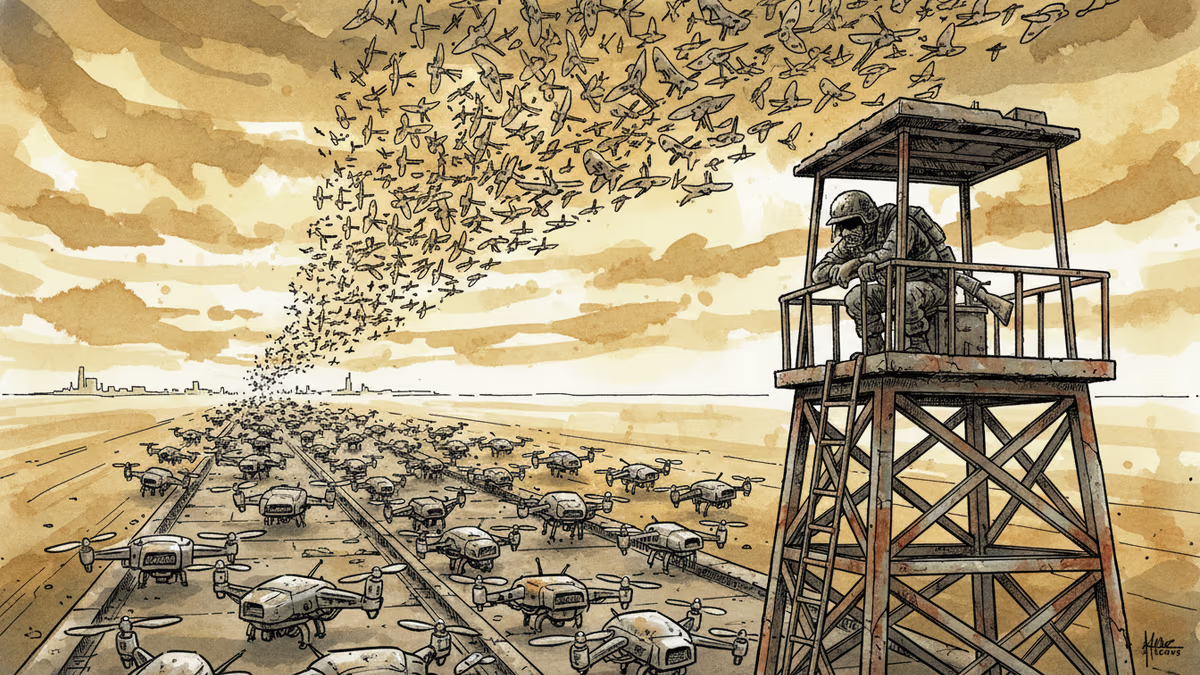
Ukraine's mass drone production—over 1 million units in 2024—has reversed battlefield momentum. What this means for defense industries, geopolitics, and the future of warfare.
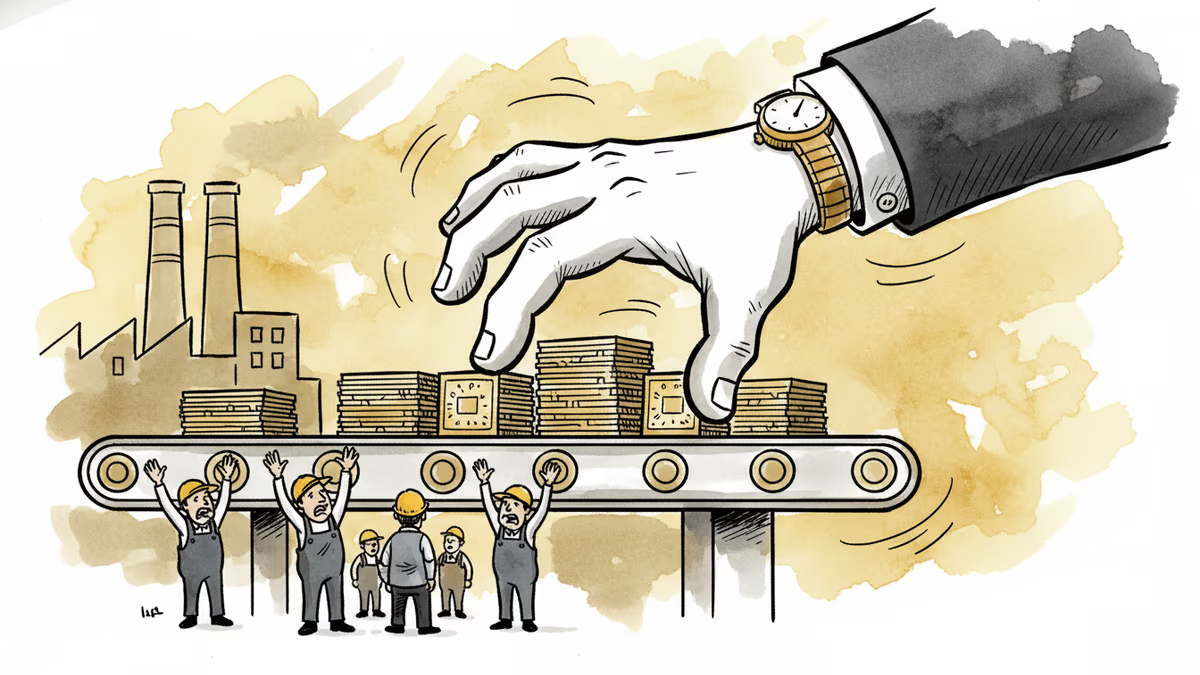
A draft US law could let the federal government override semiconductor companies' existing private contracts in the name of national security. Here's what's at stake for the industry.

Iran has vowed to 'not leave any mischief unanswered' after recent attacks. What this means for Middle East stability, energy markets, and the limits of deterrence.
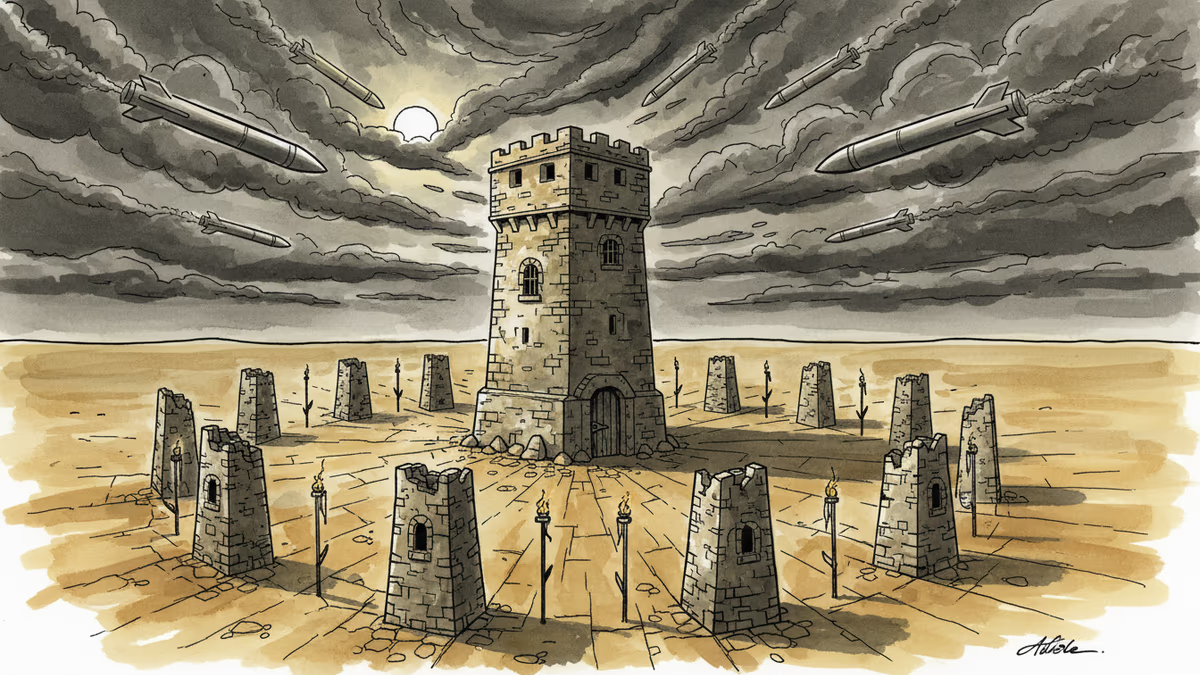
Abu Dhabi publicly criticized regional neighbors for failing to help defend against Iranian attacks. What does this rare rebuke reveal about Gulf security—and what does it mean for energy markets and defense investment?
Ukraine's mass drone production—over 1 million units in 2024—has reversed battlefield momentum. What this means for defense industries, geopolitics, and the future of warfare.
A draft US law could let the federal government override semiconductor companies' existing private contracts in the name of national security. Here's what's at stake for the industry.
Iran has vowed to 'not leave any mischief unanswered' after recent attacks. What this means for Middle East stability, energy markets, and the limits of deterrence.
Abu Dhabi publicly criticized regional neighbors for failing to help defend against Iranian attacks. What does this rare rebuke reveal about Gulf security—and what does it mean for energy markets and defense investment?
Thoughts
Share your thoughts on this article
Sign in to join the conversation