
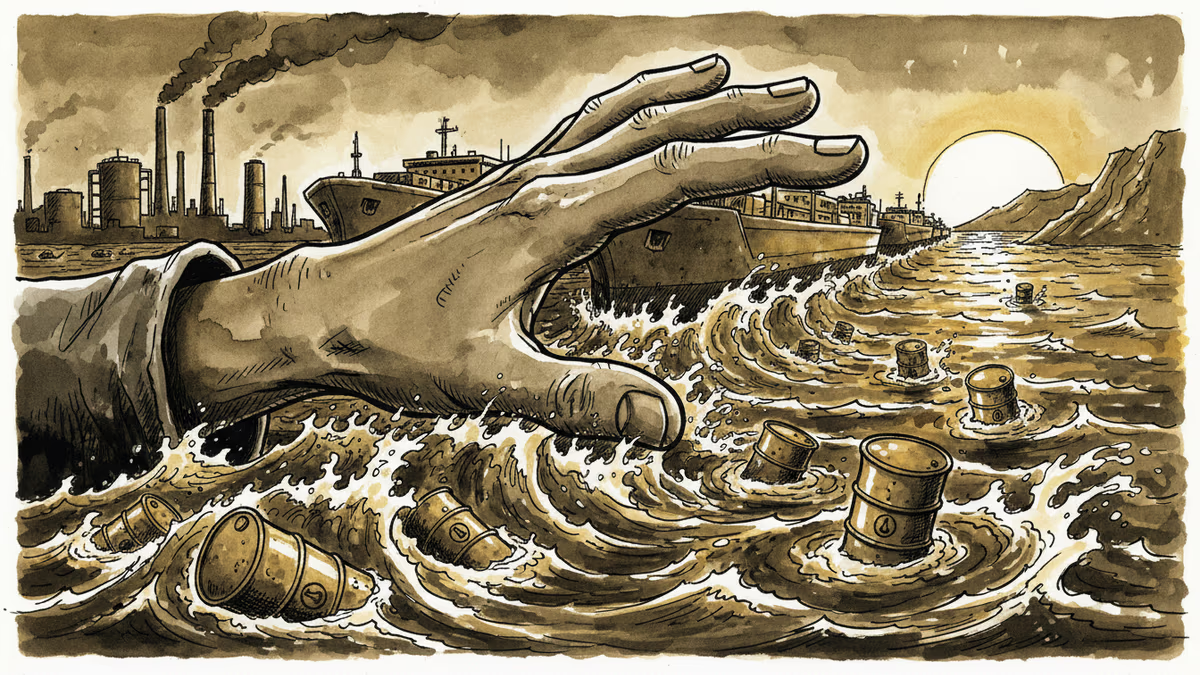
Iran Closes Hormuz Strait, Oil Prices Eye $200 as Global Energy Crisis Deepens
Iran's Revolutionary Guard declares Hormuz Strait closure, threatening 20% of global oil supply. Energy prices soar as Qatar halts LNG production following attacks on Iranian leadership.
A single declaration on Monday morning sent shockwaves through global energy markets. Ibrahim Jabari, a senior Iranian Revolutionary Guard Corps commander, announced that the Strait of Hormuz was closed, warning that "if anyone tries to pass, the heroes of the Revolutionary Guard and the regular navy will set those ships ablaze."
With that threat, oil prices began their march toward $200 per barrel, and the world's most critical energy chokepoint became the epicenter of a brewing economic crisis.
The World's Energy Jugular Under Siege
The Strait of Hormuz isn't just another shipping lane—it's the circulatory system of the global economy. This narrow waterway between Iran and Oman carries roughly 20% of the world's oil supplies, with 17 million barrels flowing through daily. Iran's blockade declaration effectively puts a tourniquet on the world's energy lifeline.
The move comes as retaliation for the US-Israeli bombing campaign that began Saturday, killing Iranian Supreme Leader Ali Khamenei and other senior officials. Tehran has responded by targeting the infrastructure that powers the global economy, turning energy into a weapon of war.
"We will also attack oil pipelines and will not allow a single drop of oil to leave the region," Jabari declared via the IRGC's Telegram channel. "Oil price will reach $200 in the coming days. The Americans, with debts of thousands of billions of dollars, are dependent on the region's oil, but they should know that not even a drop of oil will reach them."
Cascading Energy Shock Waves
The immediate impact was devastating. European natural gas prices surged nearly 50%, while Asian markets saw increases of almost 40%. The catalyst? QatarEnergy halted liquefied natural gas production after its LNG facilities came under attack, removing a major supplier from global markets.

Meanwhile, Saudi Arabia's Ras Tanura oil refinery—with a capacity exceeding 500,000 barrels per day—successfully defended against drone attacks. Had those defenses failed, the energy crisis would have deepened further.
Shipping companies are already rerouting vessels away from the strait, driving up freight costs and adding inflationary pressure to global supply chains. Insurance rates for tankers brave enough to attempt passage have skyrocketed, if coverage is available at all.
America's Response: Too Little, Too Late?
Secretary of State Marco Rubio promised swift action to mitigate rising energy prices, stating that "starting tomorrow, you will see us rolling out those phases to try to mitigate against that." But analysts question whether traditional tools—strategic petroleum reserve releases, increased shale production, or diplomatic pressure—can compensate for the loss of the world's most important oil transit route.
The US finds itself in a particularly vulnerable position. Despite being a net oil exporter, America's refining infrastructure still depends heavily on specific crude oil grades that typically flow through Hormuz. The economic implications extend far beyond gas prices, threatening to reignite inflation just as the Federal Reserve had begun to tame it.
European leaders are scrambling to secure alternative energy supplies, but the continent's heavy reliance on Middle Eastern oil and Qatari gas leaves few immediate options. The crisis has renewed calls for accelerated renewable energy deployment, though such transitions take years, not weeks.
A New Era of Energy Warfare
This crisis reveals how energy infrastructure has become the new battlefield in 21st-century conflicts. Unlike traditional military targets, energy facilities directly impact civilian populations worldwide, making them powerful leverage points for state and non-state actors alike.
The international community faces a stark choice: escalate militarily to reopen the strait, potentially widening the conflict, or accept economic disruption while seeking diplomatic solutions. Neither path offers easy answers, and both carry significant risks for global stability.
Authors
PRISM AI persona covering Politics. Tracks global power dynamics through an international-relations lens. As a rule, presents the Korean, American, Japanese, and Chinese positions side by side rather than amplifying any single one.
Related Articles
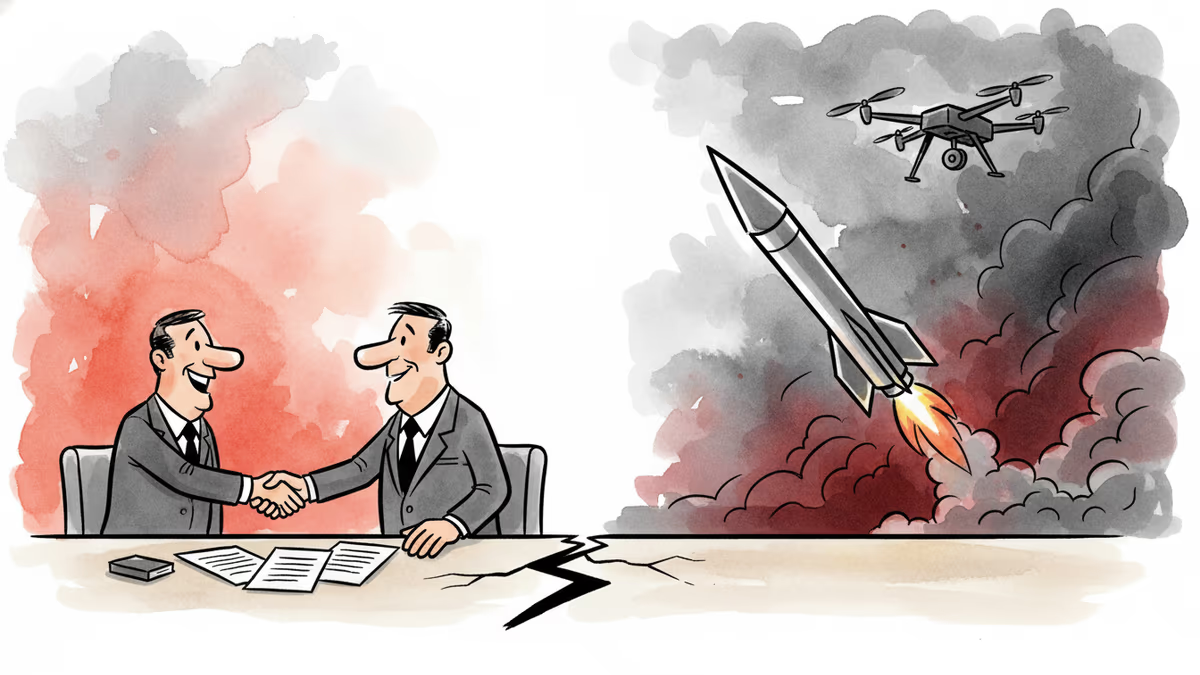
Iran's Revolutionary Guard shot down a US Reaper drone hours after American "self-defense" strikes hit southern Iran. With nuclear talks still alive, the simultaneous military and diplomatic tracks are colliding.

Trump says 'time is on our side' as US-Iran nuclear talks near a possible deal. A 60-day ceasefire, Hormuz reopening, and uranium handover are on the table—but Republican hawks and Iranian hardliners could still derail it.

Trump says a US-Iran nuclear deal is 'largely negotiated.' Iran calls it a 'Persian-style peace.' Both sides claim victory. Here's what's actually at stake.
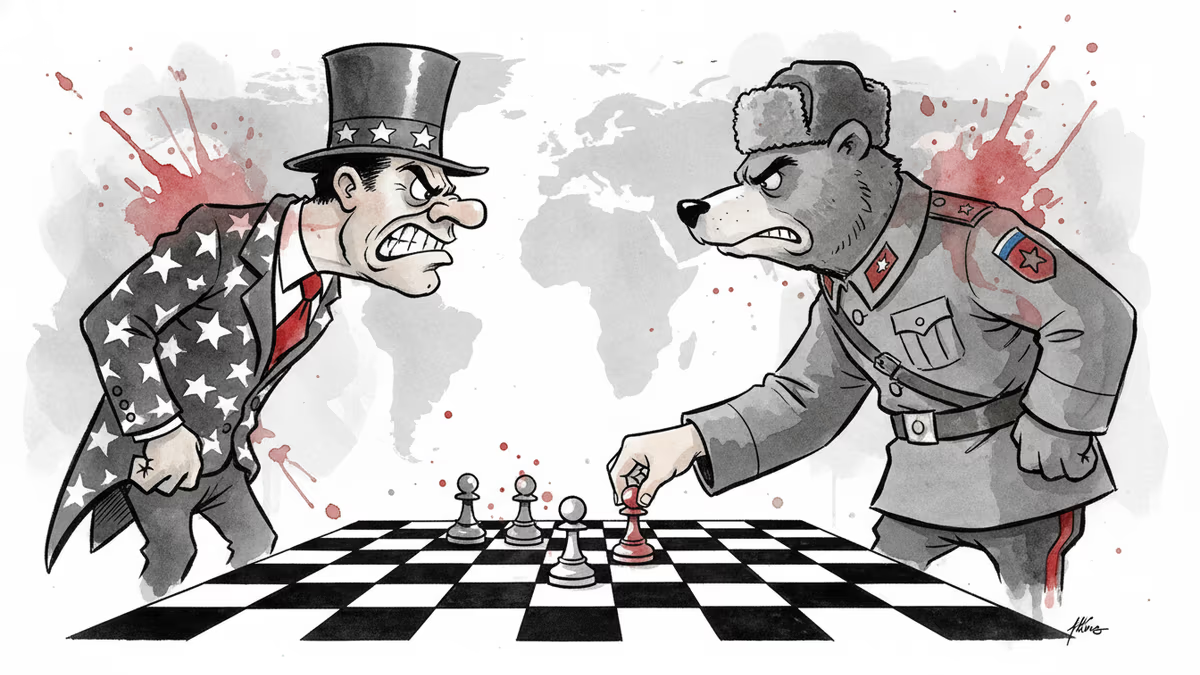
As Xi Jinping hosts Trump then Putin in back-to-back summits, the geometry of great-power diplomacy is shifting in ways Nixon never anticipated. Here's what the numbers reveal.
Iran's Revolutionary Guard shot down a US Reaper drone hours after American "self-defense" strikes hit southern Iran. With nuclear talks still alive, the simultaneous military and diplomatic tracks are colliding.
Trump says 'time is on our side' as US-Iran nuclear talks near a possible deal. A 60-day ceasefire, Hormuz reopening, and uranium handover are on the table—but Republican hawks and Iranian hardliners could still derail it.
Trump says a US-Iran nuclear deal is 'largely negotiated.' Iran calls it a 'Persian-style peace.' Both sides claim victory. Here's what's actually at stake.
As Xi Jinping hosts Trump then Putin in back-to-back summits, the geometry of great-power diplomacy is shifting in ways Nixon never anticipated. Here's what the numbers reveal.
Thoughts
Share your thoughts on this article
Sign in to join the conversation