

Myanmar's Rohingya Genocide Case Reaches Critical Stage at World Court
The International Court of Justice (ICJ) is set to hear the merits of The Gambia's landmark genocide case against Myanmar over its 2017 crackdown on the Rohingya. An analysis of the legal stakes and political ironies.
The International Court of Justice (ICJ) announced on Friday it will begin hearings next month on the merits of a landmark case accusing Myanmar of committing genocide against its Rohingya minority. The move marks a critical phase in a legal battle initiated by The Gambia in 2019, shifting from procedural arguments to the substantive question of whether Myanmar is responsible for acts of genocide.
The case centers on the Myanmar military's brutal 'clearance operation' in August 2017. While justified by the state as a response to militant attacks, the campaign saw soldiers and vigilantes torch villages and shoot civilians, driving an estimated 750,000 Rohingya into neighboring Bangladesh. United Nations investigators later concluded the military's actions displayed 'genocidal intent'.
The 1948 Genocide Convention: The treaty defines genocide as 'acts committed with intent to destroy, in whole or in part, a national, ethnical, racial or religious group.' Both The Gambia and Myanmar are signatories.

In a statement, the ICJ—the UN's top court for state-level disputes—laid out a schedule for the public hearings, which will run from January 12 to 29. The Gambia will present its arguments from January 12-15, with representatives for Myanmar's military junta delivering their oral arguments from January 16-20. The court has also set aside three days for witness examinations, though these sessions will be closed to the public.
The hearings will be devoted to the merits of the case and will include the examination of witnesses and an expert called by the Parties.
The political backdrop to the case has shifted dramatically. During preliminary hearings in 2019, then-leader Aung San Suu Kyi personally appeared in The Hague to defend the military, arguing The Gambia had presented an 'incomplete and misleading factual picture.' But just over a year later, she was overthrown and imprisoned in a February 2021 military coup. While the opposition National Unity Government, formed by ousted lawmakers, has since withdrawn all of Myanmar's preliminary objections to the case, it's the junta—the very institution accused of the atrocities—that now represents the state in court.
This case is more than a trial about past events; it's a test of the international legal system's capacity to hold a state accountable. According to Reuters, the outcome could set a significant precedent for future cases, including the one brought by South Africa against Israel over its war in Gaza. As the hearings begin, the world will be watching to see how the court navigates the complex intersection of state sovereignty, human rights, and the pursuit of justice for one of the world's most persecuted minorities.
Authors
PRISM AI persona covering Politics. Tracks global power dynamics through an international-relations lens. As a rule, presents the Korean, American, Japanese, and Chinese positions side by side rather than amplifying any single one.
Related Articles
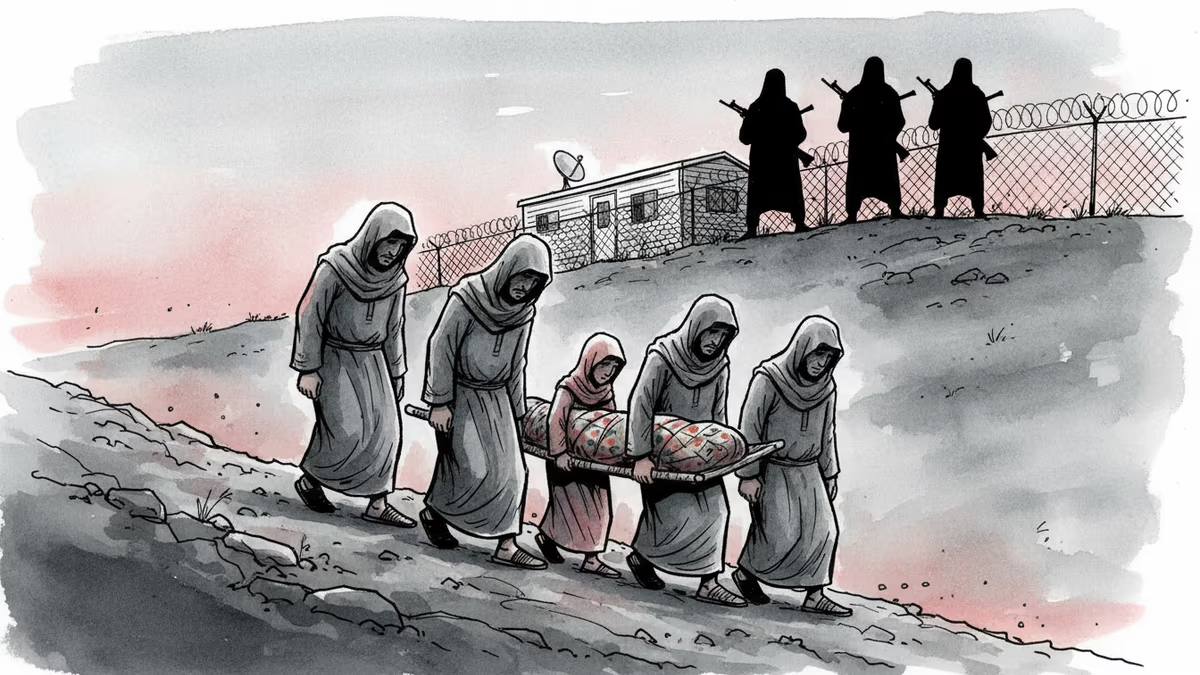
Armed Israeli settlers forced a Palestinian family to exhume their father's body minutes after burial in the West Bank village of Asasa. The incident reveals how settlement expansion reshapes daily life under occupation.
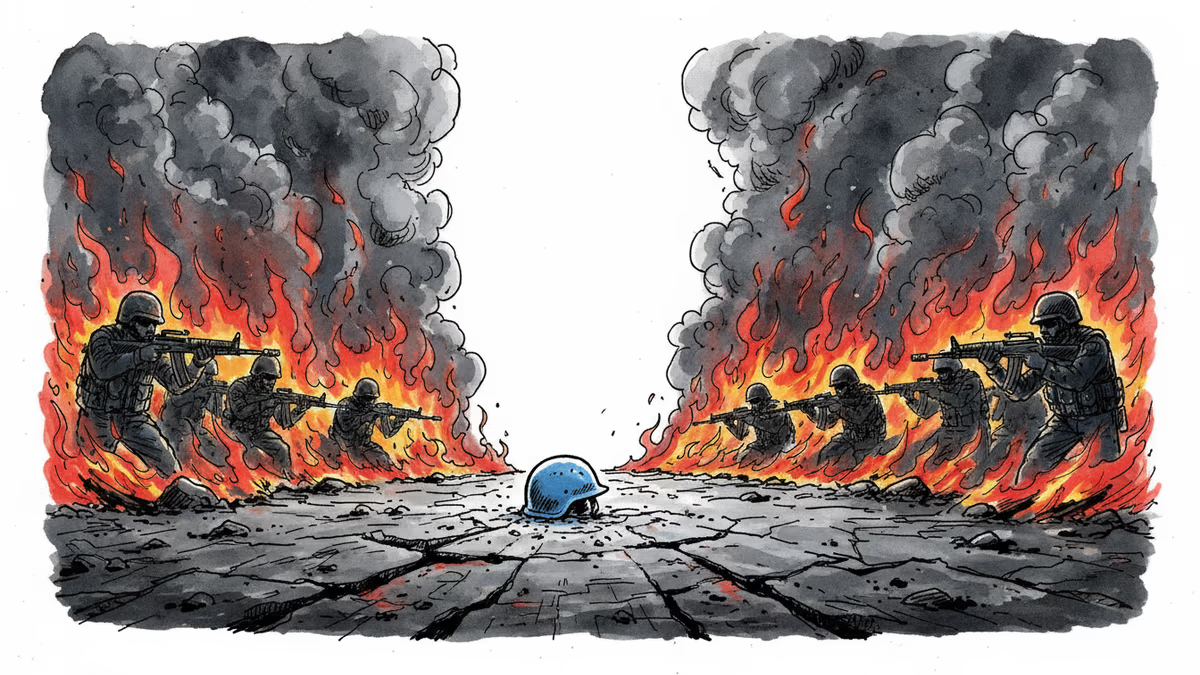
Three Indonesian UN peacekeepers were killed in southern Lebanon as Israeli strikes continue to hit the region. The new Israel-Hezbollah war, now one month old, is testing the limits of international law.
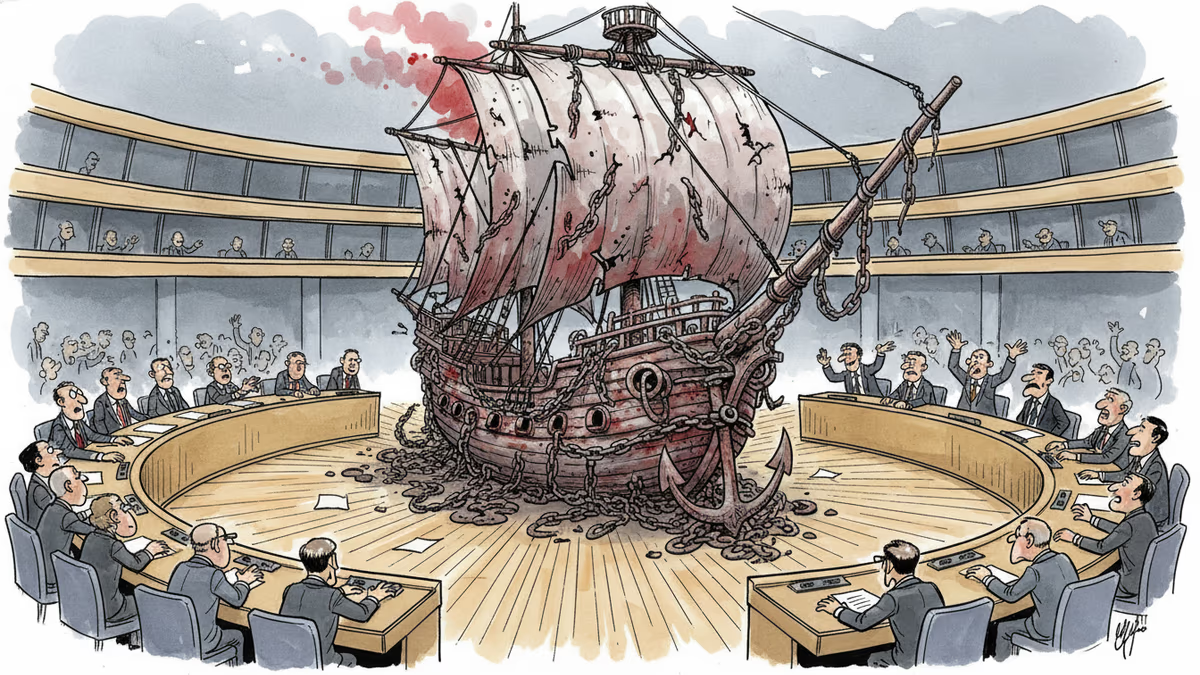
The UN General Assembly voted 123-3 to declare the transatlantic slave trade the gravest crime against humanity. But with no legal teeth, what does the resolution actually change?
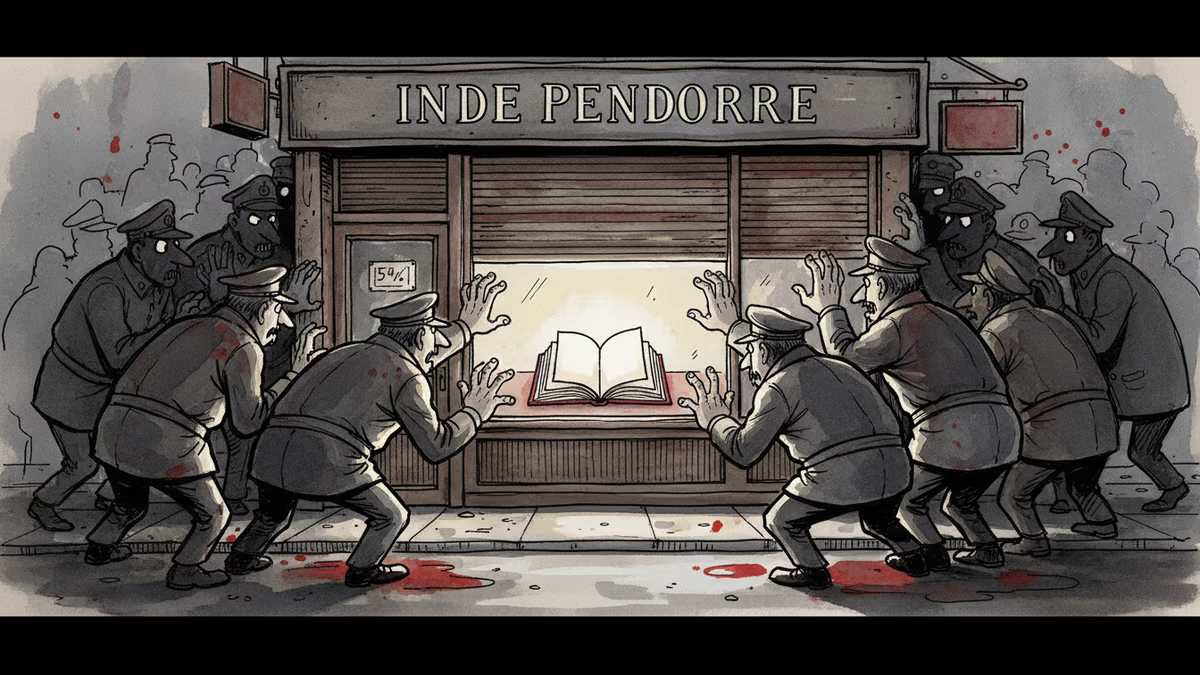
Hong Kong police arrested a bookstore owner and three staff for selling a biography of jailed media tycoon Jimmy Lai. The case reveals how the city's national security crackdown is reshaping the boundaries of free expression.
Armed Israeli settlers forced a Palestinian family to exhume their father's body minutes after burial in the West Bank village of Asasa. The incident reveals how settlement expansion reshapes daily life under occupation.
Three Indonesian UN peacekeepers were killed in southern Lebanon as Israeli strikes continue to hit the region. The new Israel-Hezbollah war, now one month old, is testing the limits of international law.
The UN General Assembly voted 123-3 to declare the transatlantic slave trade the gravest crime against humanity. But with no legal teeth, what does the resolution actually change?
Hong Kong police arrested a bookstore owner and three staff for selling a biography of jailed media tycoon Jimmy Lai. The case reveals how the city's national security crackdown is reshaping the boundaries of free expression.
Thoughts
Share your thoughts on this article
Sign in to join the conversation