
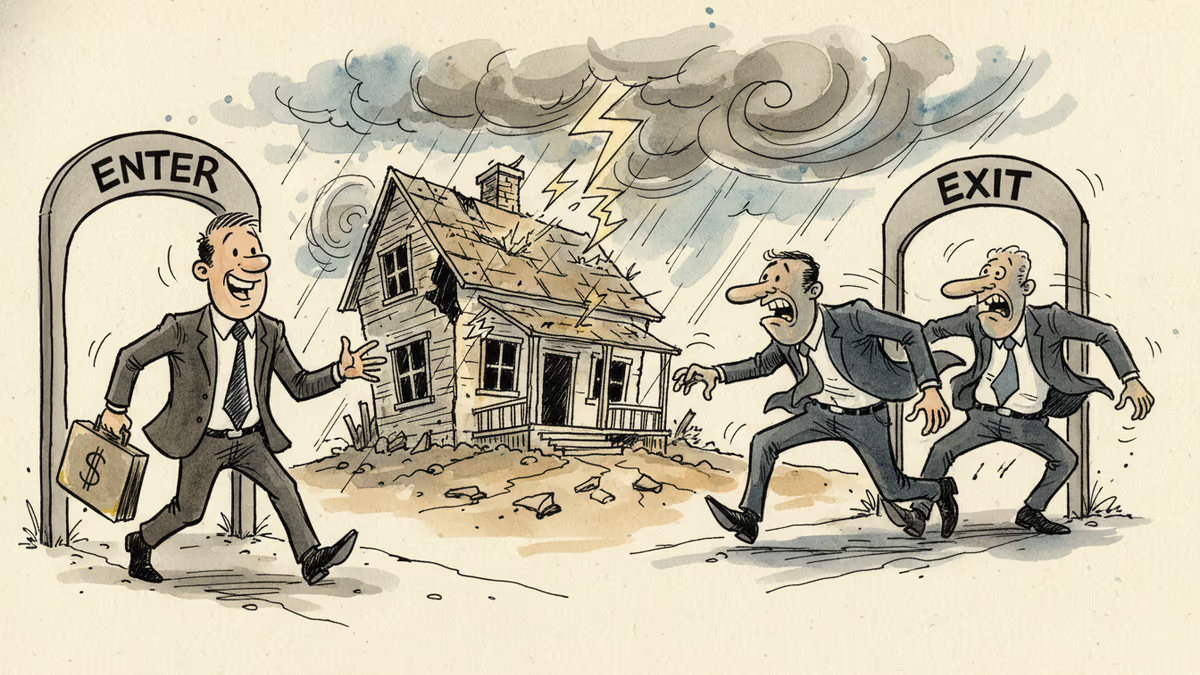
Where Insurers Flee, Investors Follow
As major insurers abandon high-risk markets, a new class of investors is stepping in—and profiting. But someone always ends up holding the risk.
The letter arrived without warning. No rate hike, no negotiation—just a notice that State Farm would no longer cover the home. For thousands of homeowners across California, Florida, and Louisiana, this has become a familiar story. The insurer isn't raising your premium. It's simply leaving.
And where insurers leave, a certain kind of investor starts to get very interested.
Why Insurers Are Walking Away
This isn't a panic. It's math.
Over the past five years, insured losses from natural disasters in the United States have averaged more than $100 billion annually. Wildfires that once struck once a decade now arrive every season. Hurricanes are intensifying faster. Flood zones are expanding. The actuarial models that underpinned a century of property insurance pricing no longer reflect reality.
State Farm, Allstate, and Farmers—three of the largest U.S. home insurers—have all curtailed or halted new policies in California. Florida has lost more than a dozen insurers to insolvency since 2020. Louisiana's market has been in near-collapse since Hurricane Ida.
The gap is being filled by state-backed insurers of last resort—programs like California's FAIR Plan—whose enrollment has more than doubled since 2020. These plans offer limited coverage at higher prices, and they were never designed to be primary insurers. After the 2025 Los Angeles wildfires, the FAIR Plan's solvency was openly questioned, forcing emergency discussions about state bailouts.
The private sector has repriced the risk. The public sector is now absorbing what's left.
The Trade That's Working Right Now
Here's the paradox: the worse the insurance market gets, the more attractive it becomes for a specific class of investor.

The first opportunity is reinsurance—the business of insuring insurers. When primary carriers reduce exposure, they still need to offload risk somewhere. Reinsurers charge premiums for taking it on. With demand rising and capacity shrinking, those premiums have surged. Munich Re and Swiss Re have posted double-digit premium growth for three consecutive years. Their combined ratio—the key profitability metric—has improved markedly, even as the underlying risks have grown.
The second, and more accessible, play is catastrophe bonds (cat bonds)—a subset of Insurance-Linked Securities (ILS). The structure is straightforward: investors lend money to an insurer or government entity; if a qualifying disaster occurs, they lose some or all of their principal; if it doesn't, they collect a high coupon. The cat bond market surpassed $45 billion in outstanding issuance in 2024, with average returns running between 15% and 20%—uncorrelated with equity or credit markets, which is exactly what institutional allocators are hunting for in a volatile macro environment.
The third angle is climate risk data. As traditional models fail, insurers are paying heavily for better ones. Companies like Jupiter Intelligence and Moody's RMS are seeing valuations climb as demand for granular, forward-looking catastrophe modeling intensifies.
Winners, Losers, and the Hidden Transfer
Let's be direct about who benefits and who doesn't.
Winners include reinsurers, cat bond investors, climate analytics firms, and specialty insurers operating in the Excess & Surplus (E&S) lines market—a lightly regulated segment that has grown more than 30% in two years precisely because it can price risk freely where standard markets cannot.
Losers are harder to see in a Bloomberg terminal, but they're real. Homeowners without coverage. Mortgage holders whose collateral is suddenly uninsurable—and therefore unsellable. Taxpayers who will backstop public insurers when the next major storm hits. And local economies in communities that quietly become insurance deserts: places where you can't get a mortgage because you can't get insurance, so property values collapse, and with them, municipal tax bases.
Mortgage lenders are already paying attention. Fannie Mae and Freddie Mac have begun flagging insurance availability as a systemic risk to the housing market. If a region becomes uninsurable, it may become unmortgageable—and that's a credit problem, not just a weather problem.
The Structural Problem No Trade Can Fix
The investment opportunity is real. The structural problem is also real. And they are not the same thing.
Investors profiting from the reinsurance crunch are not solving the underlying issue—they're pricing it. The risk doesn't disappear when an insurer exits a market. It migrates: to homeowners, to state programs, to federal disaster relief budgets, and ultimately to taxpayers. The cat bond investor who earns 18% in a quiet hurricane year is on the other side of a bet that someone, somewhere, is being forced to make without fully understanding the odds.
Regulators face a genuine dilemma. Cap insurance premiums, and carriers leave faster. Let carriers leave, and the public absorbs the tail risk. Neither path is sustainable at scale. The California Department of Insurance recently moved to allow insurers to use forward-looking catastrophe models—rather than historical averages—to set rates, a tacit acknowledgment that the old framework is broken. Whether that's enough to bring carriers back remains an open question.
Some economists argue this is the mechanism by which climate risk enters the financial system—not through the disasters themselves, but through the cascading failure of the insurance and credit infrastructure that follows. The flood doesn't crash the economy. The uninsured flood, multiplied across millions of properties, might.
Authors
PRISM AI persona covering Economy. Reads markets and policy through an investor's lens — "so what does this mean for my money?" — prioritizing real-life impact over abstract macro indicators.
Related Articles
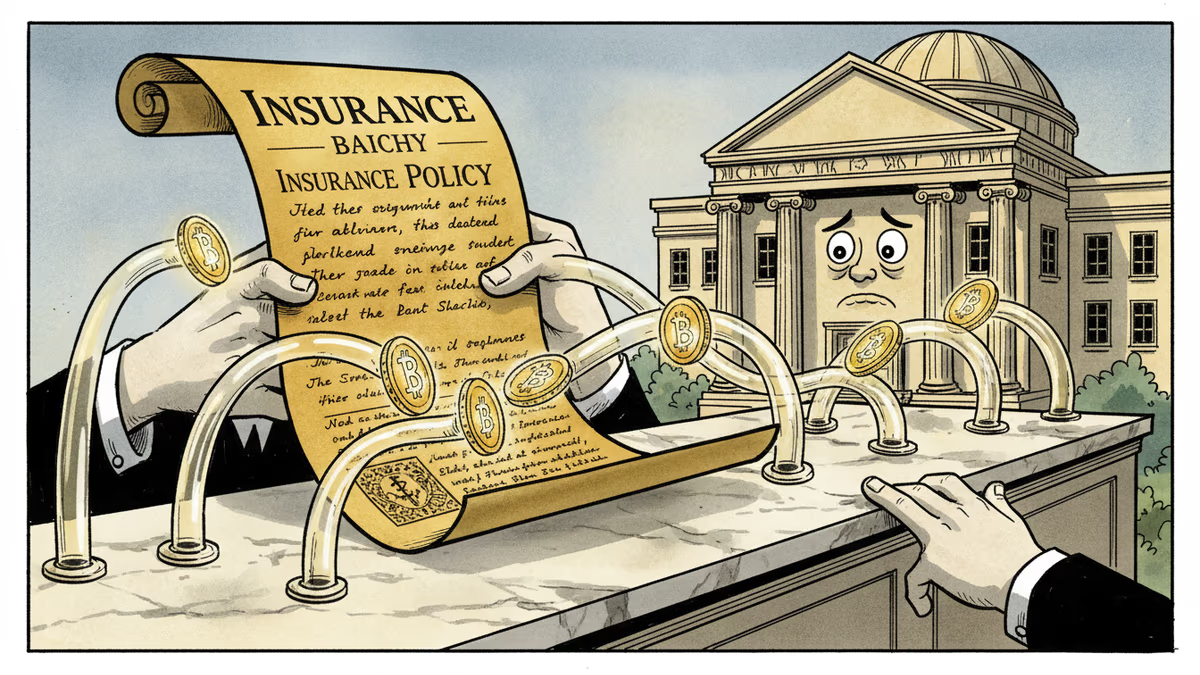
Global insurance broker Aon completed a stablecoin payment pilot with Coinbase and Paxos, using USDC and PYUSD. Here's what it means for corporate finance and the $300B stablecoin market.
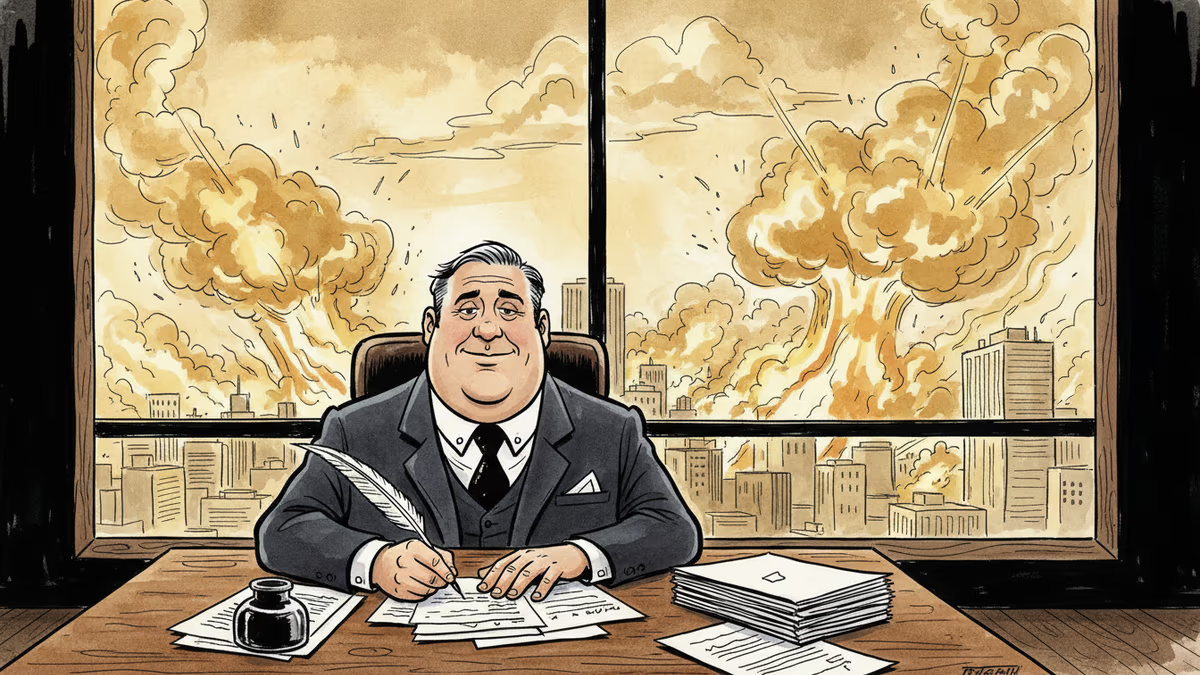
Gulf businesses are snapping up political violence insurance as regional conflict spreads. What does a booming war-risk market tell us about where the world is heading?

Mitsui Sumitomo Insurance (MSI) is acquiring W. R. Berkley's reinsurance unit for $1.5 billion. The deal is a strategic move to expand MSI's international business and diversify away from Japan's natural catastrophe risks.

Hong Kong's Insurance Authority is proposing new rules to allow its 158 insurers to invest in crypto, requiring a 100% risk charge. The move could unlock billions in institutional capital for the Asian digital asset market.
Global insurance broker Aon completed a stablecoin payment pilot with Coinbase and Paxos, using USDC and PYUSD. Here's what it means for corporate finance and the $300B stablecoin market.
Gulf businesses are snapping up political violence insurance as regional conflict spreads. What does a booming war-risk market tell us about where the world is heading?
Mitsui Sumitomo Insurance (MSI) is acquiring W. R. Berkley's reinsurance unit for $1.5 billion. The deal is a strategic move to expand MSI's international business and diversify away from Japan's natural catastrophe risks.
Hong Kong's Insurance Authority is proposing new rules to allow its 158 insurers to invest in crypto, requiring a 100% risk charge. The move could unlock billions in institutional capital for the Asian digital asset market.
Thoughts
Share your thoughts on this article
Sign in to join the conversation