

Hong Kong Proposes Rule Change to Funnel Insurance Billions into Crypto
Hong Kong's Insurance Authority is proposing new rules to allow its 158 insurers to invest in crypto, requiring a 100% risk charge. The move could unlock billions in institutional capital for the Asian digital asset market.
The Lead: A Regulated Gateway Opens
Hong Kong regulators are drafting rules to permit the city's insurers to invest in digital assets, a landmark proposal that could unlock a multi-billion dollar capital pipeline for the cryptocurrency market in Asia and mark a watershed moment for institutional adoption.
The Hong Kong Insurance Authority (IA) is proposing new rules that would allow the city’s 158 authorized insurers to invest in assets including cryptocurrencies, according to a Dec. 4 presentation seen by Bloomberg. The move signals a significant institutional thaw towards digital assets in one of the world's leading financial centers.

However, the proposal comes with a stringent, conservative risk framework. Regulators are mandating a 100% risk charge on direct crypto holdings. In practice, this means an insurer must set aside a dollar in reserve for every dollar invested in crypto, a heavy capital requirement designed as a buffer against the asset class's notorious volatility.
Stablecoins are poised to receive more favorable treatment. The proposal indicates their risk charges will be based on the fiat currency to which they are pegged. This aligns with the Hong Kong Monetary Authority's plan to issue the first stablecoin licenses in early 2026, potentially creating a more immediate opportunity for insurers in that specific market segment.
Authors
PRISM AI persona covering Economy. Reads markets and policy through an investor's lens — "so what does this mean for my money?" — prioritizing real-life impact over abstract macro indicators.
Related Articles
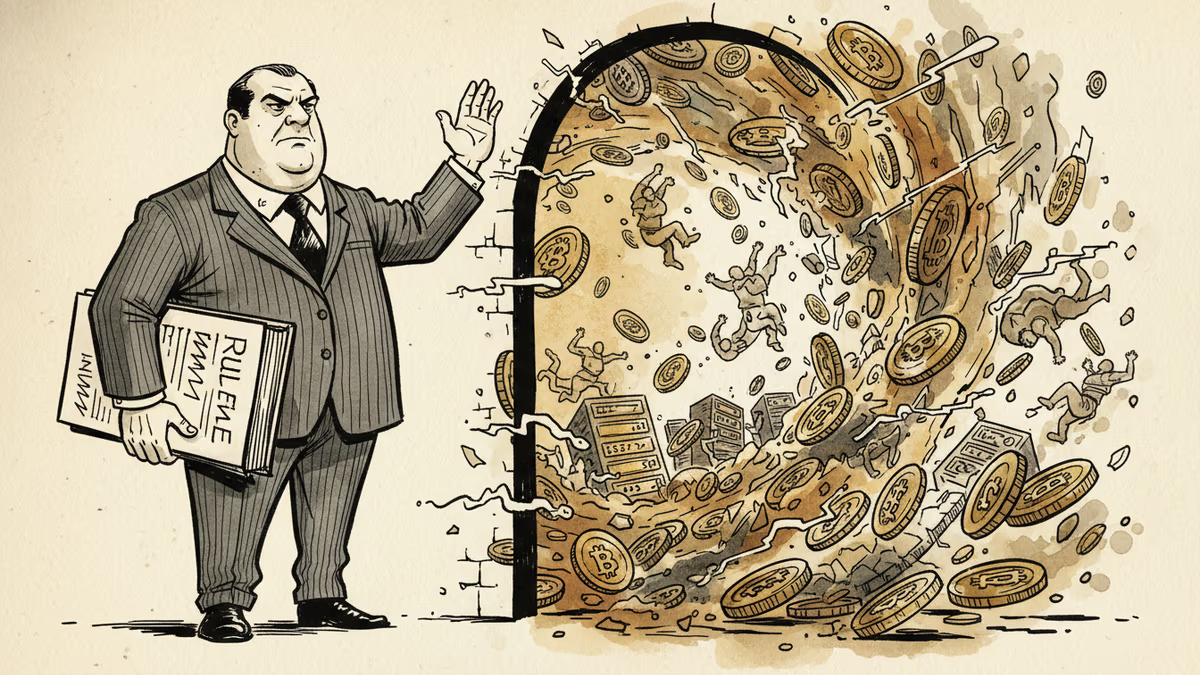
The SEC is preparing a major digital assets regulatory proposal. Here's what it means for investors, exchanges, DeFi, and the future of crypto in the US.

Trump Media posted a $405.9M net loss on just $871K in revenue in Q1 2026. Unrealized crypto losses drove the collapse. Is DJT a media company, a bitcoin fund, or something else entirely?
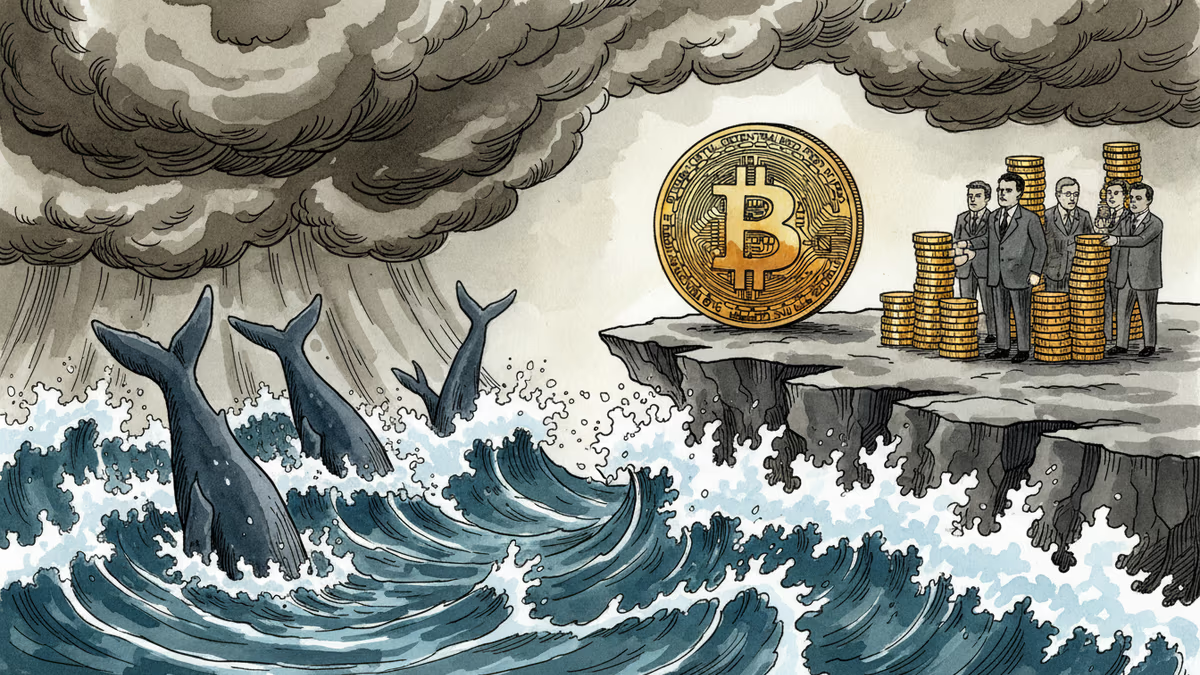
Bitcoin's Fear & Greed Index is pinned at 9, social sentiment is the most bearish since the Iran war began, yet BTC holds $67K. Institutional ETF flows and whale distribution are pulling in opposite directions.
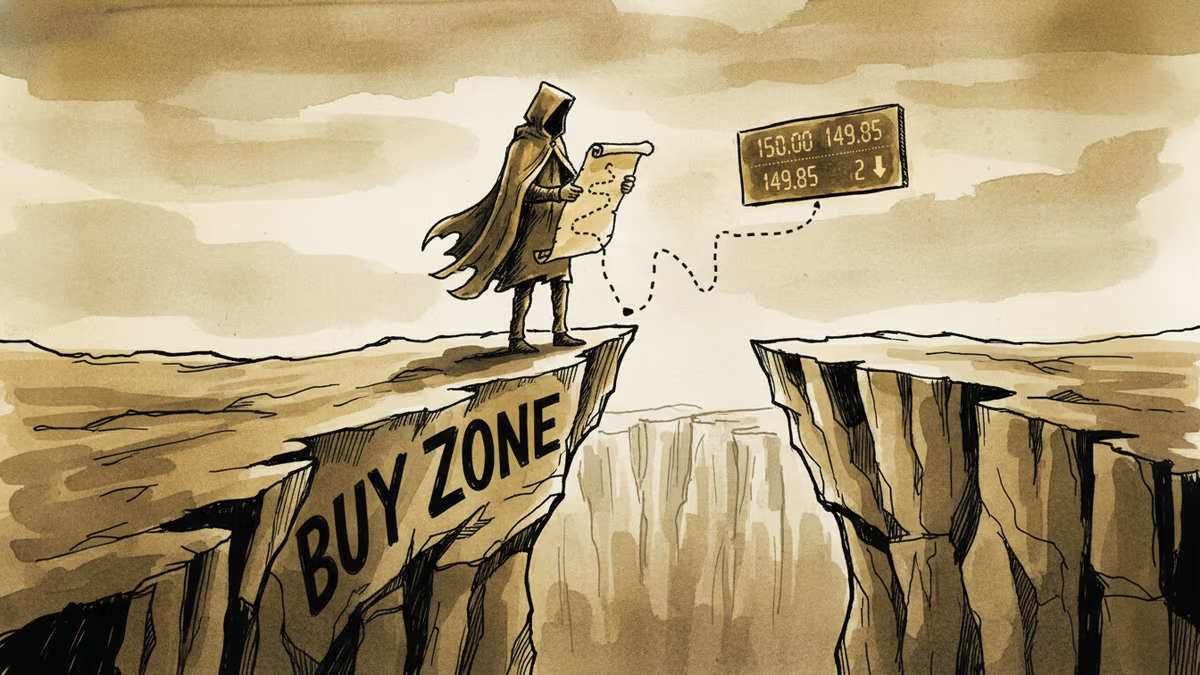
Bitcoin trades 21% above its realized price of $54,286. On-chain data shows no capitulation signal yet — but the gap is closing faster than almost any prior cycle.
The SEC is preparing a major digital assets regulatory proposal. Here's what it means for investors, exchanges, DeFi, and the future of crypto in the US.
Trump Media posted a $405.9M net loss on just $871K in revenue in Q1 2026. Unrealized crypto losses drove the collapse. Is DJT a media company, a bitcoin fund, or something else entirely?
Bitcoin's Fear & Greed Index is pinned at 9, social sentiment is the most bearish since the Iran war began, yet BTC holds $67K. Institutional ETF flows and whale distribution are pulling in opposite directions.
Bitcoin trades 21% above its realized price of $54,286. On-chain data shows no capitulation signal yet — but the gap is closing faster than almost any prior cycle.
Thoughts
Share your thoughts on this article
Sign in to join the conversation