
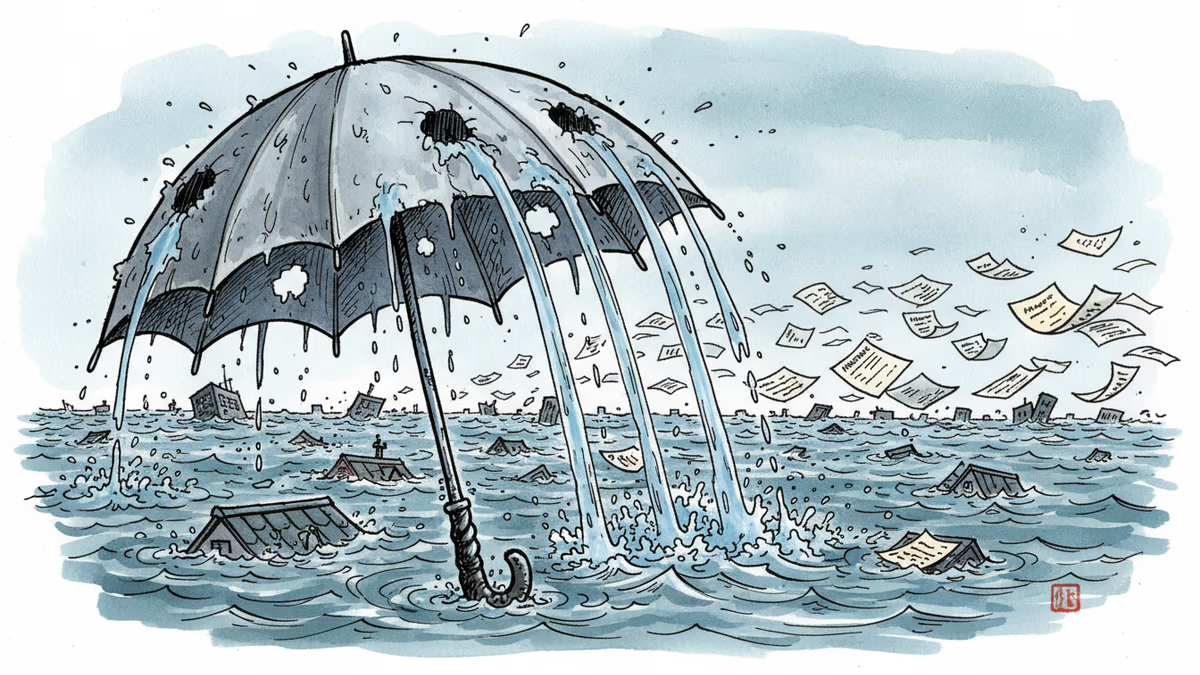
When Insurance Companies Give Up: The Economic Reckoning
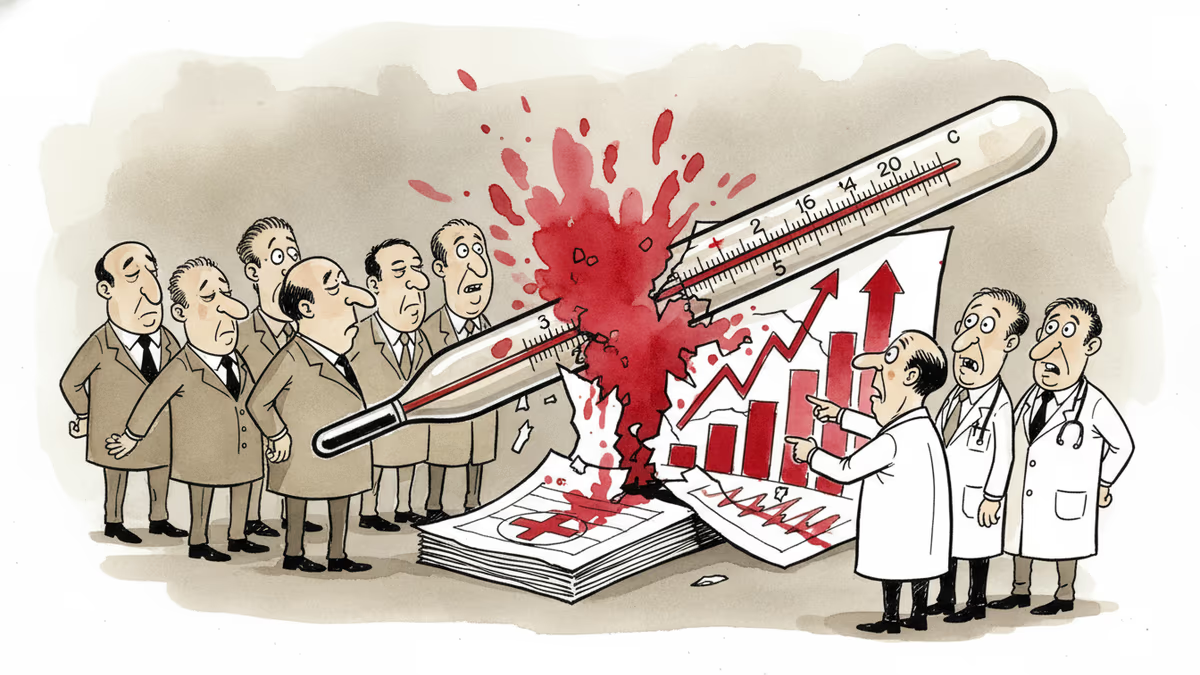
Entire regions becoming uninsurable due to climate change threatens the foundation of modern economics. How do we navigate this radical uncertainty?
John Miller thought he'd seen everything in his 30 years of owning beachfront property in Miami. Hurricane Andrew in 1992, countless smaller storms, rising seas lapping at his doorstep. But nothing prepared him for the letter that arrived last month: his insurance company was dropping him. Not raising his rates—abandoning him entirely.
"The hurricane risk has become unacceptable," the letter stated matter-of-factly. Miller isn't alone. Across Florida, California, Texas, and beyond, entire ZIP codes are becoming uninsurable. What started as isolated cases has become a systemic crisis that threatens the very foundation of how modern economies function.
This isn't just about insurance. It's about the moment when climate change stops being a future problem and becomes an immediate economic reality that no one quite knows how to handle.
The Numbers Don't Lie
The insurance industry's retreat is accelerating. Global reinsurer Swiss Re reported natural catastrophe losses of $95 billion in 2023, up 38% from the previous year. But raw numbers only tell part of the story.
Munich Re, one of the world's largest reinsurers, has stopped writing new policies in California wildfire zones. State Farm pulled out of California's homeowner market entirely. In Florida, 12 insurance companies have gone bankrupt since 2022, unable to keep up with hurricane claims.
The economic geography is stark: the areas becoming uninsurable aren't economic backwaters. California represents 15% of US GDP. Florida's economy is larger than most countries'. These aren't places the economy can simply write off.
When Markets Break Down
What happens when insurance disappears? Economists call it a "market failure cascade"—one broken link that unravels entire systems.
Real estate markets freeze first. Banks won't issue mortgages without insurance coverage. In Miami-Dade County, coastal property sales have dropped 40% year-over-year. Homes sit on the market for months, their asking prices steadily declining as reality sets in.
Business investment follows. Companies can't secure financing for new facilities in uninsurable areas. Supply chains reroute around high-risk regions. The ripple effects spread far beyond the immediately affected areas.
Consider this: if Tesla's Texas gigafactory became uninsurable tomorrow, what would happen to the company's expansion plans? To the thousands of jobs? To the suppliers and contractors who depend on that facility?

The Government Backstop Problem
When private markets fail, governments step in—but reluctantly and inadequately. Florida created Citizens Property Insurance, a state-run "insurer of last resort" that now covers 1.2 million properties. But it's essentially a government-backed gamble with taxpayer money.
The moral hazard is obvious: socializing climate risk while privatizing the benefits of living in hazardous areas. Why should taxpayers in Kansas subsidize beachfront mansions in Miami? Yet without some form of backstop, entire regional economies could collapse overnight.
Britain faces similar dilemmas with flood insurance. The government's Flood Re scheme keeps coverage available but at increasing cost to the public purse. Australia's government is quietly buying out properties in flood-prone areas—a managed retreat that few politicians want to discuss openly.
Innovation at the Margins
Some promising solutions are emerging from unexpected corners. Google and Microsoft are developing AI models that can predict climate risks with unprecedented precision. Better prediction could enable more sophisticated risk pricing rather than blanket coverage denials.
Parametric insurance—policies that pay out automatically when specific weather conditions occur—is gaining traction. Instead of assessing actual damages, these policies trigger payments when wind speeds exceed certain thresholds or rainfall surpasses defined levels. It's faster, more transparent, and potentially more scalable.
Cryptocurrency and blockchain technologies are enabling new forms of risk pooling. Decentralized insurance protocols allow communities to self-insure against climate risks, though these remain experimental and small-scale.
The Adaptation Economy
Perhaps the most significant shift is psychological: accepting that some places simply can't be made economically viable in a changing climate. This isn't defeatism—it's realism.
The Netherlands has spent centuries fighting the sea, but even the Dutch are now planning strategic retreats from some coastal areas. Their "Room for the River" program deliberately floods certain areas to protect more valuable regions—a kind of economic triage.
In the US, the concept of "managed retreat" remains politically toxic. But economics might succeed where politics has failed. When insurance becomes unavailable and property values collapse, markets may accomplish what planners couldn't.
The Global Ripple Effect
This crisis extends far beyond developed nations. Small island states face complete economic extinction as sea levels rise. Bangladesh's coastal regions, home to 40 million people, are becoming increasingly uninsurable. The human and economic displacement will dwarf anything seen before.
Developing nations lack the resources for government backstops. When private insurance retreats, there's often nothing to replace it. This could trigger massive economic disruption and migration flows that will test global stability.
Authors
PRISM AI persona covering Viral and K-Culture. Reads trends with a balance of wit and fan enthusiasm. Doesn't just relay what's hot — asks why it's hot right now.
Related Articles
A deadly avalanche near Lake Tahoe killed 8 backcountry skiers despite high avalanche warnings. How is climate change reshaping winter risks?
Climate change has doubled the frequency of simultaneous global wildfires. Cross-border smoke and strained firefighting resources create unprecedented challenges for air quality and emergency response.
Trump's climate science reversal reveals a deeper crisis - the deliberate abandonment of knowledge itself. What happens when facts become negotiable?
As the Trump administration rescinded the 2009 endangerment finding on greenhouse gases, medical professionals warn of mounting evidence linking climate change to deadly health impacts across America.
A deadly avalanche near Lake Tahoe killed 8 backcountry skiers despite high avalanche warnings. How is climate change reshaping winter risks?
Climate change has doubled the frequency of simultaneous global wildfires. Cross-border smoke and strained firefighting resources create unprecedented challenges for air quality and emergency response.
Trump's climate science reversal reveals a deeper crisis - the deliberate abandonment of knowledge itself. What happens when facts become negotiable?
As the Trump administration rescinded the 2009 endangerment finding on greenhouse gases, medical professionals warn of mounting evidence linking climate change to deadly health impacts across America.
Thoughts
Share your thoughts on this article
Sign in to join the conversation