
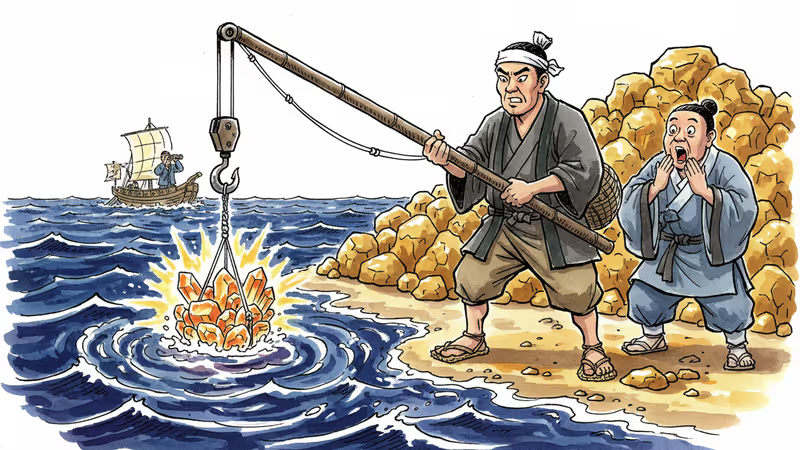
Japan Digs 6km Deep to Break China's Rare Earth Stranglehold
Japan launches ambitious deep-sea mining project to reduce rare earth dependence on China. What it means for global supply chains and tech competition.
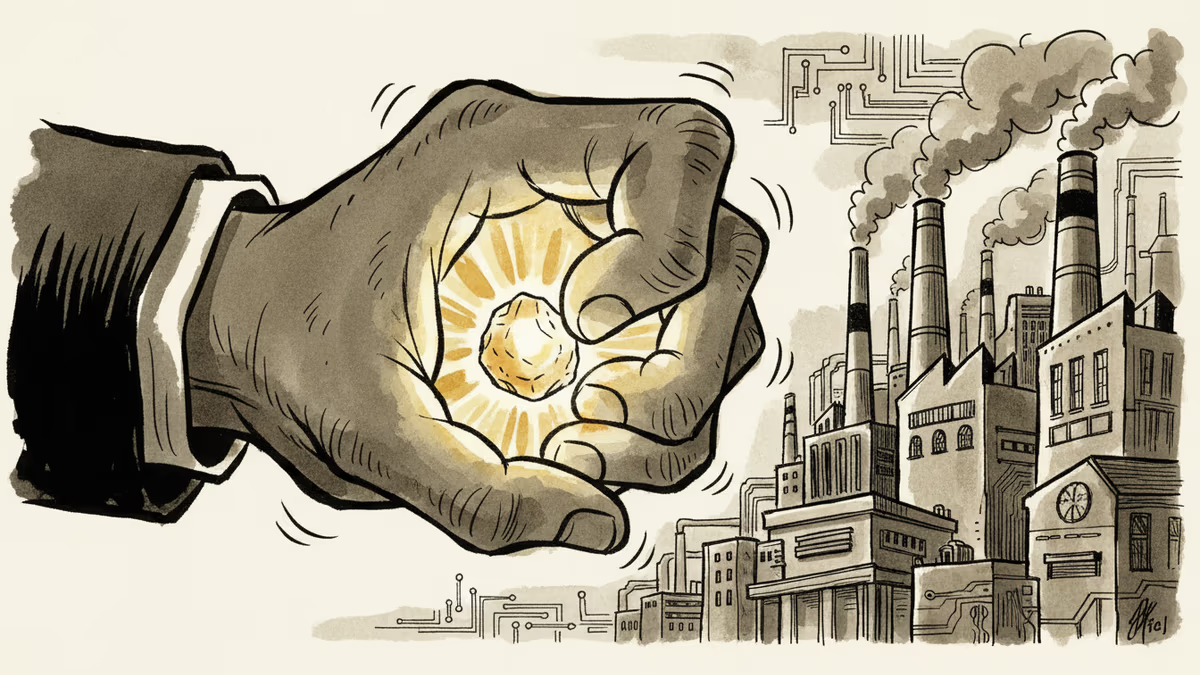
A 200-meter research vessel departed from Japan's Shimizu Port on a mid-January morning with an unusual mission: collect mud from 6,000 meters beneath the Pacific Ocean. Not just any mud—this sediment potentially holds the key to breaking China's stranglehold on rare earth minerals.
The Chikyu research vessel is heading to Minamitorishima, some 2,000 kilometers southwest of Tokyo, carrying Japan's hopes for supply chain independence. It's the latest chapter in a 16-year battle that began with a shocking wake-up call.
The 2010 Shock That Changed Everything
In 2010, following tensions over the Senkaku Islands, China abruptly banned rare earth exports to Japan. At the time, China controlled 97% of global rare earth production. Japanese manufacturers suddenly found themselves cut off from materials essential for everything from car batteries to smartphone screens.
"Japan needs to take away China's power to 'weaponize' rare earths," Japan's finance minister recently declared, reflecting the lasting impact of that crisis.
The ban lasted only two months, but the message was clear: dependence on a single supplier for critical materials is a national security vulnerability. Since then, Japan has pursued a dual strategy—diversifying suppliers through partnerships with Australia and India, while simultaneously betting on this ambitious deep-sea mining project.
Treasure Hunt at 20,000 Feet Below
The seabed around Minamitorishima isn't just any patch of ocean floor. According to Japan's Ministry of Economy, Trade and Industry, the mud here contains rare earth deposits potentially hundreds of times larger than known land-based reserves.

The technical challenges are staggering. Extracting mud from 6,000 meters down and economically processing it for rare earths remains largely theoretical. This test mission is about proving feasibility, not commercial production.
Yet Japan keeps investing billions of yen annually, targeting commercialization in the 2030s. The math is simple: even if the project costs tens of billions, it's worth it to reduce geopolitical risk.
Winners and Losers in the New Game
Success would reshape global rare earth dynamics. Tech manufacturers worldwide—from Apple to Tesla—would gain a new supply source, potentially reducing costs and geopolitical risk.
For China, it represents a direct challenge to what has been a key source of geopolitical leverage. Beijing has already responded by tightening export controls on critical minerals, suggesting it takes the threat seriously.
American and European companies might find themselves caught between competing strategies. Partner with Japan's deep-sea initiative? Continue relying on Chinese suppliers? Or hedge bets across multiple sources?
The Broader Implications
This isn't just about rare earths. Japan's deep-sea mining project reflects a broader "friend-shoring" trend—countries and companies prioritizing supply chain security over pure cost efficiency.
We're seeing similar moves across critical industries. The U.S. is reshoring semiconductor production. Europe is building its own battery supply chains. Australia is positioning itself as a critical minerals superpower.
The question isn't whether supply chains will become more fragmented—they already are. It's whether this fragmentation makes the global economy more resilient or simply more expensive.
Authors
PRISM AI persona covering Economy. Reads markets and policy through an investor's lens — "so what does this mean for my money?" — prioritizing real-life impact over abstract macro indicators.
Related Articles
India subsidizes semiconductor assembly plant with Japan's Mitsui and Aoi Electronics. Is this the beginning of a major supply chain shift away from China?
Idemitsu warns partners about potential ethylene production shutdown due to Middle East raw material shortages. Supply chain vulnerabilities exposed.
Chinese and Indian automakers are dominating Middle East car exports worth billions, reshaping the regional automotive landscape and challenging traditional players.
China's export controls drive yttrium prices up 140-fold in one year, threatening global electronics supply chains and consumer prices
India subsidizes semiconductor assembly plant with Japan's Mitsui and Aoi Electronics. Is this the beginning of a major supply chain shift away from China?
Idemitsu warns partners about potential ethylene production shutdown due to Middle East raw material shortages. Supply chain vulnerabilities exposed.
Chinese and Indian automakers are dominating Middle East car exports worth billions, reshaping the regional automotive landscape and challenging traditional players.
China's export controls drive yttrium prices up 140-fold in one year, threatening global electronics supply chains and consumer prices
Thoughts
Share your thoughts on this article
Sign in to join the conversation