
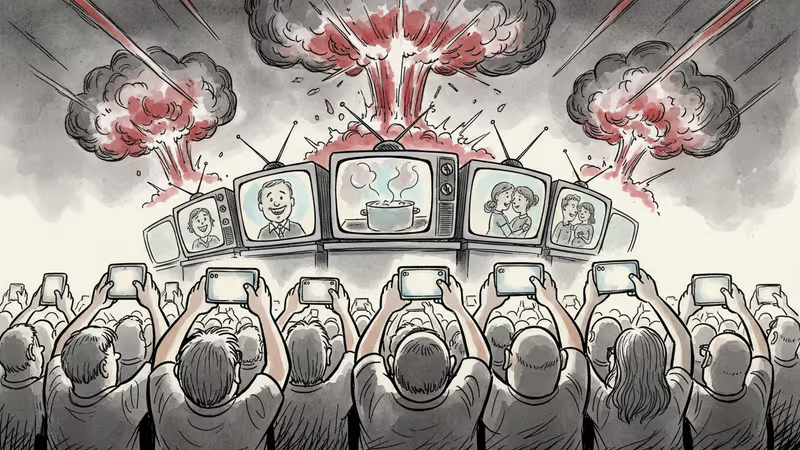
When Citizens Become the Newsroom: Venezuela's Information Uprising
During the January 3 US military operation in Venezuela, citizens bypassed government censorship through WhatsApp, satellite internet, and collaborative journalism to share real-time information.
At dawn on January 3, when bombs began falling on Caracas, Marina thought it was an earthquake. Government broadcaster VTV was airing a report about the culture minister's visit to Russia. Radio stations offered no information. But her phone was buzzing with WhatsApp messages: "They're bombing Caracas!"
What happened next reveals how ordinary citizens can outmaneuver authoritarian information control—and raises urgent questions about who controls the truth in our digital age.
When Newsrooms Go Dark, Citizens Light Up
As 11 military installations came under simultaneous attack, Venezuela had virtually no independent reporters left to cover the story. Years of harassment had emptied newsrooms, imprisoned journalists, and forced others into exile. Over 400 media outlets had disappeared in two decades.
Citizens filled the void. From windows and balconies, beaches, and even a mountaintop 10,300 feet above sea level, Venezuelans captured and shared footage of the explosions. International networks confirmed the news only after Venezuelan smartphones had already spread the truth.
Elon Musk'sStarlink played an unexpected role. When hikers in remote mountain villages struggled with intermittent internet, portable satellite antennas in their luggage provided crucial connectivity. SpaceX offered free service to Venezuelans during the crisis.
The Paranoia That Saved Democracy
This wasn't spontaneous citizen journalism—it was the product of 20 years of survival training under the Chavista regime. Venezuelans have learned to pre-delete "suspicious" photos and memes from their phones, move sensitive conversations to hidden folders, and leave devices at home when possible.
Collective paranoia born from fears of arbitrary detention, torture, and extortion paradoxically prevented these citizens from succumbing to dictatorship. They'd developed what we might call "information resilience"—the ability to find and share truth despite systematic suppression.

The turning point came in 2014, when anti-government protests coincided with traditional media outlets being sold to government-friendly business groups. Journalists fled to create independent digital platforms. Twitter (now X) emerged as a powerful alternative information source.
The Economics of Information Control
Venezuela's internet penetration sits at just 55%. According to TOP10VPN, the country ranks second only to Russia in government internet shutdowns, suffering economic losses of $1.91 billion and over 5,900 hours of disconnection affecting 17.9 million people.
Yet citizens persisted. At 5:14 AM on January 3—before Defense Minister Vladimir Padrino López officially announced the "criminal military aggression"—Venezuelans were already sharing the truth. Exiled and domestic journalists collaborated on YouTube for 11 hours of live coverage, becoming the first to inform Venezuelans of Trump's announcement that Maduro had been captured.
The Global Information Wars
Venezuela's experience offers a preview of information warfare's future. As governments worldwide grapple with "misinformation" and platform regulation, the line between legitimate content moderation and censorship blurs dangerously.
Meta, Google, and X now wield unprecedented power over global information flows. When these platforms make content decisions—whether removing "harmful" posts or restricting certain regions—they're essentially conducting information warfare at scale.
The Venezuelan case raises uncomfortable questions: If Starlink can provide free internet during political crises, what happens when SpaceX's interests don't align with information freedom? When citizen journalists become the primary news source, how do we distinguish truth from propaganda?
Democracy's Digital Immune System
Perhaps most striking is how Venezuelans developed what we might call democracy's digital immune system. Like biological immunity, it required exposure to threats to build resistance. Years of censorship taught citizens to route around digital barriers, verify information through multiple sources, and maintain communication networks despite government interference.
This resilience came at enormous cost—journalists imprisoned, media outlets shuttered, families separated by exile. But it also demonstrated something powerful: authoritarian control of information, no matter how sophisticated, remains vulnerable to distributed resistance.
The question facing democratic societies isn't whether we'll face similar information crises, but whether we're building similar resilience. Are we creating citizens capable of independent information verification, or are we outsourcing that responsibility to platforms and algorithms?
Authors
Related Articles
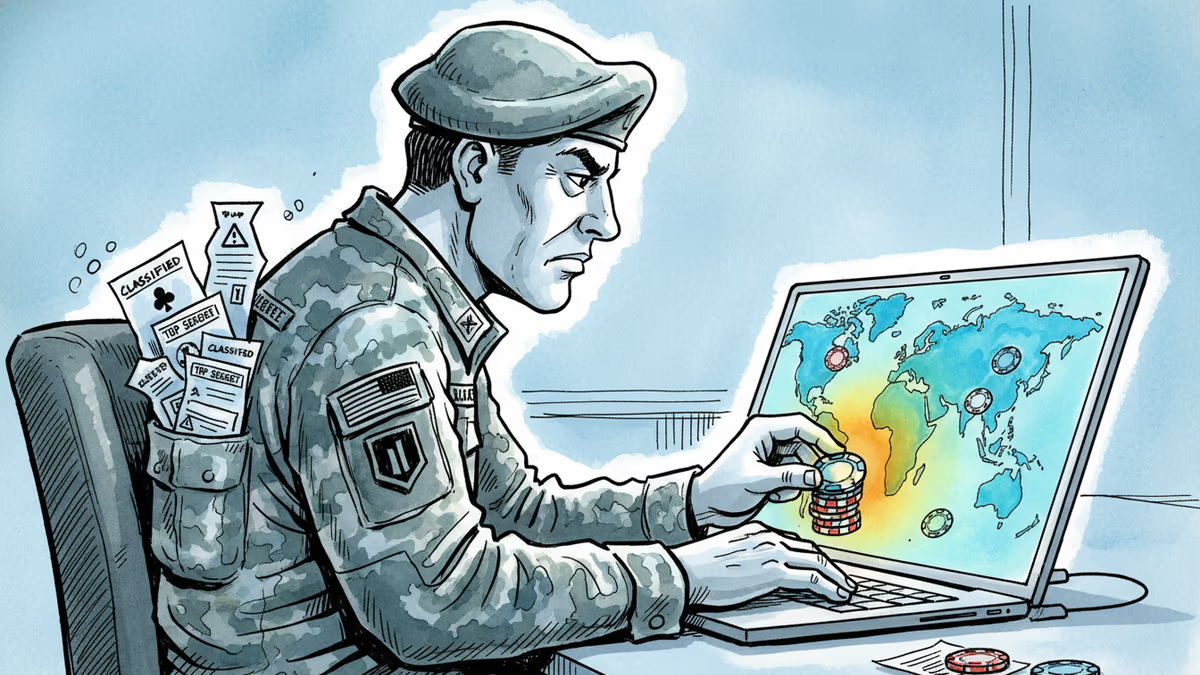
A US special forces soldier involved in the operation that captured Venezuela's Maduro allegedly used classified intel to bet on Polymarket, pocketing over $400,000. The case exposes a gaping hole in how prediction markets are regulated.
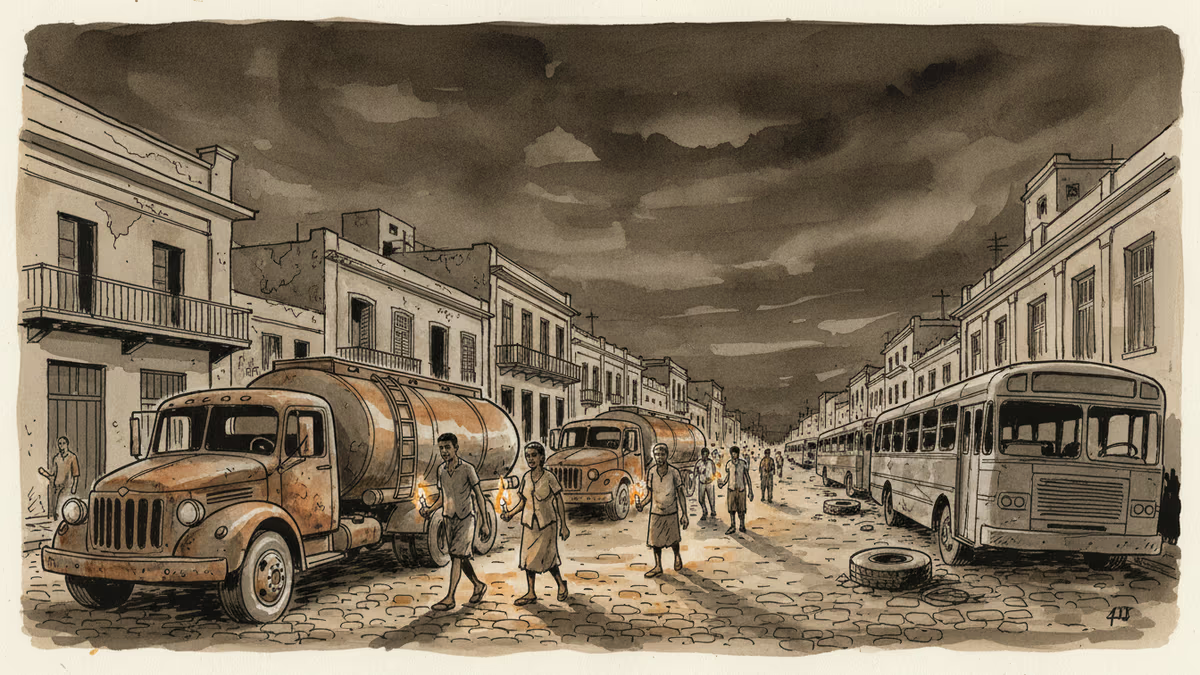
Venezuela's oil supply cut after Maduro's removal leaves Cuba facing total collapse as power outages and water shortages paralyze daily life.
A mysterious Polymarket bettor made $500,000 by predicting the 2026 Venezuela invasion and Nicolás Maduro's removal just days before the U.S. strike. Explore the ethics of predictive markets.
A mysterious Polymarket account made over $408,000 by betting on Maduro's capture just hours before the US military strike, sparking insider trading concerns.
A US special forces soldier involved in the operation that captured Venezuela's Maduro allegedly used classified intel to bet on Polymarket, pocketing over $400,000. The case exposes a gaping hole in how prediction markets are regulated.
Venezuela's oil supply cut after Maduro's removal leaves Cuba facing total collapse as power outages and water shortages paralyze daily life.
A mysterious Polymarket bettor made $500,000 by predicting the 2026 Venezuela invasion and Nicolás Maduro's removal just days before the U.S. strike. Explore the ethics of predictive markets.
A mysterious Polymarket account made over $408,000 by betting on Maduro's capture just hours before the US military strike, sparking insider trading concerns.
Thoughts
Share your thoughts on this article
Sign in to join the conversation