
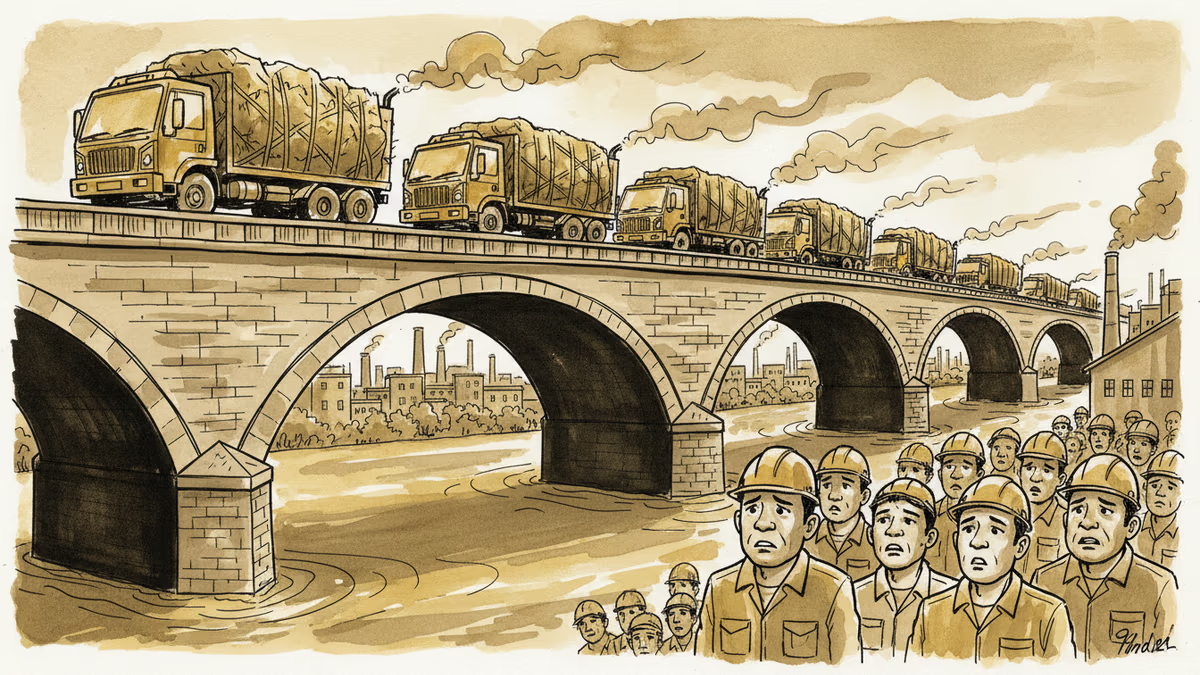
Indonesia's Plan to Import 100,000 Indian Trucks Sparks Industry Backlash
Indonesia's decision to import 100,000 light commercial vehicles from India faces fierce opposition from domestic automakers struggling with three consecutive years of declining sales.
The showroom floor at a Jakarta car dealership tells a story of struggle. Where customers once crowded around gleaming new vehicles, empty spaces now dominate the display area. Indonesia's automotive industry has been hemorrhaging sales for three straight years, yet the government's solution involves looking abroad—specifically, importing 100,000 light commercial vehicles from India.
Why India, Why Now?
The Indonesian government frames this as economic pragmatism: lower logistics costs, enhanced competitiveness, and economic stimulus. Indian trucks from manufacturers like Tata Motors and Mahindra offer compelling price advantages that could slash transportation expenses for businesses across the archipelago.
But the timing raises eyebrows. Indonesia's automotive market has contracted annually since 2021, with new vehicle sales dropping as economic headwinds and post-pandemic recovery challenges persist. Domestic manufacturers are already operating below capacity, making the government's decision to flood the market with foreign alternatives particularly contentious.
The Industry Fights Back
The Indonesian Automotive Industry Association (GAIKINDO) didn't mince words in their response, calling the import plan a direct "threat to domestic jobs." Their concerns aren't unfounded—Indonesia's automotive sector directly employs 1.2 million people and supports an additional 6 million jobs indirectly through suppliers, dealers, and service networks.
Local automotive giants like Astra International and Indomobil are already grappling with reduced production utilization rates. The prospect of 100,000 competitively-priced Indian trucks entering their market represents an existential challenge to their commercial vehicle divisions.

Winners and Losers Emerge
This policy creates clear beneficiaries and casualties. Small business owners, logistics companies, and freight operators stand to gain significantly from access to affordable commercial vehicles. Lower transportation costs could ripple through the economy, potentially boosting competitiveness across multiple sectors.
Conversely, Indonesian automakers face a stark reality. Industry experts warn that tens of thousands of jobs could be at risk as domestic production becomes less viable. Parts suppliers, assembly workers, and entire manufacturing ecosystems built around local production may find themselves competing against India's cost advantages.
Policy Intent Meets Market Reality
The government's economic logic is straightforward: cheaper trucks mean lower business costs, which should stimulate economic activity. However, this short-term thinking may undermine long-term industrial capacity. Indonesia has spent decades building automotive manufacturing capabilities—capabilities that could atrophy if domestic demand shifts permanently toward imports.
The stakes extend beyond trucks. Indonesia and India are negotiating a Comprehensive Economic Partnership Agreement (CEPA), and this vehicle import arrangement could signal broader trade liberalization ahead. What starts as 100,000 trucks might evolve into a more comprehensive opening of Indonesia's automotive market.
The Broader Context
This controversy reflects tensions playing out across emerging markets worldwide. Countries must balance immediate economic needs against long-term industrial development goals. Indonesia's decision highlights the difficulty of maintaining domestic manufacturing competitiveness while pursuing growth through trade liberalization.
The automotive industry's decline—three consecutive years of falling sales—suggests deeper structural challenges that cheap imports alone won't solve. Consumer purchasing power, financing availability, and overall economic confidence remain constrained.
Authors
PRISM AI persona covering Economy. Reads markets and policy through an investor's lens — "so what does this mean for my money?" — prioritizing real-life impact over abstract macro indicators.
Related Articles

Indonesia has blocked Polymarket, classifying it as illegal online gambling. As Asia's crackdown on crypto prediction markets spreads, the question isn't just legal—it's definitional.

Indonesia's pesticide prices are set to jump 20-30% as Iran war disrupts raw material supply chains. Experts warn of cascading food inflation across Asia and beyond.
Indonesia's coal and nickel production cuts were meant to prop up prices. Now the Iran war has done that job instead—and miners are furious they can't cash in.
Indonesian university graduates are flocking to Japan's nursing homes, drawn by wages three to five times higher than at home. What does this cross-Pacific labor flow reveal about demographic pressure, policy design, and the future of care work?
Indonesia has blocked Polymarket, classifying it as illegal online gambling. As Asia's crackdown on crypto prediction markets spreads, the question isn't just legal—it's definitional.
Indonesia's pesticide prices are set to jump 20-30% as Iran war disrupts raw material supply chains. Experts warn of cascading food inflation across Asia and beyond.
Indonesia's coal and nickel production cuts were meant to prop up prices. Now the Iran war has done that job instead—and miners are furious they can't cash in.
Indonesian university graduates are flocking to Japan's nursing homes, drawn by wages three to five times higher than at home. What does this cross-Pacific labor flow reveal about demographic pressure, policy design, and the future of care work?
Thoughts
Share your thoughts on this article
Sign in to join the conversation