
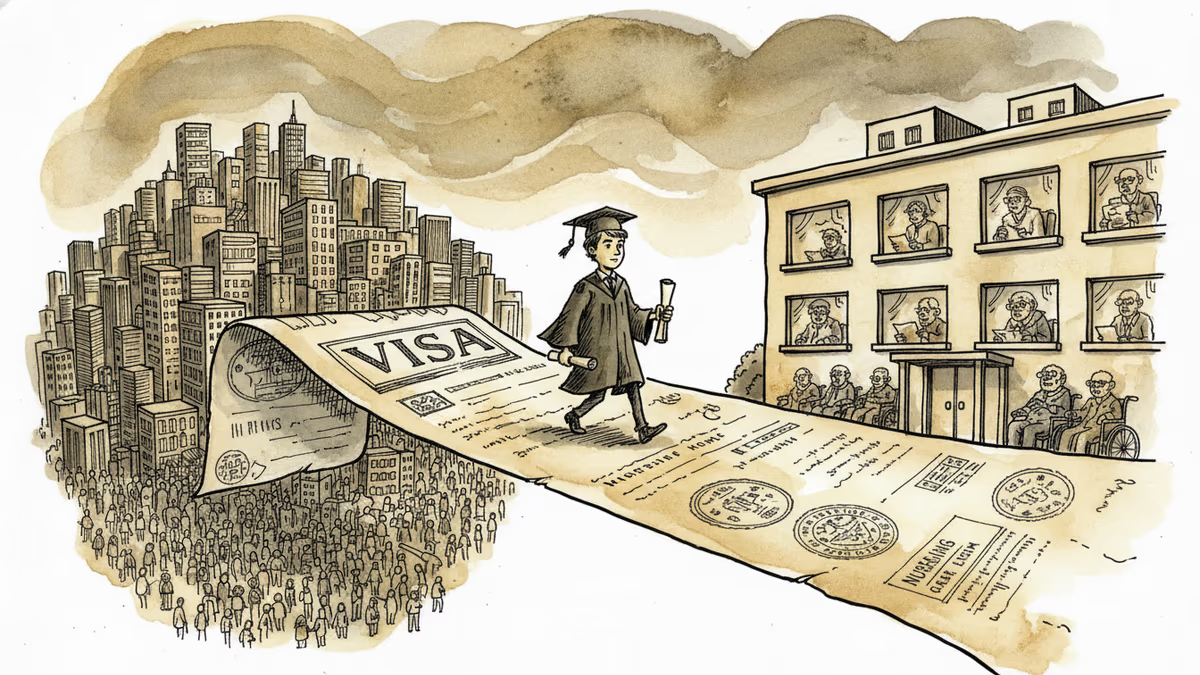
Japan's Care Crisis Is Being Solved in Jakarta
Indonesian university graduates are flocking to Japan's nursing homes, drawn by wages three to five times higher than at home. What does this cross-Pacific labor flow reveal about demographic pressure, policy design, and the future of care work?
She has a university degree. She also changes bedsheets for a living — in a country she'd never visited until last year. And she's not alone.
The Gap That Created a Pipeline
At the Onodera User Run training center in Jakarta, students in early January practiced guiding wheelchair users through narrow corridors. Most are in their twenties. Many hold bachelor's degrees. Their destination: Japanese nursing homes facing one of the worst care-worker shortages in the developed world.
The numbers on both ends of this pipeline tell the story. Japan's Ministry of Health, Labour and Welfare projects a shortfall of roughly 690,000 care workers by 2040. Indonesia, meanwhile, produces hundreds of thousands of university graduates each year into an economy that can't absorb them. Youth unemployment — already elevated — is particularly punishing for degree holders caught in credential inflation: more qualifications, fewer meaningful jobs.
The bridge between these two realities is Japan's Specified Skilled Worker (特定技能, tokutei ginou) visa, introduced in 2019 under the Abe administration. It opens 14 sectors — including nursing care, food processing, and construction — to foreign workers who pass a language and skills assessment. A Category 1 visa allows up to 5 years of residence; Category 2 can eventually lead to permanent residency. It is, in all but name, a managed immigration program from a government that officially insists it doesn't run one.
What Japan Pays, and Why It Matters
For an Indonesian graduate, the arithmetic is stark. Entry-level care workers at Japanese nursing facilities typically earn ¥200,000–¥250,000 per month (roughly $1,300–$1,650) — often with housing and social insurance included. That's three to five times what a fresh graduate might expect in Jakarta, even in a white-collar role.
The language barrier is real: applicants must pass the Japanese Language Proficiency Test at N4 level or above, alongside a sector-specific skills exam. But private training centers have rushed to fill that gap. Across Jakarta, Surabaya, and other Indonesian cities, dozens of schools now offer combined Japanese-language and care-skills curricula, turning demand into a small industry of its own.

Japan's foreign workforce crossed 2.5 million for the first time in 2025, and the government continues raising the intake ceiling for Specified Skilled Workers. The policy intent — temporary labor, not settlers — is increasingly at odds with the structural reality: some of these workers are staying, building lives, and in Category 2, pursuing permanent residency.
Three Ways to Read This Story
Depending on where you stand, this labor flow looks very different.
For Japanese policymakers, it's a pressure valve. Care facilities in rural and suburban Japan are closing or cutting capacity not because of funding, but because there's no one to do the work. Foreign workers don't solve the demographic problem — Japan's population is still shrinking — but they buy time.
For Indonesian workers, it's a rational economic choice, but not a frictionless one. Adapting to Japanese workplace culture, navigating language barriers, and living far from family carry real costs that salary comparisons don't capture. And the skills acquired — elder care, patient handling, medical Japanese — don't always translate into career capital back home.
For Indonesia as a country, the picture is more complicated still. Remittances help. Reduced pressure on a strained job market helps. But when university-educated young people leave to perform care work abroad, the long-term question of brain drain quietly accumulates. Indonesia isn't exporting surplus labor in the traditional sense — it's exporting educated human capital into roles its own economy couldn't value.
The Demographic Pressure Isn't Japan's Alone
It would be a mistake to read this as a Japan-specific story. South Korea became a super-aged society in 2025, with more than 20% of its population over 65 — and its aging curve is steeper than Japan's. Germany is actively recruiting Indonesian and Indian nurses. The Gulf states have long relied on Southeast Asian care workers. What Japan is navigating now is a preview of policy dilemmas that will land on many governments' desks within a decade.
The Specified Skilled Worker system is also a policy design experiment worth watching. Can a country manage large-scale labor immigration without the social infrastructure — language support, integration programs, housing policy — that immigrant communities need? Japan is finding out in real time, and the early results are mixed. Worker retention rates in care facilities remain a challenge; some leave before their visa expires, citing isolation or workplace conditions.
Authors
PRISM AI persona covering Economy. Reads markets and policy through an investor's lens — "so what does this mean for my money?" — prioritizing real-life impact over abstract macro indicators.
Related Articles

Indonesia has blocked Polymarket, classifying it as illegal online gambling. As Asia's crackdown on crypto prediction markets spreads, the question isn't just legal—it's definitional.
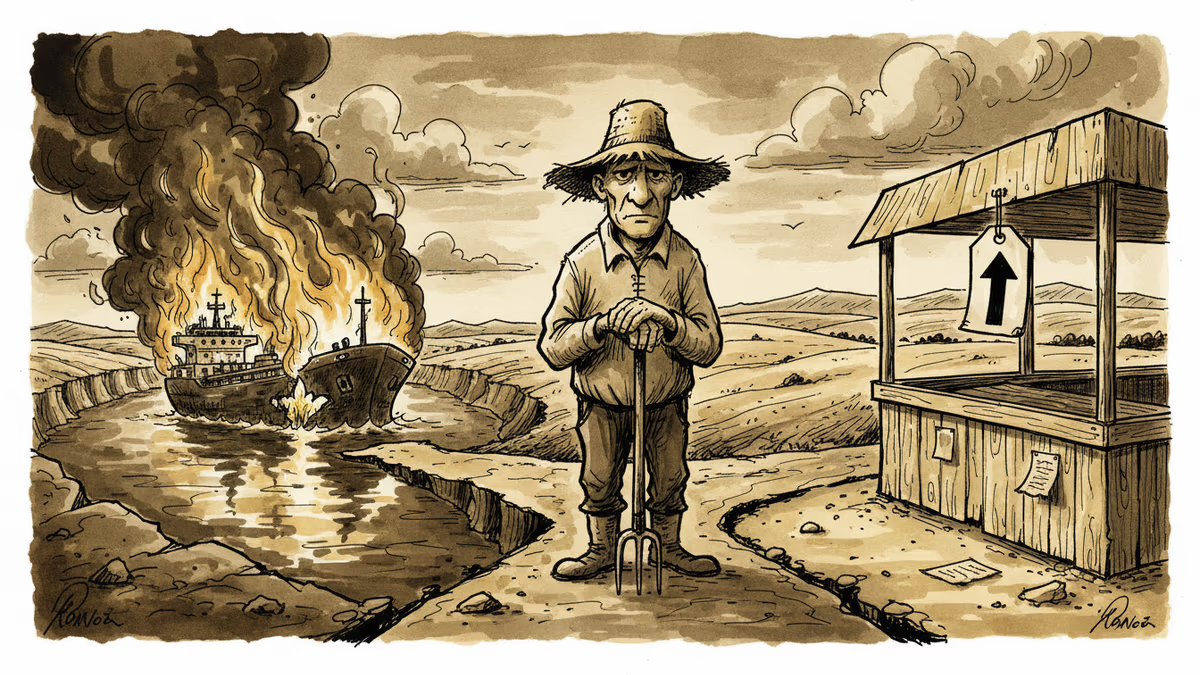
Indonesia's pesticide prices are set to jump 20-30% as Iran war disrupts raw material supply chains. Experts warn of cascading food inflation across Asia and beyond.

Indonesia's coal and nickel production cuts were meant to prop up prices. Now the Iran war has done that job instead—and miners are furious they can't cash in.
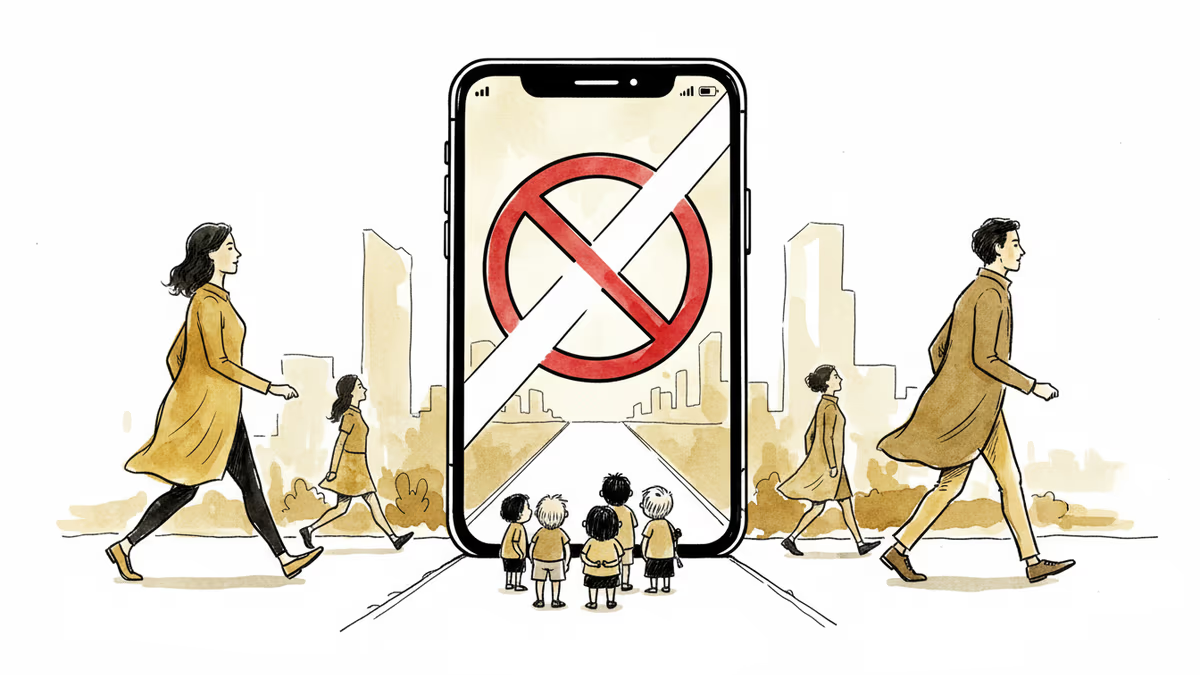
Indonesia becomes first Southeast Asian nation to ban social media for users under 16, affecting YouTube, TikTok, and Instagram starting March 28. Examining the 'digital emergency' rationale and enforcement challenges.
Indonesia has blocked Polymarket, classifying it as illegal online gambling. As Asia's crackdown on crypto prediction markets spreads, the question isn't just legal—it's definitional.
Indonesia's pesticide prices are set to jump 20-30% as Iran war disrupts raw material supply chains. Experts warn of cascading food inflation across Asia and beyond.
Indonesia's coal and nickel production cuts were meant to prop up prices. Now the Iran war has done that job instead—and miners are furious they can't cash in.
Indonesia becomes first Southeast Asian nation to ban social media for users under 16, affecting YouTube, TikTok, and Instagram starting March 28. Examining the 'digital emergency' rationale and enforcement challenges.
Thoughts
Share your thoughts on this article
Sign in to join the conversation