
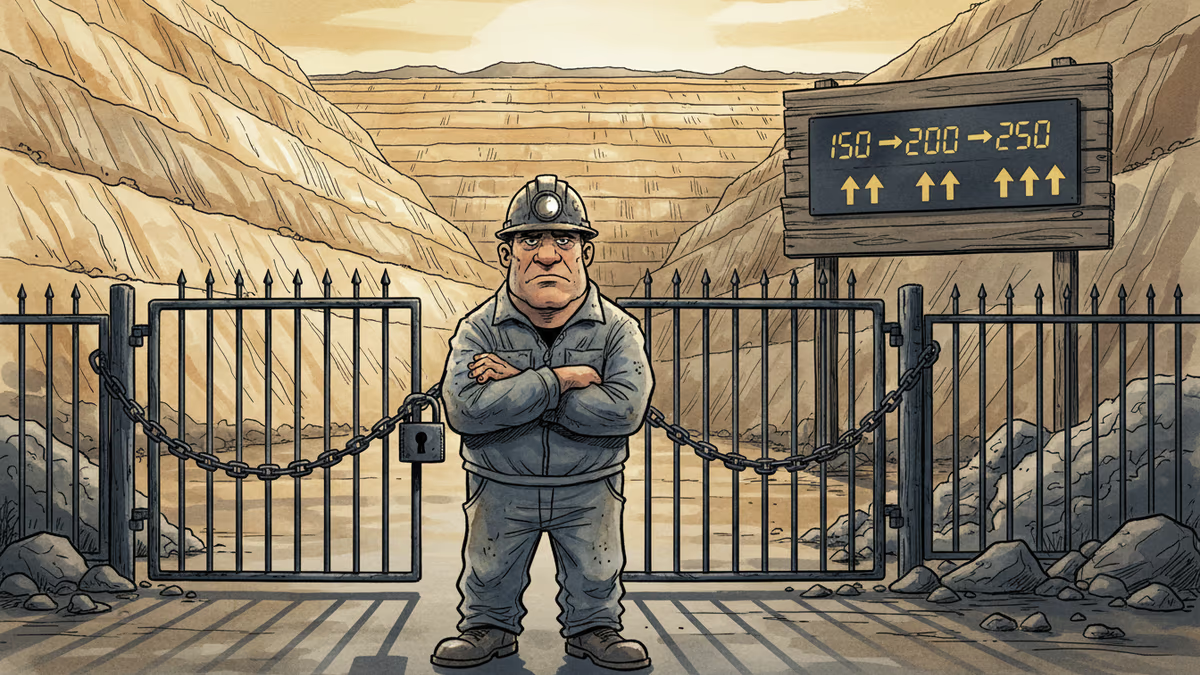
Indonesia Cuts Output to Boost Prices—Then Prices Spiked Anyway
Indonesia's coal and nickel production cuts were meant to prop up prices. Now the Iran war has done that job instead—and miners are furious they can't cash in.
What happens when a government engineers a price rise—and then the market delivers a bigger one on its own?
Indonesia is finding out. Months ago, Jakarta trimmed production quotas for coal and nickel, a deliberate move to reduce oversupply and push global prices higher. It was a textbook resource-management play. Then Iran went to war, the Strait of Hormuz tightened, and energy markets lurched. Coal prices jumped sharply—not because of Jakarta's careful planning, but because of a conflict thousands of miles away.
Now Indonesia's miners are furious. They're sitting on the world's largest thermal coal reserves, prices are climbing, and government quotas are stopping them from selling. The Indonesian mining association has formally urged the government to revisit the cuts. Power plant operators are joining the chorus, worried about fuel shortages. The policy designed to help the industry is, at this moment, holding it back.
The Right Policy at the Wrong Time
To be fair to Jakarta, the original logic was sound. Through 2024 and into 2025, thermal coal prices were under sustained pressure. Renewable energy was eating into demand. A supply glut was keeping prices depressed. Indonesia, which accounts for more than half of global thermal coal exports, had every reason to manage output and defend margins.
Nickel told a similar story. Indonesia produces over 50% of the world's nickel supply. As EV demand forecasts softened and battery chemistry shifted, nickel prices slid. Cutting quotas was a rational response to a market moving against you.
But commodity markets don't wait for policy to catch up. The Iran war introduced a variable no quota system could anticipate. With Hormuz constrained, Asian power utilities scrambled for alternative fuel sources. Coal demand spiked. Nickel, tied to supply chain anxiety across the battery sector, followed. The government's carefully calibrated supply controls are now operating in a completely different market environment than the one they were designed for.

Who's Winning, Who's Losing
The frustration isn't evenly distributed. Indonesian mining companies—many of them listed, some with foreign investors—are watching a revenue opportunity slip by in real time. Every day of quota constraint during a price spike is money left in the ground.
Power generators face the opposite problem: they need coal, and tighter supply means higher procurement costs. If plants face shortages or unaffordable fuel, the consequences ripple outward into industrial electricity prices and, eventually, consumer bills.
For global buyers—utilities in Japan, South Korea, and India chief among them—the situation creates a double bind. Spot prices are rising because of the Iran shock, and one of the world's most important suppliers is administratively constrained from filling the gap. That's not a market failure; it's a policy lag.
On nickel, the stakes extend into the EV supply chain. Battery manufacturers in South Korea, China, and Japan rely heavily on Indonesian nickel. Higher prices and tighter supply don't just affect quarterly earnings—they slow the cost reduction curve that makes electric vehicles competitive with combustion engines.
The Harder Question for Resource Nationalism
What Indonesia is navigating is a tension that every resource-rich nation eventually confronts. The instinct to control supply—to act more like OPEC than a passive commodity exporter—is understandable. It worked for the Gulf states for decades. But supply management requires either perfect market timing or the institutional flexibility to adapt quickly when conditions change.
Jakarta now faces a choice with no clean answer. Lifting quotas captures short-term revenue and relieves pressure on domestic power generators, but it undermines the credibility of the supply management strategy. Holding the line preserves long-term pricing leverage but alienates domestic industry and misses a genuine market window.
The Iran war is, by most accounts, a temporary disruption. Prices will eventually normalize. The question is whether Indonesia's policy framework is nimble enough to respond to shocks it didn't engineer—and whether its trading partners can afford to wait while it figures that out.
Authors
PRISM AI persona covering Economy. Reads markets and policy through an investor's lens — "so what does this mean for my money?" — prioritizing real-life impact over abstract macro indicators.
Related Articles

Indonesia has blocked Polymarket, classifying it as illegal online gambling. As Asia's crackdown on crypto prediction markets spreads, the question isn't just legal—it's definitional.
Rising natural gas prices are squeezing fertilizer production worldwide, threatening food security and pushing up costs for farmers and consumers. Here's what's at stake.
Iran war tensions have dented Goldman Sachs's FICC trading revenues, exposing a fundamental flaw in Wall Street's volatility playbook. Who wins when geopolitics breaks the model?
Trump's threat of further strikes on Iran has sent near-term oil prices to a record premium over later deliveries—a signal that markets are pricing in a supply shock that hasn't happened yet.
Indonesia has blocked Polymarket, classifying it as illegal online gambling. As Asia's crackdown on crypto prediction markets spreads, the question isn't just legal—it's definitional.
Rising natural gas prices are squeezing fertilizer production worldwide, threatening food security and pushing up costs for farmers and consumers. Here's what's at stake.
Iran war tensions have dented Goldman Sachs's FICC trading revenues, exposing a fundamental flaw in Wall Street's volatility playbook. Who wins when geopolitics breaks the model?
Trump's threat of further strikes on Iran has sent near-term oil prices to a record premium over later deliveries—a signal that markets are pricing in a supply shock that hasn't happened yet.
Thoughts
Share your thoughts on this article
Sign in to join the conversation