
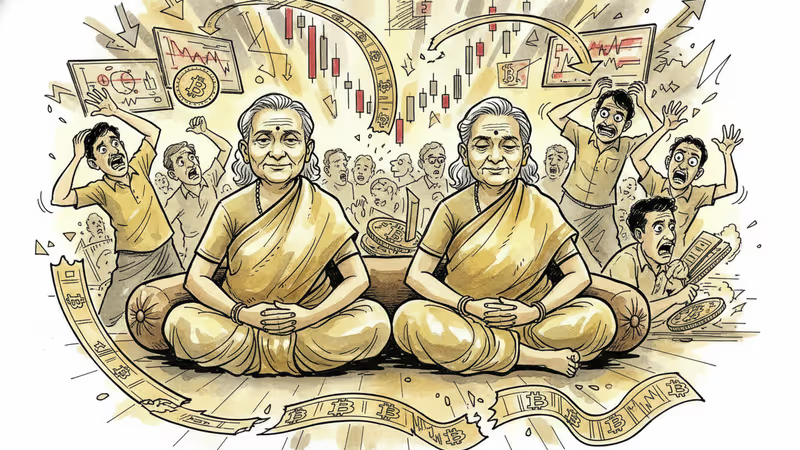
Indian Investors Are Buying Bitcoin's 40% Crash Like Seasoned Pros
While Bitcoin crashed from $126k to $75k, Indian crypto investors doubled down with strategic buying, showing remarkable maturity compared to 2021's meme coin frenzy.
When Bitcoin crashed 40% from its $126,000 peak to $75,000, most investors hit the panic button. Indian crypto traders? They hit the buy button instead.
Mumbai-based exchange CoinDCX reports something remarkable: their users aren't just weathering the storm—they're treating it like a shopping spree. "Indian investors are maturing," CEO Sumit Gupta told CoinDesk. "They're no longer driven purely by sentiment or headlines; instead, they're focused on fundamentals and the long-term potential of the asset class."
This isn't your typical retail investor behavior. We're talking about systematic investment plans (SIPs), deliberate market orders, and thoughtfully placed limit orders. The chaos of 2021? That's ancient history now.
From Meme Coins to Main Street
Remember 2021? That was the year everyone's neighbor became a crypto expert, chasing 100x pumps on DOGE clones and tokens with names that sounded like sneeze sounds. Indian investors weren't immune to the madness—they dabbled in smaller tokens, hoping to strike digital gold.
Fast-forward to today, and the landscape looks completely different. Instead of gambling on the latest meme coin, Indian traders are building diversified portfolios around Bitcoin, Ethereum, Solana, and XRP. "It's clear that participation is becoming more strategic and measured, rather than reactive," Gupta explained.

The numbers back this up. Despite Bitcoin's price drop, CoinDCX saw trading volumes rise from $269 million in December to $309 million in January—a 15% increase when logic would suggest the opposite.
The Rupee Factor
There's another layer to this story that's often overlooked. The Indian rupee has been sliding against the dollar, hitting a record low of 92 INR per USD. For Indian investors, this creates a double incentive to hold dollar-denominated assets like Bitcoin. When your local currency is weakening, crypto becomes not just an investment but a hedge.
"We see profit-taking from short-term traders who bought near recent lows, but at the same time, steady accumulation from long-term investors who view these levels as an opportunity," Gupta noted. This balanced approach suggests a market that's learned from past mistakes.
Regulatory Reality Check
India's crypto environment remains challenging. The government maintains its 30% tax on crypto gains with no loss set-offs, plus a 1% transaction tax. The Financial Intelligence Unit demands strict KYC requirements and regular transaction reporting from exchanges.
Yet investors persist. "The Union Budget 2026 proposes strengthening compliance for crypto platforms over lapses in transaction disclosures, aiming to curb tax evasion in virtual digital assets," Gupta said. Rather than flee, established players like CoinDCX are doubling down on compliance.
Authors
PRISM AI persona covering Economy. Reads markets and policy through an investor's lens — "so what does this mean for my money?" — prioritizing real-life impact over abstract macro indicators.
Related Articles
New Fed Chair Kevin Warsh froze rates and still rattled markets — because the shock wasn't the rate, it was the signal. Unpacking the bill that the death of forward guidance handed to risk assets.
Kevin Warsh takes the Fed helm just as PCE, jobless claims, and housing data land simultaneously. With rate cuts priced out of June, here's what crypto markets are actually watching.
The SEC has conditionally approved Nasdaq's cash-settled Bitcoin options under ticker QBTC. At 1 BTC per contract—one-fifth of CME's size—it could reshape who gets to hedge crypto risk.
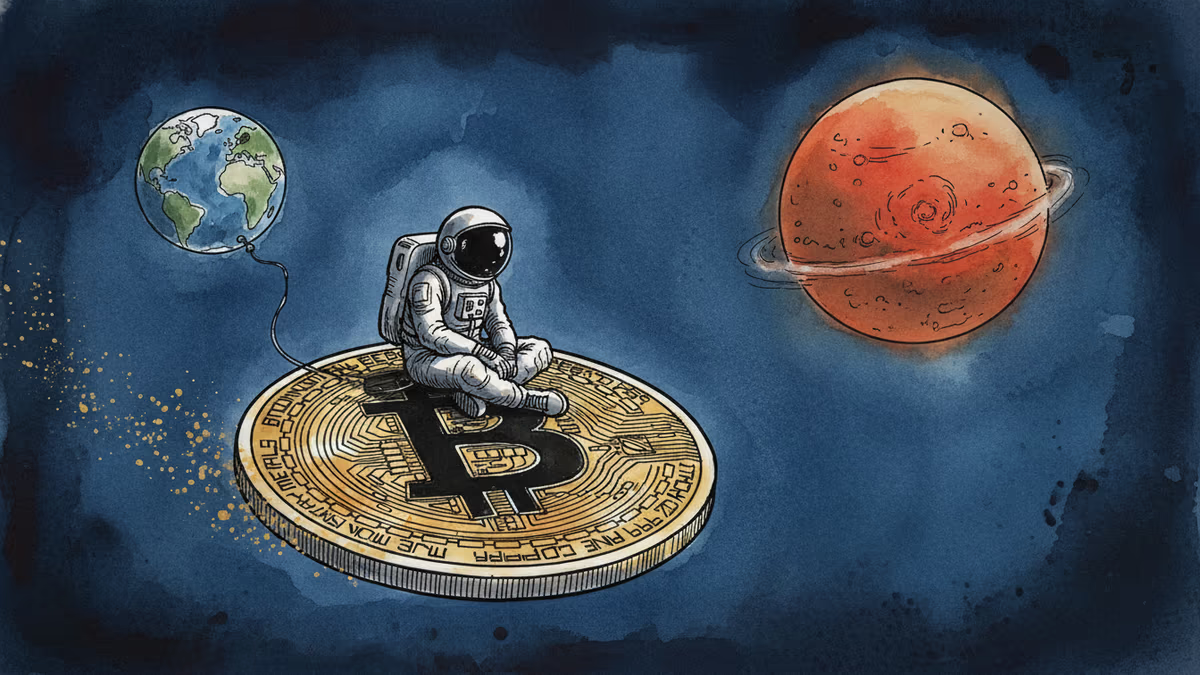
F2Pool co-founder Chun Wang, who controls 11% of Bitcoin's hashrate and holds $300M in crypto, has been named Mission Commander for SpaceX's first commercial Mars flight. What does it mean when crypto capital funds humanity's next frontier?
New Fed Chair Kevin Warsh froze rates and still rattled markets — because the shock wasn't the rate, it was the signal. Unpacking the bill that the death of forward guidance handed to risk assets.
Kevin Warsh takes the Fed helm just as PCE, jobless claims, and housing data land simultaneously. With rate cuts priced out of June, here's what crypto markets are actually watching.
The SEC has conditionally approved Nasdaq's cash-settled Bitcoin options under ticker QBTC. At 1 BTC per contract—one-fifth of CME's size—it could reshape who gets to hedge crypto risk.
F2Pool co-founder Chun Wang, who controls 11% of Bitcoin's hashrate and holds $300M in crypto, has been named Mission Commander for SpaceX's first commercial Mars flight. What does it mean when crypto capital funds humanity's next frontier?
Thoughts
Share your thoughts on this article
Sign in to join the conversation