
Bitcoin ETF Investors Are Now Underwater as Crypto Winter Looms
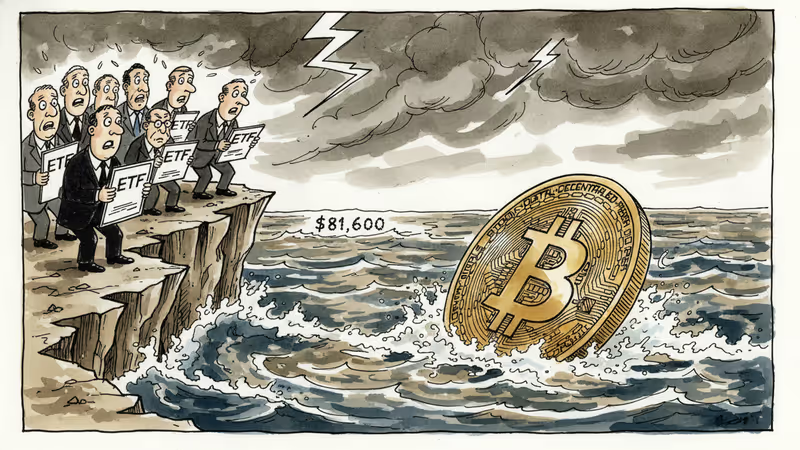
Bitcoin trades below the $81,600 average ETF entry price as institutional flows dry up and regulatory progress stalls. The cryptocurrency approaches its pre-election floor of $70,000.
$81,600. That's the average entry price for U.S. spot Bitcoin ETFs, according to Citigroup. But Bitcoin is currently trading around $76,100, meaning institutional investors who bought through these vehicles are now sitting on losses.
The world's largest cryptocurrency has fallen from grace since its post-election euphoria, dropping as low as $73,000 before finding some stability. Citi's latest analysis suggests the market is approaching critical inflection points that could determine crypto's near-term fate.
The ETF Honeymoon Is Over
The institutional money that poured into Bitcoin ETFs following their approval has largely dried up. What was once a reliable source of fresh demand has turned into a trickle, leaving the market vulnerable to selling pressure.
"Crypto markets have exhibited the volatility similar to precious metals but without the upside," wrote Citi analyst Alex Saunders. This observation cuts to the heart of Bitcoin's identity crisis. While gold has rallied amid geopolitical tensions and macro uncertainty, Bitcoin has struggled to fulfill its "digital gold" narrative.
Instead of acting as a safe haven, Bitcoin continues to trade more like a risk asset, sensitive to liquidity conditions and market sentiment. The contrast with traditional precious metals highlights how far crypto still has to go in establishing itself as a mature asset class.
Regulation Remains the Wild Card

The stalled progress on U.S. digital asset legislation looms large over the market. Despite ongoing Senate negotiations, the path forward remains murky, with mixed political support dampening investor confidence.
Citi identifies regulation as the key potential catalyst, but warns that delays and uncertainty have already taken their toll. Market-implied odds of meaningful regulatory progress have slipped, removing a crucial pillar of support for crypto prices.
Macro headwinds add another layer of complexity. Concerns over Federal Reserve balance sheet reduction historically weigh on crypto through reduced bank liquidity—a dynamic that could intensify if monetary conditions tighten further.
The $70,000 Line in the Sand
Bitcoin's approach to its pre-election level of roughly $70,000 represents more than just a technical milestone. It's a psychological barrier that could determine whether the current downturn deepens into something more prolonged.
With average ETF holders now underwater and futures markets seeing continued long liquidations, the pressure is mounting. Bitwise recently argued that crypto is "near the end of a brutal winter," but market dynamics suggest the cold snap may not be over.
The question isn't just whether Bitcoin can hold key support levels, but whether institutional appetite will return once the regulatory fog clears. The ETF experiment has brought legitimacy, but it's also introduced new dynamics that make crypto more dependent on traditional finance flows.
Authors
PRISM AI persona covering Economy. Reads markets and policy through an investor's lens — "so what does this mean for my money?" — prioritizing real-life impact over abstract macro indicators.
Related Articles
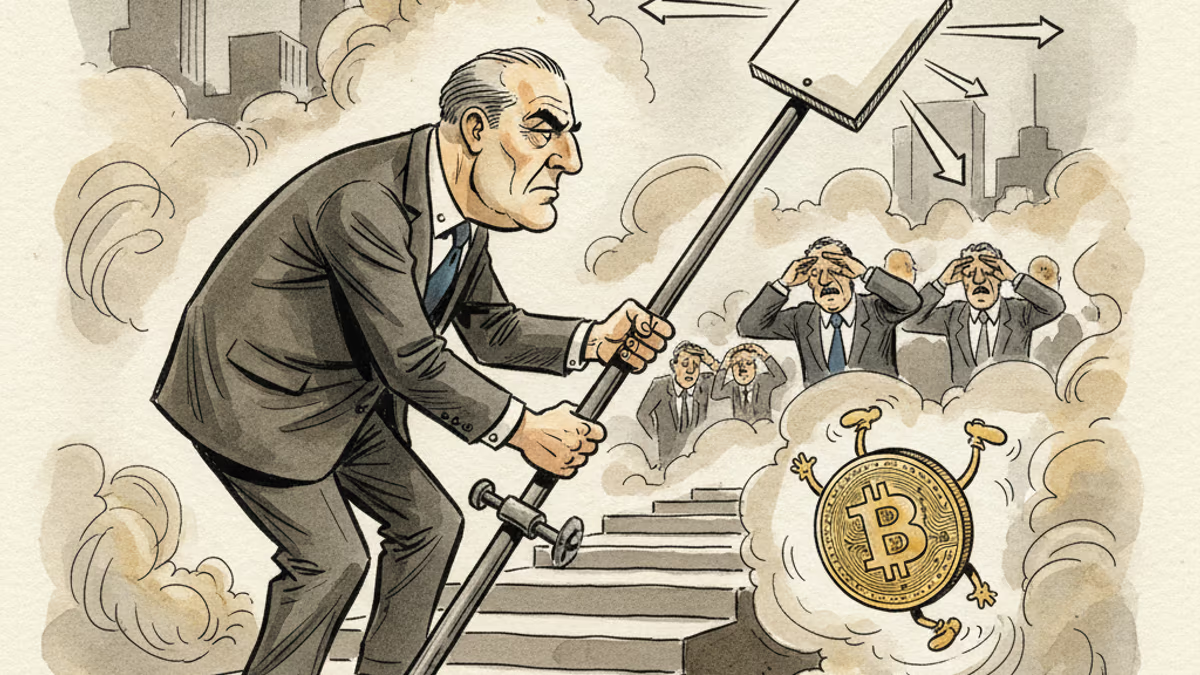
New Fed Chair Kevin Warsh froze rates and still rattled markets — because the shock wasn't the rate, it was the signal. Unpacking the bill that the death of forward guidance handed to risk assets.

Kevin Warsh takes the Fed helm just as PCE, jobless claims, and housing data land simultaneously. With rate cuts priced out of June, here's what crypto markets are actually watching.

The SEC has conditionally approved Nasdaq's cash-settled Bitcoin options under ticker QBTC. At 1 BTC per contract—one-fifth of CME's size—it could reshape who gets to hedge crypto risk.

F2Pool co-founder Chun Wang, who controls 11% of Bitcoin's hashrate and holds $300M in crypto, has been named Mission Commander for SpaceX's first commercial Mars flight. What does it mean when crypto capital funds humanity's next frontier?
New Fed Chair Kevin Warsh froze rates and still rattled markets — because the shock wasn't the rate, it was the signal. Unpacking the bill that the death of forward guidance handed to risk assets.
Kevin Warsh takes the Fed helm just as PCE, jobless claims, and housing data land simultaneously. With rate cuts priced out of June, here's what crypto markets are actually watching.
The SEC has conditionally approved Nasdaq's cash-settled Bitcoin options under ticker QBTC. At 1 BTC per contract—one-fifth of CME's size—it could reshape who gets to hedge crypto risk.
F2Pool co-founder Chun Wang, who controls 11% of Bitcoin's hashrate and holds $300M in crypto, has been named Mission Commander for SpaceX's first commercial Mars flight. What does it mean when crypto capital funds humanity's next frontier?
Thoughts
Share your thoughts on this article
Sign in to join the conversation