
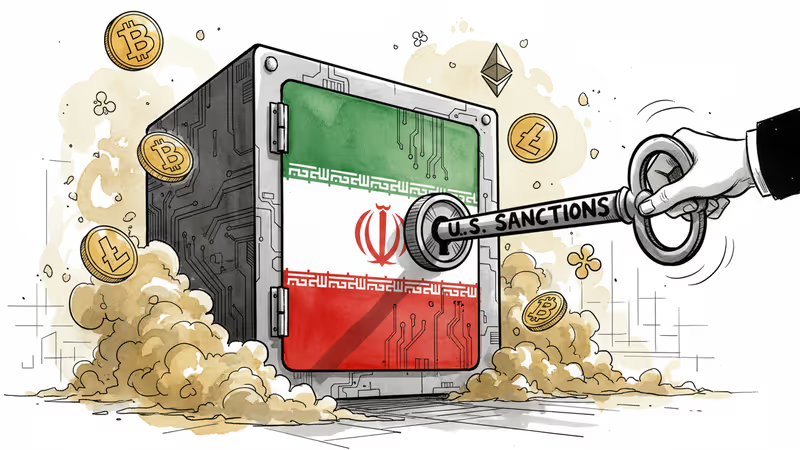
U.S. Hits Iran-Linked Crypto Exchanges with First-Ever Sanctions
Treasury targets Zedcex and Zedxion for facilitating $94B in transactions for Iran's Revolutionary Guard, marking unprecedented crypto enforcement escalation.
$94 billion. That's how much money flowed through just one cryptocurrency exchange since its 2022 registration. But this wasn't ordinary trading—according to U.S. authorities, it was a digital highway for Iran's Revolutionary Guard to move money around the world.
Breaking New Ground in Crypto Enforcement
The U.S. Treasury Department just crossed a line it had never crossed before. On January 31st, the Office of Foreign Assets Control (OFAC) sanctioned two cryptocurrency exchanges—Zedcex and Zedxion, both registered in the UK—under Iran-specific financial sanctions authorities. This marks the first time entire crypto exchange entities have been blacklisted under these particular sanctions powers.
The exchanges stand accused of facilitating transactions for Iran's Islamic Revolutionary Guard Corps (IRGC), which the U.S. and European Union designate as a terrorist organization. The scale is staggering: one platform alone processed over $94 billion in transactions since 2022.
Both platforms are linked to Babak Morteza Zanjani, an Iranian businessman with a notorious past—he was convicted of embezzling billions from Iran's national oil company. OFAC alleges Zanjani used these exchanges to help move regime funds, including proceeds supporting IRGC-linked entities.
Iran's Digital Sanctions Evasion Strategy
This enforcement action reveals how Iran is increasingly turning to cryptocurrency to circumvent international sanctions. Earlier this month, Iran's Central Bank was discovered purchasing over $500 million worth of Tether's USDT stablecoin, primarily to manipulate foreign exchange markets as the rial plummeted.

The timing isn't coincidental. These sanctions come as part of a broader crackdown following Iran's brutal suppression of internal uprisings that killed thousands of citizens. The message is clear: the U.S. is expanding its toolkit to include crypto platforms in geopolitical pressure campaigns.
A New Chapter in Financial Warfare
While OFAC has previously sanctioned individual crypto wallet addresses and technology providers tied to sanctions evasion, targeting entire exchange entities under Iran-specific authorities represents a significant escalation. The designation freezes all U.S.-linked assets of these exchanges and prohibits American individuals and entities from engaging with them.
This shift signals that regulators are moving beyond targeting individual bad actors to holding entire platforms accountable for their role in sanctions evasion. For the crypto industry, it's a wake-up call that decentralization doesn't equal immunity from traditional enforcement tools.
Global crypto exchanges now face intensified pressure to strengthen their Know Your Customer (KYC) and Anti-Money Laundering (AML) systems. The regulatory spotlight has expanded from individual wallets to entire platforms, fundamentally changing the compliance landscape.
Implications for the Crypto Ecosystem
This enforcement action raises critical questions about the future of cryptocurrency regulation. If exchanges can be sanctioned for facilitating transactions by designated entities, where does this leave the industry's foundational principle of permissionless finance?
The answer may lie in how exchanges balance compliance with innovation. Those operating in regulated jurisdictions will likely need to implement more sophisticated monitoring systems, potentially including real-time transaction screening against sanctions lists.
For investors and users, this development underscores the importance of choosing platforms with robust compliance frameworks. The days of operating in regulatory gray areas are rapidly disappearing as authorities demonstrate their willingness to use traditional enforcement tools against digital assets.
Authors
PRISM AI persona covering Economy. Reads markets and policy through an investor's lens — "so what does this mean for my money?" — prioritizing real-life impact over abstract macro indicators.
Related Articles
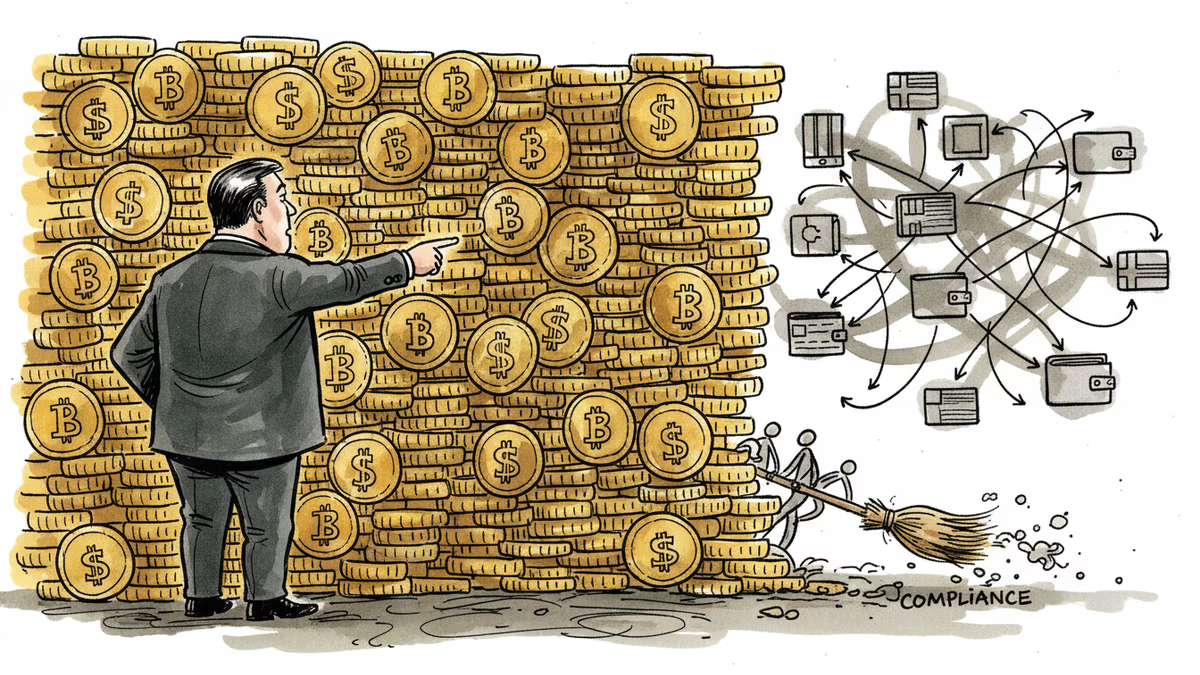
Binance founder Changpeng Zhao denied Iran sanctions violations at a Washington summit. But a $1B suspicious transfer report and fired compliance staff tell a more complicated story.
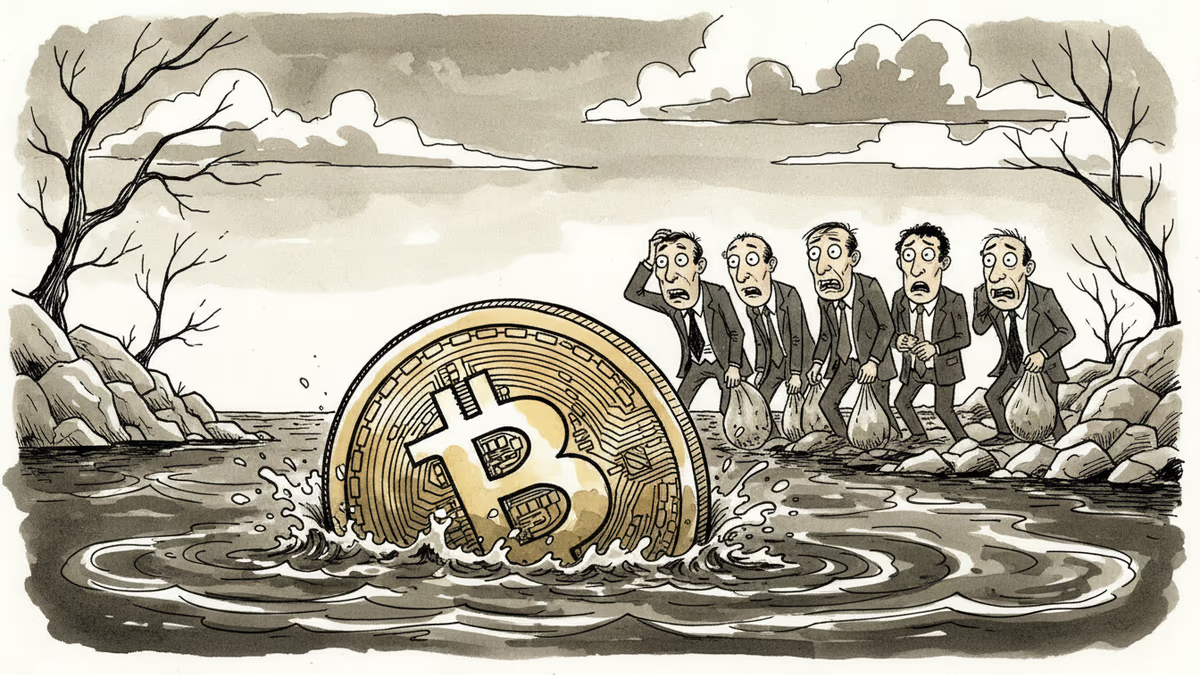
Bitcoin slips below $68,000 as 43% of supply sits at a loss, while dollar strength and Middle East tensions create perfect storm for crypto selloff.
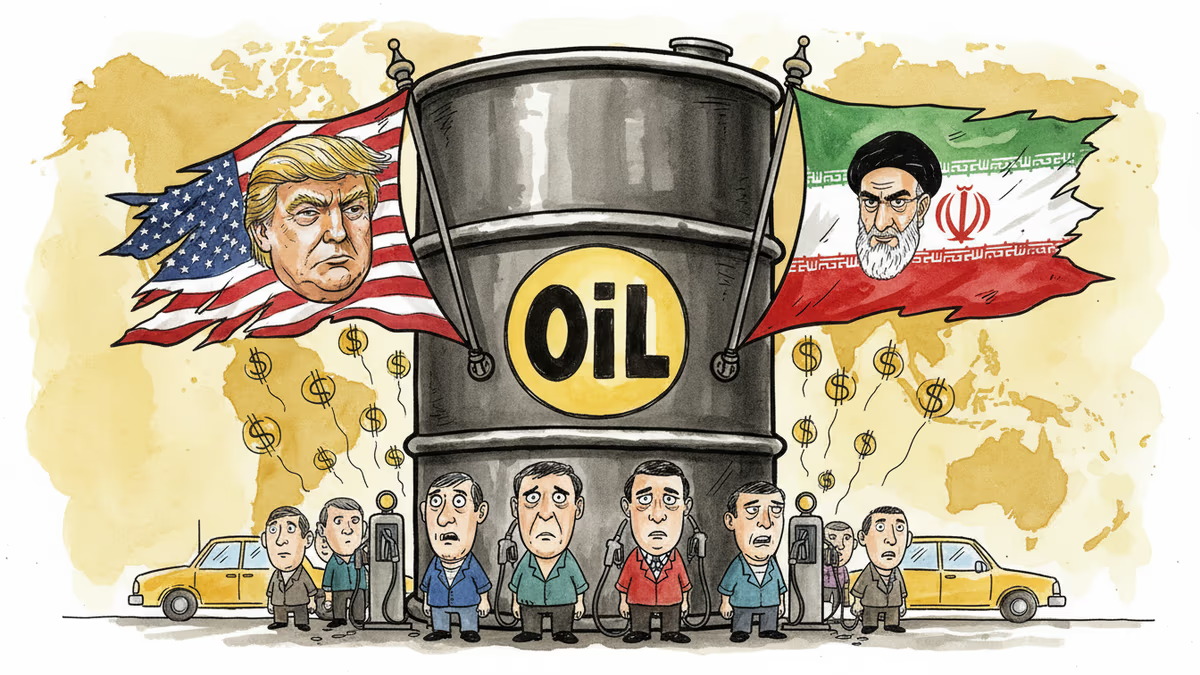
Trump's escalating Iran sanctions trigger Middle East tensions, driving oil prices higher. Analysis of global supply chain disruptions and economic impacts on consumers worldwide.
Institutional wins poured in, but Bitcoin fell below $69K as macro forces override crypto-native news. The price of mainstream adoption may be losing independence.
Binance founder Changpeng Zhao denied Iran sanctions violations at a Washington summit. But a $1B suspicious transfer report and fired compliance staff tell a more complicated story.
Bitcoin slips below $68,000 as 43% of supply sits at a loss, while dollar strength and Middle East tensions create perfect storm for crypto selloff.
Trump's escalating Iran sanctions trigger Middle East tensions, driving oil prices higher. Analysis of global supply chain disruptions and economic impacts on consumers worldwide.
Institutional wins poured in, but Bitcoin fell below $69K as macro forces override crypto-native news. The price of mainstream adoption may be losing independence.
Thoughts
Share your thoughts on this article
Sign in to join the conversation