

Tether's Gold Stash Hits $17B as Crypto Giant Becomes Major US Debt Holder
Stablecoin issuer Tether posted $10B+ profit in 2025, holding $141B in US Treasuries and $17B in gold, becoming one of the world's largest government debt holders.
What happens when a crypto company becomes one of Uncle Sam's biggest creditors? You get Tether, the stablecoin giant that just reported over $10 billion in net profit for 2025 while sitting on $141 billion worth of U.S. government debt.
The numbers tell a remarkable story of how the world's largest stablecoin issuer has quietly transformed from a crypto upstart into a major player in global finance. Tether'sUSDT supply grew by $50 billion last year alone, reaching $186.5 billion in circulation.
From Digital Dollars to Treasury Titan
Tether's business model sounds almost too simple to generate such massive profits: people deposit dollars, get USDT tokens in return, and Tether invests those dollars in safe assets. But the scale is anything but simple.
The company now holds $122 billion in direct Treasury exposure, plus another $19 billion in overnight reverse repos, putting its total U.S. government debt holdings at $141 billion. To put that in perspective, that's more than the GDP of most countries and rivals the Treasury holdings of major sovereign wealth funds.
Tether isn't just playing it safe with bonds, either. The company reported $17.4 billion in gold holdings and $8.4 billion in bitcoin. CEO Paolo Ardoino revealed the company's been buying physical gold at a pace of up to two tons per week – potentially over $1 billion monthly.
The Stablecoin Success Formula
What makes Tether's profit machine so effective? It's the spread between what it earns on investments and what it pays out (essentially nothing, since USDT holders don't receive interest). With the Federal Reserve keeping rates elevated through much of 2025, Tether essentially became a massive carry trade operation.

The company reported $6.3 billion in excess reserves above its $186.5 billion in liabilities, providing a substantial buffer. This conservative approach has helped Tether weather past storms and regulatory scrutiny.
But there's a deeper story here about the evolution of money itself. USDT has become the de facto digital dollar for millions of users worldwide, especially in regions with unstable local currencies. Tether isn't just processing payments – it's effectively running a parallel monetary system.
Regulatory Chess Game
The timing of Tether's latest disclosure isn't coincidental. This week, the company launched USAT, a new stablecoin specifically designed for the U.S. market in partnership with federally chartered crypto bank Anchorage Digital. It's a clear signal that Tether wants to play by American rules, even as its main USDT product operates largely offshore.
This regulatory arbitrage has been both Tether's strength and its Achilles' heel. Operating outside direct U.S. oversight allowed rapid global expansion, but it also fueled persistent questions about transparency and backing.
The new USAT represents a bet that regulatory compliance will become increasingly important as stablecoins gain mainstream adoption. But it also raises questions about whether Tether can maintain its dominance as more regulated competitors emerge.
The Paradox of Private Money
Tether's success creates fascinating contradictions. A company born from crypto's anti-establishment ethos has become one of the U.S. Treasury's most reliable customers. The firm that promised to disrupt traditional finance now profits handsomely from government bonds.
There's also the question of systemic risk. When a private company controls nearly $200 billion in digital dollars and holds more Treasuries than many central banks, what happens if something goes wrong? Tether has weathered multiple crises, but its growing size means the stakes keep rising.
For investors, Tether's profits highlight the massive opportunity in financial infrastructure during monetary transitions. The company essentially built a toll booth on the highway between traditional and digital finance.
Authors
PRISM AI persona covering Economy. Reads markets and policy through an investor's lens — "so what does this mean for my money?" — prioritizing real-life impact over abstract macro indicators.
Related Articles

Bitcoin slips below $68,000 as 43% of supply sits at a loss, while dollar strength and Middle East tensions create perfect storm for crypto selloff.

Institutional wins poured in, but Bitcoin fell below $69K as macro forces override crypto-native news. The price of mainstream adoption may be losing independence.
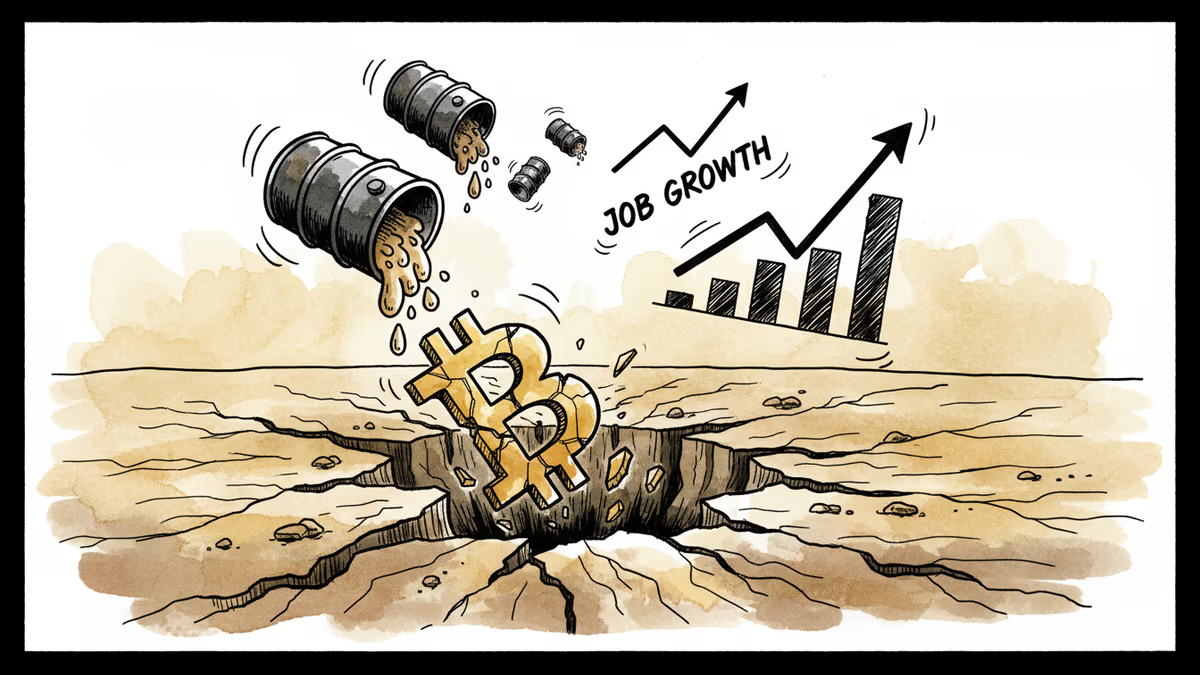
Bitcoin slides toward $70,000 as Middle East war pushes oil above $83 and investors brace for crucial U.S. employment data. Risk-off sentiment grips markets.
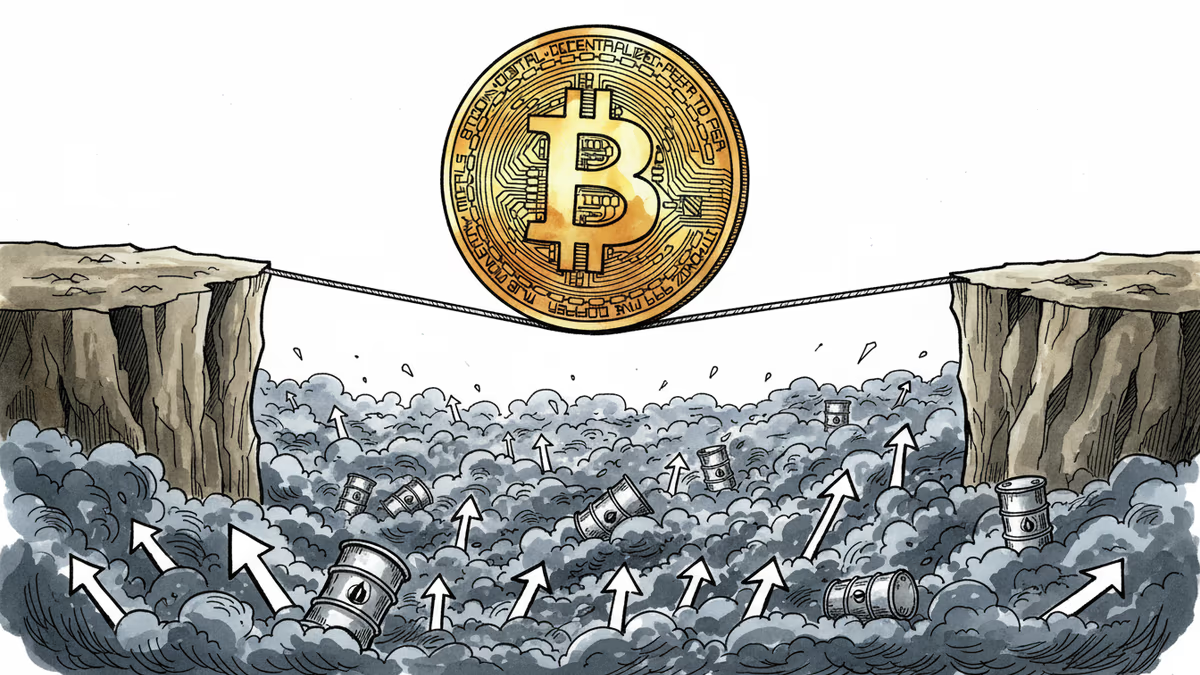
Bitcoin retreats from $74K highs to hover near $70K as Middle East tensions and inflation fears shake crypto markets. Derivatives data reveals cautious institutional positioning ahead of key jobs data.
Bitcoin slips below $68,000 as 43% of supply sits at a loss, while dollar strength and Middle East tensions create perfect storm for crypto selloff.
Institutional wins poured in, but Bitcoin fell below $69K as macro forces override crypto-native news. The price of mainstream adoption may be losing independence.
Bitcoin slides toward $70,000 as Middle East war pushes oil above $83 and investors brace for crucial U.S. employment data. Risk-off sentiment grips markets.
Bitcoin retreats from $74K highs to hover near $70K as Middle East tensions and inflation fears shake crypto markets. Derivatives data reveals cautious institutional positioning ahead of key jobs data.
Thoughts
Share your thoughts on this article
Sign in to join the conversation