

700,000 Residents Exposed: The 4-Year Illinois IDHS data breach 700,000 residents Crisis
The Illinois IDHS data breach has exposed over 700,000 residents' data for four years. Learn about the security lapse involving Medicaid recipients and personal information.
700,000 residents had their sensitive personal information exposed for over four years due to a massive security oversight. The state of Illinois recently confirmed a long-standing data leak that left vulnerable citizens' details wide open on the public web.
Unpacking the Illinois IDHS data breach 700,000 residents security lapse
According to TechCrunch, the Illinois Department of Human Services (IDHS) admitted on January 2, 2026, that an internal mapping tool was inadvertently left public. Officials used this site to allocate state resources, but it became a window for anyone to view private citizen data from April 2021 until its discovery in September 2025.

A breakdown of the exposed data
The breach hit two primary groups. First, 672,616 Medicaid and Medicare Savings Program recipients had their addresses, case numbers, and demographic info leaked—though their names remained hidden. Second, and more concerningly, 32,401 individuals receiving rehabilitation services had their full names, addresses, and case statuses exposed.
Authors
Related Articles
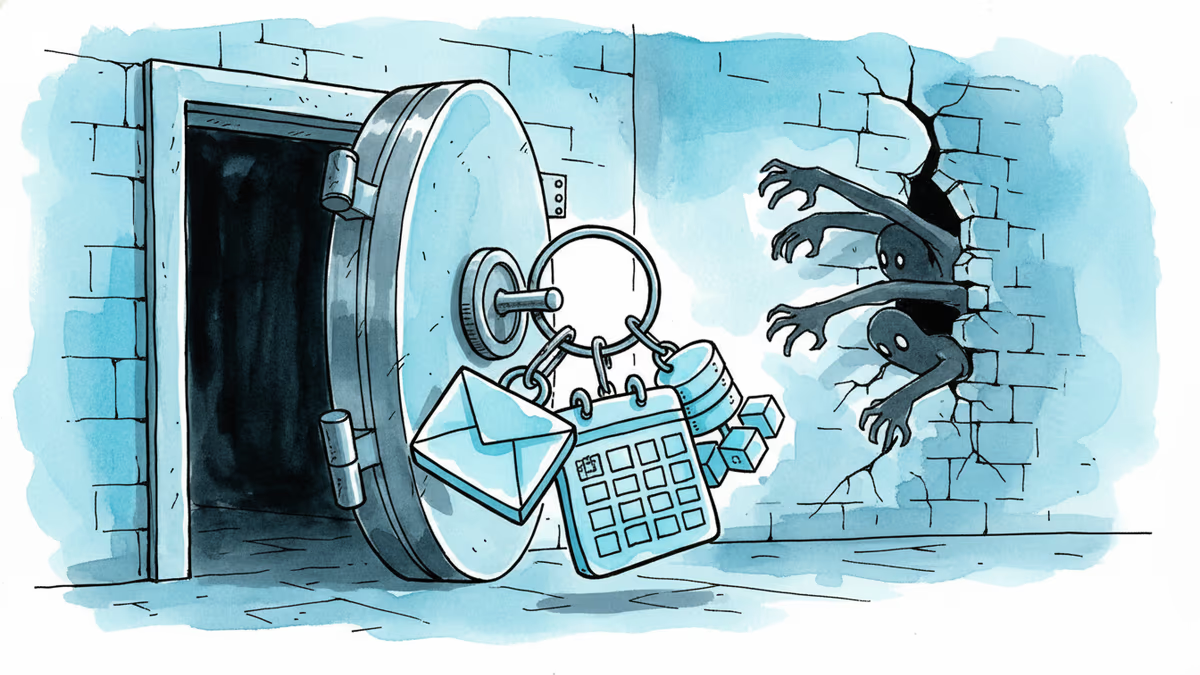
A critical vulnerability in Starlette—downloaded 325 million times per week—puts millions of AI agent servers at risk, exposing stored credentials for email, databases, and third-party services.

GitHub confirmed hackers stole data from 3,800 internal repositories via a poisoned VS Code extension. Here's why developer tools are now the most dangerous attack surface in tech.

A Utah woman was sentenced to life in prison partly because of her Google searches and deleted texts. The Kouri Richins case reveals how digital footprints have become the courtroom's most reliable witness.
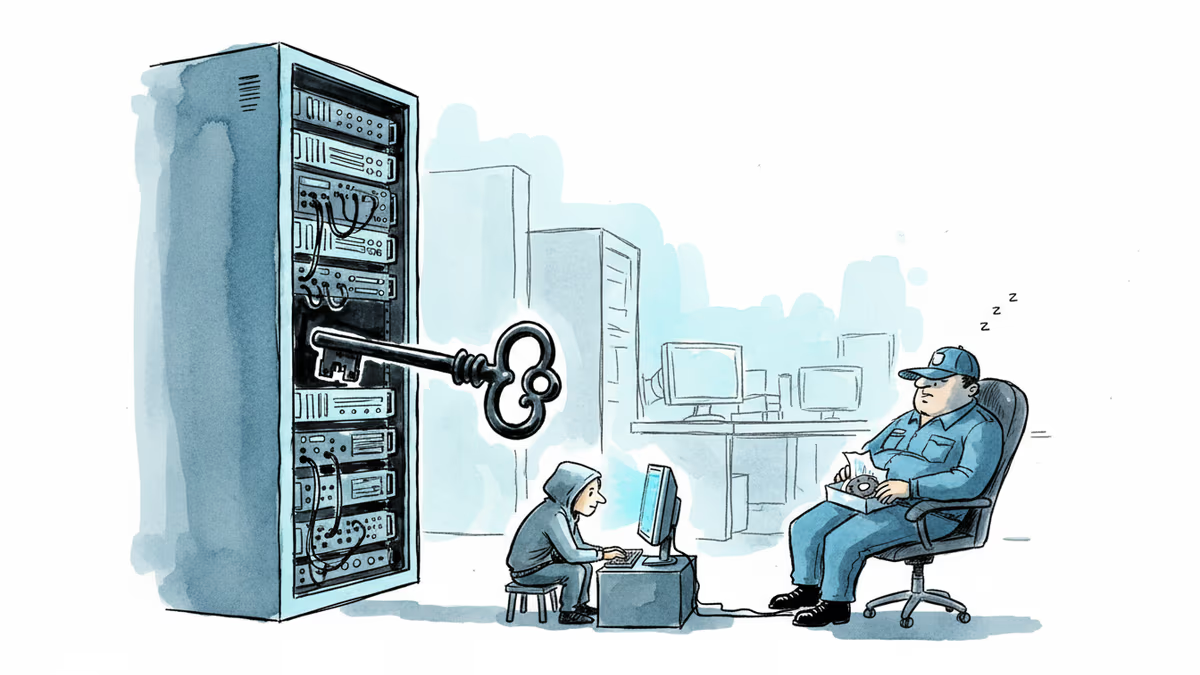
Dirty Frag gives low-privilege users root access on virtually every Linux distro. The exploit code leaked three days ago. Microsoft says attackers are already experimenting with it.
A critical vulnerability in Starlette—downloaded 325 million times per week—puts millions of AI agent servers at risk, exposing stored credentials for email, databases, and third-party services.
GitHub confirmed hackers stole data from 3,800 internal repositories via a poisoned VS Code extension. Here's why developer tools are now the most dangerous attack surface in tech.
A Utah woman was sentenced to life in prison partly because of her Google searches and deleted texts. The Kouri Richins case reveals how digital footprints have become the courtroom's most reliable witness.
Dirty Frag gives low-privilege users root access on virtually every Linux distro. The exploit code leaked three days ago. Microsoft says attackers are already experimenting with it.
Thoughts
Share your thoughts on this article
Sign in to join the conversation