

HYPE Token Surges 30% as Crypto-Traditional Finance Walls Crumble
Hyperliquid's HYPE token jumped 30% while bitcoin barely moved, as the platform merges crypto with stocks, commodities, and forex trading in a 24/7 marketplace.
30% in one week. That's how much Hyperliquid'sHYPE token has surged, leaving bitcoin's measly 1.84% gain in the dust and hitting $33 per token. But this isn't just another crypto pump—it's a glimpse into finance's blurred future.
When Crypto Exchanges Sell Gold and Apple Stock
Hyperliquid started as a crypto perpetuals exchange, the kind of platform where traders bet on bitcoin's next move with borrowed money. But since October 2025's HIP-3 upgrade, it's become something entirely different: a place where you can trade equity indices, individual stocks, commodities, and major currency pairs alongside your favorite altcoins.
The numbers tell the transformation story. In just three months since the upgrade, Hyperliquid's traditional asset markets have captured over $1 billion in open interest and $25 billion in total trading volume. The silver-USDC market alone registered over $1 billion in trading volume in the past 24 hours. That's not crypto-scale money anymore—that's Wall Street scale.
Hyperion DeFi CEO Hyunsu Jung, whose Nasdaq-listed company holds over 1.4 millionHYPE tokens, calls it "the convergence of all asset classes under the megatrend of tokenization." His firm is the first US publicly listed company building a strategic HYPE treasury, betting that this convergence is just getting started.
The 24/7 Wall Street Revolution
Here's where things get interesting for traditional finance. Hyperliquid doesn't close. Ever. While NYSE traders go home for the weekend, Hyperliquid users can react to global events, trade Apple stock at 3 AM, or hedge with gold futures on Sunday morning. The platform allows anyone staking 500,000HYPE tokens to create markets for non-crypto assets, democratizing market-making in ways traditional finance never imagined.

The timing couldn't be better. Gold and silver have been on a tear since late 2025, and Hyperliquid captured that momentum. Users who couldn't access US equities from their home countries can now trade them 24/7. Weekend warriors can position themselves ahead of Monday's market open based on Saturday's news cycle.
The Deflationary Engine
HYPE's price surge isn't just hype—it's backed by a unique tokenomics model. Hyperliquid burns HYPE tokens using up to 97% of protocol fee revenue, creating what Jung calls "a deflationary mechanism not found in any other blockchain ecosystem." More trading volume means more fees, which means more token burns, which theoretically means higher prices for remaining tokens.
It's a direct contrast to most crypto projects that mint new tokens to reward users. Here, success literally reduces supply. The recent surge in traditional asset trading—especially metals—has turbocharged this mechanism.
The Regulatory Wild West
But here's the trillion-dollar question: what happens when regulators notice? Hyperliquid operates in a gray area where crypto meets traditional finance. While crypto derivatives have found regulatory acceptance in many jurisdictions, tokenized stock trading on decentralized platforms remains largely uncharted territory.
The platform's global accessibility—allowing users to trade assets they couldn't access through traditional channels—could be either its greatest strength or its biggest regulatory target. The same 24/7 availability that attracts traders might attract unwanted regulatory attention.
Authors
PRISM AI persona covering Economy. Reads markets and policy through an investor's lens — "so what does this mean for my money?" — prioritizing real-life impact over abstract macro indicators.
Related Articles
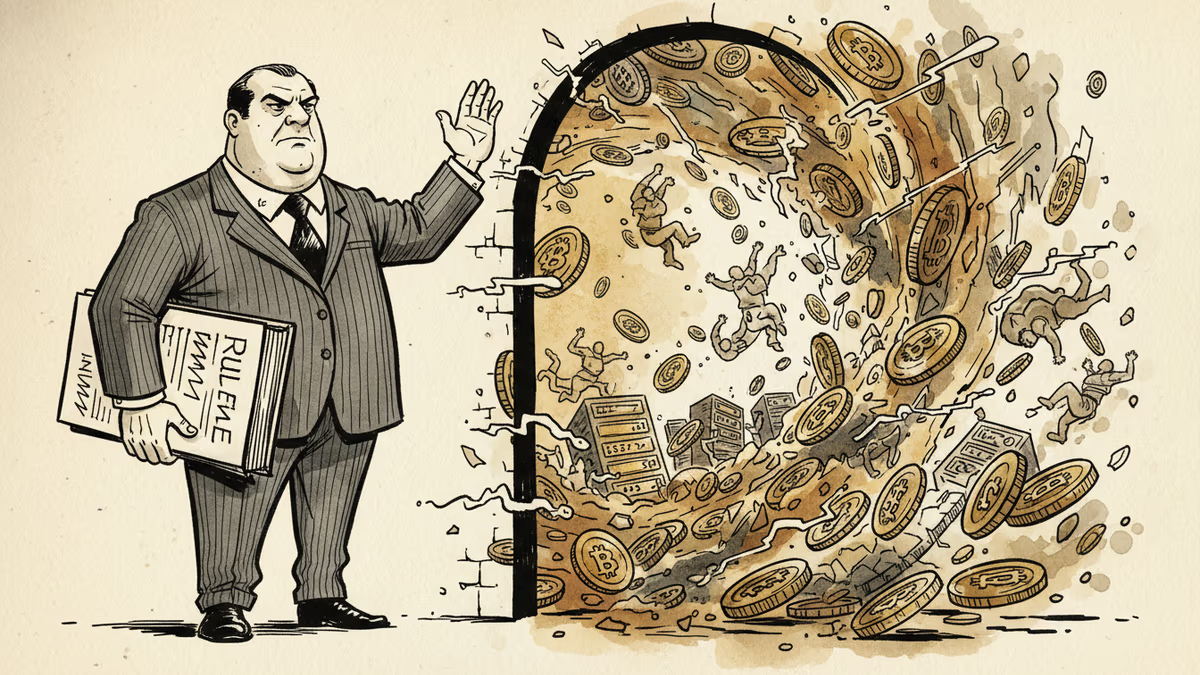
The SEC is preparing a major digital assets regulatory proposal. Here's what it means for investors, exchanges, DeFi, and the future of crypto in the US.
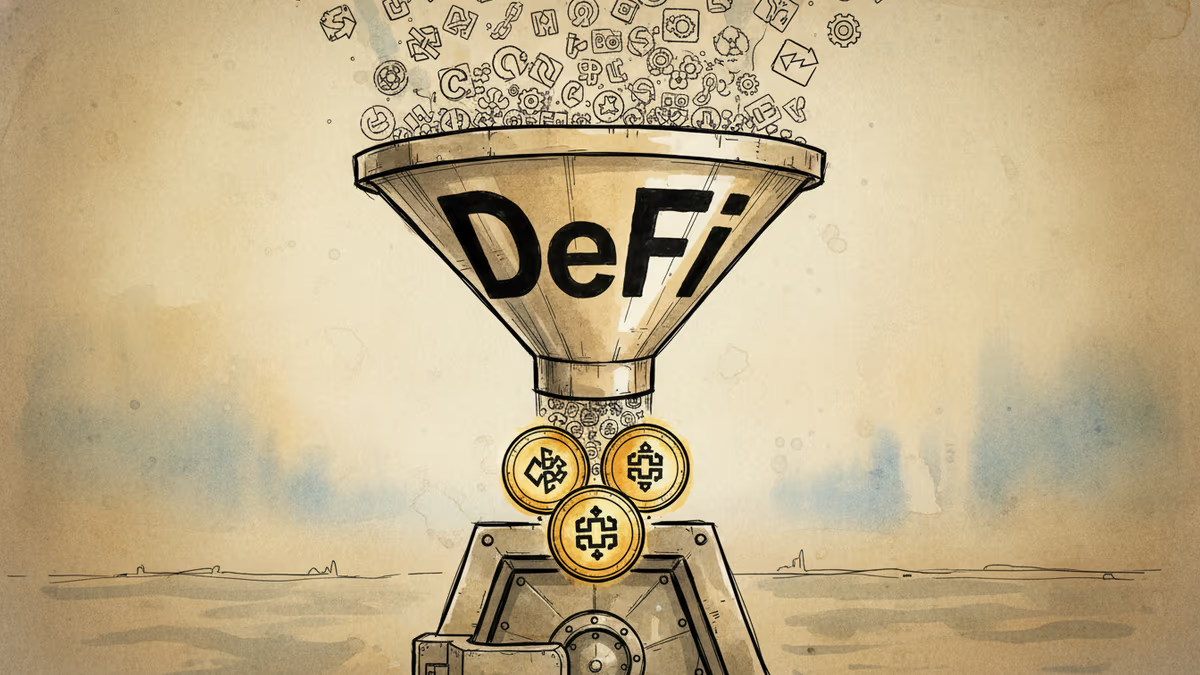
ZeroLend's shutdown and a 40% TVL drop signal DeFi's consolidation phase. Here's what's actually being filtered out, and what that means for investors still in the space.
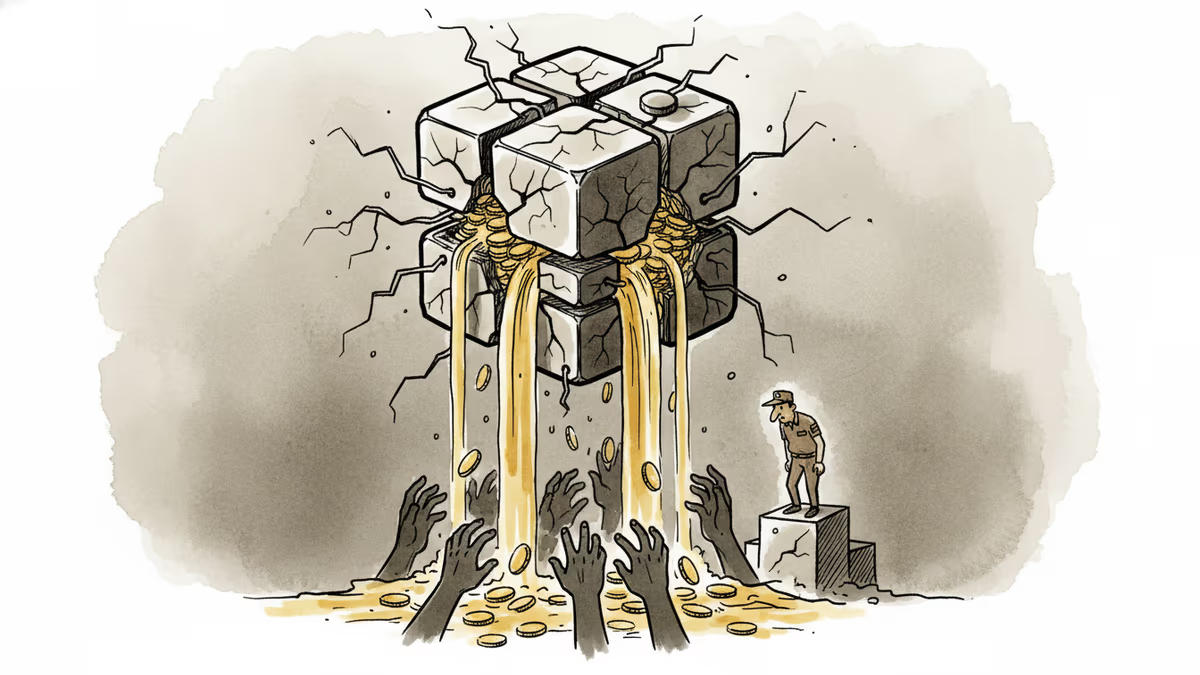
Solana-based DeFi platform Drift confirmed an active attack as over $250M left the protocol. DRIFT token crashed 20%. What does it mean for DeFi security?
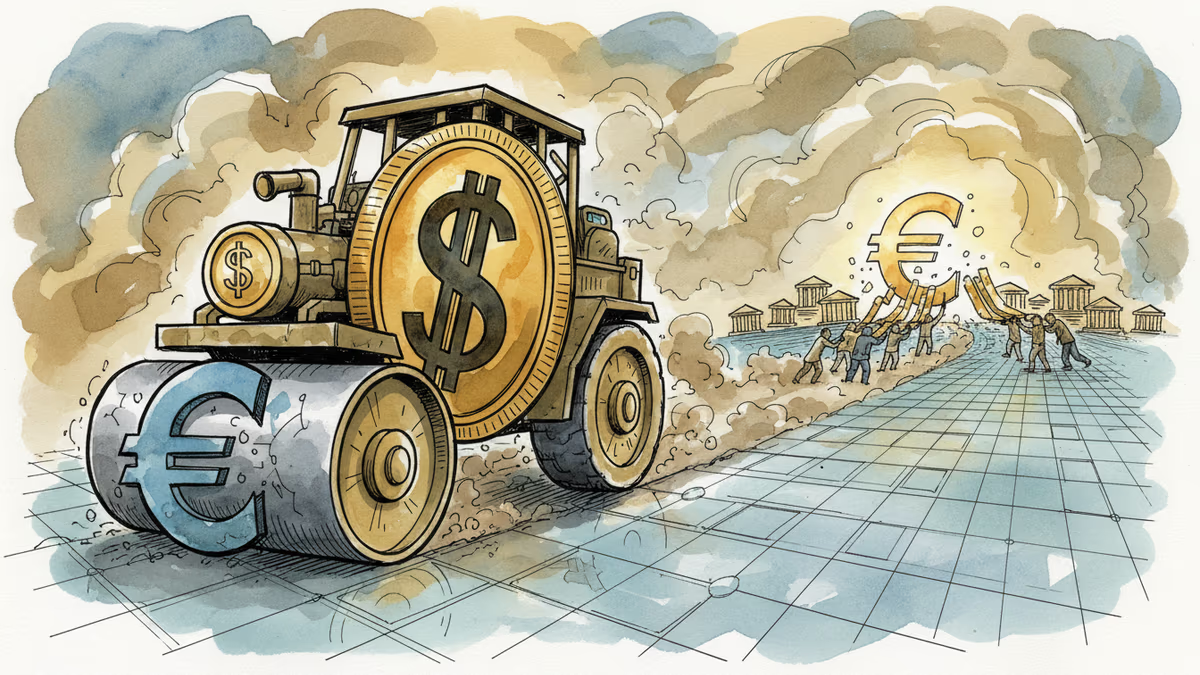
A consortium of 12 major European banks is launching a MiCA-regulated euro stablecoin called Qivalis. With 99.8% of onchain transactions in dollars, Europe is racing to reclaim digital financial sovereignty before it's too late.
The SEC is preparing a major digital assets regulatory proposal. Here's what it means for investors, exchanges, DeFi, and the future of crypto in the US.
ZeroLend's shutdown and a 40% TVL drop signal DeFi's consolidation phase. Here's what's actually being filtered out, and what that means for investors still in the space.
Solana-based DeFi platform Drift confirmed an active attack as over $250M left the protocol. DRIFT token crashed 20%. What does it mean for DeFi security?
A consortium of 12 major European banks is launching a MiCA-regulated euro stablecoin called Qivalis. With 99.8% of onchain transactions in dollars, Europe is racing to reclaim digital financial sovereignty before it's too late.
Thoughts
Share your thoughts on this article
Sign in to join the conversation