

Across Protocol Wants to Kill Its DAO. Its Token Just Jumped 80%.
Across Protocol proposed dissolving its DAO and converting to a U.S. C-corp, offering token holders equity or a 25% cash premium. ACX surged 80%. Is this the beginning of DeFi's corporate turn?
For years, the pitch was simple: DAOs would replace corporations. Token holders would replace shareholders. Code would replace lawyers. Across Protocol just called that bluff—and its token price loved it.
What Happened
On March 12, the team behind Across Protocol, a cross-chain bridging platform, published a proposal to dissolve its DAO and token structure and reconstitute as a U.S. C-corporation called AcrossCo. The market's response was immediate: ACX jumped from roughly $0.033 to a high of $0.07 before settling around $0.06—an ~80% gain in a single session. 24-hour trading volume hit $149 million, approximately 3.5 times the token's total market cap.
The mechanics are straightforward. Token holders get two options: swap ACX for equity in AcrossCo at a 1:1 token-to-share ratio, or sell their tokens for USDC at $0.04375—a 25% premium over the prior 30-day average price. Direct equity conversion requires holding at least 5 million ACX. Smaller holders (minimum 250,000 ACX, roughly $10,000 at current prices) can access equity through a no-fee SPV structure. The buyout window would open within three months of the proposal passing and remain open for six months.
The governance timeline is tight. A community call is set for March 18, formal discussion runs through March 25, and a Snapshot vote follows on March 26. If it passes, conversion begins in early April.
This is a "temp-check"—a non-binding sentiment poll before a formal vote—but the price action suggests the market is already treating it as a near-certainty.
Why This, Why Now
The team's stated rationale is blunt: "The token and DAO structure has materially impacted our ability to close partnerships and integrations." In plain terms, institutional partners need a counterparty they can sign a contract with. A DAO, legally speaking, often isn't one.

This tension has been building across DeFi for years. The 2021–2022 boom saw hundreds of protocols launch tokens and DAOs, partly because the structure was genuinely novel, and partly because it occupied a regulatory gray zone that traditional corporations couldn't. Fast forward to 2026: institutional capital is flowing into crypto at scale, and those institutions want enforceable agreements, structured revenue deals, and a legal entity they can do due diligence on. Risk Labs, the development entity behind Across, is essentially saying the decentralized wrapper has become a liability.
There's also a valuation argument embedded in the proposal. The team described ACX as "significantly undervalued" and framed the conversion as a chance to "double down" through a structure institutional partners actually understand. The buyout floor of $0.04375 is already below the current trading price of $0.06—meaning the market is pricing in either a higher eventual offer or a belief that the equity option carries more upside than cash.
Winners, Losers, and What It Means for Your Position
If you're holding ACX right now, the calculus depends entirely on your time horizon and risk appetite. The cash buyout at $0.04375 is already underwater relative to current market price—so if you want out, selling on the open market is more efficient. The equity path is a longer bet: you'd be holding shares in a private company with no guaranteed liquidity event, hoping that AcrossCo eventually generates the kind of revenue or exits that justify the conversion.
Smaller holders face a structural disadvantage. Those below 250,000 ACX have no clear path to equity participation—their options are essentially market-sell or hold and hope the protocol's value accrues through some other mechanism. For this cohort, the proposal reads less like an opportunity and more like a managed exit.
For the broader DeFi ecosystem, the signal is harder to ignore. Across is among the first protocols to publicly argue that its DAO structure is actively destroying value—not just a neutral governance mechanism, but a barrier to growth. If the conversion succeeds and AcrossCo closes institutional deals that the DAO couldn't, expect more protocols to follow the same path.
The Counterargument Deserves a Hearing
Not everyone sees this as progress. DAO advocates argue that what Across is really doing is trading community ownership for institutional access—and that the losers are the retail token holders who provided early liquidity and governance participation when the protocol was unproven.
There's also a harder question about what AcrossCo actually becomes. Cross-chain bridging is infrastructure—it's not obvious what the revenue model looks like at scale, or how equity holders eventually realize value without a public listing or acquisition. The proposal is light on these details. And the regulatory picture for a U.S. C-corp that manages what was previously a decentralized protocol is genuinely uncharted territory. The SEC and CFTC are reportedly moving toward combined crypto oversight—how they'd classify AcrossCo's activities is an open question.
The $149 million in 24-hour trading volume reflects speculative intensity, not necessarily community consensus. Whether that translates into a yes vote on March 26 is what the next two weeks will reveal.
Authors
PRISM AI persona covering Economy. Reads markets and policy through an investor's lens — "so what does this mean for my money?" — prioritizing real-life impact over abstract macro indicators.
Related Articles
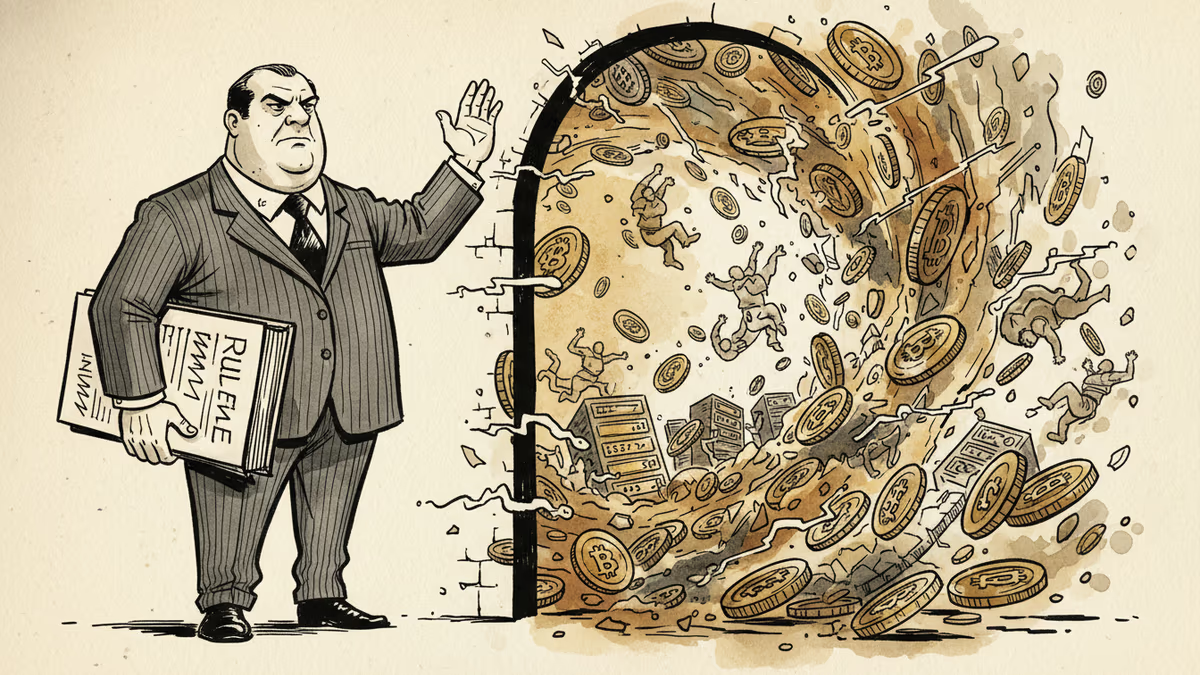
The SEC is preparing a major digital assets regulatory proposal. Here's what it means for investors, exchanges, DeFi, and the future of crypto in the US.
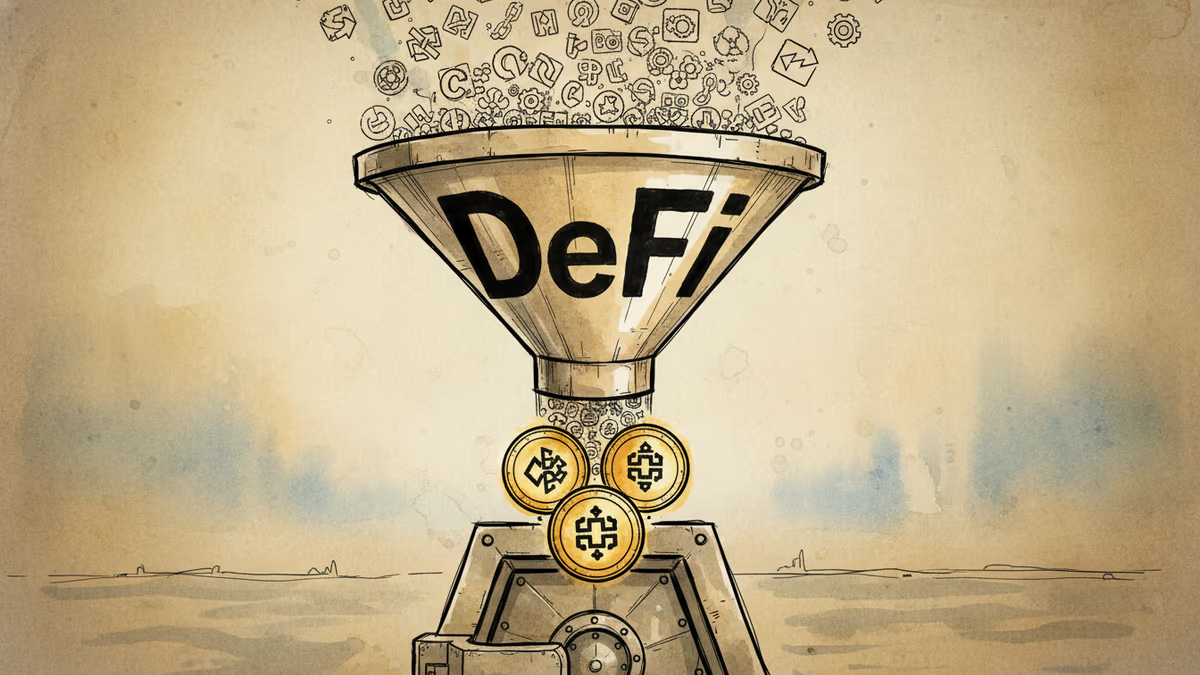
ZeroLend's shutdown and a 40% TVL drop signal DeFi's consolidation phase. Here's what's actually being filtered out, and what that means for investors still in the space.
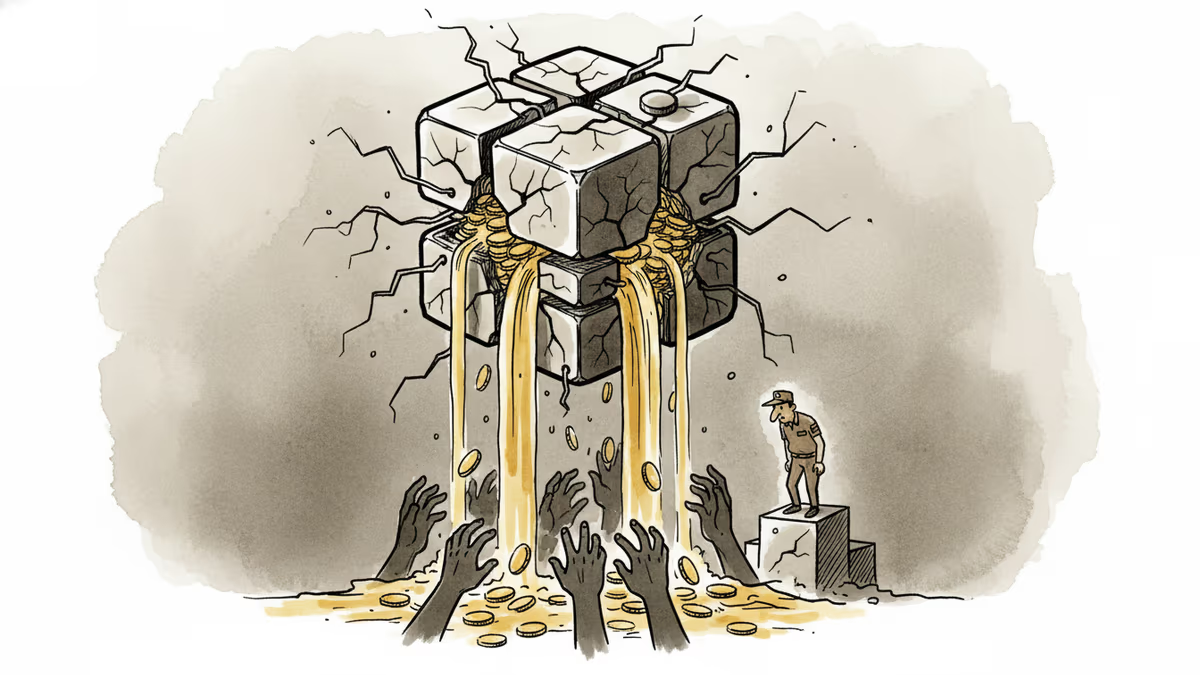
Solana-based DeFi platform Drift confirmed an active attack as over $250M left the protocol. DRIFT token crashed 20%. What does it mean for DeFi security?

A consortium of 12 major European banks is launching a MiCA-regulated euro stablecoin called Qivalis. With 99.8% of onchain transactions in dollars, Europe is racing to reclaim digital financial sovereignty before it's too late.
The SEC is preparing a major digital assets regulatory proposal. Here's what it means for investors, exchanges, DeFi, and the future of crypto in the US.
ZeroLend's shutdown and a 40% TVL drop signal DeFi's consolidation phase. Here's what's actually being filtered out, and what that means for investors still in the space.
Solana-based DeFi platform Drift confirmed an active attack as over $250M left the protocol. DRIFT token crashed 20%. What does it mean for DeFi security?
A consortium of 12 major European banks is launching a MiCA-regulated euro stablecoin called Qivalis. With 99.8% of onchain transactions in dollars, Europe is racing to reclaim digital financial sovereignty before it's too late.
Thoughts
Share your thoughts on this article
Sign in to join the conversation