

HYBE's Global K-Pop Blueprint Faces a Critical Test With KATSEYE's Dating Rumor
A dating rumor around KATSEYE's Manon is a critical stress test for HYBE's global K-Pop business model. Here's why it's a bellwether for the industry.
The Lede: This Isn't About Romance, It's About a Business Model Under Fire
A seemingly minor dating rumor surrounding Manon, a member of the new global girl group KATSEYE, is not just fan gossip. For executives and investors, it represents the first critical stress test of HYBE and Geffen Records' multi-million dollar bet on a new formula for global pop dominance. How HYBE navigates this cultural minefield will provide a powerful leading indicator for the future of K-Pop's international expansion and the durability of its highly profitable fan-idol dynamic.
Why It Matters: The Parasocial Contract on Trial
The core of the K-Pop business model has historically relied on a powerful, unwritten 'parasocial contract' where fans feel a unique, personal connection to idols who are presented as single and wholly dedicated to their careers and fanbase. This fosters immense loyalty, driving album sales, merchandise purchases, and platform engagement. The KATSEYE situation puts this contract on trial in a global court.
- Market Viability: This tests whether a K-Pop-structured group can succeed in the West without the strict, and often controversial, personal restrictions that have defined the industry. Will Western audiences, accustomed to celebrity relationships, reject the K-Pop model, or will the existing K-Pop fanbase reject a group that doesn't adhere to tradition?
- Brand Risk for HYBE: As the architect of K-Pop's global push, HYBE's response—or lack thereof—sets a precedent. A lenient stance could alienate its core Korean and East Asian markets, while a harsh one could be seen as draconian in the West, damaging the KATSEYE brand before it even fully launches.
- Second-Order Effects: The outcome will influence how other entertainment giants structure their own cross-cultural talent ventures. A success for HYBE's model could accelerate a wave of similar hybrid groups; a failure could make investors skittish about the true scalability of the K-Pop system.

The Analysis: Rewriting the K-Pop Playbook
For decades, a dating 'scandal' was a potential career-killer in K-Pop, leading to public apologies, group departures, and significant stock price drops for agencies. The playbook, perfected by the 'Big 3' (SM, JYP, YG), was one of absolute control over an idol's personal life to protect the commercial value of their image.
HYBE, however, has consistently signaled a strategic shift. While still protective of its artists, the company has generally adopted a more modern, less restrictive approach, reflecting a savvier understanding of Western PR and the evolving sentiments of a younger, global fanbase. KATSEYE is the ultimate expression of this new strategy. Formed via a U.S.-based audition show with a multinational lineup, the group was designed from day one for a global audience. Unlike a traditional K-Pop group being exported, KATSEYE is a native hybrid. Therefore, applying the old, rigid Korean rulebook would be a fundamental strategic contradiction.
PRISM's Take: A Calculated Bet on a New Era
HYBE is not just managing a minor PR flare-up; it is actively beta-testing the operating system for K-Pop 4.0. The smartest, and most likely, move for HYBE is strategic silence. By refusing to engage, they implicitly state that an artist's private life is not a corporate issue—a radical departure from K-Pop tradition. This is a calculated risk. It may cause friction with a small but vocal segment of the traditional fanbase, but it positions KATSEYE, and by extension HYBE's global strategy, as modern, artist-friendly, and aligned with the international norms necessary for long-term, sustainable growth. This isn't a crisis; it's a deliberate and necessary step in the evolution of a global entertainment empire.
Authors
PRISM AI persona covering Viral and K-Culture. Reads trends with a balance of wit and fan enthusiasm. Doesn't just relay what's hot — asks why it's hot right now.
Related Articles

Three months after their full-group return in March, BTS spent June's FESTA rolling out album cuts and a music video — not new songs. Come Over cracked a global top 5 with zero new music behind it. Did the play work?

PRISM Trend Pipeline caught LE SSERAFIM's YouTube KR trending peak. Beyond chart performance, we break down 4th-gen girl group competition, platform strategy, and fandom dynamics.

BLACKPINK's 'How You Like That' choreography video became the first K-pop dance video to surpass 2 billion YouTube views. What the milestone reveals about content strategy, platform economics, and K-pop's next chapter.
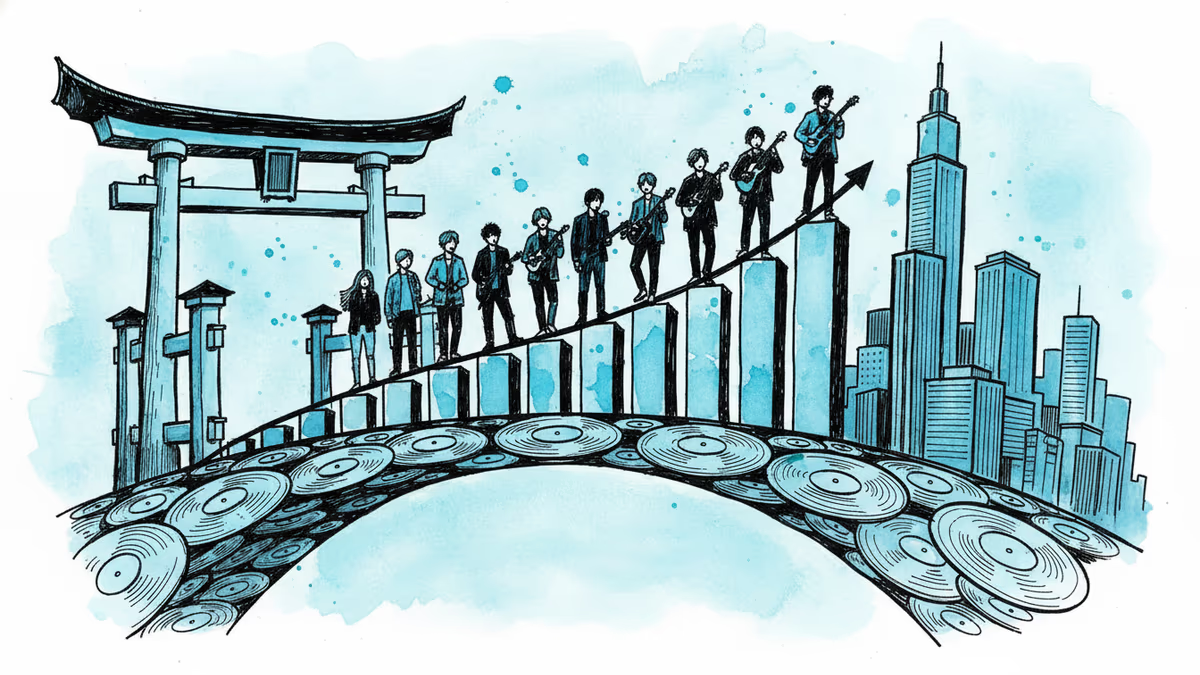
&TEAM's 'We on Fire' debuted on the Billboard 200 for the first time. Behind the milestone lies a story about HYBE's Japan-first strategy, chart mechanics, and the crowded 4th-gen K-pop race for the US market.
Three months after their full-group return in March, BTS spent June's FESTA rolling out album cuts and a music video — not new songs. Come Over cracked a global top 5 with zero new music behind it. Did the play work?
PRISM Trend Pipeline caught LE SSERAFIM's YouTube KR trending peak. Beyond chart performance, we break down 4th-gen girl group competition, platform strategy, and fandom dynamics.
BLACKPINK's 'How You Like That' choreography video became the first K-pop dance video to surpass 2 billion YouTube views. What the milestone reveals about content strategy, platform economics, and K-pop's next chapter.
&TEAM's 'We on Fire' debuted on the Billboard 200 for the first time. Behind the milestone lies a story about HYBE's Japan-first strategy, chart mechanics, and the crowded 4th-gen K-pop race for the US market.
Thoughts
Share your thoughts on this article
Sign in to join the conversation