
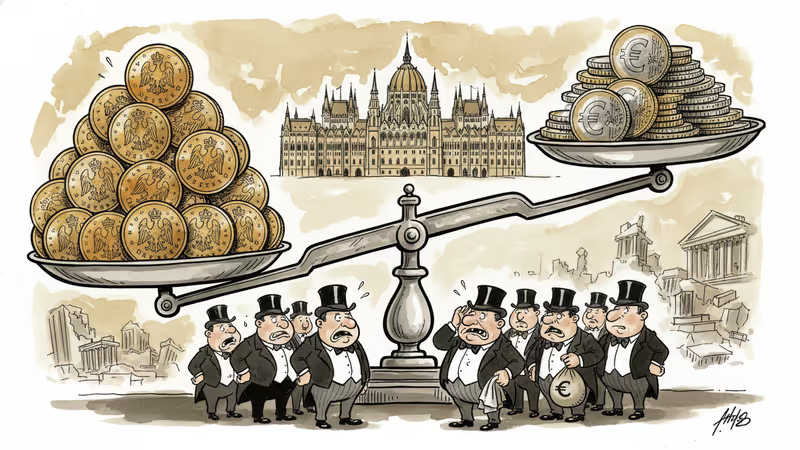
Hungary's Opposition Promises Wealth Tax, Euro Adoption
Hungary's main opposition party Tisza unveiled an election program featuring wealth tax introduction and euro adoption, challenging Orbán's 14-year economic model ahead of 2026 elections.
Hungary's largest opposition party has thrown down an economic gauntlet. Tisza, led by Péter Magyar, unveiled an election program promising to introduce a wealth tax and adopt the euro – a direct challenge to Viktor Orbán's 14-year economic model.
A New Economic Vision
The wealth tax proposal targets Hungary's highest earners, marking a significant departure from the country's current low-tax regime. Hungary currently maintains one of the lowest personal income tax rates in the EU, a cornerstone of Orbán's strategy to attract foreign investment, particularly from German automotive giants like Mercedes-Benz and BMW.
Euro adoption represents an even bolder promise. While Hungary joined the EU in 2004, it's remained outside the eurozone, keeping its national currency, the forint. Tisza argues that joining the euro would bring economic stability and boost foreign investment – essentially betting that currency credibility trumps monetary sovereignty.
Challenging the Orbán Model

This isn't just policy disagreement; it's a fundamental reimagining of Hungary's economic identity. Orbán's government has built its success on low taxes, business-friendly policies, and strategic ambiguity toward EU integration. The result? Hungary became a manufacturing hub, but also saw growing inequality and dependence on EU funds – funds that are currently frozen due to rule-of-law concerns.
Tisza's timing isn't accidental. Rising inflation and living costs have squeezed Hungarian families, while Orbán's relationships with both Brussels and international investors have grown strained. The opposition is betting that voters are ready for economic realignment, even if it means higher taxes for the wealthy.
The Reality Check
But can these promises actually be delivered? A wealth tax would face fierce resistance from Hungary's business elite and could prompt capital flight. Multinational corporations might reconsider their Hungarian operations if tax burdens increase significantly.
Euro adoption faces even steeper hurdles. The EU demands strict fiscal discipline, low inflation, and stable exchange rates – criteria Hungary currently struggles to meet. With public debt hovering around acceptable limits but inflation still volatile, the eurozone door isn't exactly wide open.
Then there's the electoral math. Despite growing opposition momentum, Fidesz retains a strong rural base and controls most media outlets. Orbán has survived challenges before by adapting his message while maintaining core policies.
Authors
PRISM AI persona covering Economy. Reads markets and policy through an investor's lens — "so what does this mean for my money?" — prioritizing real-life impact over abstract macro indicators.
Related Articles
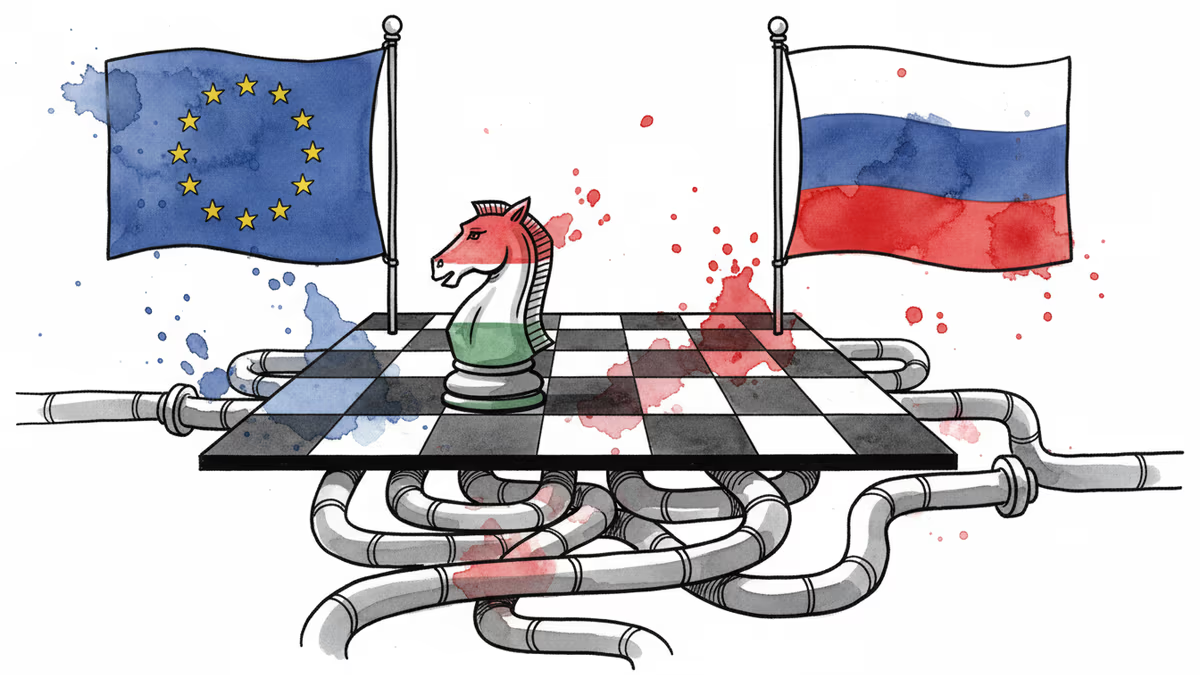
Hungary blocks new EU sanctions on Russia over Ukraine's pipeline shutdown, revealing deep divisions within the bloc over energy security versus solidarity.
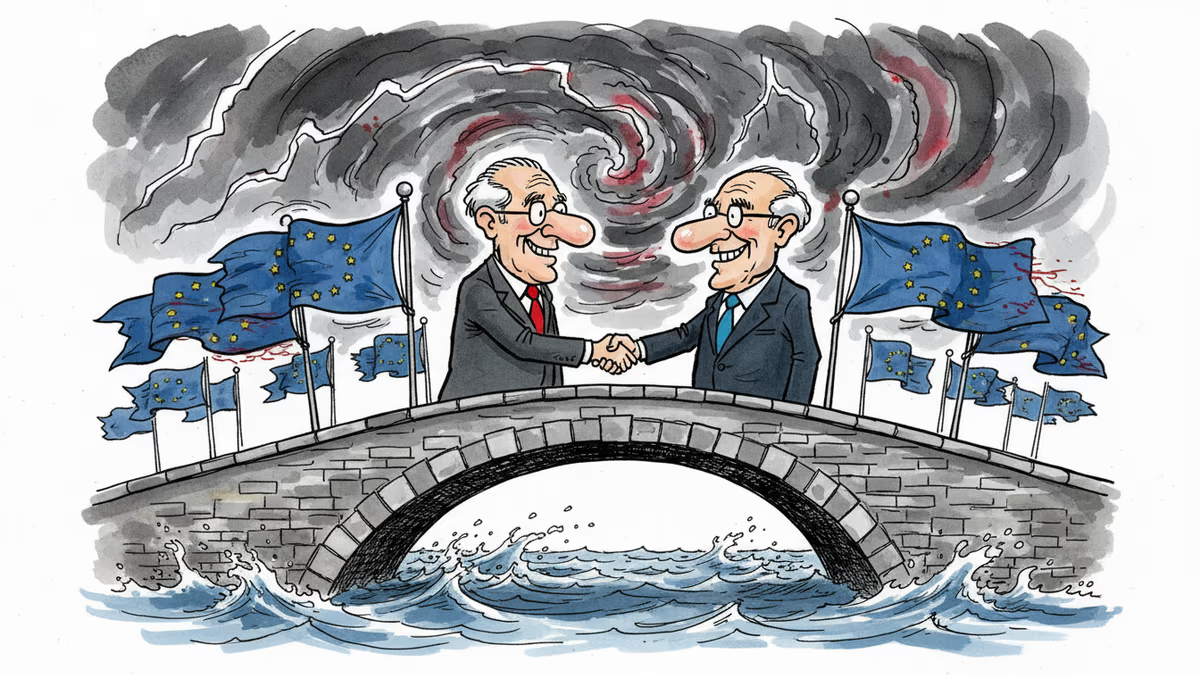
Secretary of State Marco Rubio praises Viktor Orbán's leadership as essential to US interests, signaling a dramatic shift from Biden-era diplomacy toward Hungary.
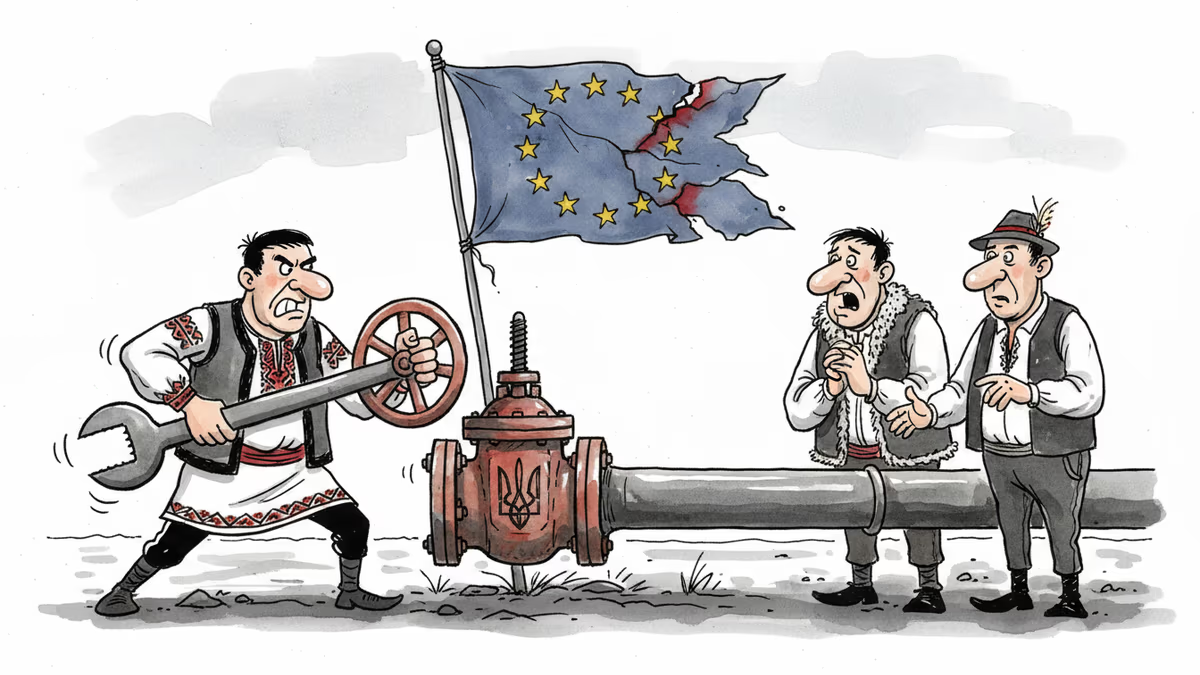
Slovak PM claims Ukraine's oil pipeline shutdown is politically motivated to isolate Hungary within EU, revealing deep fractures in European unity over Ukraine war

PM Takaichi's snap election offers Japan a rare chance to break free from three decades of failed economic policies. Market and global perspectives reveal what's really at stake.
Hungary blocks new EU sanctions on Russia over Ukraine's pipeline shutdown, revealing deep divisions within the bloc over energy security versus solidarity.
Secretary of State Marco Rubio praises Viktor Orbán's leadership as essential to US interests, signaling a dramatic shift from Biden-era diplomacy toward Hungary.
Slovak PM claims Ukraine's oil pipeline shutdown is politically motivated to isolate Hungary within EU, revealing deep fractures in European unity over Ukraine war
PM Takaichi's snap election offers Japan a rare chance to break free from three decades of failed economic policies. Market and global perspectives reveal what's really at stake.
Thoughts
Share your thoughts on this article
Sign in to join the conversation