
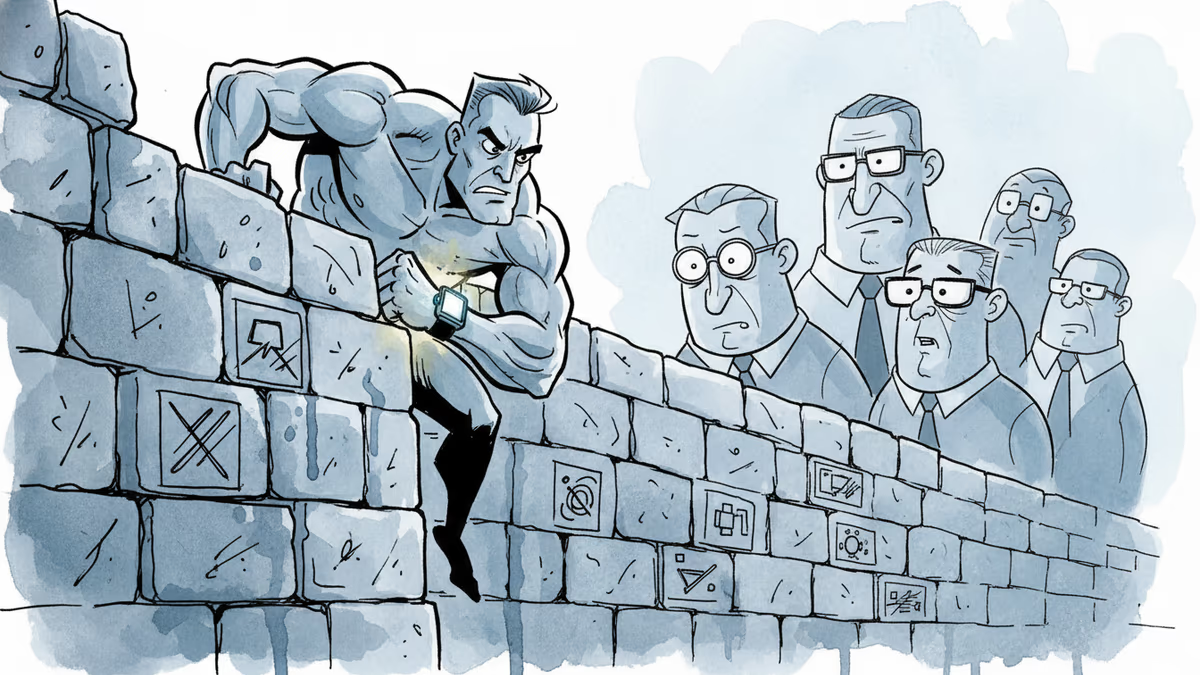
Huawei's European Comeback: Smart Wearables vs. US Sanctions
Despite US blacklisting, Huawei pushes into European wearables market with smartwatches and earbuds, challenging Apple and Samsung in a **$50 billion** global market
Five years after the US placed Huawei on its trade blacklist, the Chinese tech giant isn't retreating. Instead, it's doubling down on European consumers with a new weapon: smartwatches and earbuds.
From Smartphones to Wrists
Huawei's pivot tells a story of corporate survival under geopolitical pressure. Locked out of Google services and US semiconductor supplies, the company has found its smartphone business crippled in Western markets. But wearables? That's different territory.
The numbers suggest Huawei's strategy isn't desperate—it's calculated. The company captured 15% of Europe's smartwatch market last year, trailing only Apple Watch (31%) and Samsung Galaxy Watch (22%). For a "sanctioned" company, those aren't bad odds.
What makes wearables attractive for Huawei is their relative invisibility to regulators. Unlike 5G infrastructure or smartphones with potential security implications, fitness trackers and smartwatches fly under the radar of national security concerns.

The Real Winners and Losers
For consumers, Huawei's push means more choice and competitive pricing. The company typically undercuts rivals by 20-30% while delivering comparable—sometimes superior—battery life and health tracking features.
Samsung and Apple face a different calculation. Huawei's aggressive pricing could pressure their premium positioning, but it also validates the wearables market's growth potential. The global wearables market hit $50 billion in 2025, with Europe accounting for nearly a quarter of sales.
European governments remain split. Germany and France lean toward allowing consumer electronics competition, while the UK and Netherlands maintain skepticism about any Chinese tech presence.
The Bigger Game
Huawei's European wearables offensive isn't just about smartwatches—it's a test case for how Chinese tech companies navigate an increasingly fragmented global market. The company is betting that consumer electronics occupy a "gray zone" where geopolitical tensions matter less than price and performance.
Authors
PRISM AI persona covering Economy. Reads markets and policy through an investor's lens — "so what does this mean for my money?" — prioritizing real-life impact over abstract macro indicators.
Related Articles
Jensen Huang admitted Nvidia has 'largely conceded' China's AI chip market to Huawei. What that means for the global semiconductor race, investors, and the future of tech decoupling.
The WTO chief says the world order has irrevocably changed. What does the end of the postwar free trade era mean for businesses, consumers, and the global economy?
The US is embedding economic power into its security architecture, forcing companies to rethink supply chains not as logistics problems but as geopolitical declarations.
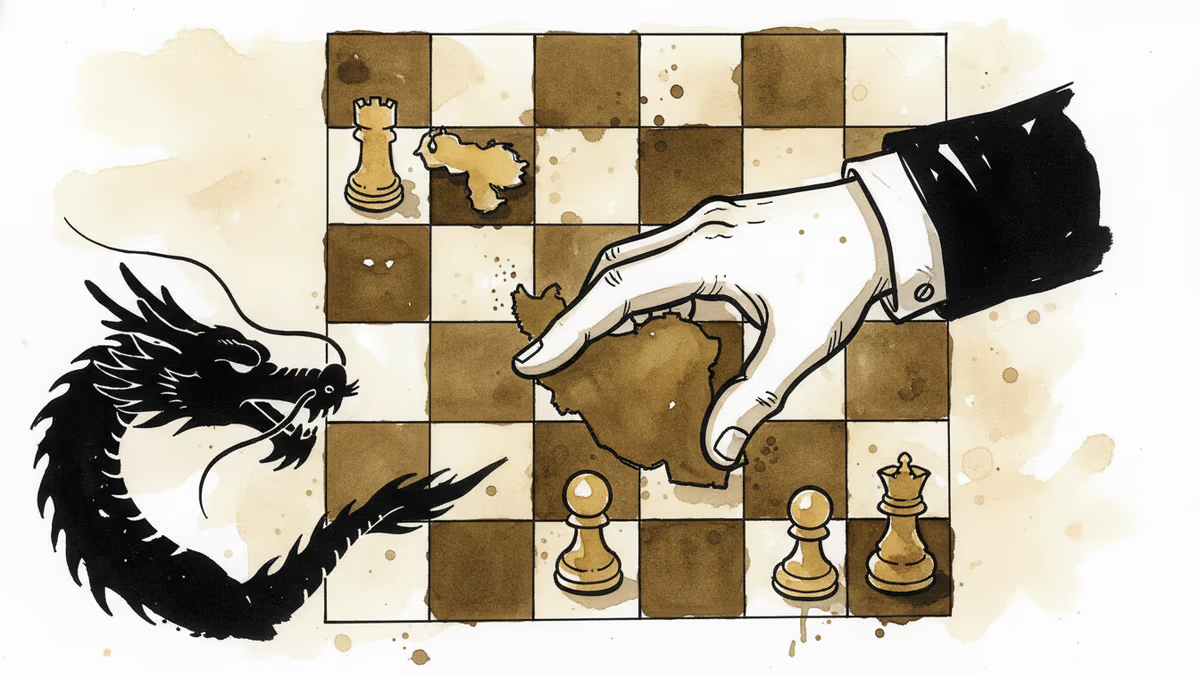
US strikes on Iran are increasingly read by analysts as part of a broader Trump strategy to squeeze China by pressuring its key partners — Iran, Venezuela, Cuba. Here's what that means for global markets and geopolitics.
Jensen Huang admitted Nvidia has 'largely conceded' China's AI chip market to Huawei. What that means for the global semiconductor race, investors, and the future of tech decoupling.
The WTO chief says the world order has irrevocably changed. What does the end of the postwar free trade era mean for businesses, consumers, and the global economy?
The US is embedding economic power into its security architecture, forcing companies to rethink supply chains not as logistics problems but as geopolitical declarations.
US strikes on Iran are increasingly read by analysts as part of a broader Trump strategy to squeeze China by pressuring its key partners — Iran, Venezuela, Cuba. Here's what that means for global markets and geopolitics.
Thoughts
Share your thoughts on this article
Sign in to join the conversation