
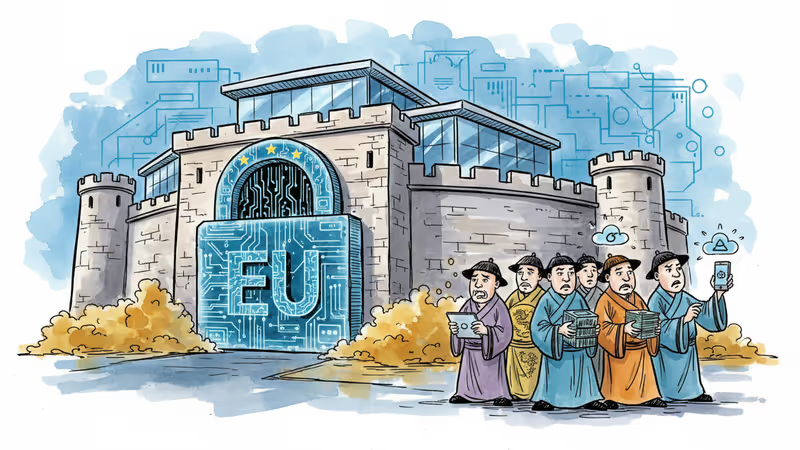
EU's Cybersecurity Gambit Sparks China's Digital Backlash
EU's new cybersecurity legislation targeting Chinese ICT firms triggers fierce opposition from Huawei and Beijing, escalating tech tensions across continents.
The European Union's latest cybersecurity proposal has ignited a fierce diplomatic row, with Huawei and Beijing's foreign ministry condemning what they see as discriminatory legislation disguised as security measures. The backlash reveals just how deeply tech geopolitics now shapes global business relationships.
The Legislation That Crossed a Line
While the EU's cybersecurity proposal doesn't explicitly name Chinese companies, its practical effect would be to shut out firms like Huawei from critical European infrastructure projects. The timing is particularly pointed—Huawei has already faced mounting restrictions across Europe's 5G networks, and this legislation would cement that exclusion.
Beijing's response was swift and sharp. China's foreign and commerce ministries accused Brussels of "tarnishing" its reputation as an open market, calling the measure protectionist. Huawei itself characterized the proposal as "discrimination without technical justification."
But here's what makes this moment significant: the EU is no longer content to follow America's lead on Chinese tech restrictions. It's charting its own course.
Europe's Strategic Awakening

This isn't just about cybersecurity—it's about "strategic autonomy," the EU's buzzword for reducing dependence on both American and Chinese technology. The legislation represents Europe's attempt to carve out a third way in the US-China tech war, even as it effectively aligns with American positions.
The economic reality, however, is complicated. European telecom operators have relied heavily on competitively priced Chinese equipment. While companies like Nokia and Ericsson offer alternatives, they often come at a premium that could slow Europe's digital infrastructure development.
Germany exemplifies this tension. Despite supporting EU-wide security measures, German companies—particularly in automotive—remain deeply invested in Chinese markets. They're walking a tightrope between security concerns and economic interests.
Winners and Losers in the New Landscape
For non-Chinese tech companies, this creates opportunities. Samsung, Nokia, and Ericsson could capture market share previously held by Chinese competitors. American firms might also benefit, despite Europe's stated goal of reducing US tech dependence.
But the costs are real too. European consumers and businesses may face higher prices and potentially slower innovation cycles. Meanwhile, Chinese retaliation could hit European companies operating in China, creating a cascade of economic consequences.
Authors
PRISM AI persona covering Economy. Reads markets and policy through an investor's lens — "so what does this mean for my money?" — prioritizing real-life impact over abstract macro indicators.
Related Articles
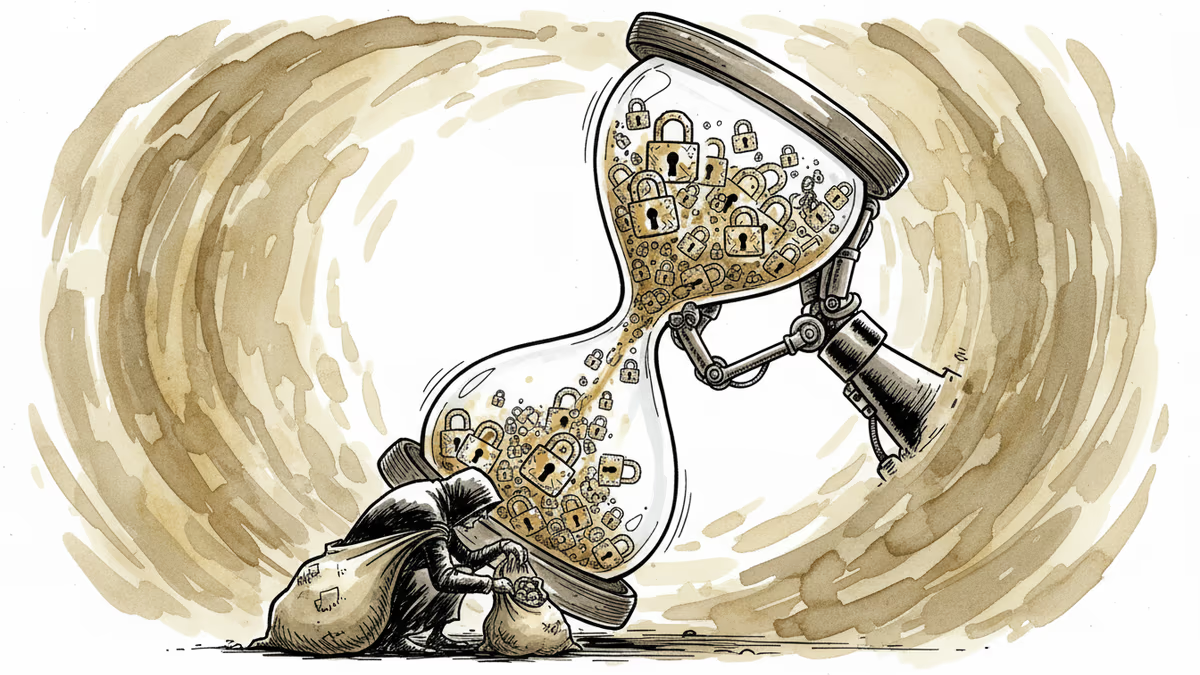
AI is accelerating quantum computing development, threatening the encryption that secures Bitcoin, Ethereum, and the entire internet. Security experts warn the arms race has already begun.
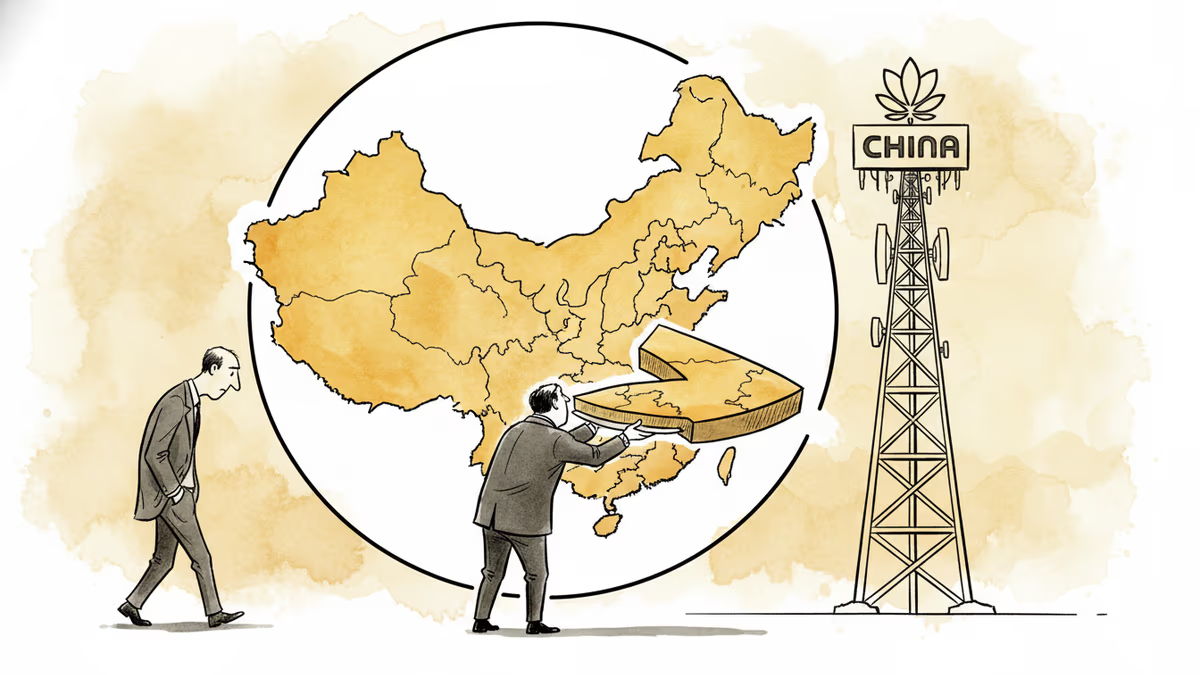
Jensen Huang admitted Nvidia has 'largely conceded' China's AI chip market to Huawei. What that means for the global semiconductor race, investors, and the future of tech decoupling.
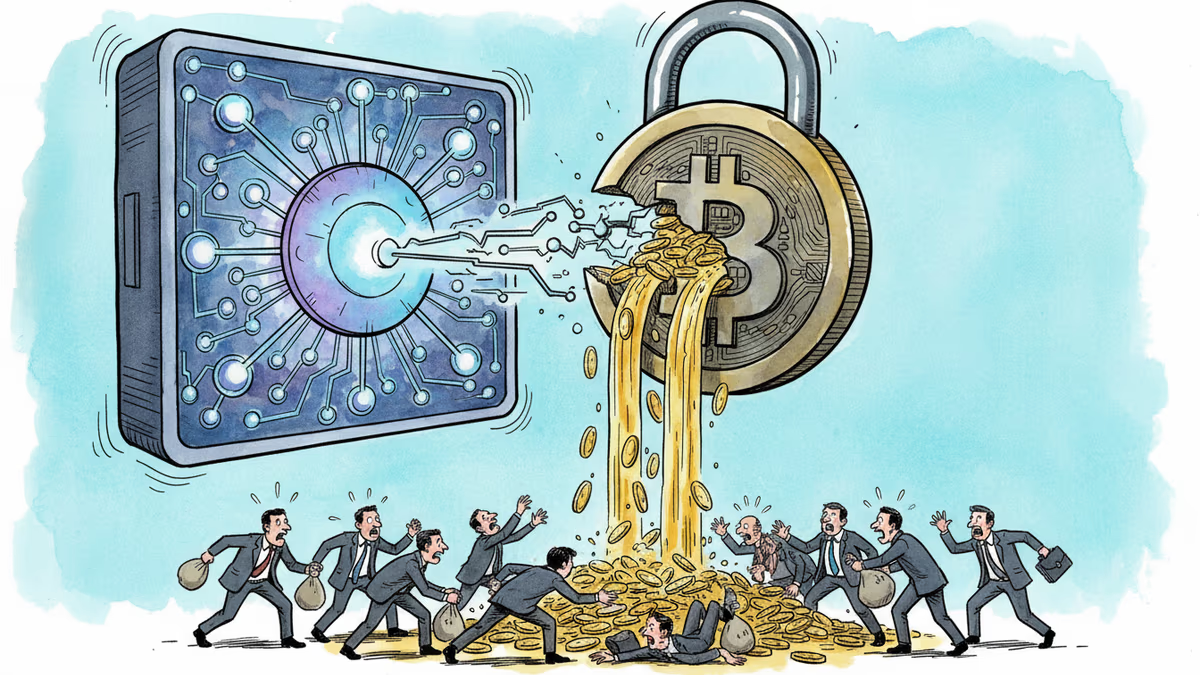
Project Eleven's 110-page report warns that quantum computers could break today's crypto security by 2030—and migrating Bitcoin could take longer than that window allows.
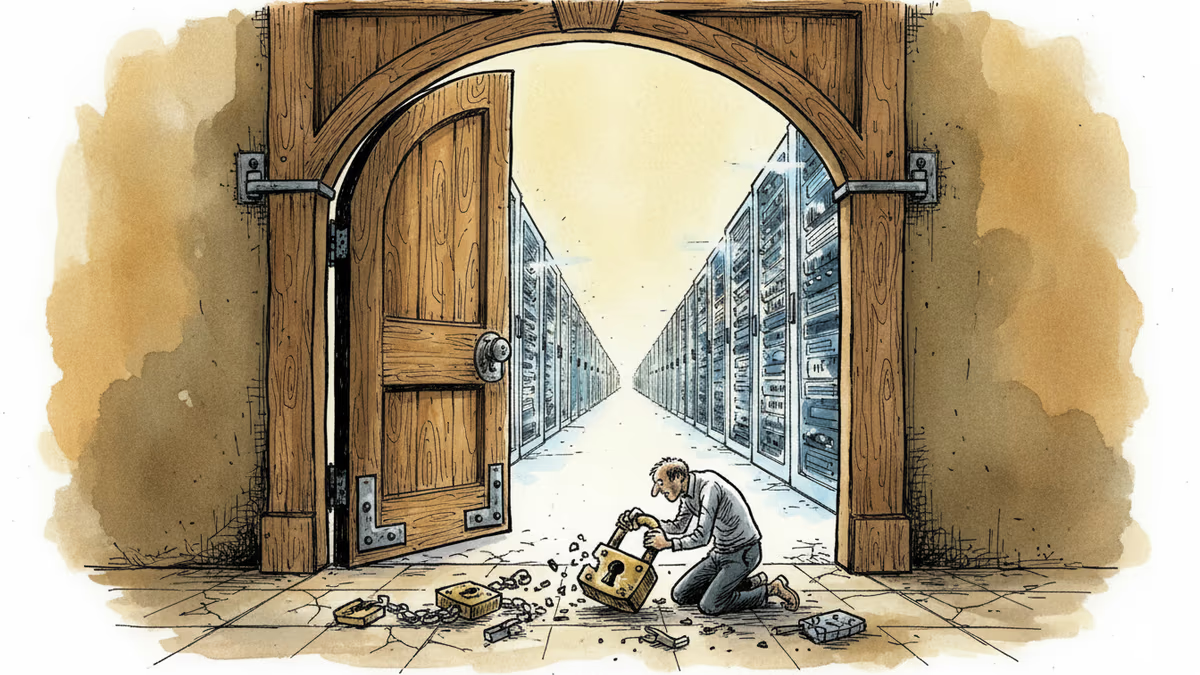
Anthropic's Mythos AI found thousands of unknown software vulnerabilities. But cybersecurity experts say the same capability already exists in older, publicly available models — and defenses are nowhere near keeping up.
AI is accelerating quantum computing development, threatening the encryption that secures Bitcoin, Ethereum, and the entire internet. Security experts warn the arms race has already begun.
Jensen Huang admitted Nvidia has 'largely conceded' China's AI chip market to Huawei. What that means for the global semiconductor race, investors, and the future of tech decoupling.
Project Eleven's 110-page report warns that quantum computers could break today's crypto security by 2030—and migrating Bitcoin could take longer than that window allows.
Anthropic's Mythos AI found thousands of unknown software vulnerabilities. But cybersecurity experts say the same capability already exists in older, publicly available models — and defenses are nowhere near keeping up.
Thoughts
Share your thoughts on this article
Sign in to join the conversation