
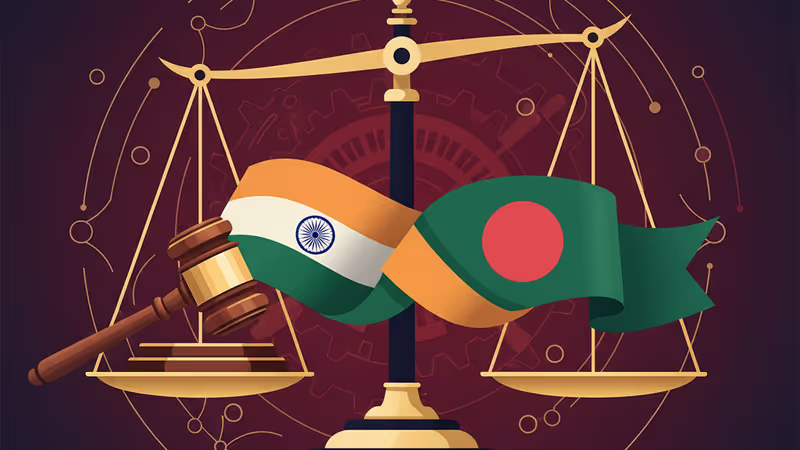
India's Hasina Headache: Why Extraditing a Former Ally is a Diplomatic Minefield
India faces a diplomatic and legal test after Bangladesh requests the extradition of former PM Sheikh Hasina, who was sentenced to death. This article analyzes the serious legal hurdles and geopolitical stakes.
New Delhi is navigating a complex legal and geopolitical dilemma after Bangladesh's interim government formally requested the extradition of former Prime Minister Sheikh Hasina, who was sentenced to death in November. India's decision on the fate of its erstwhile ally will test its strategic interests, legal obligations, and humanitarian principles, with significant consequences for the South Asian landscape.
The request, filed by the Muhammad Yunus-led interim government, invokes a 2013 extradition treaty between the two nations. Dhaka insists the treaty obligates India to return any person convicted of serious crimes. India's response has been cautious, with its External Affairs Ministry stating only that the request is "under examination."
The path to extradition, however, is fraught with legal hurdles. Under India's 1962 Extradition Act, a magistrate must first determine if a 'prima facie' case exists. But two major obstacles loom larger: the nature of the charges and the penalty.
A key provision in extradition law allows a state to refuse a request if it determines the offense is 'of a political character.' Given the swift judicial process following a change in government, India could argue the charges against Hasina are politically motivated, providing a legal basis for refusal.
The most significant barrier is the death sentence. Both Indian law and international human rights norms strongly discourage extraditing individuals to countries where they face capital punishment, unless ironclad assurances are given that the sentence won't be carried out. India has a history of denying extradition on these humanitarian grounds.
This content is AI-generated based on source articles. While we strive for accuracy, errors may occur. We recommend verifying with the original source.
Related Articles
From Syria and Gaza to the killing of journalists and the climate crisis, a collection of documentaries serves as an archive of modern conflict. We analyze the role of conflict journalism today.
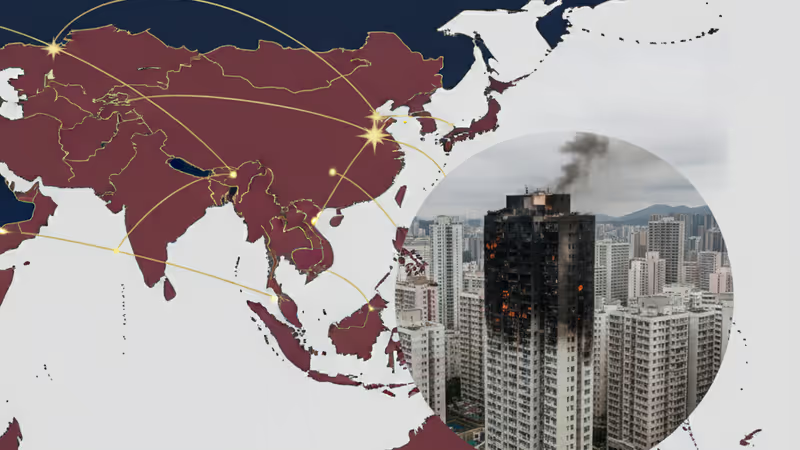
A fire in Hong Kong's Tai Po district killed 159, but the real tragedy it exposes is the city's chronic housing crisis, a systemic failure impacting its economy, politics, and social stability.
Rep. Adam Smith, the leading Democrat on the Armed Services Committee, says the Trump administration's oil blockade on Venezuela is primarily a tool for regime change against President Maduro, challenging the official U.S. justification.

An in-depth look at how Sarawak, once a Malaysian periphery, is leveraging federal political fragmentation and its own internal stability to become a green economic powerhouse.