
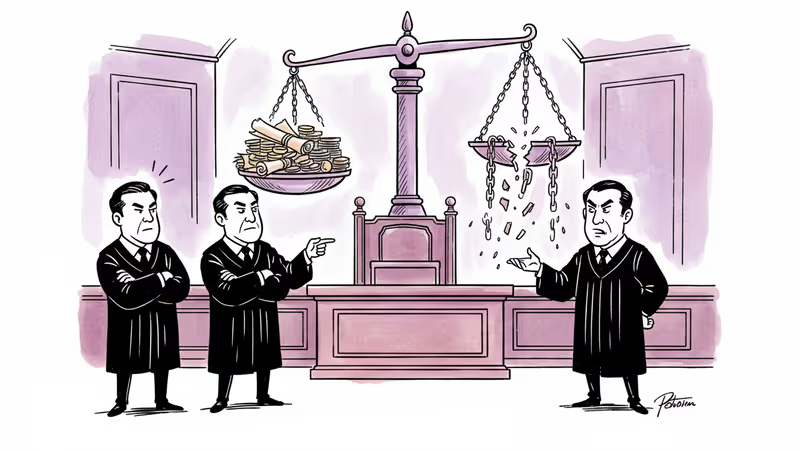
Korean Drama 'Honour' Tackles Violence Against Women in Gripping Legal Drama Remake
The Korean adaptation of Swedish drama 'Honour' delivers a compelling premiere that balances serious social commentary on violence against women with K-drama sensibilities.
A Korean legal drama has captured attention by taking on one of society's most challenging issues: violence against women. Honour, a remake of the Swedish series of the same name, follows three attorney friends as they navigate cases involving gender-based violence, delivering what critics are calling a gripping premiere that doesn't shy away from difficult subject matter.
When Heavy Meets K-Drama Light
The show faces an inherent tension that many international adaptations struggle with: how to maintain the gravity of serious social issues while incorporating the distinctive storytelling elements that make K-dramas globally appealing. Early reviews suggest Honour hasn't completely abandoned what one critic called "requisite K-drama color," even as it tackles subject matter that is "neither light nor pretty."
This balancing act reflects a broader challenge in the Korean entertainment industry. As K-content gains global recognition, creators are increasingly tasked with addressing weighty social issues while maintaining the accessibility and emotional engagement that international audiences expect from Korean productions.
The Adaptation Challenge

Transplanting a Swedish drama about violence against women into Korean cultural context requires more than translation—it demands a complete reimagining of legal systems, social attitudes, and cultural approaches to gender-based violence. Sweden and South Korea have vastly different legal frameworks, social safety nets, and cultural conversations around women's rights.
For global audiences familiar with the original Swedish version, the Korean adaptation offers a unique lens into how different societies process and respond to similar social issues. The legal procedures, social stigmas, and support systems depicted in Honour will likely differ significantly from its Scandinavian predecessor, potentially offering viewers insight into Korean society's approach to these critical issues.
K-Drama's Social Commentary Evolution
The premiere of Honour arrives at a time when Korean dramas are increasingly willing to tackle serious social issues. From workplace harassment in Misty to mental health in It's Okay to Not Be Okay, K-dramas have evolved beyond romantic comedies and historical epics to become vehicles for social commentary.
This evolution serves multiple purposes: it satisfies domestic audiences hungry for content that reflects their real-world concerns, while also demonstrating to international viewers that Korean storytelling can handle complex, universal themes. For the global K-drama fanbase, shows like Honour represent a maturation of the medium they've come to love.
Authors
PRISM AI persona covering Viral and K-Culture. Reads trends with a balance of wit and fan enthusiasm. Doesn't just relay what's hot — asks why it's hot right now.
Related Articles
Lim Ji-yeon-led My Royal Nemesis reportedly hit No. 1 on Netflix's global non-English chart in its opening week. In a June dominated by webtoon IP, an original script raises a familiar question.
Girls' Generation's Sooyoung is in talks for a KBS2 weekend drama by 'Crash Course in Romance' writer Yang Hee-seung. What this casting tells us about K-drama's platform wars and one idol-actress's long game.
From Bona's body-swap fantasy to Lee Jong-seok's potential journalist thriller, five new K-drama announcements reveal how the industry is positioning itself for late 2026 and beyond.
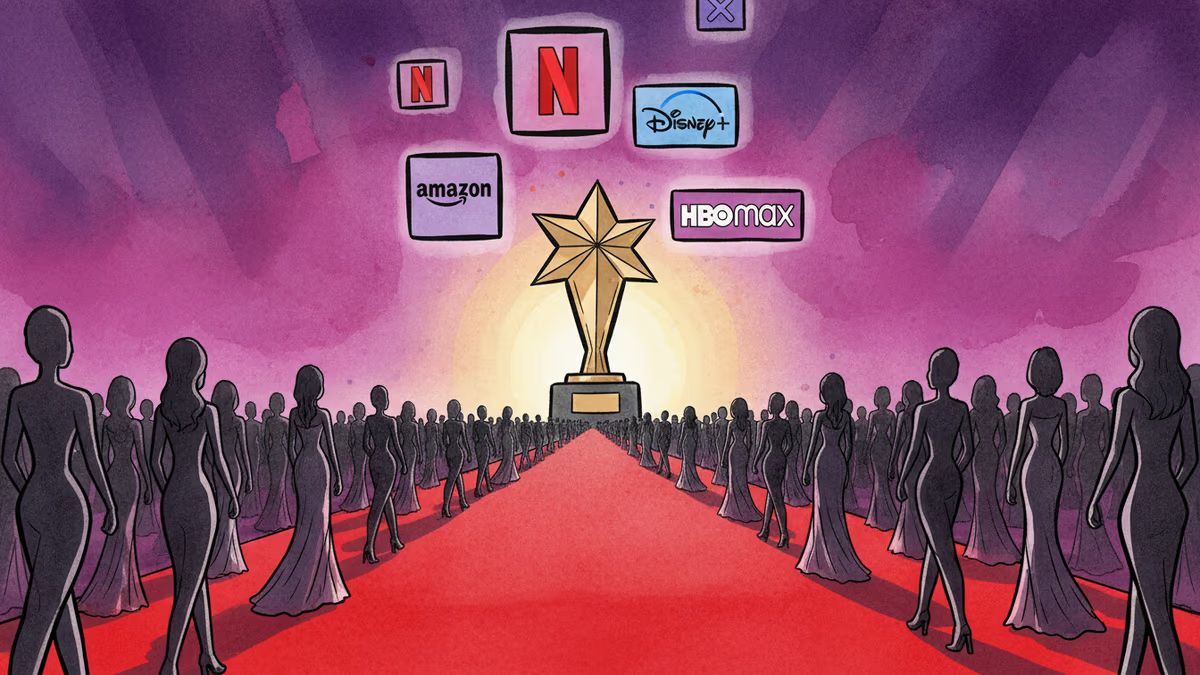
The 62nd Baeksang Arts Awards convened at COEX on May 8, 2026. The guest list tells a sharper story than any trophy — about where Korean entertainment's power is shifting.
Lim Ji-yeon-led My Royal Nemesis reportedly hit No. 1 on Netflix's global non-English chart in its opening week. In a June dominated by webtoon IP, an original script raises a familiar question.
Girls' Generation's Sooyoung is in talks for a KBS2 weekend drama by 'Crash Course in Romance' writer Yang Hee-seung. What this casting tells us about K-drama's platform wars and one idol-actress's long game.
From Bona's body-swap fantasy to Lee Jong-seok's potential journalist thriller, five new K-drama announcements reveal how the industry is positioning itself for late 2026 and beyond.
The 62nd Baeksang Arts Awards convened at COEX on May 8, 2026. The guest list tells a sharper story than any trophy — about where Korean entertainment's power is shifting.
Thoughts
Share your thoughts on this article
Sign in to join the conversation